

5 Best Movies Like The Invite
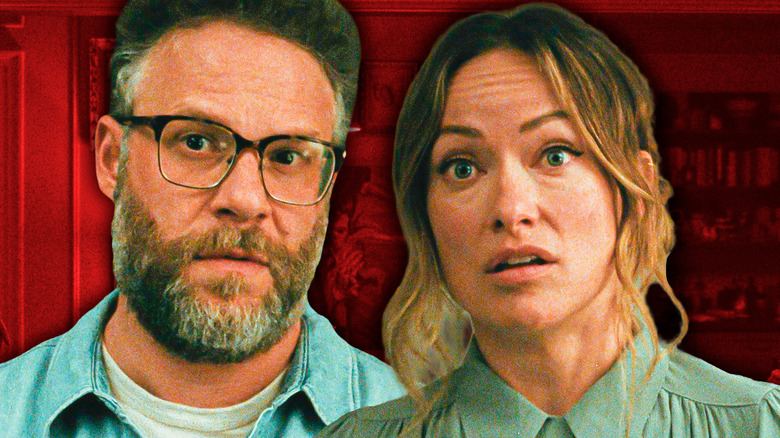
A sleeper box office hit, "The Invite" is a wickedly funny comedy starring Edward Norton, Penélope Cruz, Seth Rogen, and Olivia Wilde, that has no doubt sparked some awkward conversations among many couples. For those of you who find comfort in the cringe and want more realistic romcoms that don't give you a happily-ever-after all that easily, then you've come to the right place, as we've compiled a quick watchlist of five uncomfortable relationship dramas you should check out next.
"The Invite" received glowing reviews, and some of our recommendations include other dark marriage stories that have gone all the way to Oscar gold. Others are acclaimed love-triangle or polyamory stories that unpack the themes of director/star Olivia Wilde's claustrophobic comedy even further. All five come highly recommended by critics and Letterboxd users alike, so satisfaction is highly likely if you're looking for your next dose of discomfort viewing.
Eternity
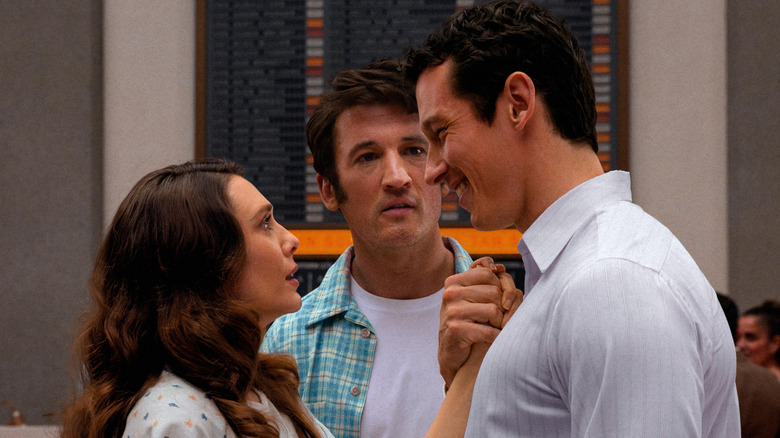
Before we dig into some of the classic movies that inspired Olivia Wilde, we're going to shine a light on two complicated relationship comedies that push the idea of a "romcom" to its ultimate breaking point. This high-concept love triangle drama from director David Freyne is set in a fantastical but inescapably bureaucratic afterlife where you get to decide where you want to spend the rest of, well, "Eternity." After Larry dies and wakes up as his younger self (played by Miles Teller), he decides to wait around for his wife Joan (Elizabeth Olsen) and head into the great beyond together. This is complicated when she does show up, however, as a guy he's befriended in this gigantic airport terminal-style waiting room (Callum Turner) turns out to be her first husband, a soldier who died in the Korean War and has waited 67 years for her to return to him.
The three of them can't enter the same afterlife together, and once you've chosen where you want to end up, you can't leave and visit another: you will be exiled to "the Void" for attempting an escape. But beneath this fantastical world-building — pitched somewhere between "A Matter of Life and Death" and Terry Gilliam's "Brazil" — is a sweet-hearted romantic drama, which reframes nostalgic what-ifs about past relationships as existential dilemmas. This 2025 whimsical afterlife romcom with heart is the kind of deeply earnest, ever-so-slightly screwball romantic fantasy that rarely gets made anymore, but with a far more modern perspective on dating. "Eternity" is a much easier, far less cringe-inducing watch than "The Invite," but one that's equally perceptive about the strains on a long-term relationship.
Splitsville

Far more heavily indebted to vintage screwball comedies than "Eternity," director Michael Angelo Covino's madcap 2025 anti-romcom "Splitsville" — co-written with his co-star Kyle Marvin — similarly depicts the fallout from a troubled monogamous couple taking advice from friends in an open marriage. It all starts when Carey (Marvin) and his wife Ashley (Adria Arjona) try to save someone's life after witnessing a car crash, which Ashley takes as the ultimate opportunity to say that their relationship is on life support too; she's had an affair and wants a divorce.
Distraught, Carey heads over to the house of his best friend Paul (Covino) and his wife Julie (Dakota Johnson). While comforting him, Julie reveals that she and Paul are in an open relationship. No surprise what happens between Carey and Julie when Paul heads off on a business trip soon after, but Carey's confession to Paul that he slept with his wife upon his return sets off a disastrous chain of events that reverberates across both relationships and each set of friendships.
Covino's film is a lot less grounded than "The Invite," with the reveal of the affair leading to an extended slapstick fight that plays out like a "Tom and Jerry" cartoon brought to life. The farcical nature of the plot keeps the characters scheming for each other's downfall behind the other's back once punches have stopped being thrown, with unexpected romantic feelings, criminal conspiracy plots, and new partners intended to make the old ones jealous, further complicating domestic dilemmas that should have been easy to resolve. It doesn't have as grounded a perspective on long-term relationships as "The Invite" does, but it shares a wickedly acidic sense of humor, turned up to 11.
Take This Waltz
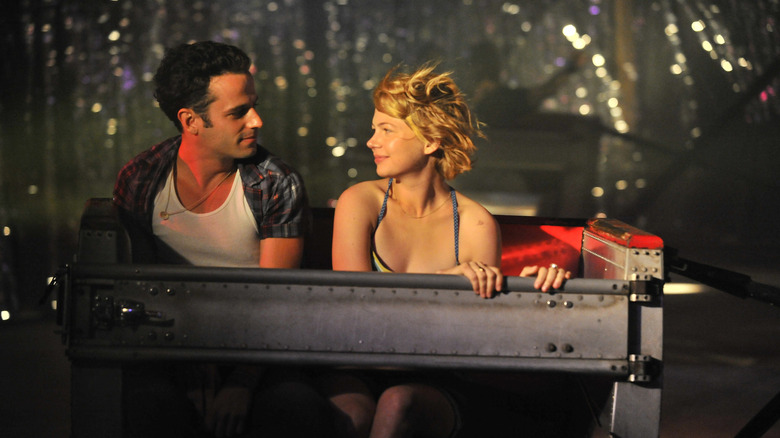
"The Invite" wasn't the first time Seth Rogen played the third-wheel husband of a character newly introduced to a more exciting romantic partner, although Canadian director Sarah Polley's 2011 film "Take This Waltz" takes a slightly different approach in analyzing the relationship between a sexually charged fantasy and reality. Michelle Williams plays journalist Margot, five years deep into her marriage to Lou (Rogen) when she meets free-spirited artist Daniel (Luke Kirby) on an assignment.
The pair keep bumping into each other, discovering they live just across the street; the intensity of their attraction and flirtation is obvious, but Margot is committed to her husband. It's just the humdrum nature of the everyday routine they've settled into that is causing her to fantasize elsewhere, and she keeps seeing Daniel in secret, although she never makes a move as she hasn't lost any feelings for her husband. She's just eager for excitement again.
Many relationship dramas — especially love triangle dramas — hinge on a protagonist's belief that the grass is always greener on the other side, and the exciting romance they've yearned for is ever-so-slightly out of grasp. Polley's movie embraces and demystifies this fantasy, empathizing with and showing a natural understanding of Margot's attraction to Daniel and the rebirth a life with him could represent, while simultaneously puncturing holes in the concept that this would ever be the idealized happy ending she's always dreamed of.
The writer/director has equal compassion for each corner of this love triangle, and never passes judgment for their messiest actions, even if she does want to hold their delusions up to the cold light of day. If your relationship could survive watching "The Invite" together, then this is your next big test.
Vicky Christina Barcelona

"The Invite" suggests that being in a relationship with Penélope Cruz is an unrelenting emotional roller coaster with no letup, but being with Pina would be nowhere near as intense as spending a single hour with María Elena. The actor's Oscar-winning supporting turn in 2008's "Vicky Cristina Barcelona" draws more from the highly charged melodrama of her collaborations with director Pedro Almodóvar, a presence who remains so forceful in the life of ex-husband Juan Antonio (Javier Bardem) that the very subject of her lingers in the background of any conversation he has with any other woman.
Woody Allen's film follows best friends Vicky (Rebecca Hall) and Cristina (Scarlett Johansson) on a summer trip to the Catalan capital where they meet Bardem's enigmatic artist, who intends to sleep with them both. Vicky hides that she does from her bestie, with the pair growing apart as Cristina agrees to move in with him. What she doesn't foresee is that María Elena is back on the scene, and Juan Antonio remains completely infatuated with her — but because their relationship was so volatile, they decide the best course of action is entering into a throuple with Cristina, who can be the calming influence they need.
Allen's late-period romantic dramas can often feel stuck in an earlier era, but "Vicky Cristina Barcelona" has aged surprisingly well as a frank depiction of non-monogamy, understanding the appeal, and why certain emotional frequencies wouldn't be attuned to it. As in "The Invite," it all comes tumbling down, but not for the reasons you'd expect from a movie written by a man then in his early 70s; it's surprisingly intuitive for a movie about a young protagonist's quest for romantic self-discovery.
Who's Afraid of Virginia Woolf?
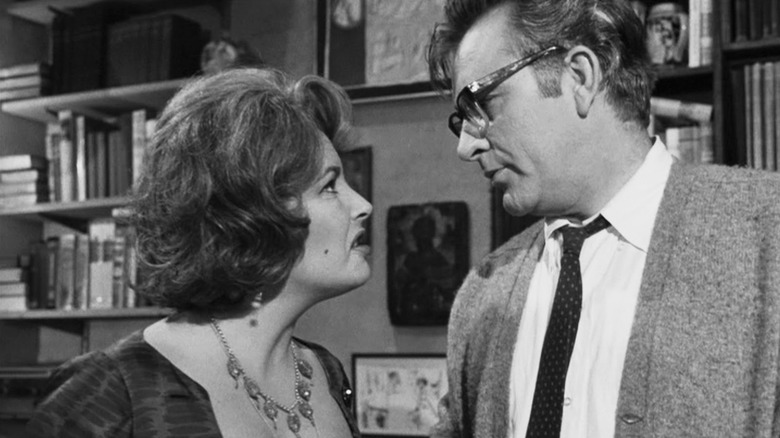
One of just two films in history to be nominated in every Oscar category it was eligible for – alongside 1960's "Cimarrón" – director Mike Nichols' 1966 adaptation of Edward Albee's play remains one of the most uncomfortably lacerating relationship dramas ever committed to screen. That it stars one of Hollywood's most famous on-again, off-again couples so early into a volatile marriage has helped it endure long after it broke new ground for foul-mouthed screen dialogue that wouldn't stir up controversy today.
The premise is simple: George (Richard Burton) and Martha (a de-glammed Elizabeth Taylor) arrive home drunk from a work party, with Martha revealing she invited a young couple she met there back to their place for a nightcap. It's not long until the pair are at each other's throats in front of their guests, revealing the darkest secrets of their relationship and driving a wedge through their uncomfortable visitors Nick and Honey (George Segal and Sandy Dennis).
Much like "The Invite," which was flatteringly compared to "Who's Afraid of Virginia Woolf?" in several glowing reviews, Nichols largely restricts the action to the claustrophobic home of its lead couple, making us feel like flies on the wall with no escape route from this pressure cooker environment. The dialogue is often darkly hilarious, but there are no moments to catch your breath between the highly charged arguments like there are in Wilde's film.
But while "The Invite" might have hit too close to home for many, there is some cause for relief with "Virginia Woolf" — few relationships are quite as cutthroat as George and Martha's, so you'll probably feel a lot stronger in yours after experiencing a couple of hours in the company of theirs.