

Fjord Review: This Award-Winning Sebastian Stan Drama Is Sure To Start Fights [TIFF 2026]
- Raises a lot of thought-provoking questions
- Sebastian Stan and Renate Reinsve nail tricky characters
- Changes from the true story lend its arguments some dishonesty
"Fjord" was something of a surprising winner for the Palme d'Or, the top prize at the Cannes Film Festival. It was neither the best reviewed film in competition nor the most acclaimed work of its director, Cristian Mungiu; critics thought the anti-Putin thriller "Minotaur" or the Thomas Mann biopic "Fatherland" were safer consensus picks. I suspect the reason "Fjord" won over Park Chan-wook's jury was because it's not a safe or consensus pick. No matter where you fall on the political spectrum, "Fjord" is a movie designed to challenge you and make you angry, though different groups will be angry for different reasons.
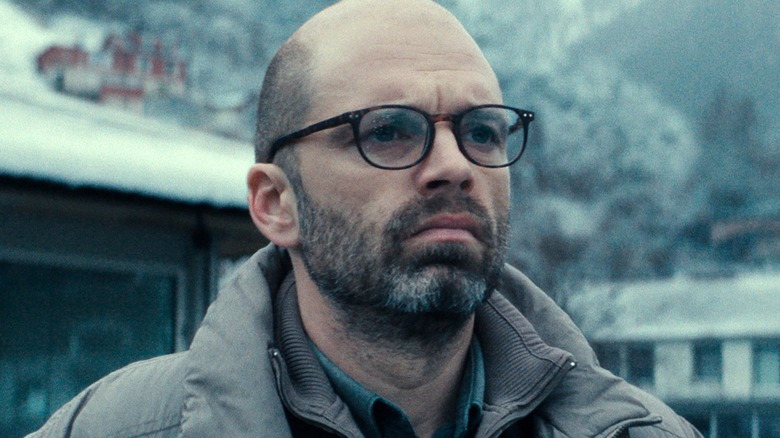
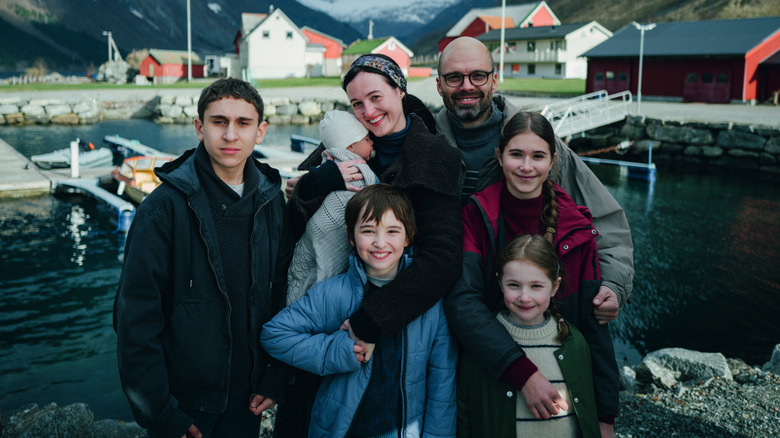
Mungiu describes the film as inspired by a few different cases of conservative immigrant families getting in trouble with Norwegian Child Welfare Services, but the true story it most closely resembles is that of the Bodnariu family. Fictionalized as the Gheorghius, the father Mihai (Sebastian Stan) is Romanian, the mother Lisbet (Renate Reinsve) is Norwegian, and at the start of the film they have just relocated with their five children from Romania to Norway. Their liberal neighbors are initially welcoming, with the impulsive lesbian next door, Noora (Henrikke Lund-Olsen), befriending the eldest daughter Elia Gheorghiu (Vanessa Ceban). But one day Elia comes to school with bruises, and when the social workers inquire about whether their father has gotten physical with them, Elia answers yes, leading to the children's immediate separation from their parents.
What follows is a tense legal drama where we're never given direct answers of what exactly happened, reminiscent of the 2023 Palme d'Or winner "Anatomy of a Fall" but with much more fraught subject matter ("Anatomy of a slap on the butt," reads the film's most liked review on Letterboxd). You understand where every character is coming from and also (with the exception of the children) have reasons to hate them all at the same time. "Fjord" will challenge liberals to sympathize with religious homophobes defending some degree of corporal punishment, while forcing conservatives to engage with the horror of governments separating ethnic minority immigrant families. The conversations you'll have in person after seeing this movie will be fascinating, and the conversations you'll have online will be insufferable.
The actors handle the material with nuance
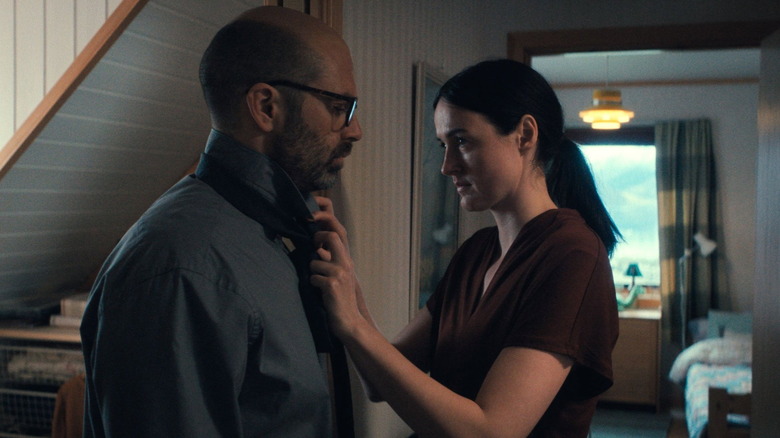
Sebastian Stan has parlayed his Marvel Cinematic Universe fame into a series of genuinely challenging roles. Mihai might not require as extreme a transformation as Donald Trump in "The Apprentice" or Edward in "A Different Man," but Stan is effectively de-glammed as the balding Gheorghiu patriarch. There's a reserve of anger beneath Mihai's quiet calm that makes his presence unsettling, and his alliance with extremist groups to make his defense certainly won't ingratiate him to most viewers. But there's also a sense that he's an honest man who believes everything he says ― his honesty (as well as the language barriers he faces navigating conversations in English and Norwegian) can incriminate him, but also makes his defenses seem genuine.
Renate Reinsve's Lisbet challenges expectations. Though conservative and devoutly religious, she's no submissive tradwife stereotype. She works at a nursing home, serious in living out her Christian values in the sort of ways the secular world can respect, though how vocal she's allowed to be about her faith at work is a point of contention. When her children are taken away, authorities tell her she can have them back if she admits her husband has been abusing her, but there's nothing for her to admit.
Where Mihai tries to make their family's legal struggle a bigger political cause, Lisbet would prefer to keep matters personal, seeking legal counsel from her neighbor Mia (Lisa Carlehed). It's Mia who makes the arguments that seem closest to a definitive statement of perspective in a movie aiming for icy impartiality: a liberal defense of how multiculturalism necessitates tolerating neighbors whose values you might find abhorrent. Of course, abhorrent actions are a different matter entirely from mere differences of opinion, but the prosecution's arguments are at least as much about what the Gheorghius believe as about what they might or might not have done.
Is this film a fair depiction of the case?
I don't know enough about Norwegian society to judge whether Cristian Mungiu's depiction of the country's welfare services is fair or if it falls into strawman portrayals. Obviously this is based on a real case, so the thorny issues such a case brings up are fair game for all sorts of cultural criticism. I know many viewers who attended the Q&A after the TIFF premiere soured on "Fjord" after hearing Mungiu discuss his centrist belief that left-wing "cancel culture" bears responsibility for the rise in right-wing extremism; I disagree with his analysis, but I also don't think his movie is really making that argument, so that view doesn't impact my opinion. It was quite fascinating watching this the same day as "Club Kid," a movie with tone and characters that are almost the exact opposite of this one's but also examines a conflict between flawed parenting and an aggressive legal system.
Doing research afterward, however, there is one thing I've found that does lower my respect for the film: the most dramatic part of the legal case's resolution, the part that made everyone gasp in the theater, turns out to be completely fictionalized. I don't need movies loosely based on true stories to be historically accurate (even if extreme historical inaccuracy can get laughable), but if you're trying to do social commentary, such commentary should be about something that's real. Creating "did I just blow your mind?" thought experiments out of nowhere in the context of a realistic political drama is an act of empty provocation, and it increases my skepticism of the film in general.
And yet even with those serious problems, I must still defend "Fjord" against those who've labeled it ― often sight unseen ― as a "MAGA movie." Not when it ends on the note it does. For all the ways Mihai and Lisbet can be defended, the ending makes it clear: even if they're innocent of the worst crimes they were accused of, there are other ways their worldview is hurting their children. I felt so bad for Noora, the character I most sympathized with throughout and whose troubled and tragic presence anchors the final scene. The complicated swirl of thoughts and emotions this movie left me with certainly isn't the most enjoyable sensation, but it's one that I can't dismiss.
"Fjord" premiered at the 2026 Cannes Film Festival. Looper screened it at the 2026 Toronto International Film Festival. It is now playing in U.S. theaters.