

Clayface Easter Eggs Only True DC Fans Noticed

So far, the DC Universe hasn't been shy on delivering Easter Eggs that hint at this franchise's larger world. Various details you missed in James Gunn's "Superman," for instance, included nods to the existence of Gotham City and multiple eras of classic DC heroes. Then there's recent TV programs like the second "Peacemaker" season, which featured a character explicitly referencing Bludhaven, while "Lanterns" confirmed that DC Comics fixtures like The Phantom Zone and Midway City are alive and well. Imminent DC Universe productions like "The People v. Gorilla Grodd" and "Man of Tomorrow" promise to only further deepen the wealth of Easter eggs across this franchise.
"Clayface," the third feature film in the DC Universe, is a wildly different creation from either "Superman" or "Supergirl." However, it firmly exists in the DC Universe, and thus continues the tradition of this franchise using Easter Eggs to reinforce its larger world. Even as Matt Hagen (Tom Rhys Harries) grapples with how a medical procedure is altering his body and sending him down the path to becoming a Batman baddie, there's Easter eggs littered across "Clayface" that'll immediately grab the attention of DC Comics fans while going over the heads of general audiences.
What exactly are the tidbits on offer? More specifically, how do they relate to the larger DC Universe or DC Comics history? Let's break down these easy-to-miss "Clayface" details continuing the trend of noteworthy DC Universe Easter eggs.
Welcome to the Moldoff Building
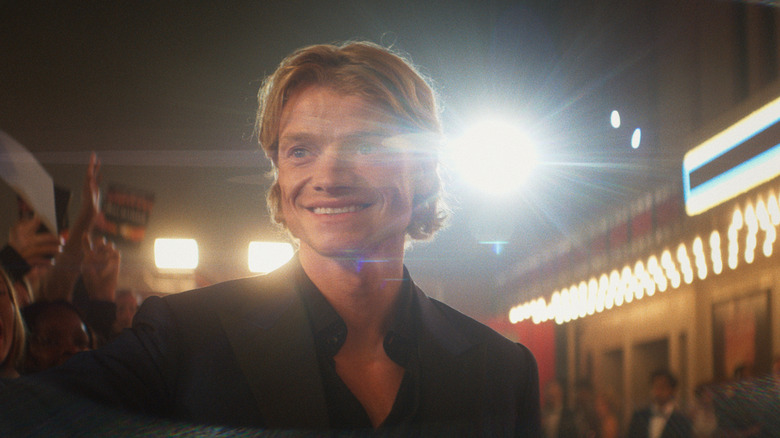
When Frank Fitzpatrick (Eddie Marsan), Matt Hagen's manager, heads back to his office, he passes by the name of building he operates in. The location's moniker includes the name Moldoff. Though it only appears onscreen for a few seconds, the deployment of the word Moldoff should ring some bells for comic book geeks. That's a reference to famous artist Sheldon Moldoff, who proved crucial to the history of DC Comics — especially the Batman mythos. His early illustrations for characters like Alan Scott/Green Lantern and Hawkman forever influenced how those figures would appear in all sorts of DC media.
His DC exploits also included co-creating a slew of famous Batman supporting characters, including the Matt Hagen incarnation of Clayface (Bill Finger also brought this version of the supervillain to life). Now, the first live-action movie focusing on this character has delivered a nod (however subtle) to this seminal artist. This is especially welcome, since comic fans have often bemoaned the lack of recognition for the impact Maldoff's art had on the world. So many beloved characters, costumes, and storylines wouldn't have been possible without a man whose name often eludes even the most devoted Batman fans.
Perhaps that eye-catching background detail in "Clayface" will help draw further attention to the tremendous legacy Sheldon Moldoff left behind. Either way, this particular Easter egg is a moving tribute to the past from a very modern vision of Clayface.
That Imperial Pictures logo
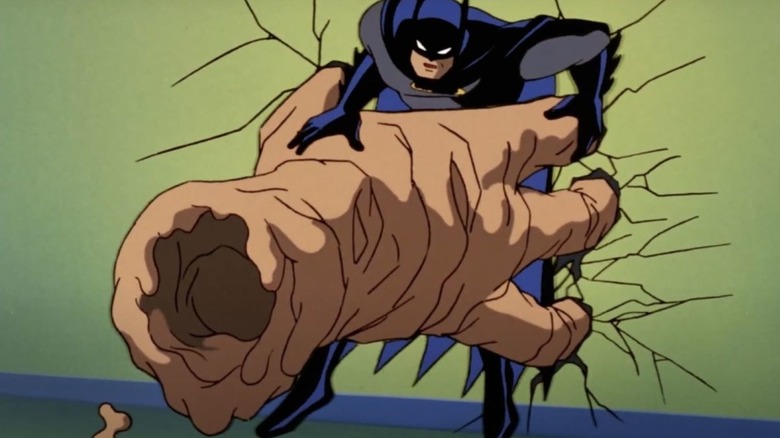
As "Clayface" opens, audiences see Matt Hagen living the movie star life. He's getting wheeled up to the set in a limo, he's rehearsing all of his lines, and he's in the makeup chair making sure he looks as handsome as can be. One wide establishing shot of studio lot Hagen is working on, though, reveals that he's working for an outfit named Imperial Pictures. For "Batman: The Animated Series" fans, that should ring a bell. It's the same outfit Matt Hagenwas connected to in that show. Decades later, Clayface is still working at the fictional realm of Imperial Pictures.
The various Clayface episodes are often considered among the best of "Batman: The Animated Series." That shouldn't make it surprising that original "Clayface" writer Mike Flanagan has declared that this show's tragic take on Clayface directly inspired his passion to be a part of this movie in the first place. The connections between "Clayface" and "Batman: The Animated Series" are apparent to eagle-eyed viewers once the Imperial Pictures logo briefly appears on-screen. Given that this entity is either entirely or largely absent from other DC Comics media, its presence in "Clayface" could only be a nod towards this seminal program.
Granted, "Clayface," being an R-rated horror movie, gets way more violent than "The Animated Series" ever could. However, that Imperial Pictures reference makes it clear that one of the most acclaimed Clayface interpretations is never far from the minds of director James Watkins and company.
The send in the clown billboard
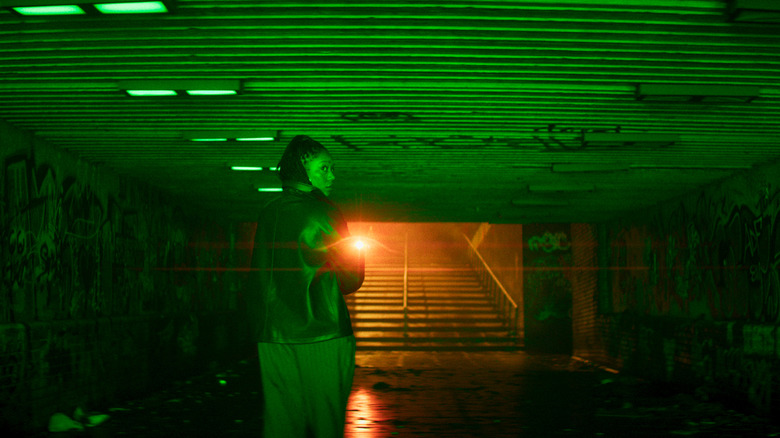
As gangster baddie Markos Szabo (David Dencik) begins sending his men after Dr. Caitlyn Corr (Naomi Ackie) and her fiancée John Borrelli (Max Minghella) to keep them from challenging his criminal operations, Hagen decides to step in and fight one of these cronies stalking Corr. Specifically, one "Clayface" scene features Szabo's henchman seemingly stalking Corr down a long tunnel, only to catch up with her and realize it's actually the shapeshifting Hagen. Just before this realization, there's a shot of Corr entering this tunnel with a gigantic billboard behind her advertising an amusement park that promises visitors "fun." On the billboard is a massive picture of a clown, an icon woefully familiar to Gotham citizens.
Now, this isn't teeing up the next live-action Joker actor. However, in the context of Corr in this image actually being a disguised Hagen (not to mention the vicious slaying Hagen is about to dish out on his gangster opponent), the clown in this shot symbolizes something else. It instead suggests how Matt Hagen is crossing lines that will take him down the path to becoming a foe on par with the most powerful DC villains. With a billboard echoing The Joker looking down on him, Hagen solidifies his descent into villainy.
Such rich subtext behind this background detail seems only natural, given that placing a prominent (and eerie-looking) clown in any piece of Gotham-set media can't be incidental.
Fresh off the presses, the Gotham Gazette

Famously, Superman works at the Daily Planet newspaper in Metropolis, in his alter ego as Clark Kent. This was brought over for 2025's "Superman," and returning to this location is one of those things that happen in every Superman movie. However, Superman's not the only DC Comics legend who has a newspaper in his neck of the woods. Gotham City, which is home to Batman and his many colorful villains causing mayhem, also has a publication working its hardest to cover everything that transpires in Gotham's borders. That outlet would be the Gotham Gazette, a publication that shows up in the final moments of "Clayface."
In this film's ending, Dr. Caitlyn Corr strolls over to a newspaper stand and picks up a publication revealing to herself and the audience that the general public's perception of Matt Hagen is that he's missing and presumed dead. The briefly-seen newspaper logo belongs to the Gotham Gazette. This publication, though not quite as prominent in live-action Batman media as the Daily Planet is, is proving quite active lately. To date, the Gotham Gazette also appeared in both "The Batman" and its HBO spin-off show "The Penguin."
That renewed live-action presence now includes a brief appearance in "Clayface," which firmly establishes that the Gotham Gazette is covering everything going on in Gotham in the DC Universe.
Welcome back to Coast City

A crucial part of Matt Hagen's character in "Clayface" is that he grew up in the dingy Lucas Heights neighborhood of Gotham City and subsequently crawled his way out of there to become a celebrity. He's an underdog who escaped his origins to find better days, only for his ascent to tragically end once his face gets smashed up. Thus, once he loses his good looks, he's stuck back in Gotham, the very place he worked so hard to elude. That's a core tragedy for this incarnation of Clayface, though Gotham isn't the only famous DC city that Hagen resides in. When the story starts, he's living the movie star life in Coast City.
That name should be familiar to any DC Comics fans. It's the home of Hal Jordan and, in the comics, a domicile that proved crucial in the dark history of Green Lantern. In live-action DC Universe media, Coast City has proven surprisingly prominent. This city showed up multiple times in "Lanterns," including in an episode depicting Aaron Pierre's John Stewart traveling to a Coast City mansion owned by Kyle Chandler's Hal Jordan. The glitzy, sunny reputation of Coast City (which, as its name implies, exists on the coast in a way similar to Los Angeles) is amplified by its presence in "Clayface" as the place where movie magic happens.
If only Matt Hagen could've stayed there forever instead of being condemned to becoming another Gotham baddie. Hey, at least DC fans got to see Coast City on the big screen again.
To the Gotham Docks!
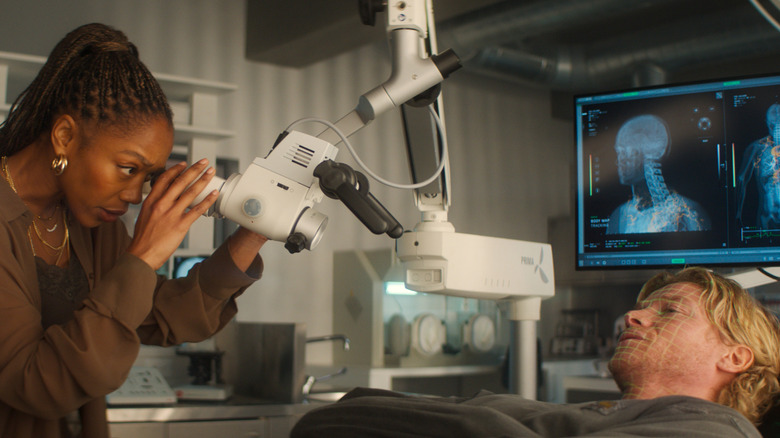
Frank Fitzpatrick scurrying around outside the entrance to his work building doesn't just offer up a glimpse at a plaque referencing a classic DC Comics artist. There's also a street sign in the background of several of these shots referencing a location called "Gotham Docks." This water-heavy location has appeared in countless Batman stories, especially in small screen exploits starring Clayface. Multiple "Batman: The Animated Series" episodes featured trips to the Gotham Docks, ditto multiple installments of the 2004 program "The Batman" and "Young Justice."
"Batman Begins" also made time for a trip to the Gotham Docks, a clear sign of just how ubiquitous this Gotham corner is in Batman adaptations. The Gotham Docks are a perfect backdrop for writers conjuring up new stories about Batman confronting criminals. After all, this shipyard can be a place where illicit shipments or new foes are coming in that Batman can stop. Plus, in the case of "Clayface," making the existence of the Gotham Docks explicit reinforces how cavernous Gotham is. Gotham is so massive (dark mirror of New York City and Chicago that it is, in contrast to Metropolis' lighter take) that it also features its own docks. No wonder someone like Matt Hagen got lost here.
Future explicitly Batman-centric stories in the DC Universe could actually take audiences to the Gotham Docks and see what they look like (and how they compare to other non-comics appearances of this location). For now, this "Clayface" background sign will have to suffice.
A familiar Gotham club proves crucial to Clayface's origin
Club Vesuvius is easily the most happening club in all of Gotham City, if by "happening" you mean a perfect place for supervillains to be born. Matt Hagen makes a fateful trip to this location early in "Clayface" to engage in some celebratory dancing when he unfortunately sleeps with the girlfriend of mobster Markos Szabo. This leads to Szabo and his men destroying Hagen's face and sending this actor down the path of becoming Clayface. In the climax of "Clayface," a super-powered Hagen returns to Club Vesuvius to dish out his idea of justice, slaughtering those who've wronged him. The club's dance floor runs red with blood on that fateful night.
In the comics, Club Vesuvius is no stranger to housing crucial moments for Batman baddies. Specifically, the Batman foe constantly went back to Club Vesuvius as his personal lair (that didn't last long). Who is to say only nefarious Batman foes can have all the fun at Club Vesuvius, though? Another major DC Comics character, Zatanna, is also often connected to Club Vesuvius, though no reference to her (or Firefly for that matter) appears in "Clayface." Here, the club just functions as a routine party joint that often appears in gangster movies like "Carlito's Way."
That briefly seen and referenced name, though, does ensure Matt Hagen's new origin story intersects him with a place featuring a rich DC Comics history. Now if only it could be known for more than just inspiring bloodshed and supervillain origins.