

5 Best Submarine Movies Based On True Stories, Ranked
Plenty of submarine movies are made in collaboration with experts, willing to advise filmmakers on everything from the tactics of nautical warfare to the elaborate designs of the vehicles themselves. You're always able to tell which movies have done their homework, and the more claustrophobic you feel while watching, the likelier it is that the creatives involved have done the required reading.
However, not all submarine movies are made equal, and factual accuracy doesn't account for anything if the film you've made isn't particularly gripping to start with. When adapting true stories, some directors can get too bogged down in doing justice to real events to the extent they forget to make something entertaining. Which is why, for this list, we're looking at the cinephile-approved sub movies adapted from true stories.
The titles on this list are ranked in reverse order from lowest to highest rated on Letterboxd, with some that take greater liberties with the truth considered better than more authoritative takes on real events. All have ratings far above the average, but some are more divisive than others — we've crunched the numbers and will outline the reasons why some were received that way as we count down this top five.
If this has you hungry for more underwater action, head back over here once you've finished reading for our picks for the five best submarine movies ever made.
5. K-19: The Widowmaker
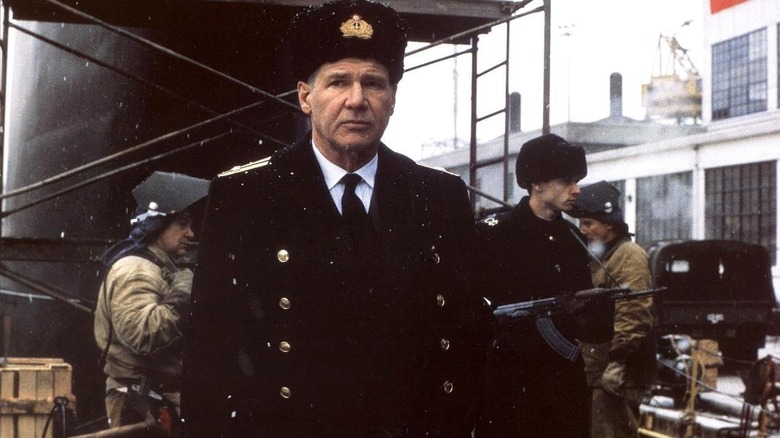
Before "The Hurt Locker," director Kathryn Bigelow pivoted from big and bombastic action movies into fact-driven thrillers with this adaptation of a true story from one of the most tense moments during the Cold War. "K-19: The Widowmaker" is set in 1961, when the USSR's nuclear arsenal prompted US nuclear submarines to be stationed near Moscow and Leningrad. In response, the Soviets launched their first nuclear-powered missile submarine, stationing it near Greenland in the North Atlantic so it could be within striking distance of New York and Washington D.C.
Due to the rushed nature of building a ship to beat the US, several crew members died during its production, while multiple systems failures and floods were reported during the early testing stages. Still, it wound up setting sail, putting the crew's lives in jeopardy when the reactor coolant began leaking, causing them to work through high levels of nuclear radiation to fix it. All while cut off from Moscow, leaving them with little chance of a rescue mission.
It's a great true story which Bigelow's movie doesn't do justice to. That's reflected in the generally mixed-positive Letterboxd user ratings, and narrowly fresh Rotten Tomatoes rating that was buoyed by raves from the likes of Roger Ebert. She follows the dramatic beats of the truth, although her characters are fictionalized composites of the crew members on board, and she softens some of the facts for a Hollywood audience.
The movie may be grueling at times, but the ship's nickname here being "The Widowmaker" when in reality it was "Hiroshima" is enough to know there's a darker story not being told. Still, it's an entertaining dad movie, and with Harrison Ford and Liam Neeson as the commanding and executive officers, it makes for a decent Sunday afternoon watch.
4. Kursk
It's easy to understand why "Kursk" was a box-office bomb, making far less than its reported $40 million budget. There were no survivors of the 2000 disaster, and director Thomas Vinterberg's film charts the administrative failures that caused the deaths of all 118 crew members stationed onboard, trying to evoke emotion through the impassioned ways the crew's family members and foreign navies attempt to intervene to no avail.
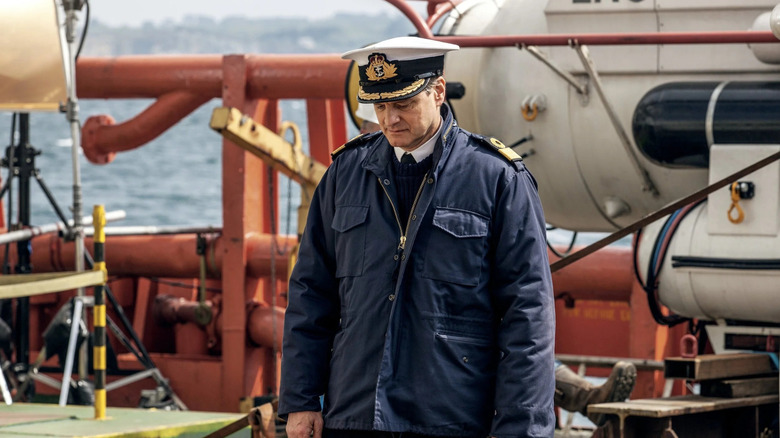
Although its characters are composites, the cause of the disaster and its onboard fallout are depicted faithfully. A dummy torpedo began leaking high-test peroxide fuel, triggering a small explosion that started a sustained fire, one which detonated all remaining torpedoes minutes later. The procedural approach to the "Kursk" narrative focuses on the delay between this deadly incident and word spreading that the men needed to be rescued, with journalist Robert Moore (who wrote the source material) and former Royal Navy commodore David Russell (played here by Colin Firth) both acting as advisers to guide the realism.
For the most part this works, although there is an elephant in the room: the lack of Vladimir Putin. His government's inaction was his first scandal as President – he remained on holiday for several days while the chaos unfolded — and Robert Rodat's screenplay doesn't fully do justice to the true story by removing this critical roadblock to the crew's survival. This is a tense, nauseating account of a real disaster whilst onboard, but the lack of a full picture on land stops it short of greatness, which is reflected in the soft 3.2 average Letterboxd rating.
3. U-571
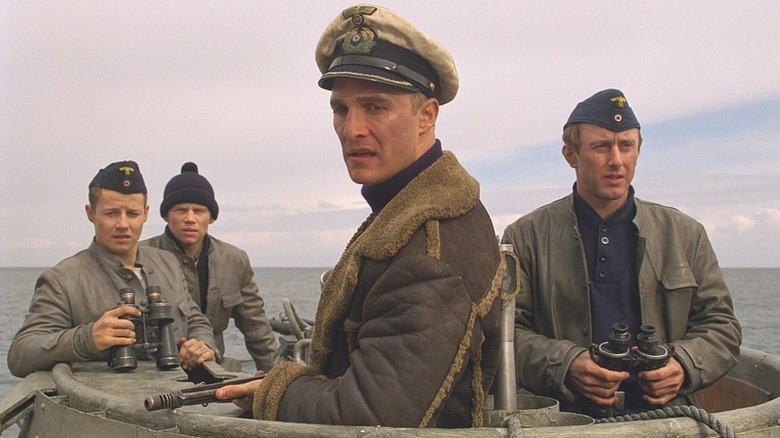
Easily the most historically inaccurate movie on this list, to the point that it caused a minor international incident between the UK and US, director Jonathan Mostow's "U-571" takes the story of a British naval triumph in World War II and attributes it to the United States Navy instead.
Then-Prime Minister Tony Blair called the movie an "affront" to the legacy of the veterans who risked their lives tracking down the gunned German U-boat to retrieve the Enigma code machine onboard, an achievement the movie claims to be a US victory, shepherded by the decidedly not-British Matthew McConaughey and Bill Paxton. Co-screenwriter David Ayer even expressed regret at distorting history a few years later, saying that this was a decision made so the film would appeal to an American audience, and that he'd never pull a stunt like this again.
With all that out of the way, a quick look at Letterboxd shows that while fans may be aware of these glaring historical inaccuracies, they aren't letting them get in the way of their love for the movie. Like any submarine movie worth its salt, "U-571" balances a procedural examination of naval strategy with thrilling, claustrophobic set pieces, setting the table with an opening scene of intense action and maintaining that level of thrilling suspense from there. Yes, it feels like you must caveat any praise for the movie by highlighting the very big way it twists the true story into conventional Hollywood action fare — but once you get over that, there's a lot of fun to be had here.
2. Above Us the Waves
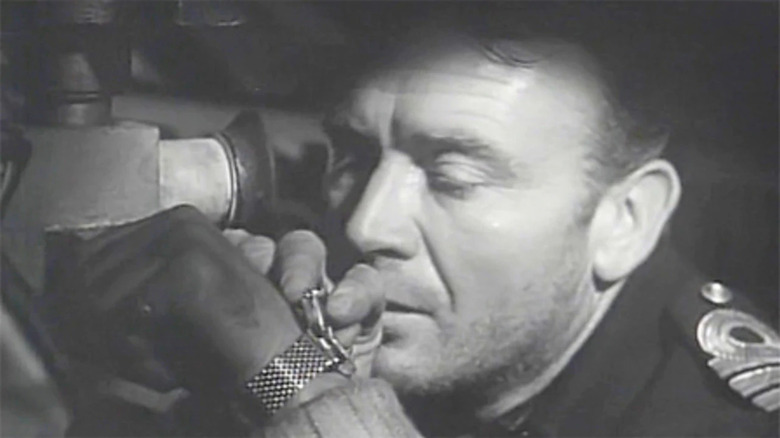
Adapted from British Royal Navy commander C. E. T. Warren's non-fiction tome of the same name and co-written with James Benson, "Above us the Waves" is the account of two consecutive Navy missions to take down the Tirpitz, a German battleship hidden in the Norwegian fjords. Producer William MacQuitty was a submarine obsessive who bought the rights to adapt the book before it became a best-seller, and as an experienced diver, he was hands-on in ensuring technical and historical accuracy for the underwater sequences.
It's an approach that makes it easy to overlook the minor creative changes (such as renaming a torpedo carrier), as screenwriter Robin Estridge and director Ralph Thomas largely follow the source material's arc, right down to documenting the many missteps and errors made on the mission. The procedural structure is catnip for naval thriller fans, and struck a chord with British audiences who were reliably making homegrown WWII blockbusters into hits ("The Dam Busters" was the UK's highest grossing movie in 1955).
Unfortunately, it has since become the most obscure title on this list, with only 481 total user ratings on Letterboxd. It deserves to be rediscovered by any fan of the genre. As reviews on the site point out, the slow-burning, process-driven narrative explodes into a tense and claustrophobic second half, set entirely within the confines of the tin can floating in the North Sea. It's as stripped down as a submarine movie can get but no less thrilling for it, especially considering how faithful it remains to the facts.
1. Das Boot
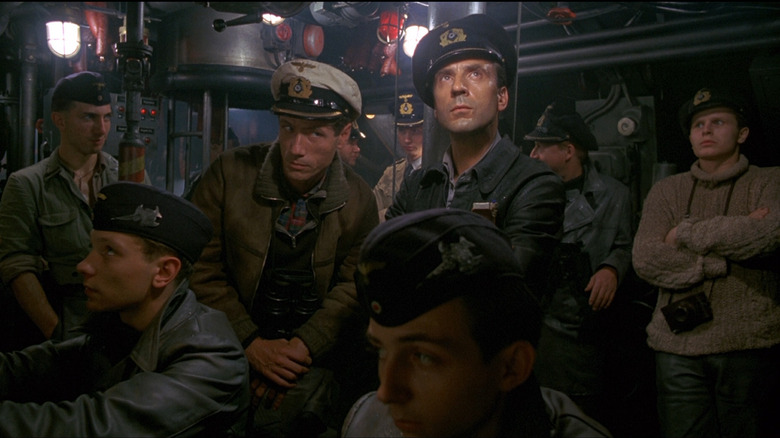
The number one on this list was never in doubt, with an average rating on Letterboxd an entire star higher than second place. "Das Boot" boasts an impressive 4.3 compared to the 3.3 of "Above Us the Waves." Director Wolfgang Petersen's anti-war epic needs little introduction. It's a gold standard not just for submarine movies, but those adapted from real events, taking journalist Lothar-Günther Buchheim's semi-autobiographical novel as the starting point for a more authoritative account of life below the surface.
If you do need further assurance of why this is considered the best in the genre, look at Petersen's painstaking attention to period detail in building replicas of the commissioned submarines, with the assistance of real crew members to ensure accuracy when it comes to capturing life on board these claustrophobic cans. It was the most expensive German movie in history at that time, and every last deutsche mark went to good use.
Of course, "Das Boot" resonates far beyond the dedicated audience of submarine obsessives, and has been routinely commended for generations for its grueling depiction of life at war, with servicemen low on supplies and morale before the biggest existential threats to their lives make themselves known. This is the reason many still proclaim it to be the most realistic submarine movie ever made. Even outside of wartime, veterans can recognize the truth in its depiction of the monotonous routine while stuck inside, even without the tension ratcheted up to such uncomfortable levels. It's one of the most realistic accounts of the lives of servicemen during WWII, not just one of the truest to reality submarine films.