

Street Fighter (2026) Easter Eggs Only True Fans Noticed
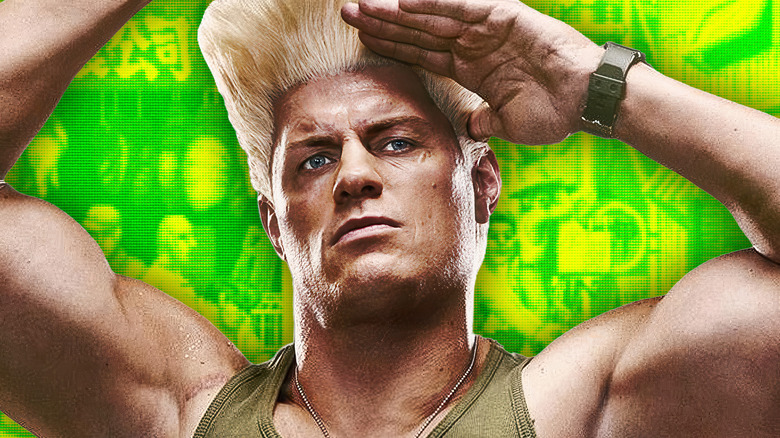
The 2026 "Street Fighter" video game movie makes immediately clear that the people behind it have paid careful attention to the franchise that it's based on. As can be the case with video game movies, some aspects of "Street Fighter" will no doubt leave game fans furious. However, there are also moments in the film that feel directly ripped from the Capcom titles, such as the clever recreation of the famous intro of "Street Fighter II" and the inspired use of the characters' theme music. Costumes and character looks in general are on the point across the board, and there are many well-executed moments where the impressive fight scenes manage to incorporate special moves from the games.
As you can probably expect from a project like this, "Street Fighter" is also full of neat little Easter eggs for fans to find and enjoy. Some of them are reasonably easy to locate, while others require serious lore knowledge and dedication to spot. Let's take a look at some of the most impressive Easter eggs in "Street Fighter."
The animated segments are a love letter to previous Street Fighter works
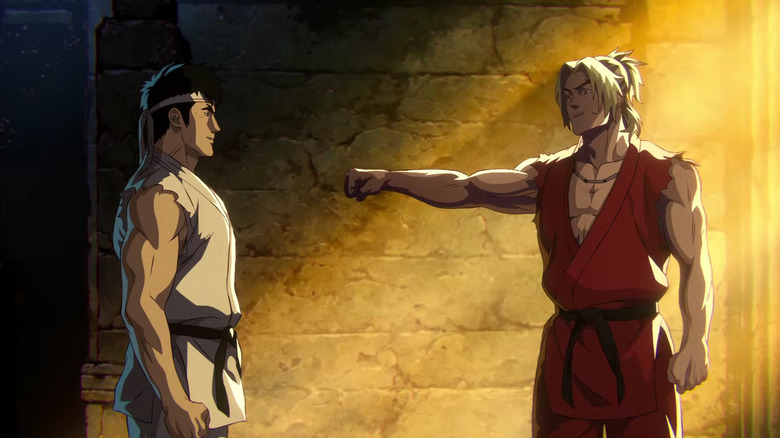
The most surprising thing about the 2026 live action "Street Fighter" movie is probably the fact that it isn't all live action. Instead, the film opens with a lengthy animated segment, and the backstory of Ryu (Andrew Koji), Ken (Noah Centineo), Gouken (Don Lee), and Akuma (Joe "Roman Reigns" Anoa'i) unfolds in the same style over the course of the show. Even the ending of "Street Fighter" is animated, courtesy of the stinger where the villains who are still standing go to meet Sagat.
Though the style of animation is slightly different and the characters resemble their live-action counterparts, it's not hard to surmise that the animated segments pay tribute to 1994's "Street Fighter II: The Animated Movie," which has a cool 80% rating on Rotten Tomatoes. It's easily the better of the two major 1990s Street Fighter projects — for comparison, the Jean-Claude Van Damme film stands at 20%.
In addition, the animated style is a perfect choice for covering the events of the first 1987 "Street Fighter" game in the beginning. The game isn't the kind of stone cold classic that "Street Fighter II" became, and covering it in a completely different aesthetic than the movie proper is a perfect way to convey that while the 1987 game is a part of the Street Fighter history, it's a far cry from what came after it.
Cammy's costume and casting
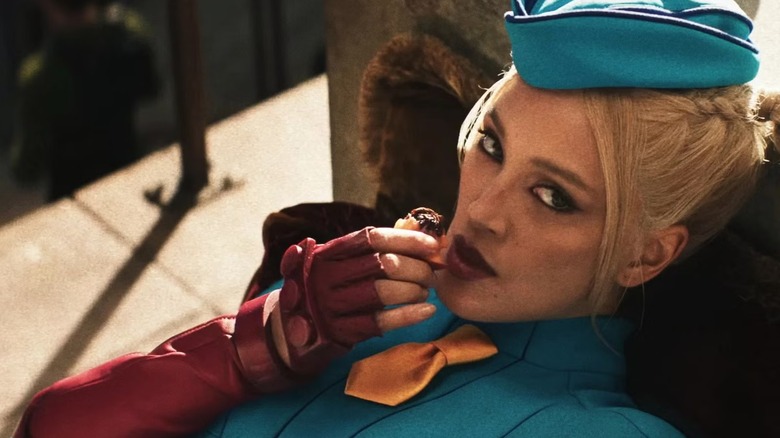
Cammy (Mel Jarnson) plays the femme fatale role in "Street Fighter," which is a departure from the character's usual portrayal. Traditionally, she's a MI6 agent and a protagonist, but here she's competing for the title of the most unhinged character with M. Bison (David Dastmalchian) himself.
The key to her attitude and allegiance is her costume. As knowledgeable fans will spot, Cammy's outfit in the movie is a fairly accurate adaptation of her design in "Street Fighter Alpha," which chronologically takes place before "Street Fighter II." It's an immediate visual cue that, at this stage of the story, she's still brainwashed by Bison and fighting on his side.
Whether by coincidence or by design, Cammy's casting is also a fun little gag. Jarnson has a history in fighting game adaptations, as she played the screeching, vampiric Nitara in the 2021 rival franchise film "Mortal Kombat." As a possible nod at Jarnson's former character, Cammy even sneaks in a very uncharacteristic scream in a late-game scene when she and Bison learn of Akuma's arrival.
We've seen Guile's car before
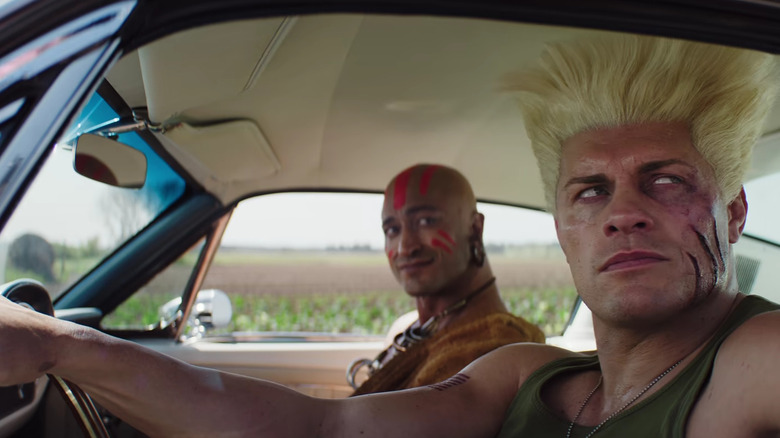
Near the end of the movie, Guile (Cody Rhodes) and Dhalsim (Vidyut Jammwal) roll up to Ryu, Ken, Chun-Li (Callina Liang) and Dan Hibiki (Andrew Schultz) and offer them a ride. Guile's ever cool, striped Ford Mustang gets plenty of attention during the sequence that features all six characters squeezing inside, and there's a good reason for that. After all, the man has been driving the thing since 1994.
The car is another reference to "Street Fighter II: The Animated Movie," in which Guile drives the same type of vehicle. Guile's car gets plenty of screen time in the animated film, so it's a fun detail for hardcore fans to see the film bring the Mustang back in live action — and even more fun to use the car to transport a significant percentage of the many "Street Fighter" movie characters all at once.
The most famous car in the franchise can't catch a break
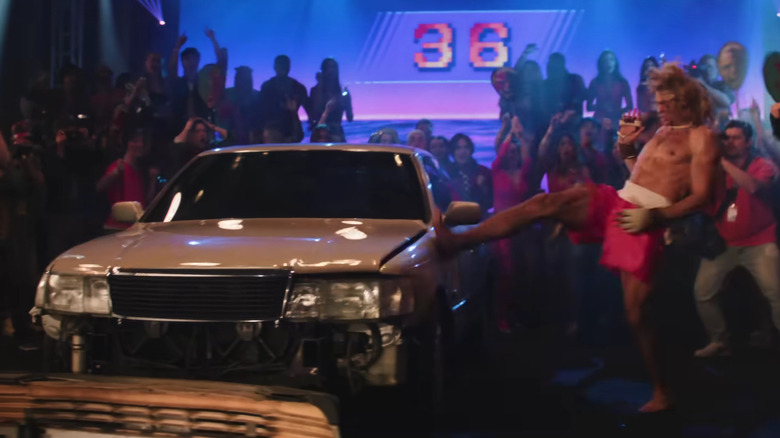
Speaking of cars, there's one particular vehicle that every "Street Fighter II" player will recognize: The bonus stage car that the characters have to break down with their attacks within a given time limit (it's even shown up in other Capcom games). That car has taken a terrible beating over the years, and the newest "Street Fighter" film doesn't offer the thing any respite.
The car side quest makes an appearance during Ken's gloryhunter montage, where the character hits and kicks the poor automobile into oblivion as one of his many publicity stunts. It's an extremely short scene that's wholly unnecessary in the grand scheme of things, narratively speaking — but if you've played "Street Fighter II," it's more than enough to make you smile and nod. And isn't that what best Easter eggs are all about?
So many 1990s Easter eggs
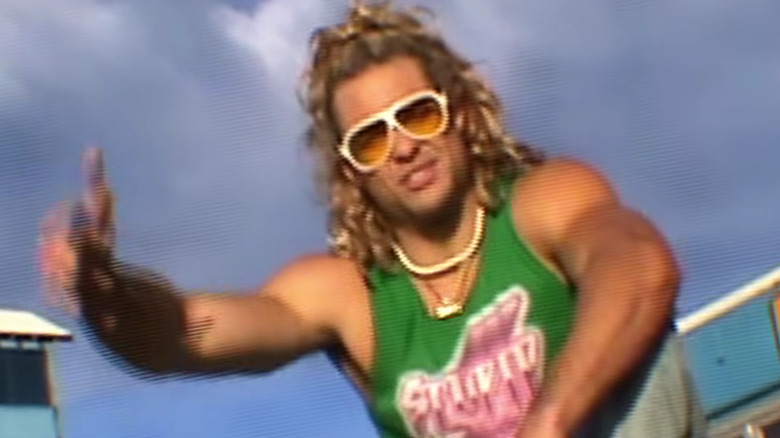
The majority of "Street Fighter" takes place in 1993, and the movie's soundtrack reflects the era — in particular, the (infamous) 4 Non Blondes song "What's Up," which serves as an important male bonding tune between Ryu and Ken. However, the nostalgic music is just one of the ways in which the 1990s kids get to eat their fill over the course of the film.
Ken's storyline, in particular, has numerous references to iconic 1990s institutions. We see glimpses of his "A Day in the Life" episode on MTV, and his tendency to shill products is a recurring early joke: At various points, Ken advertises Jolt Cola and Duracell batteries, and there's even discussion of a Ken-themed Taco Bell Gordita Crunch. Dan Hibiki even name-drops "Skinemax," the popular 1990s moniker for Cinemax, which was in the habit of showing softcore movies at the time. Sprinkling in these little details helps give the movie's world a lived-in feel.
Dan Hibiki's pink gi
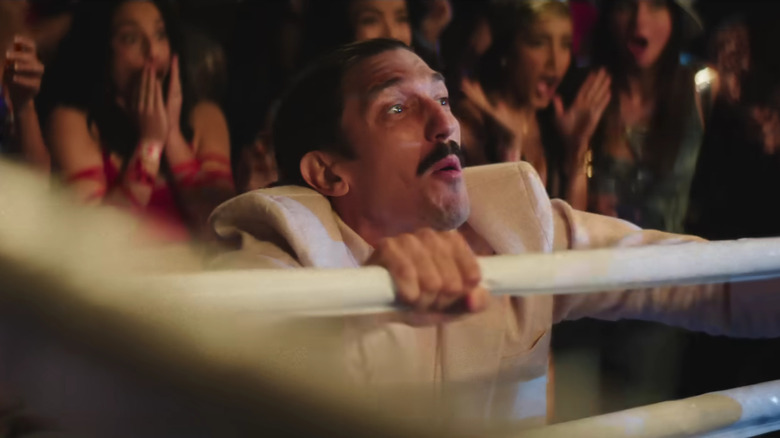
Dan Hibiki is a joke character in the Street Fighter franchise, but the movie reimagines him as Ken's manager and legitimate friend. Outside combat, his biggest failing is his complete inability to get along with Guile. Late in the game, though, we do see that he's quite useless as a fighter, as he tries and utterly fails to go up against Akuma.
When Dan gets (or attempts to get) real in the endgame, he ditches his nifty suit in favor of his famous pink karate gi. Here, we also find out precisely why said outfit is the color it is: Dan's gi is originally white like Ryu's, but he accidentally washed it with Ken's bright red outfit. This is a reference to the video game Dan's backstory. That version is equally useless with laundry, though the reds he mixed his gi with aren't Ken's in the games.
Bison pays homage to the late, great Raul Julia
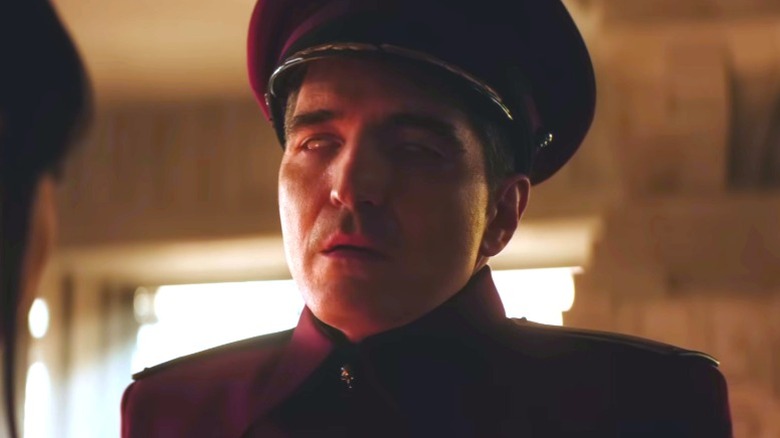
When it comes to acting, David Dastmalchian has by far the hardest gig in "Street Fighter." He's not only the main villain, but he portrays Lord M. Bison at a stage where the villain is still on his way to full power — and the last guy who played the role was the late, great Raul Julia, who's easily the best part of the 1994 "Street Fighter" movie.
To his credit, Dastmalchian doesn't even attempt to replicate Julia's scenery-chewing performance as the dictator. Instead, his Bison is an openly perverted creep who exists to make people uncomfortable and whose mission in life is to find shortcuts to attain his coveted Psycho Power. Even so, the 2026 movie does pay homage to Julia with a version of his character's most iconic line.
In the 1994 movie, Bison delivers an all-timer when Chun-Li (Ming-Na Wen) is shocked that he doesn't even remember attacking her village and killing her father. "For you, the day Bison graced your village was the most important day of your life," he retorts. "But for me, it was Tuesday." Dastmalchian gets a very nice remix on the theme when he beats Chun-Li with a Psycho Crusher. "For you, it's the day you die," he says. "For me, it's Tuesday." It's a fun way to connect two talented actors playing the same character over three decades apart — and perhaps a confirmation that Tuesday likely continues to be Chun-Li's least favorite day of the week.
There's a reason Guile and Dhalsim are buddies
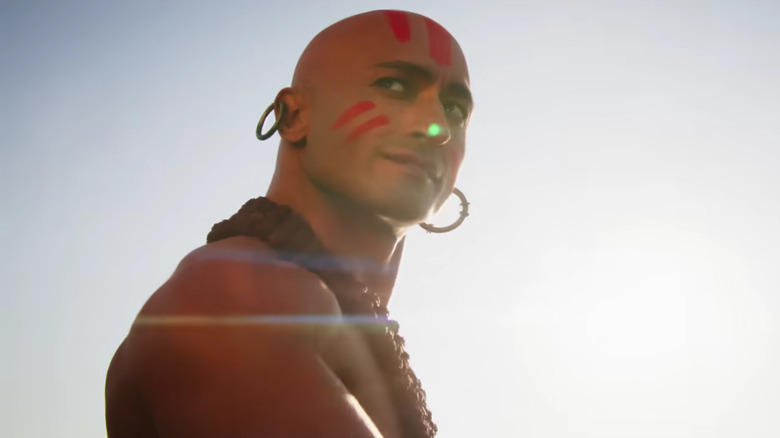
The "Street Fighter" movie shows that the majority of the World Warriors know each other in one way or another. Befitting his status as a military man with access to plenty of intel, Guile acts as the primary character who relays this information. More often than not, the film drops these personal relationships in the form of casual conversation that shows that the characters have old history — but Guile's relationship with Dhalsim gets more attention.
The film depicts American Air Force jock Guile and Indian yogi Dhalsim as great, if slightly mismatched, friends. They have worked (and apparently still work) together on peacekeeping missions, and they share a friendly rapport and mutual respect. While this is a slight remix of their relationship in the games, it's also a direct nod to their canon friendship. In the game series, Dhalsim's son and Guile's daughter are friends, which means that the two fathers are also buddies who hang out every once in a while.
There's a reason Chun-Li and Vega fight
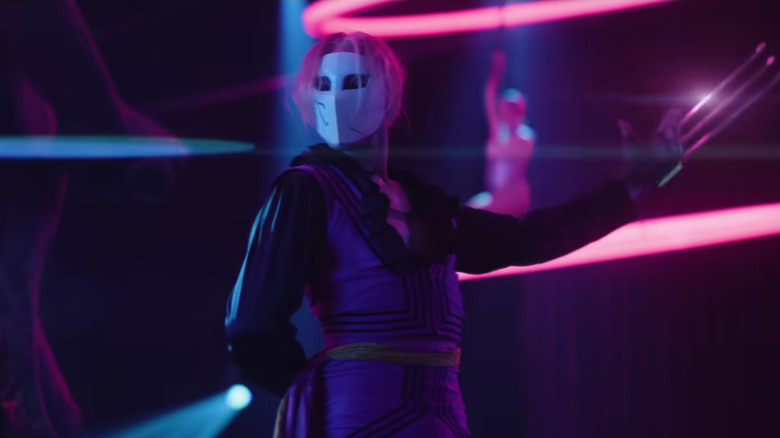
Chun-Li and Vega (Orville Peck) enjoy a very hostile relationship in "Street Fighter." This culminates in a big battle where the former faces both the latter and Juli (Rayna Vallandingham). Chun-Li comes out on top after a hard-fought and brutal fight — which might just seem familiar to fans who have seen "Street Fighter II: The Animated Movie."
The pair's animosity, you see, has history. In fact, it seems to be a reference to the 1994 animated film, which depicts Vega as an assassin who tries and fails to end Chun-Li's life. The battle in the 2026 movie even references and replicates several beats from the 1994 fight. Perhaps most notably, the finish where Chun-Li drives Vega into a wall with a brutal lightning kick barrage and messes up his face is a fairly clear homage to the end of their fight in "The Animated Movie."
That Charlie name-drop
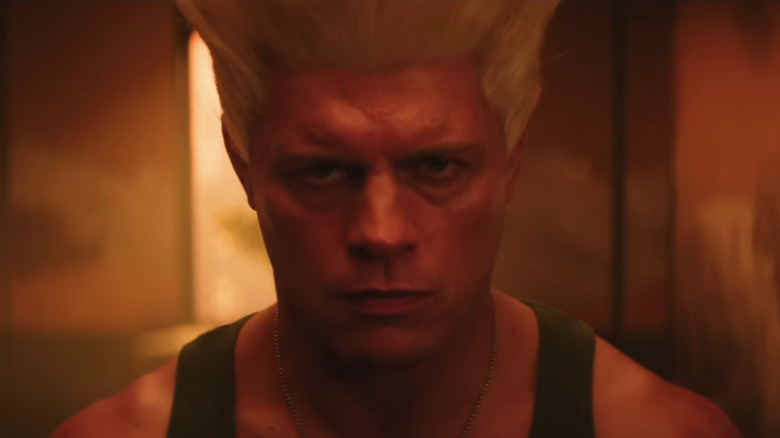
During the club scene where several of the fighters are introduced, we see Guile trying to talk a club dancer's ear off. During this very one-sided conversation, he mentions his best friend, Charlie. This is a brief, but fairly important moment that lets us know quite a bit about both Guile himself and Charlie Nash.
Charlie is an important figure in Guile's backstory. Before he eventually joined the ranks of the World Warriors, he was a victim of Bison in the games. He also infamously got turned into the monstrous Blanka (as played by Robert Mammone) in the 1994 live-action movie. Avenging Charlie is a massive part of Guile's most traditional motivation, and contributes to his stern attitude in the games.
Here, it's implied that Charlie is alive and well. This keeps his role as Guile's best friend intact, but it also befits Guile's depiction as a more happy-go-lucky character. After all, Guile doesn't have reason to fight for revenge at this point, so he can afford to be a lighter and more comedic figure.