

5 Best Gregory Peck Western Movies, Ranked
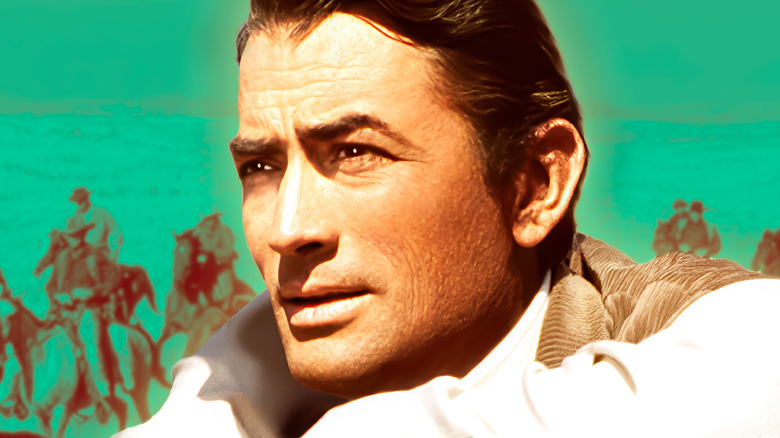
Gregory Peck was a fascinating silver screen legend. Examining every Gregory Peck movie, from the worst to the best, it's clear that, even as a young man in his earliest mid-1940s performances, Peck always exuded big wise elder energy. With that commanding voice and stoic demeanor, it was impossible to imagine Peck being drunk, ribald, or not in the right in any given situation.
In some ways, he was the classical, squeaky-clean portrait of masculinity that the realistic contours of the New Hollywood movement were meant to counter. Even if Peck's performances weren't exactly everyday souls who could flourish in neo-realist settings, his ability to captivate one's attention was unquestionable.
Gregory Peck was a transfixing personality whose most seminal performances thrived on his distinctive brand of assuredness and wisdom. Some of his cinematic exploits even took him to the Western genre, a realm most leading men who were popular in the '50s and '60s inevitably visited (often repeatedly). Today, his legacy in this genre is largely defined by these five excellent offerings, ranked from "least best" to greatest based on their average Letterboxd ratings.
Each of these films functions as an excellent display of the idiosyncratic acting qualities only Gregory Peck could properly realize. But they're also so good that they each have plenty of other artistic triumphs that don't even involve Peck. Best of all, each of these five Western gems let viewers savor the ways Gregory Peck excelled as an artist and left an eternal impression on cinema.
5. How the West Was Won
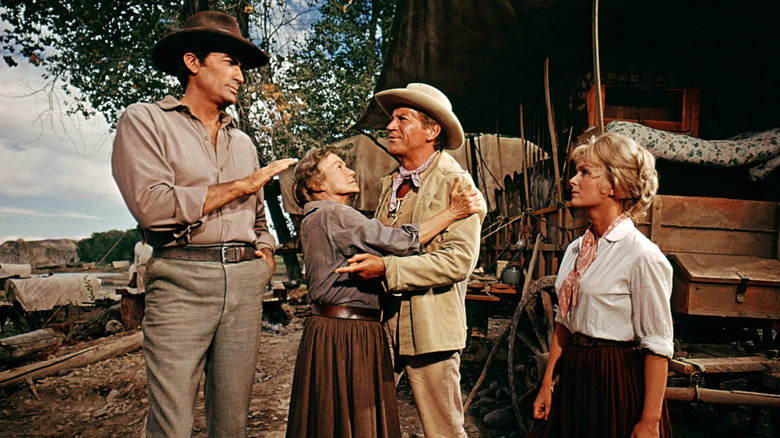
The very title of 1963's "How the West Was Won" is some weird colonizer nonsense, as this sprawling epic directed by Henry Hathaway, John Ford, and George Marshall follows a deluge of white settler Americans throughout the 19th century, with characters like Linus Rawlings (Jimmy Stewart) and gambling expert Cleve Van Valen (Gregory Peck) being the story's most prominent characters. The film's very classical aesthetic inevitably means that "How the West Was Won" indulges in some harmful Western tropes, including reductive portrayals of whatever Indigenous individuals appear on-screen.
The 3.5 average Letterboxd rating for "How the West Was Won" is informed by reviews that point out how the film hasn't aged well, but not necessarily because of its political material. Instead, many of the reviews note that the cinematography, which was meant to take advantage of the then-current and expansive Cinerama camerawork and projection, doesn't translate very well to 21st century at-home viewing. Others note that the characters aren't especially compelling, which leaves even legendary performers like Peck a bit adrift. Still, other Letterboxd users found "How the West Was Won" and its epic scope to be enduringly appealing, even when not projected on a massive screen.
Given how many behind-the-scenes artists and actors united to create this movie, it shouldn't be a surprise that "How the West Was Won" threw enough darts to hit a bullseye for certain Letterboxd patrons.
4. The Bravados
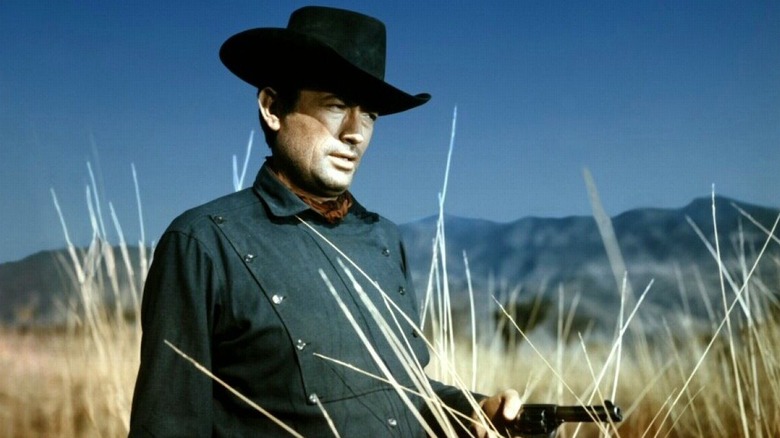
Usually, people don't get all giddy about imminent slayings. However, Jim Douglass (Gregory Peck), the lead character of 1958's "The Bravados," is elated that a quartet of men are preparing to meet the gallows since he's convinced they're the ones responsible for his wife's murder. Alas, all four men escape the noose, inspiring Douglass to round up a search party to take the quartet down. Like so many of the Westerns you need to see before you die, "The Bravados" is fascinated by revenge. Given that Jim Douglass is set on bringing four different human beings to justice, "The Bravados" has plenty of room to explore that concept.
With an average 3.7 rating, director Henry King's "The Bravados" is still cultivating new fans. Part of its enduring reputation comes from the film's anchor, Peck, who always exudes a reliable screen persona with a believable authoritative aura. Many of the most positive reviews hail the film for making such inspired use of Peck's powerful presence. Meanwhile, the grim ambiance of the movie also seems to have taken many Letterboxd users by surprise in the best possible way.
Committing to such a bleak aesthetic ensures Peck and other stars like Lee Van Cleef can dig into some juicy, haunting material — starting with Jim Douglass and his relief at seeing four men on their way to becoming corpses.
3. Yellow Sky
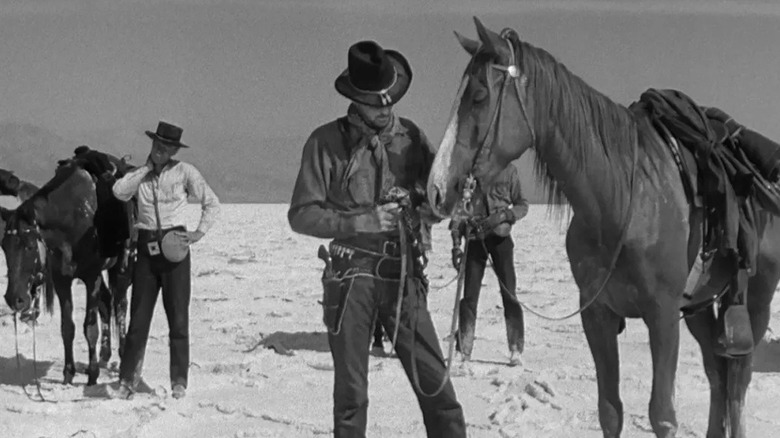
1948 delivered some of the absolute best movies of the 1940s, including "Bicycle Thieves," "Drunken Angel," and "The Treasure of the Sierra Madre." Though not quite as influential or famous as some other titles dropping that year, the Gregory Peck star vehicle "Yellow Sky" became another beloved feature from 1948. Peck portrays a more wicked character here than one might expect from the man so famous for his compassion in "To Kill a Mockingbird." He plays James "Stretch" Dawson, the leader of some criminals who end up hiding in a largely abandoned town save for two resilient residents, a lady and her grandpa.
One of Dawson's men concocts a scheme to kill these remaining denizens and grab the nearby gold, a plan Dawson refuses to sit idly by and watch unfold. That's the classically heroic Gregory Peck everyone knows and loves. "Yellow Sky" has a solid 3.7 average rating on Letterboxd, with much of that rating coming from the production's grim tone. Despite being a Hays Code-era Western, "Yellow Sky" isn't afraid to delve into thorny moral complexities that many Letterboxd users found compelling.
Peck's gruff ambiance also proved a perfect fit for "Yellow Sky," accentuating director William A. Wellman's ominous aesthetic. There are lots of great 1948 movies out there, but die-hard Western fans would be wise to watch "Yellow Sky."
2. The Gunfighter
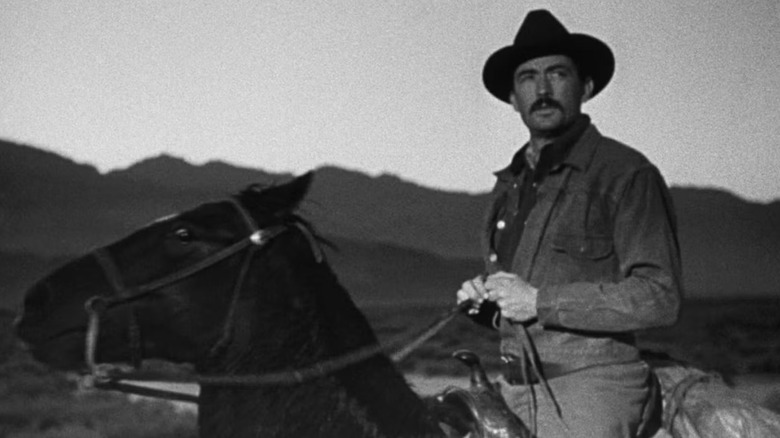
Like so many of us these days, Western protagonist Jimmy Ringo (Gregory Peck) is tired. He's a man known far and wide throughout the Wild West as a legendary gunslinger. Everyone is prone to challenge him and try to best him at this bullet-ridden game, yet Ringo has no interest in hearing more guns go off and putting another body into the ground. All he wants is his family and to put this legacy behind him. Yet while attempting to make good with his wife, Peggy (Helen Westcott), his reputation just keeps following him. Given how relentlessly the world keeps reminding him of the past, it's no wonder Jimmy Ringo is exhausted.
"The Gunfighter" has a four star average rating on Letterboxd, an impressive feat chalked up to how well it explores the kind of remorseful themes that often populate Westerns. This is a genre rife with titles about men contending with their blood-stained legacies and mortality, and those thematic fixtures of the Western are everywhere in "The Gunfighter," which filters such concepts through a haunting tone and Peck's emotionally potent performance. Just watching him sit alone at a saloon table with his head tilted down is enough to achingly convey Jimmy Ringo's yearning to escape this pervasive and grisly reputation.
The past won't abandon him, though, and while that makes for a trying (and exhausting) existence, it also secures the placement of "The Gunfighter" on our list of the best Western movies of all time.
1. The Big Country
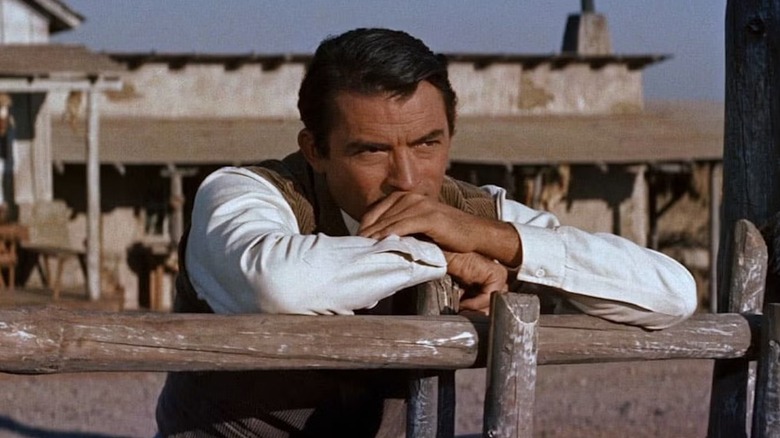
Director William Wyler's impressive filmography spanned many different genres, but he's got a special place in the heart of moviegoers for his forays into the Western, which included helming one of Gary Cooper's five best Westerns. In "The Big Country," Gregory Peck plays Captain James McKay, who, while trying to enjoy his retirement, ends up in a duel over resources with people like Rufus Hannassey (Burl Ives). Typically for a Peck protagonist, McKay would rather settle this whole matter with words and compromises rather than bullets. But this doesn't sit well with everyone around him, who crave more visceral forms of justice and retribution.
With an average rating of four stars on Letterboxd, "The Big Country" clearly still holds sway over audiences with its expansive approach to Western storytelling. It's clear from the film's reviews that Wyler's dedication to exploring many weighty themes over its 167-minute runtime — including American society's definition of "proper" masculinity — engrossed most Letterboxd users despite the title's lengthy narrative approach.
Better yet, several reviews hail "The Big Country" as a dazzling showcase for how assured and confident Wyler had become as a director, with some of his most lauded visuals scattered throughout this endeavor. Then there's Peck, also the centerpiece of many positive Letterboxd posts. All these raves make it no surprise that both Wyler and "The Big Country" remain iconic.