

5 Best Gary Cooper Western Movies, Ranked
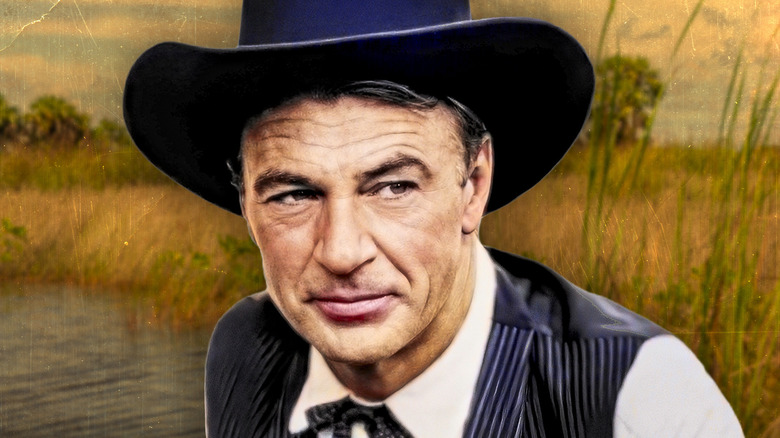
"Whatever happened to Gary Cooper? The strong silent type." Tony Soprano's wistful comment on the lack of Gary Coopers in the modern world is easy to understand given how many great movies this actor headlined. In his career, Cooper worked with a deluge of beloved filmmakers (from William Wyler to Ernst Lubitsch to Frank Capra, among many others) and anchored many more beloved movies that are still talked about to this day. Among other feats, Cooper's commitment to such a fascinatingly restrained screen persona made him a compelling contrast to other actors of the early 20th century.
One of Cooper's many great legacies was anchoring a slew of beloved Westerns. For a while, he was a staple of the genre, and the sheer amount of films he starred in ensured that the five greatest Gary Cooper Westerns of all time (ranked below from "lowest" to highest average Letterboxd rating) reflect his sterling track record in this space. They also capture how Cooper constantly intertwined himself with acclaimed filmmakers and other sublime actors with their own legendary personas.
If you're also lamenting the lack of Gary Cooper-types in the modern world, then behold the five best Westerns from a fixture of not just the genre, but many of the best Western movies of all time. Tony Soprano's surely seen one or two of them more than once.
5. The Westerner
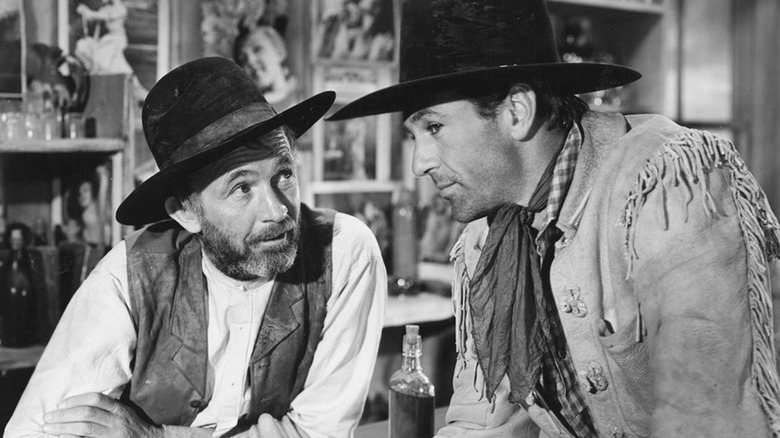
Not even a legend like Gary Cooper is arguably the most notable actor in 1940's "The Westerner." That honor would go to supporting player Walter Brennan, a staple of the this genre famous for, among other feats, appearing in a number of classic Westerns that would be perfect for a remake. Brennan's work in "The Westerner," though, wasn't just another Old West notch on his filmography. It also scored him his third Oscar win, making him one of only eight performers in the history of cinema to win three or more Academy Awards for acting. Following his Oscar victories in titles like "Come and Get It" and "Kentucky," "The Westerner" solidified Brennan's place in Oscar history.
Beyond that, director William Wyler's "The Westerner" has garnered a solid reputation on Letterboxd with a 3.6 average rating. Cooper played Cole Harden, who begins rebelling against a corrupt judge after being erroneously accused of horse thievery. Letterboxd reviews of this title hail Brennan's compelling work as that nasty judge, with Cooper's leading man performance also praised. While some reviews admit that "The Westerner" treads familiar Western movie narrative terrain, most saw its sharp visuals and stellar performances as enough to mitigate those shortcomings.
This wouldn't be the last time Cooper and Wyler worked together (1956's "Friendly Persuasion" would also unite them), but the general reception to "The Westerner" on Letterboxd indicates that this film was a mighty fine inaugural collaboration for the duo.
4. Vera Cruz
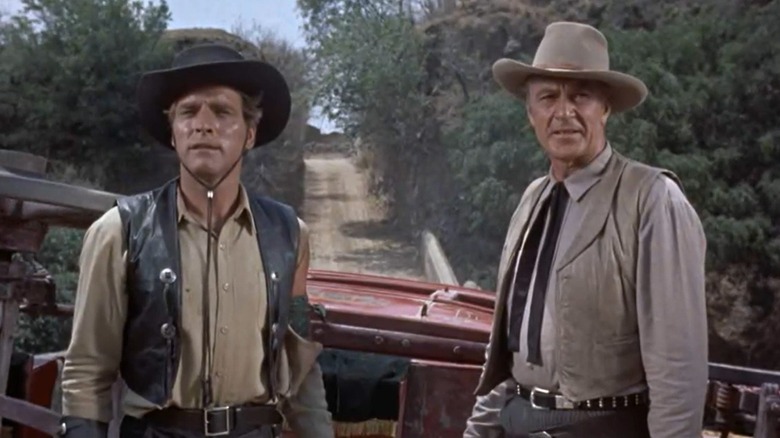
Though he directed a pair of movies before this, 1954's "Vera Cruz" was the major breakthrough title for director Robert Aldrich, who'd subsequently helm seminal productions like "The Big Knife," "What Ever Happened to Baby Jane?," and "The Dirty Dozen." This outing saw Gary Cooper playing Ben Trane, a mercenary who works with Joe Erin (Burt Lancaster) to move what turns out to be a treasure trove of gold coins (along with a countess) across Mexico. As anyone whose seen "The Treasure of the Sierra Madre" or similar movies knows, nothing instills distrust and chaos in people more than gobs of money that you have to split with other folks.
This union between Cooper and Lancaster has a 3.6 rating on Letterboxd, a reputation buoyed by some extremely positive reviews that declare the film to be an extraordinary work that encapsulates everything people love about vintage entries in this genre. The absolutely stacked cast (which also included Charles Bronson, Ernest Borgnine, Cesar Romero, and many others) is also a critical element underlining many of the positive "Vera Cruz" reviews. While a handful of Letterboxd write-ups lamented that the film felt trapped between classical and revisionist Western sensibilities, most "Vera Cruz" reviews on the site are upbeat.
Burt Lancaster's cinematic achievements, like anchoring one of the best prison movies of all time, are endless. With his acclaimed work in "Vera Cruz," however, he held his own against Gary Cooper and helped Robert Aldrich establish his legendary career.
3. The Hanging Tree
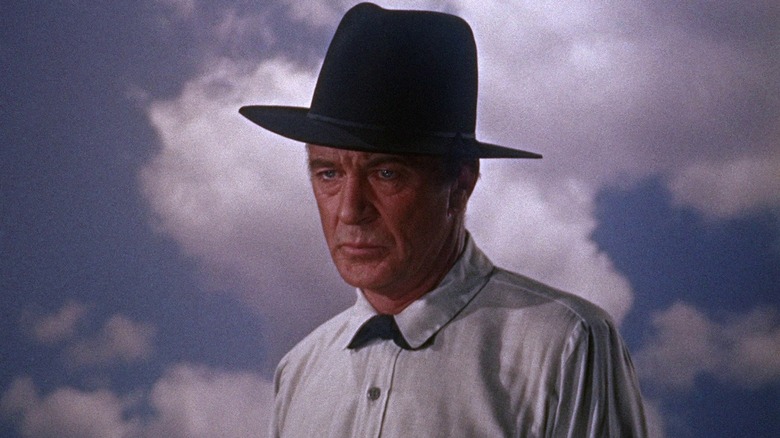
Directed by Delmer Daves and based on a 1957 novelette of the same name by Dorothy M. Johnson, "The Hanging Tree" finds Gary Cooper playing Dr. Joseph Frail, who tries starting a new life in Montana with Elizabeth Mahler (Maria Schell). Their potential tranquility doesn't last long: After Elizabeth experiences a traumatic attack, Frail ends up encountering more problems, some of which stem from his dynamic with a man, Rune (Ben Piazza), he previously saved from being hanged.
With an average Letterboxd rating of 3.7, users were astonished by how effectively "The Hanging Tree" explores its characters in such empathetic and insightful fashion. Frail and company aren't just vessels to create derivative Western movie set pieces. Instead, Letterboxd users praised how much depth and humanity is imbued into these characters by the array of tremendous performances. The movie's non-sensationalized perspective regarding the Montana Gold Rush and and the way the film reflects key themes of Delmer Daves' filmography were also widely acclaimed on the platform.
All in all, "The Hanging Tree" assembled a phenomenal cast for an atmospheric and evocative work that's significantly more in touch with reality than many '50s Westerns. Its Letterboxd reviews suggest few will leave "The Hanging Tree" disappointed.
2. Man of the West
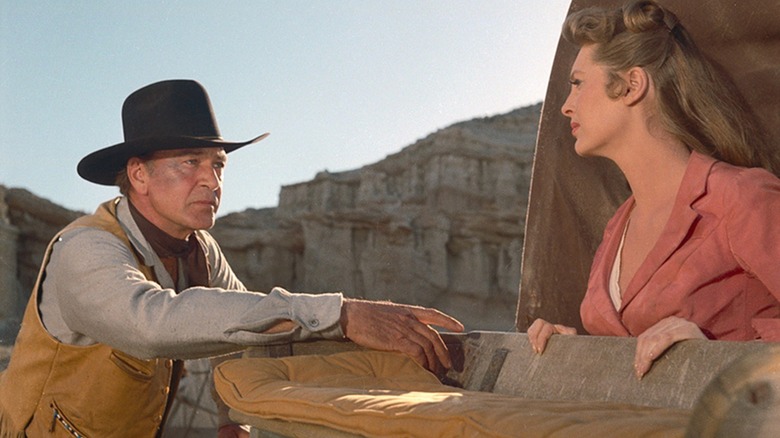
What better way for Gary Cooper to solidify his prominent presence in 1950s Westerns than headlining a film called "Man of the West?" Cooper's Western exploits may not have been quite as famous as, say, Clint Eastwood's best Westerns, but he was clearly garnering an immense enough reputation in the genre that headlining something called "Man of the West" didn't feel like an ego trip. The film came courtesy of director Anthony Mann, a figure famous for helming subversive '50s Westerns such as the Jimmy Stewart star vehicles "The Man from Laramie" and "The Naked Spur."
Cooper played Link Jones, a former outlaw trying to start a new life that includes fresh pals like crooner Billie (Julie London). Unfortunately, if he wants to protect his new connections and carve out a future for himself, he must join his nefarious uncle, Dock Tobin (Lee J. Cobb), and some thieves for an illegal operation. "Man of the West" has a 3.7 average Letterboxd rating, a score the site's user reviews chalk up to this project effectively continuing Mann's darker exploration of Western movie archetypes and the film's evocative depictions of the past crashing into the present.
Cooper's work in the lead role also garnered praise, an impressive feat given how he could have just sleepwalked through this role after anchoring so many '50s Westerns. Instead, Cooper reaffirmed why he could so naturally play a "Man of the West."
1. High Noon
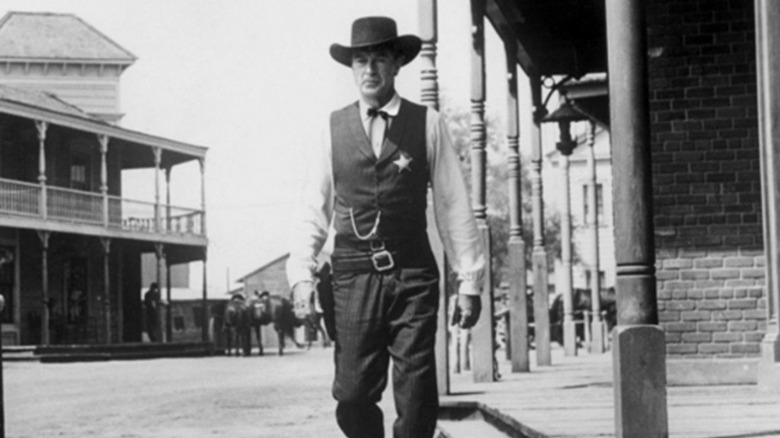
One of the biggest best picture Oscar snubs of all time is easily "High Noon" losing out on that trophy back in 1953. This remarkable film felt so entrenched in classic Westerns yet was totally its own, more contemplative beast that dared to confront the here-and-now (via a story commenting on Red Scare paranoia). That the longforgotten "The Greatest Show on Earth" beat it out is insane. However, regardless of what Oscars it did or didn't win, "High Noon" remains magnificent. It can proudly hold its head high alongside the very best movies of the 1950s.
Gary Cooper portrays Marshall Will Kane, who's forced to reckon with a group of incoming outlaws alone since everyone else in town is too terrified to stand with him. Placing Cooper's stalwart nature in a situation so vividly ripped from reality was a stroke of genius. Not only did it make Kane an absorbing character, but it also heightened the tragedy of this man being left to fend for himself against villainy. If nobody is willing to stand alongside someone with Gary Cooper's temperament, then the stakes must be staggeringly high.
Cooper delivers magnificent work that won him his second acting Oscar. Long after chatter over 1952-1953 award season snubs vanished, "High Noon" and Gary Cooper's performance still mesmerize.