
5 Best Horror Movies About Haunted Houses, Ranked
We may receive a commission on purchases made from links.
If you love movies about things that go bump in the night, then you'll love the following five titles in our list — the greatest haunted house movies ever made, which all need to be seen at least once by every horror fan. These are among the most influential films that have shaped the modern genre, every bit as unsettling today as they were when they were originally released, with almost every single one featuring little-to-no violence or onscreen gore.
And they're all the more terrifying for it. At least with a slasher villain, you know how to defeat them; with a supernatural entity in your home, there's little you can immediately do to stop the haunting. There's a reason the greatest haunted house masterpieces haven't aged a single day since release, no matter how extreme the rest of the horror genre becomes.
To choose the titles for this list, we looked only at those with the highest ratings on both Letterboxd and IMDb, whittling that selection further by choosing the five titles we feel remain the most beloved by horror fans and most influential among genre filmmakers. As this is explictly a list about horror movies, paranormal stories from other genres were ineligible, because there are no Ghostbusters to call when something strange happens in any of the neighborhoods these movies are set in. With those criteria in mind, here are our picks for the ultimate haunted house movies.
5. The Evil Dead
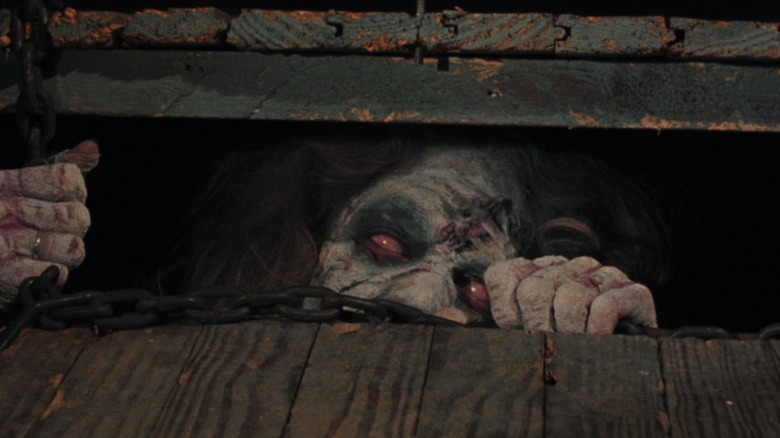
We've excluded horror comedies from this list, which means that Ash Williams' (Bruce Campbell) return to the Knowby Cabin in Sam Raimi's superior sequel "Evil Dead II" is ineligible, as it transforms the same premise into a madcap comedy. Raimi's groundbreaking 1981 debut "The Evil Dead" shows signs of the blackly comic touches that would characterize his distinctive style throughout his career, but is a far more nihilistic movie than most people remember, far bleaker than the cultural reputation that its slapstick sequels garnered would suggest.
The infamous tree sequence is singled out for being a mean-spirited outlier, but this is overall far crueler to its protagonists than later "Evil Dead" movies, where the comic levity effectively rewrites the Deadites summoned by the Necronomicon into little rascals rather than depraved existential threats. With all that being said, "The Evil Dead" remains one of the best horror debuts of all time, only slightly less impactful than on its original release because we now know the distinctive horror-comedy style Raimi would later perfect and can only see brief glimpses of here.
That's not a knock on this movie, and throwing the context of the director's career arc aside, it stands out as one of the darkest haunted house movies ever made; no character is spared, and the laughing Deadites take care of them in various depraved ways. It remains effective as a masterclass on how to create gory creature horror on a low budget, twisting a familiar premise into something a lot more visceral — and rewriting the horror rulebook in the process.
4. The Others
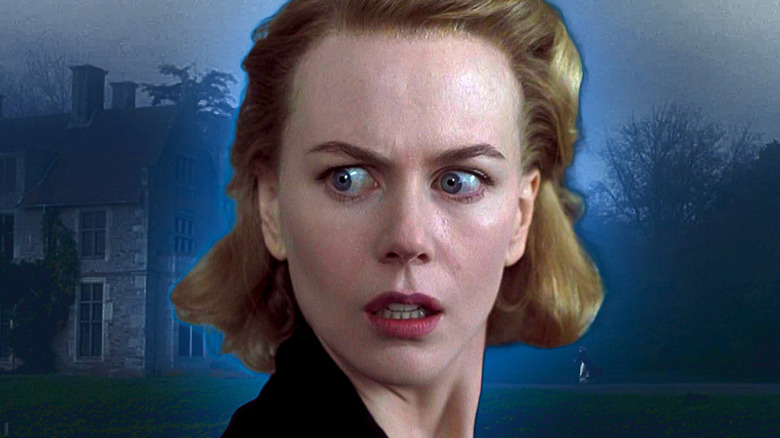
In the wake of "The Sixth Sense," it felt like Hollywood was desperate to replicate its success by giving the green light to countless more ghost stories with unexpected twists. The only one of those that's stood the test of time is 2001's "The Others," writer-director Alejandro Amenábar's old-school supernatural drama which managed to find a brand new perspective within a well-worn genre.
As a result, "The Others" was more than just its ending — with its left-field plot turn — as the filmmaker studiously updated the atmospheric chills of major influences like "The Innocents" for a new generation, with lavish period production design helping to further absorb audiences into the slow-burn mystery. Watched now, it'll make you yearn for more modern haunted house movies that have something more to offer than jump scares.
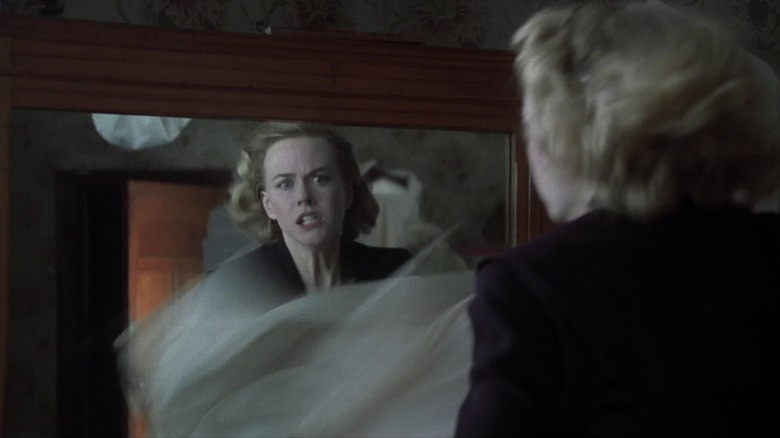
Nicole Kidman's Grace Stewart was more richly drawn than the run-of-the-mill scream queen, living in a mansion in 1945 Jersey, an island between Britain and France that was occupied by the Germans until that year. Living in complete darkness due to two children (Anne and Nicholas, played by Alakina Mann and James Bentley) with photosensitivity issues, things turn darker still when Anne claims to have been visited by a little boy in the middle of the night.
Proof that the house is haunted keeps piling up, and evidence that there was a tuberculosis outbreak on its grounds several decades earlier seems to support this, but Grace's Catholic faith comes into conflict with the facts. It builds up to a simple but effective third-act rug pull that recontextualizes the whole movie without detracting from it; it holds up to rewatches because of its sustained creepy atmosphere, even if you know where the story is headed.
3. Poltergeist
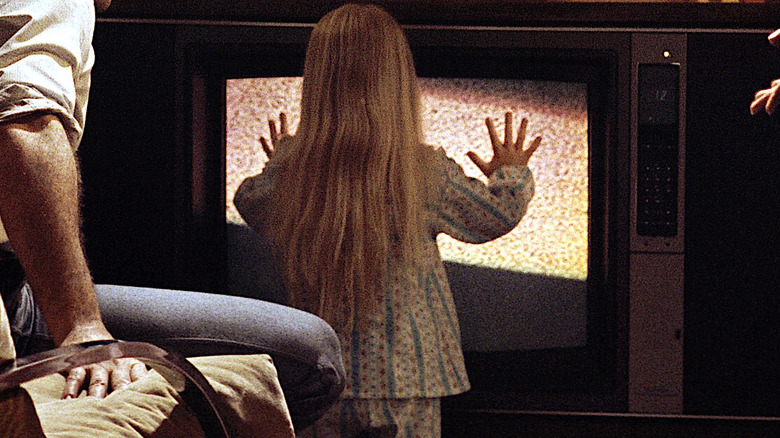
After the gruesome thrills of "The Texas Chain Saw Massacre," director Tobe Hooper left the slasher genre behind to make a more old school fright fest with 1982's "Poltergeist." Leatherface and the Sawyer family felt a million miles away from the idyllic California suburb of Cuesta Verde where the Freelings reside, a picture postcard vision of middle-class suburbia that could only have come from co-writer and producer Steven Spielberg — although the lingering dread that follows couldn't be mistaken for anybody but Hooper.
When youngest daughter Carol Anne (Heather O'Rourke) starts speaking to TV static, strange coincidences begin happening, with any narrative parallels to the sci-fi wonder of Spielberg's "Close Encounters of the Third Kind" twisted until they're unrecognizable. The biggest thing Hooper and Spielberg have in common is an obsession with family units on the brink of breakdown; there's little wonder people still claim that Spielberg was a ghost director on the project.
Originally released with a still-baffling and inappropriate PG rating (the MPAA had given it an R before Hooper and Spielberg intervened), "Poltergeist" limits the gore to push classic supernatural thrills to their boldest, scariest extremes. Several generations later, few haunted house movies have rivaled it for intensity, even if they've increased the amount of graphic violence depicted. You can feel the influence of "Poltergeist" all over the recent wave of PG-13 haunted house horror films like "The Conjuring" franchise, which also take pains to foreground the drama of the affected families, but can never match up to Hooper's movie in terms of pure thrills.
2. The Innocents
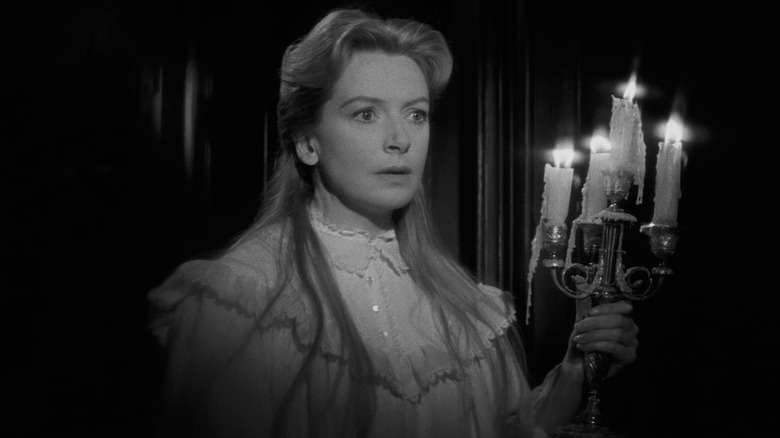
The best adaptation of one of the greatest horror novellas of all time — Henry James' "The Turn of the Screw" — director Jack Clayton's "The Innocents" remains a pioneering work because of the contrasting approach of its two co-writers. William Archibald had previously written a stage adaptation of the story that made it explicit that the Bly estate was haunted, and that the two children in Miss Giddens' (Deborah Kerr) care were being possessed by an unseen force.
Clayton wasn't too enamored with this reading upon receiving Archibald's screenplay, so he hired Truman Capote to make things more ambiguous and sow the seeds of doubt among the audience as to whether the children's behavior and other unusual phenomena were all a result of seeing the story through the eyes of an unreliable narrator. More than 60 years later, 1961's "The Innocents" remains a rich text to unpack on this level, but any academic reading wouldn't mean a thing if it weren't so viscerally haunting on the surface.
This is largely thanks to two of the greatest child acting performances we've ever seen — particularly that of Martin Stephens, who plays older brother Miles, a recently expelled schoolkid whose unsettling behavior lends credibility to Miss Giddens' theory of possession. Clayton and Capote keep events cryptic enough that you can come away from successive viewings with completely opposing perspectives on what is going down behind the manor's closed doors, which is why "The Innocents" has stood the test of time. It's a slippery work designed to be obsessively rewatched and debated, never losing its eerie impact no matter how many times you see it.
1. The Haunting
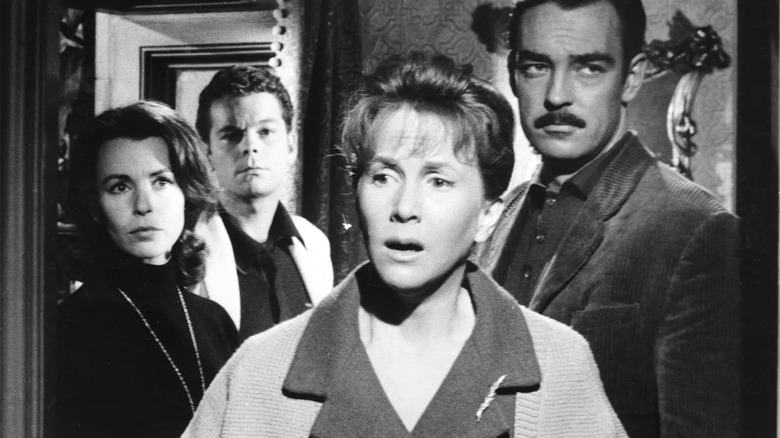
Now regarded as one of the best horror movies of all time, with Martin Scorsese even naming it as his No. 1, director Robert Wise's adaptation of Shirley Jackson's "The Haunting of Hill House" was divisive upon its original 1963 release. Wise and screenwriter Nelson Gidding loved the novel, but the latter came to view its horrors as non-literal, emphasizing a possible mental breakdown reading in his script even as the author told him that the ghosts were very much present in her interpretation.
As with "The Innocents," that tension between the writers gives way to a haunted house story even more effective than its acclaimed source material due to its newfound ambiguities, although this wasn't without controversy. Jackson was rumored to have strongly disliked it, reportedly telling a friend (as published in "The Letters of Shirley Jackson") that on her second viewing, the scariest thing she experienced was getting a parking ticket after leaving the theater.
Mike Flanagan's 2018 Netflix miniseries updated the story, but in our view, it didn't manage to surpass Wise's ahead-of-its-time take on the material. Using pioneering practical effects trickery and a wide-angle Panavision camera that wasn't even ready to be used, Wise and his team created one of the most claustrophobic haunted houses in movie history, ensuring the slow-burning character drama couldn't help but brim with background tension.
Even as the supernatural aspects were rewritten to be left up for debate, Gidding made several undercurrents from the novel more explicit, including pioneering lesbian representation that actively fed into the growing character conflicts. Audiences weren't ready for a character-driven ghost story after years of funhouse thrills, but "The Haunting" has aged into becoming one of the genre's most influential works.