

5 Movies To Watch If You Like Tom Cruise's Digger

'Digger" isn't a movie for everybody, but if it was a movie for you, then the following five titles chosen for this list will probably be to your tastes. The apocalyptic Tom Cruise comedy has divided critics (including our own) and audiences, is expected to be the year's biggest box office bomb, and is even rumored to have gotten the two Warner Bros. executives who green lit the project fired. Even if you didn't like the movie, you have to respect the studio going all-in on such a big swing; some films are for the arts, not the charts, and it's a great thing for cinema that such a bold art movie got bankrolled on this scale. If you find yourself on its dark comic wavelength, then you'll appreciate the five uncompromising titles we've picked to complement it below.
We will be discussing some spoilers for "Digger" (for a more detailed dissection, head to our ending explained here) as we unpack some of our recommendations, as the movie's twists and turns recalled a ton of cult titles we never would have predicted before going in. Some of these movies take even bigger risks that didn't initially pay off with audiences, but have aged into under-the-radar favorites, or are on the cusp of being reclaimed after divisive initial reactions. Jump in below, if you're feeling brave enough.
Asteroid City

The first place our mind went to at the 30-minute mark of "Digger," when the film revealed we were watching the final dress rehearsal of a satirical Broadway revival, was director Alejandro González Iñárritu's earlier backstage theatre comedy "Birdman," which similarly focused on the creative troubles of a cast and director struggling to launch a new adaptation of a classic play, peppering in showbiz satire and surreal sequences on the New York streets. Another movie that hid from the marketing that it was stealthily following an acting troupe putting on a show was Wes Anderson's "Asteroid City," his finest film of the past decade.
Marketed as the director's homage to 1950s B-movies, the all-star deadpan comedy about extra-terrestrial sightings in a small desert town was revealed to be a stage production, with Anderson cutting between the genre narrative and a vintage documentary of its making. Bryan Cranston's omniscient announcer ends up appearing within the fictional narrative itself, making the lines between reality and fantasy indistinguishable.
Coming from Anderson, a director whose detractors criticize him for being all-style, no-substance, "Asteroid City" uses its documentary conceit as commentary for why he tells stories in such an elaborate manner, and the heart that lies beneath his hyper-specific deadpan dialogue. Unlike "Digger," Anderson's big swing was positively received, likely because of its more appealing perspective on the art of creation -– it's the feel-good comedy you need after the despair of Iñárritu's.
White Noise
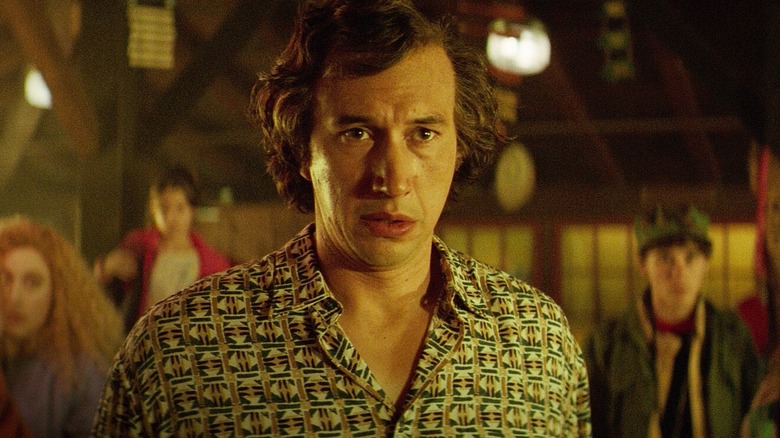
As a Netflix production, there was no way of telling whether Noah Baumbach's "White Noise" – an absurdist comedy based on Don DeLillo's postmodern 1985 novel of the same name – would be the massive box office flop everybody assumed it would be. But the bravery of Netflix for green lighting this satirical disaster movie, poking fun at varying 1980s social anxieties and how they were liberally medicated, for an eye-watering $140 million naturally welcomes parallels to "Digger." Here was a movie with a big budget unafraid of being a turn-off with its darkly comic social commentary.
As played by Adam Driver, a favorite of every director with an expensive but uncommercial passion project on their hands, Jack Gladney is the antithesis of the standard lead of an Amblin family adventure, the primary genre Baumbach aims to subvert. He's a professor of "Hitler Studies" who is growing anxious about his wife's (Greta Gerwig) increasing reliance on a mysterious drug called Dylar, not listed in any official records.
A cloud of toxic waste leads them to evacuate the city, and this sustained action is followed up with an examination of Jack's own fear of death, rendered as a parody of America's anxieties in the nuclear age. It's uncompromising, uncommercial cinema dressed up as a blockbuster; fans of "Digger" will appreciate the big swing.
Southland Tales

After the cult success of "Donnie Darko," writer/director Richard Kelly's sophomore movie was one of the most anticipated of the 2006 Cannes Film Festival -– and one of the most widely panned. If "Digger" was the boldest satire of the Trump 2.0 era so far, then the sprawling, unruly absurdist "Southland Tales" should interest you as one of the most uncompromising takedowns of George W. Bush's second term, imagining a dystopian 2008 in the wake of nuclear attacks on Texas. Kelly's original draft pre-dated 9/11 and was more of a straightforward satire of Hollywood culture. This ballooned into something more ambitious and timely, tackling everything from the war on terror to the surveillance state to climate change anxieties –- and like Iñárritu's movie, the highbrow commentary rubs shoulders with unapologetically lowbrow humor.
This is before even getting into the expansive narrative too dense to summarize here, where the fates of an amnesiac action star (Dwayne Johnson), an adult film actress with psychic abilities (Sarah Michelle Gellar), and the leader of an underground Marxist movement (Seann William Scott) collide after Los Angeles descends into anarchy. Oh, and it's also set against the backdrop of World War III and a mad scientist's efforts (Wallace Shawn) to take over the world with his renewable energy source. There are several layers to "Southland Tales," which grows less confounding as the years pass; in 2006, it looked like Kelly was parodying too much but now feels like he predicted the future.
Dr. Strangelove or: How I Learned to Stop Worrying and Love the Bomb

If you're a cinephile, you definitely thought about Stanley Kubrick's cold war satire throughout "Digger." Along with transforming apocalyptic anxieties into dark comedy, "Dr Strangelove" also seems to have directly influenced some of the characterizations in Iñárritu's screenplay, especially the military chief of staff Fitzgerald (Robert John Burke).
The actor's performance feels like an amalgamation of several paranoid army figures in the war room from Kubrick's masterpiece, and "Digger" even builds up to a clueless government bumbling into nuclear war with Russia. Though inspired by Cold War tensions, but "Dr. Strangelove" remains more relevant than we'd like to admit; the way "Digger" channels its narrative is proof that its ideas remain in the cultural consciousness. Our collective doomsday paranoia hasn't died down, and both movies mine that for dark laughs.
Peter Sellers was Oscar nominated for his portrayal of three very different roles; the titular nuclear war expert with a barely concealed Nazi past, the stiff upper-lipped RAF officer Mandrake, and the bumbling President Merkin Muffley. As with "Digger," it keeps things on the right side of silly to keep audiences from falling into despair seeing world leaders fail to stop nuclear armageddon — but ends on a note that is anything but reassuring. There's a reason it's hailed as one of the great arthouse comedies of all time; "Digger" star Jesse Plemons labeled his movie the modern "Dr Strangelove" for a reason.
You, The Living

When the first trailer for "Digger" premiered, there was chatter about its off-putting visual sensibilities. Despite being released in glorious IMAX and VistaVision, all of its sets possessed a muted color palette, with the ensemble so pale they blended in with the ornately crafted interiors around them. While Iñárritu has denied it being an homage, the style calls to mind Swedish filmmaker Roy Andersson, whose own absurdist arthouse tragicomedies have tackled many of the anxieties of modern life.
The best entry point for newcomers to Andersson's work is his 2007 effort "You, The Living," which was also coincidentally named by Iñárritu as one of the 10 greatest movies ever made in his Sight & Sound poll ballot in 2022. Consisting of a series of 50 short vignettes, it differentiates from "Digger" in using a single static camera shot for each scene, but the washed-out visuals and attentive production design bear striking similarities.
The humor is a lot more deadpan, occasionally breaking the fourth wall (and even into song!), as various sad Swedes unpack their dreams and daily anxieties. It may be uncompromisingly arthouse, but the comedy isn't of the chin-stroking variety; there are multiple belly-laughs throughout, with a man's dream of a magic trick gone wrong -– you'll know the one -– a strong contender for the funniest scene of the 2000s. If you could get onto the wavelength of "Digger," then this is the comic crowd pleaser for you.