

5 Stephen King Adaptations That Completely Ruined The Source Material
Stephen King is responsible for crafting some of the scariest horror stories in recent memory. It's no surprise Hollywood keeps returning to the King well, even to revisit a book that has been adapted before, since there's always a chance to terrify a new generation with his monsters and tragic characters.
Of course, movie studios don't always get it right. Some classic Stephen King movies are unwatchable today, due to poor performances or shoddy effects that can take an audience completely out of a film. But others are blatantly disrespectful to the source material. There are vastly different ways that a movie can disrespect the novel, and some King adaptations fail to understand what made the book so popular in the first place. These movies aren't just bad; they completely ruin the point the novel was trying to make in the first place.
These films misunderstand so poorly what initially drew readers to the novel that they occasionally feel like a completely different story with a Stephen King title attached to it. Fortunately, a bad movie doesn't remove the book from existence, but it's hard not to see these five movies as stains on their respective stories' legacies.
The Dark Tower
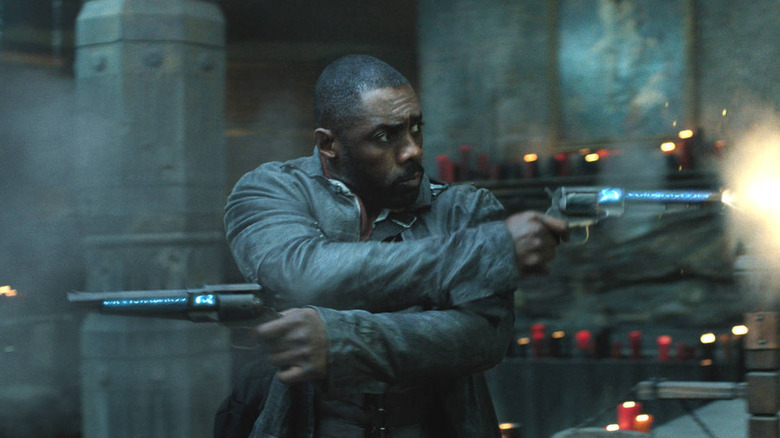
"The Dark Tower" series is one of Stephen King's most ambitious projects. Consisting of eight books — along with some shorter tales and references throughout many of King's other works — it centers around an epic quest in which gunslinger Roland Deschain aims to find the mythical Dark Tower, which holds all realities together. Its destruction would see the end of all worlds, but even that brief synopsis does a disservice to this story. It's a series that blends together Western, sci-fi, dark fantasy, and horror elements with a ton of lore that fans love to dig into.
Yet with all that, 2017's "The Dark Tower" movie couldn't even be bothered to have a runtime surpassing two hours. To be fair, before the film came out, King said it wouldn't be a one-to-one adaptation, but it's astonishing how much the film fails to translate what drew fans to the books in the first place. There's no sense of the scale of Roland's quest or the mythology behind it. Plus the movie is PG-13, so a lot of the violence and horror got toned down to where it might as well have just been a generic action flick, which is what King himself admitted was a big part of what went wrong.
That's far from the only change. Jake Chambers (Tom Taylor), a boy who Roland reluctantly befriends, dies in the book in a profound moment, whereas he's essentially the only main character in the film who lives until the end. And since the story takes place over a series of books, Roland's journey truly starts to feel insurmountable at some point. The movie clearly sets up future installments, but it also feels like it's speed-running through as much of the story as possible. "The Dark Tower" feels more appropriate to adapt to television, so let's hold out hope for that.
The Lawnmower Man
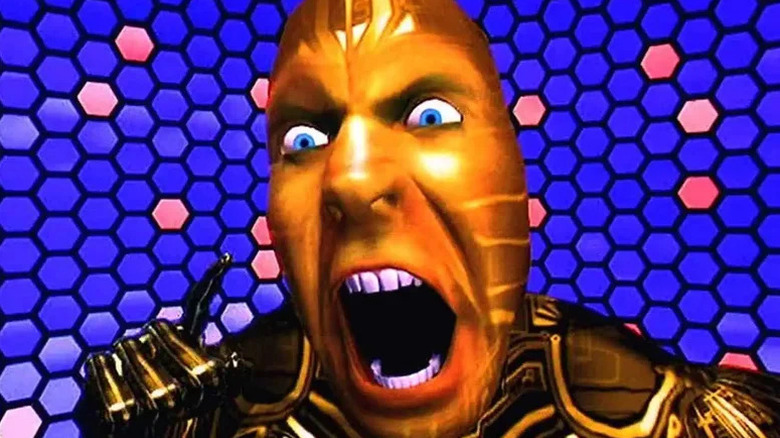
"The Lawnmower Man" is one of the most controversial Stephen King adaptations because it genuinely has nothing to do with the book other than the name. King's satirical short story follows a man who hires a lawn mowing service to tend to his yard, only to discover that the mower worships the Greek god Pan and wants to sacrifice his employer to the deity. It has nothing to do with virtual realities, which is the case with the 1992 movie "The Lawnmower Man."
It turns out that screenwriters Brett Leonard (who also directed) and Gimel Everett originally wrote an original science fiction spec script called "Cyber God." The studio had purchased the rights to "The Lawnmower Man" but couldn't figure out how to stretch the story into a feature-length film. So they merged a couple of elements of it with "Cyber God" and tacked the name onto it.
The only similarity the film has to the story is that at one point a character uses a lawnmower to kill a character. The film follows a scientist who experiments on his gardener with nootropic drugs and virtual reality simulations to enhance his intelligence, but the gardener, Jobe (Jeff Fahey), becomes obsessed within ascending into digital godhood.
King even sued New Line Cinema to have his name removed from the finished product, and that was probably the best decision. Anyone who reads the short story would be deeply confused as to how this film could come from it.
Firestarter (1984)
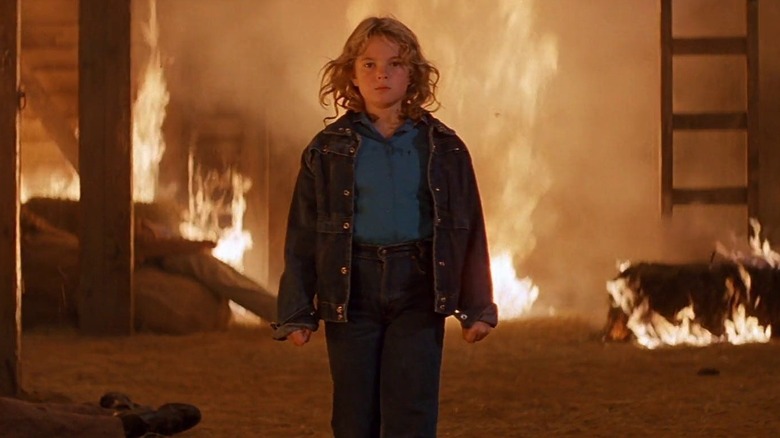
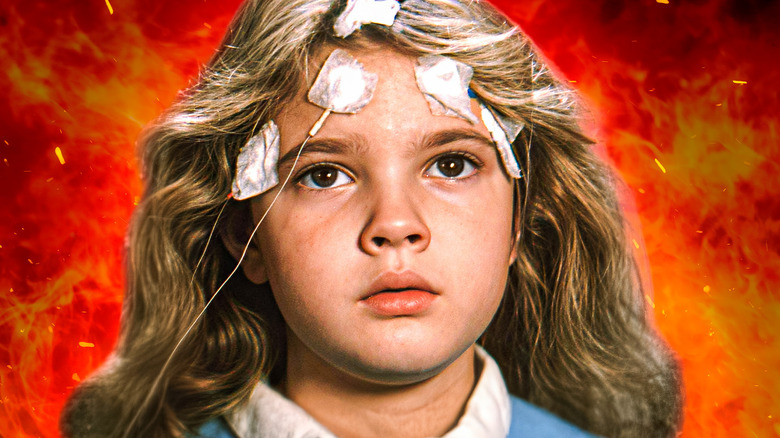
On the surface, "Firestarter" seems like a pretty faithful adaptation. Both Stephen King's novel and the 1984 film follow a young girl, Charlie McGee (Drew Barrymore), who's born with immense pyrokinetic abilities after her parents were both experimented on by the government. Now that agency, known as The Shop, wants to use Charlie for their own machinations.
But the film falls flat, largely due to getting rid of a lot of the psychological depth that made these characters so compelling on the page. "Firestarter" might be a B-tier King novel, but Charlie is written with a strong emotional core. She's sweet yet dangerous, and while she begins the book as a frightened child, she gradually comes into her own. That's largely lost on the screen, where much of Charlie's behavior — and Barrymore's performance — comes down to throwing temper tantrums.
There are some other odd moments, like Charlie's hair blowing out behind her whenever she uses her powers (even though there's no wind present). King mocked that aspect and referred to the entire movie as "flavorless" although he'd later soften his stance. The 2022 version didn't fare much better and is easily one of the worst sci-fi remakes ever made. Maybe this is just the kind of story you need to read rather than watch.
The Running Man (2025)
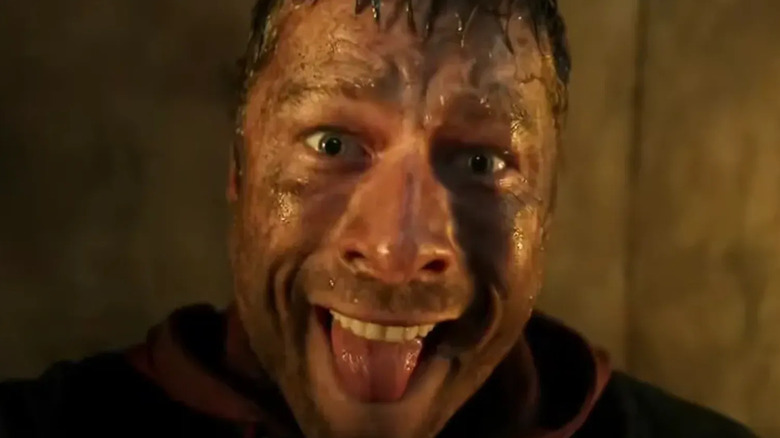
Neither film version of "The Running Man" opts for the dystopian novel's bleak ending. The 1987 version, a fairly generic (but fun) action flick starring Arnold Schwarzenegger as game show contestant Ben Richards, deviates heavily from the source material. It ends with him beating the bad guys and getting the girl — as opposed to the novel, where Ben flies a plane into the corporate headquarters of the TV network that airs the show after learning his family is dead, killing the executives in the process.
The 2025 film follows the beats of the book more closely, even seemingly until the end. Ben (Glen Powell) hijacks a plane, and it seems like he's going to kill himself to get back at the organization. But that doesn't happen. Instead, a revolution breaks out, Ben's reunited with his family, and Ben personally shoots and kills network executive Dan Killian (Josh Brolin).
The novel's ending is depressing but real. Ben's back is pressed against the wall, so in one final act of defiance, he decides to take out as many of his tormenters as he can. The film opts for a feel-good ending where the general public rises up against their dystopian oppressors. It feels like a way of placating the audience rather than radicalizing them. One could at least argue that the '80s "Running Man" takes the bare bones of the novel and rearranges them for a more fun experience. The 2025 version of "The Running Man" somehow feels more disrespectful to the source material, by getting dangerously close to the book's ending then chickening out at the last second.
Pet Sematary (2019)
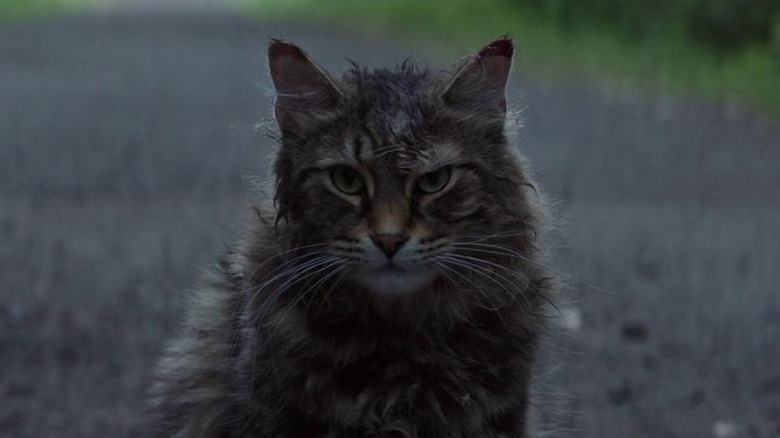
There's one primary decision in 2019's "Pet Sematary" that feels like it takes all of the wind out of the book (and even the previous adaptation in 1989). In the book and original film, little two-year-old Gage Creed (Miko Hughes) is killed by a truck after wandering into the road. As a toddler and the ultimate representation of innocence, his death feels so pointless, and it's natural for his father to feel compelled to bring him back to life in the titular pet cemetery. The subsequent imagery of the resurrected Gage, his eyes soulless as he wields a scalpel, is chilling.
The 2019 film spares Gage but has nine-year-old Ellie (Jeté Laurence) die by wandering into the road instead. This already feels more contrived. A toddler wouldn't know any better, and tragedy could strike if his parents are distracted even for a moment. But a nine-year-old might theoretically be a little smarter. Even overlooking that, bringing Ellie back to life just doesn't have the same impact. A toddler turning evil is an unspeakable corruption. A kid breaking bad has been seen 100 times before.
There are other issues with the film, including the overall tone, which trades in an atmosphere of dread for traditional slasher tropes. Sometimes dead is better, and sometimes it's better not to remake an already pretty good adaptation of a Stephen King book.