

5 Classic Stephen King Movies That Are Unwatchable Today

Stephen King's work has inspired many masterpieces and even more big screen duds, but even his weakest adaptations have some defenders willing to fight in their corner. Today, we're looking at the ones which have become increasingly impossible to argue in favor of due to how badly they've aged. Some of these weren't all that great to begin with, so you can only imagine how painful they might be to sit through today.
These are our own personal preferences, but we've defined "classic" here to mean anything that was released prior to the 21st century, and not whether they are a classic in the cultural consciousness. The titles below are a mixed bag of badly judged, from mishandled adaptations of problematic source material, to initially beloved movies which have aged like milk, and multiple which feature some of the worst directing you'll see in your life. We do expect some controversy about a couple of titles with bigger fanbases than others being included here. However, if you watch them through the eyes of a viewer in 2026, you'll understand why we now consider them unwatchable as the absolute worst films made in King's name.
This isn't a ranking, with the following five films all listed in alphabetical order. If you're hungry to see a great Stephen King movie after this, we've also ranked his 15 best movies. Although, in a little spoiler for that list, our writers disagree about one film, which is either unwatchable or one of the greatest adaptations of his work. It all depends on who you believe!
Apt Pupil
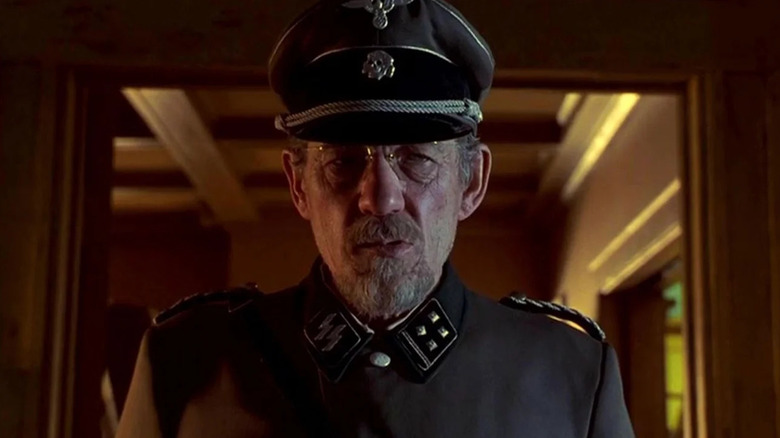
Usually, behind the scenes controversies don't affect our enjoyment of a movie. Unless we see any signs of this drama in the final edit, it's easy to forget that a film had a torturous production. But when it comes to director Bryan Singer, it's impossible to watch one of his movies without seeing signs of the repeated allegation that he rarely showed up to set, with ghost directors hired to pick up his slack. The choppily edited "Bohemian Rhapsody" infamously won an Oscar for Best Editing, presumably out of sympathy for the poor editors who had to do their best in salvaging the footage from several different stages of a notoriously cursed production.
Singer didn't always have that reputation. His "Usual Suspects" follow-up "Apt Pupil" plays out like a competent adaptation of the Stephen King novel, detailing the story of a teenager (Brad Renfro) discovering that an eccentric neighbor (Ian McKellen) was a former high-ranking Nazi living in exile. However, once you learn about a deleted scene and the lawsuits it inspired, nothing in the movie can escape from its uncomfortable shadow. An already distasteful nightmare sequence where the teen protagonist Todd imagines Holocaust victims in his school gym showers was originally envisaged as his fellow classmates made up to look like concentration camp detainees.
It inspired lawsuits as multiple underage actors in the scene claimed Singer forced them to strip naked to shoot it; in 2020, when Singer's behavior was back under the microscope, it was reported to have been settled for an undisclosed sum, with the plaintiffs all bound by confidentiality agreements. "Apt Pupil" isn't perfect as a thriller, but this context makes it deeply uncomfortable to revisit even if all evidence has been scrubbed from the screen. In fact, it might be the most controversial King adaptation.
The Green Mile
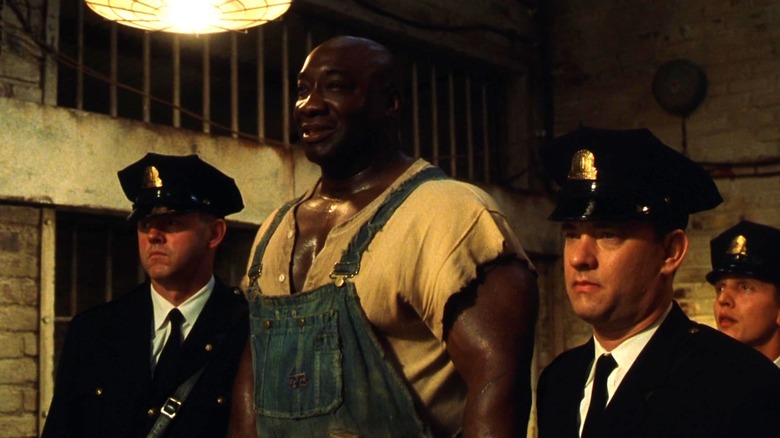
Stephen King liked Frank Darabont's adaptation of "The Green Mile," although he did offer some minor criticism for the way it increased the sentimentality of his source material, joking that the director made the first R-rated Hallmark movie. Although it's unashamedly sappy and unnecessarily long at 189 minutes (the source novel is hardly one of King's epics, clocking in at a little over 400 pages), the biggest turn-off with this Oscar-nominated movie is the characterization of Michael Clarke Duncan's character John Coffey, an inherent flaw of the story which is impossible to overlook on the screen.
This is a tale which relies on the racist trope of the magical Black man, whose supernatural powers only exist to help the white protagonist experience a profound growth. For all his healing abilities, John is without agency, his entire character defined by his relationship with corrections officer Paul Edgecomb (Tom Hanks) and how he reshapes his worldview.
This was a common trope in older magical realist novels that we thankfully don't see too much in contemporary fiction, where subservient Black characters were typically characterized as being of low intellect, speaking in folksy non sequiturs. In other words, they were positioned as non-threatening to a white protagonist's status, even if they were crucial to their journey. It's why "The Green Mile" doesn't function as successfully as it should as a tearjerker, as it relies on what has been widely accused of a negative racist stereotype to generate some emotional resonance. It's beloved by many, but even in 1999, "The Green Mile" felt outdated.
The Lawnmower Man

As far as Stephen King is concerned, "The Lawnmower Man" is undoubtedly one of the most unwatchable movies inspired by his work, because it's an adaptation of his 1975 short story in name alone. Multiple lawsuits were filed by the author over its deviation from a story about a suburbanite who unwittingly hires a devil worshipper to mow his lawn into a lame cyberpunk story about a scientist (Pierce Brosnan) using his intellectually disabled gardener (Jeff Fahey) as the guinea pig in a virtual reality experiment.
Admittedly, this 1992 movie isn't the only film on this list to maintain some watchability if you view it purely on kitsch factor, but the dated depiction of technology — including some of the most laughably pre-internet special effects representing cyberspace — is far from the only aspect which makes it hard to take this movie seriously through a modern eye.
Although you couldn't accuse Fahey of a lack of commitment to the role, the early depiction of his character Jobe Smith — before he transforms into a digitally enhanced psychopath — is still an uncomfortable, borderline reprehensible characterization of a man with intellectual disabilities. Admittedly, a genre-bending early 1990s horror isn't the place to go when looking for a sensitive depiction of this, but the reliance on tropes in the writing and the performance makes for a rough start, especially considering there is nothing specific within the narrative that justifies this characterization. If you can view it ironically, "The Lawnmower Man" is a good time in ways it was never intended to be, but you still need to overlook a lot of outdated tropes to get on that level.
Maximum Overdrive
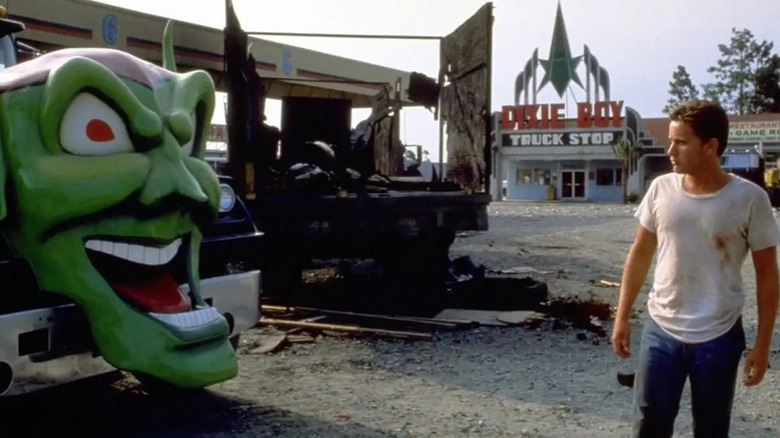
There are plenty of reasons why Stephen King's sole directorial effort has been reclaimed by the so-bad-its-good crowd, with plenty of set pieces depicting vehicular mayhem to a soundtrack that features many of AC/DC's greatest hits. But if you're not revisiting "Maximum Overdrive" as a midnight movie with a packed theater crowd, then the same reasons it plays well there as a 1980s tech kitsch are why it falls completely flat if you revisit it at home. When you're not laughing along with likeminded moviegoers about the over-the-top kills from newly sentient machines, there are few reasons to be invested thanks to the vapid characterization and a director who seems more interested in shocking the audience than effectively scaring them.
The tortured production of the movie has been documented at length, and the often incoherent nature of the storytelling is largely because — in the author's own words — King was "coked out of his mind" during production (via Far Out Magazine). Other collaborators stated he'd arrive to work at 6 a.m. drunk and continue downing beers throughout the working day. Nothing within "Maximum Overdrive" dispels these claims, and there's only so much of this drugged-out excess a viewer can take before the amateurish mind of the creative force behind it all becomes apparent.
It's a fascinating curio as the only time King stepped behind the camera and shows some visual panache in a few scenes that suggest a far more competent filmmaker if he wasn't under the influence. Unfortunately, that's not the King who showed up to the "Maximum Overdrive" set, and you'll have a hard time defending the results; it looks and feels like it was made during a bender.
Thinner
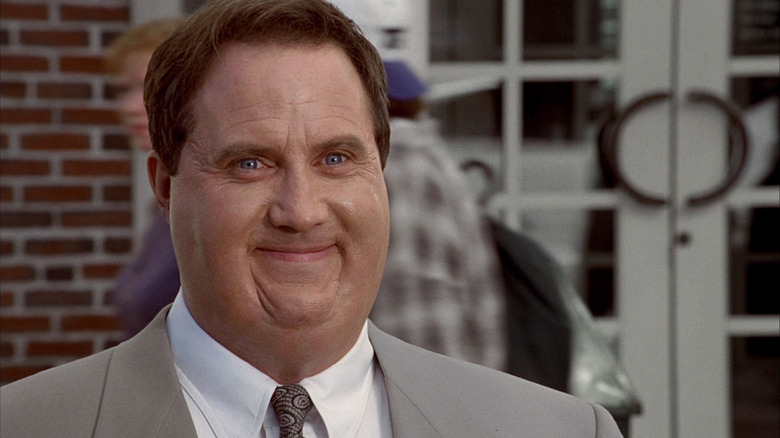
One of the 1980s Stephen King novels published under the pen name Richard Bachman, and notably the one whose smash publication finally let the truth about its real author be revealed, "Thinner" was already divisive in its original form — at least, by King's usual standards. It was a blackly comic story which needed the guiding hand of a director who could marry the body horror aspects with supernatural lore that could come across as playing off racial stereotypes if not dramatized with care. A filmmaker like Tom Holland (no, not that one) who previously made "Child's Play" and the original "Fright Night" seemed like a perfect fit for a high-concept horror-comedy that flirted with the transgressive, but his 1996 adaptation of "Thinner" struggles to overcome the inherent flaws of the story.
The elevator pitch of an obese lawyer cursed with rapidly losing weight is an intriguing one, although this hex is enforced by a Romani man as revenge for his daughter's killing, banking on the audience stereotyping the community as harboring dark magic powers to make the scares work. The treatment of the central character (played by Robert John Burke) should satirize body image issues, but instead feeds into the general fatphobia of the 1990s. The actor's unrealistic prosthetics are framed as grotesque, and the character suffers from an unhealthy obsession with food.
The material could be effectively modernized as a body horror satire in a way that speaks to society's impossible beauty standards and other adjacent themes (like eating disorders). Unfortunately, this incarnation is a product of its time in the most detrimental fashion, conforming to the same shallow beauty standards it wanted to find the horror within.