

Carrie (2026) Ending Explained: How Mike Flanagan Changes The Stephen King Story
Contains spoilers for "Carrie" Season 1
We thought there was nothing new to tell in the dark story of "Carrie" prior to Mike Flanagan's series adaptation teasing a wider, interconnected universe of telekinetic characters that could keep the story going beyond her ill-fated prom. He doesn't kill off his protagonist (played by Summer H. Howell) in this iteration, instead suggesting this is an origin story or horror villain awakening, leaving the door open for where she could go next. Stephen King's source novel ends by hinting there could be people with greater powers than Carrie; this adaptation ends by revealing they're definitely out there, and that this might not be a one-and-done miniseries.
With this being a very loose take on "Carrie," we've tried our best to answer some of the nagging questions viewers will have about the brand-new characters invented by Flanagan that drive forces behind many of the biggest changes to this story. We thought it would be a miniseries, but after that cliffhanger ending, all bets are off -– this could be the start of something a lot bigger than Carrie White.
Who was interviewing the survivors?
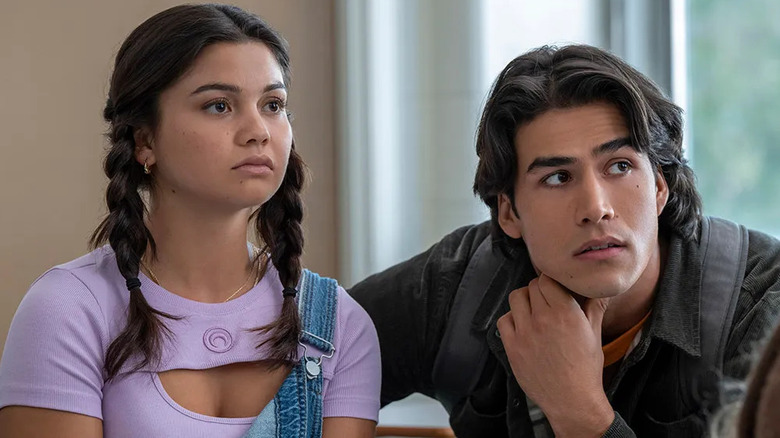
Established in Episode 1, the series appeared to have an original framing device, with survivors recounting their memories of the Black Prom to Kate Siegel's director. What first seems to be a modernization of the White Commission and the epistolary framework of the novel, the show reveals that the interviews were being filmed for the very opposite reason –- to scrub memories from the official record.
After the "director" hypnotizes Sue Snell (Siena Agudong) into forgetting she saw strangers at the prom and a looming black shadow behind Carrie, her interview with Margaret White (Samantha Sloyan) ends with her killing the mom once she reveals she'd never be able to recapture the powers she briefly showed glimpses of. Caitlyn is ordered to take Margaret back to her hotel at their undisclosed location to make it look like she died in her sleep from fighting Carrie, and that's the last time we hear from them.
Prior to the season premiere, some speculated that this could link to "The Institute," another telekinetic Stephen King adaptation which builds to the supernaturally gifted rising against their oppressors. However, it's made explicit in "Carrie" that only women possess these abilities, so that can be written off. Some also theorized that the White Commission would be a precursor to The Institute (both are designed to moderate those with supernatural powers), but this is the opposite -– it's an organization explicitly hunting down people trying to harm the telekinetic.
Who is Emaline West?
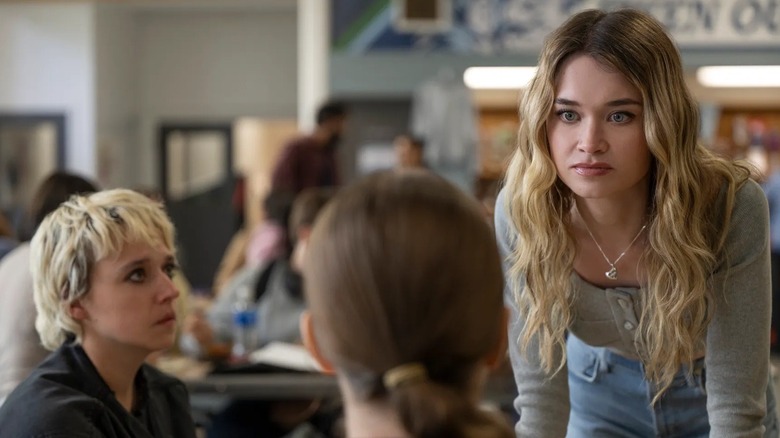
As soon as she was introduced, it appeared we were being set up for an obvious twist that Carrie's boisterous friend Emaline West (Thalia Dudek) was a ghost all along -– and it was truly groan worthy when finally revealed in Episode 5. Did we really need a montage of Carrie talking to herself, when their scenes were always framed in a way where nobody else could have seen Emaline?
Thankfully, the finale revealed Emaline to be an Astral Projector, the most advanced form of the "shine" that allowed her consciousness to be sent far outside of her body –- a power Flanagan previously depicted in "Doctor Sleep." She wasn't physically with Carrie, but Sue saw her black shadow behind Carrie at the beginning of the massacre, which nobody else had prior. After picking up Carrie as her mom is left for dead shortly after, Emaline reveals that she's been shot, and as they're physically touching, it's clear this is the first time they've properly met.
The opening episode shows Carrie's powers can be felt by others on the telekinetic spectrum, and Emaline's advanced shine is likely why she got to her first. Whether she has a connection with the small "coven" of telekinetic women isn't made explicit, but one of her first lines to Carrie in Episode 2 is "I'm a spy and you were my mission" — is that a joke about why she's interested in her hiding the truth? The series ends with Carrie not getting the clear answers she wants about Emaline; whether she's a devil or an avenging angel remains up for debate.
Did Margaret White have powers all along?
Stephen King established that telekinesis can only be passed down between women in his source material, and in most cases, it's a recessive gene that skips generations. In King's "Carrie," it's revealed that Margaret White's grandmother Sadie Cochran had this power, but after, this gene didn't appear in any other woman in the family until a young Carrie triggered a shower of rocks to fall on their home.
Flanagan's series largely stays true to this origin, but through weaving in stand-alone cold openings of various women (from Joan of Arc to moms gaining supernatural strength to save their children) he set the stage for the eventual reveal that Margaret had this ability.
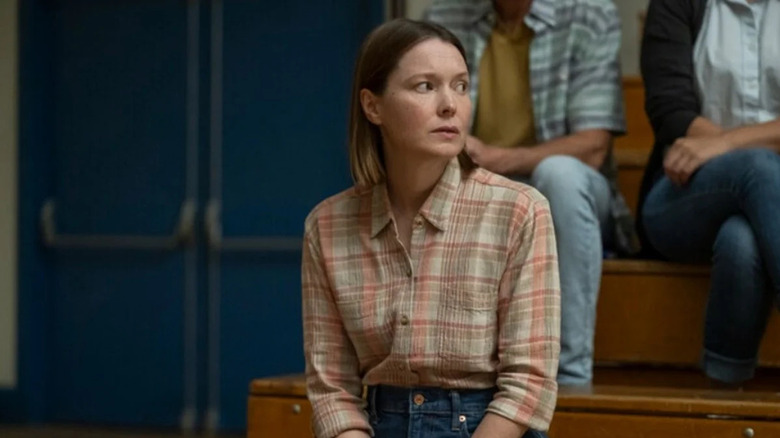
In a flashback, we learn that a very young Margaret exhibited signs of telekinesis (which she describes as having 'flexed') when she turns a crucifix in her bedroom sideways as a child. Unfortunately, as this happened while she was praying, she took it as a sign from God, and this seems to be how she came to hold her extreme religious views. It's only when in a near-death situation that she briefly recaptured her powers, but that was too-little, too-late, and the truth that she couldn't regain them was coaxed out of her by Siegel's telekinetic interviewer.
This change to the lore illustrates one of the show's most significant updates, with Margaret now more of a tragic figure. Someone whose lifelong commitment to a deeply conservative strain of religion stopped her from the empowerment that comes with the self-actualization of her powers.
Is this part of a shared Stephen King universe?
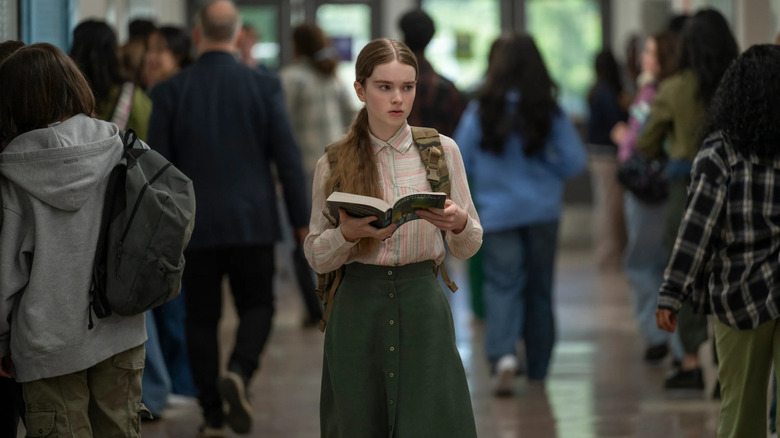
There are many new characters here not from the source material, but none with explicit links to any other Stephen King books. The only concrete nod to a shared King universe is Emaline's astral projector powers being called a "shine," the shared term for supernatural abilities first established in "The Shining" and invoked in several novels and adaptations since.
As for the psychic group interviewing the Black Prom survivors, they're referred to only as "The Others" by Amanda (Katee Sackhoff), who operates underground trying to help parents kill children with these powers before it's too late –- she's seen 200 cases, all of which are women. This is in-line with the lore in King's "Carrie," but he's tinkered with this throughout the years, with male telekinetics in "The Institute."
Most tantalizing is what the series suggests about Sue Snell, who in each iteration has a premonition that something bad will happen to Carrie at the prom, although here this is explained away better -– she sees Billy and Chris' car on a TV news report, and concludes something must be up.
The novel doesn't give her as obvious a motivation, which has made many assume she has some psychic ability too. The "Carrie" series doesn't make her Shine explicit, but seeing the shadow of Emaline invisible to everybody else does suggest a recessive gene, with the documentary team even asking questions about her physical sensations at the scene. She's made to forget everything, including any subconscious awareness of a greater psychic power.
Will there be a Season 2?
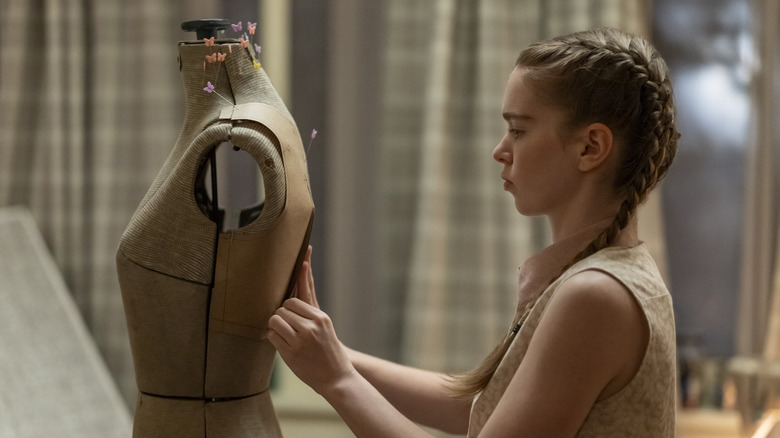
"Carrie" was announced as a miniseries, but the marketing refers to it more broadly as a "new series." On the one hand, the entire plot of "Carrie" has been covered in the miniseries, ending with the immediate fallout from her prom rampage -– the only difference here is that Carrie is alive and on the run alongside Emaline. That critical change sets the stage for a Season 2 which could further explore her powers, under the mentorship of an astral projecting ally even more powerful than her.
The closing exchange between Carrie and Emaline doesn't explicitly reveal the latter's motivations, only that there are people after them. Whether this is the organization of telekinetic women, or the forces hunting them down, isn't stressed. It alludes to an even grander conspiracy, exploring the text's inherent feminist themes on a larger scale. With Emaline telling Carrie that she "is a God," however, it could also become a perfect villain origin story; she's never saved to continue her rampage like she was here.
Flanagan previously hinted at this to Entertainment Weekly, saying, "The beauty of not really being beholden to the book or to any of the previous adaptations is that the potential of the characters and of the greater world that she belongs to does allow to look at it not as a finite story ... Part of the fun of this was diving into that expansive world that could potentially continue."