

5 Best Horror Movies Of The '80s, Ranked
The 1970s were a groundbreaking decade for horror, and the 1980s continued to push the genre beyond its limits. It seemed like every weekend there was a new slasher movie breaking records for most gratuitous kills and onscreen nudity, or a franchise sequel that went bigger and bloodier than its predecessor. This was the dawning of home video, and low-budget shockers were all the rage, creating moral panics the world over as they terrorized people's homes. Buried beneath the headlines of the most notorious titles, there were several masterpieces that went on to become some of the most influential in their genre.
With so many to choose from, we had difficulty narrowing down this list to just five entries -– removing horror-comedies like "Evil Dead II" didn't make it any easier either. Our picks for the best horror movies of the 1980s are comprised of the movies which we considered the most groundbreaking and era-defining, whose influence can be felt in horror today, and still have passionate cinephile fanbases with high ratings on Letterboxd and IMDb.
Some of these were beloved blockbusters from the moment of release, others took time to be appreciated and gain a cult following. Every one of them is worthy of being called one of the best of their decade.
5. Poltergeist
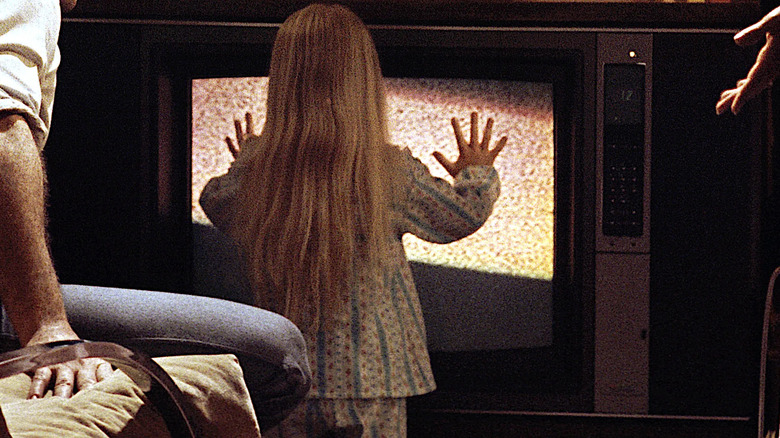
One of the great urban movie myths is that Steven Spielberg secretly directed "Poltergeist," a rumor that has long proved unkillable. While the newly built California neighborhoods looked like they could be just a short drive away from Elliott's (Henry Thomas) home in "E.T. the Extra-Terrestrial" and the story of a family unit in crisis echoed Spielberg's personal thematic preoccupations, this was a Tobe Hooper movie through and through -– just with far less bloodshed than his "Texas Chain Saw Massacre." If anything, it's the direct inverse of that watershed slasher effort, with the Freeling family acting as the wholesome suburban protagonists Leatherface and the Sawyers were the cracked mirror image of.
In "Poltergeist," the haunting is a by-product of the family's suburb being built over a former burial ground, with the ghost that possesses young daughter Carol Anne (Heather O'Rourke) ushered into their home via the TV screen. It may be less viscerally unpleasant than his most well-known work but similarly uses its horrors to satirize modern American family life, with this stereotypical middle-class unit ignorant of the history that lies below them, and susceptible to what they see on their screens. Of course, this commentary runs distant second to the well-engineered chills that make "Poltergeist" one of the most effective haunted house movies of all time, slowly building tension as it reinforces that no home is safe from paranormal threats.
4. The Thing
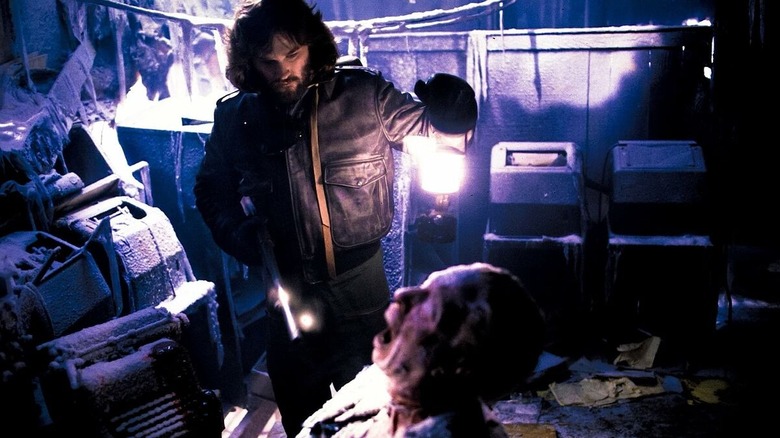
Just a few weeks after "Poltergeist," another one of the decade's most pioneering horror movies was released, and to say audiences weren't ready for John Carpenter's "The Thing" would be an understatement. Hooper's film was a huge hit because underneath the MPAA-challenging scares, there was an earnest portrayal of a loving family resilient in the face of a threat. When compared to the existential despair of Carpenter's paranoid survival horror, it's no surprise that it was met with a response as cold as its Antarctic setting. It was a bleak and unsparing affair, out of step with the popular escapism of an Amblin Entertainment movie; now, it's aged beautifully into one of Carpenter and star Kurt Russell's greatest achievements.
This is largely due to its ambiguous ending, as Childs (Keith David) returns just as last survivor MacReady (Russell) burns what he believes are the remnants of the shape-shifting monster haunting them. They exchange some words of mistrust and sip whisky as they're left alone, unaware of whether this will be their last moment. Carpenter shot a more concrete ending that revealed the protagonist's fate, but found that it undermined the lingering feeling of paranoia. Their decision may have upset audiences at the time but has helped "The Thing" age into a classic, reflecting the paranoid social and political tensions of its era in a way viewers weren't ready to grapple with.
3. A Nightmare on Elm Street
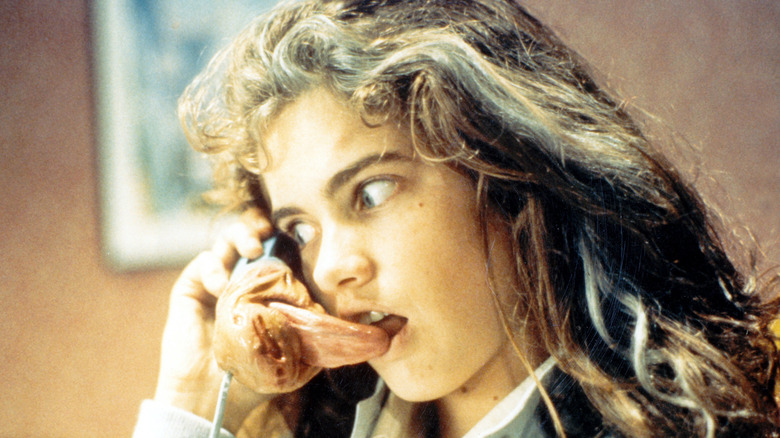
"Halloween" proved that the sanctuary of the suburbs wasn't safe from a masked killer, then Wes Craven took it one step further by making your dreams an unsafe space. Inspired by Vietnam War-era news articles about refugees who refused to sleep because of intense nightmares, several of whom eventually died in their sleep, the writer/director brought that surreal true story into the American family home with the undead serial killer Freddy Krueger (Robert Englund), who seeks revenge on the children of those who burned him alive years earlier. The supernatural premise allowed Craven to play fast and loose with the logic of a typical slasher, creating some of the most iconic images in the genre.
It became a defining slasher movie by untethering the rules from the bloody realism that came before, serving as a blueprint for Craven's eventual turn towards meta slashers that further blurred the line between in-movie reality and fantasy. The character dynamics help ground the story, with Craven finding a novel approach to explore how the sins of parents are passed down to their children, and how the next generation can escape the self-destructive spiral of who came before. Freddy Krueger may be the biggest threat, but the fear of becoming parents who range from depressed to absentee is what elevated "A Nightmare on Elm Street" into an era-defining work of existential terror.
2. The Shining
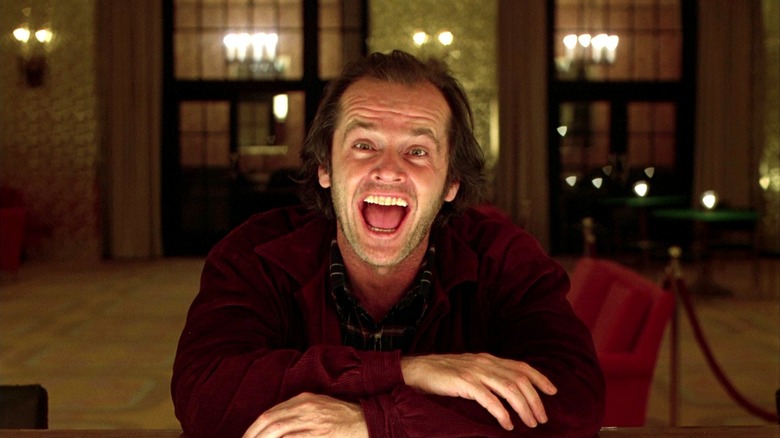
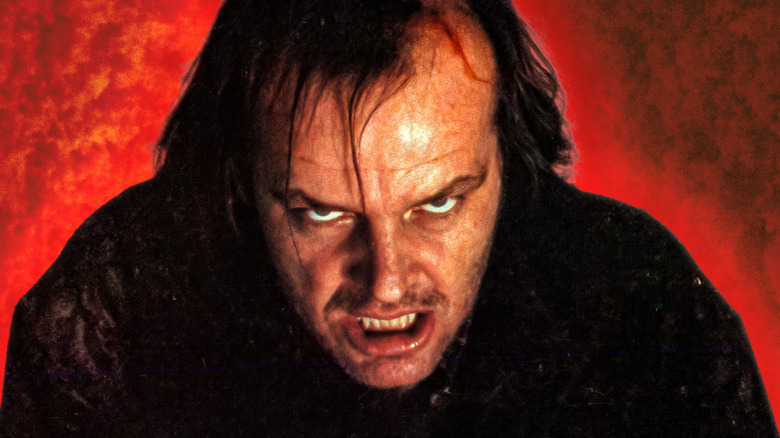
Stephen King may hate it, but that's his loss: Stanley Kubrick's bold adaptation of "The Shining" remains the best movie lifted from one of his books despite its heavy deviations. Whereas King was concrete that Jack Torrance (Jack Nicholson) and the Overlook Hotel were haunted by malevolent forces, Kubrick made events a lot more ambiguous, crafting an even richer text that has been debated and reinterpreted countless times. If you've seen the documentary "Room 237," you'll know how extreme some have gone interpreting the movie's oblique imagery to represent everything from a commentary on the genocide of the Native Americans to Kubrick's self-admission that he helped fake the moon landings.
Whether we're witnessing supernatural events, or just the interpretations of multiple unreliable narrators undergoing cabin fever in an abandoned hotel is never made clear. The film's reality hinges on whether we interpret Jack's destructive behavior for what it was in the source material -– an alcoholism that prompts abusive actions -– or something harder to anchor. It's easiest to interpret it as a tale of an abusive father and husband, but its surreal, horrifying detours mean it can't be solely examined in that light.
"The Shining" remains a pioneering work because it's one of the few decades-old masterpieces that still feels like its biggest secrets remain covered. There's something unsettling about being left with a mystery we'll never be able to crack, no matter how well we know the novel it's adapted from.
1. The Fly
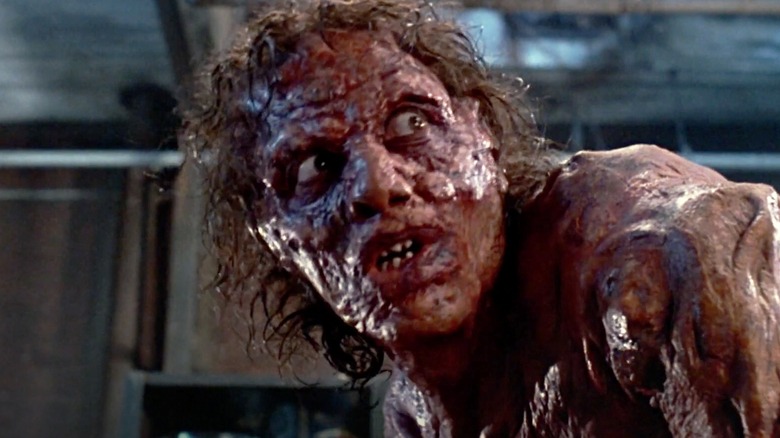
David Cronenberg was on one hell of a run through the 1970s and 1980s; we could have easily put together a top five featuring only his movies. However, the director's remake of 1958's "The Fly" is our personal pick for the top spot, transforming a B-movie creature feature into his most heartfelt tale of metamorphosis: an epic tragedy hidden beneath a classically Cronenbergian body horror surface. Jeff Goldblum's performance as the eccentric scientist Seth Brundle is career-best work, utilizing his offbeat physicality to perfectly dramatize his slow, painful transformation into the Brundlefly.
Cronenberg designed his take on the material as an allegory for seeing a loved one succumb to a terminal disease, deliberately making the story about his transformation rather than what happens after Brundlefly achieves its final form as the original movie did. Many critics in 1986 saw it as an allegory for the AIDS pandemic specifically, which helped it speak to a moment when the humanity of AIDS victims was under-discussed in pop culture, but it resonates beyond that: Very few horror movies can be labelled tearjerkers, but "The Fly" can.
Cronenberg made weirder, more uncomfortable movies which pushed the boundaries of horror elsewhere in the 1980s ("Videodrome" would also be a strong best-of-the-decade contender), but finding the humanity within deeply silly source material is one of his great achievements. "The Fly" remains the best horror of the 1980s, and one of the best movie remakes ever made.