

5 Best Western Horror Movies Of All Time, Ranked
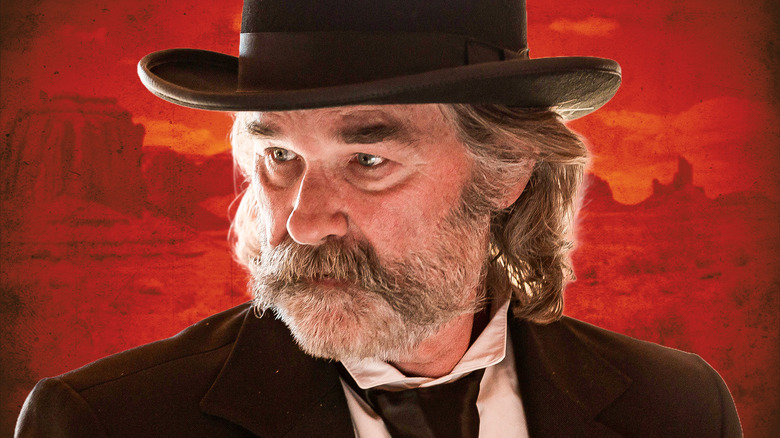
Life in the Old West already seems pretty scary by our modern standards. We probably wouldn't last long before we were targeted by gunslingers, even if we were just peacefully strolling through town or having a drink at a saloon. It was a comparatively lawless time, as the movies depict it, but luckily there's usually a hardened sheriff or bounty hunter on hand to save the day. That's not the case in the following five movies.
To compile our list of best Western horror movies, we looked at films which incorporate genre aspects into a familiar period setting, as well the modern neo-Westerns that subvert expectations by adding monsters into the mix. To keep things simple, we stood by this simplistic definition rather than broadening things out to include revisionist Western dark thrillers with no unambiguous horror elements, like "No Country for Old Men." Anton Chigurh may feel as intimidating and oddly flamboyant as your average slasher villain, but he's not the classic horror threat that characters in the following five titles are facing up against.
The following movies are ranked based upon personal preference, and we make our cases for each below. For fans of both genres, any blind spots on this list are definitely worth seeking out.
5. Bone Tomahawk
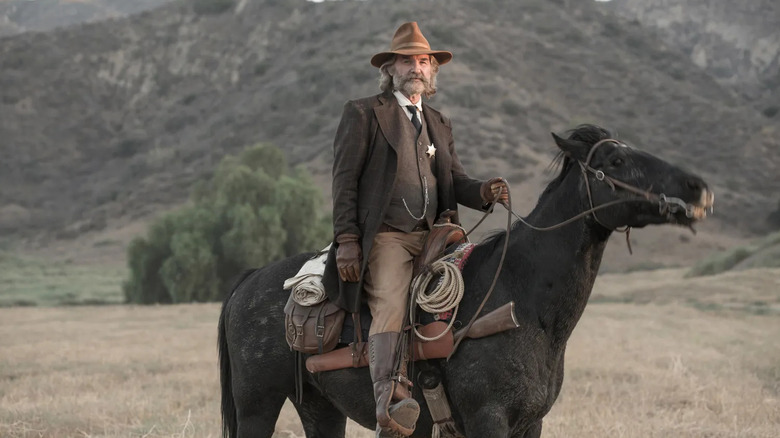
The slow burn of director S. Craig Zahler's directorial debut "Bone Tomahawk" erupts into some of the most graphic onscreen violence of the century (we labelled it one of the most disturbing movies in history). Sheriff Franklin Hunt (Kurt Russell) leads a rescue party to find an outcast Native American tribe he believes is responsible for deaths and disappearances in his small town of Bright Hope. With Zahler's unhurried, conversational screenplay, it can occasionally feel like a hangout movie equivalent to "The Searchers" — and then we meet the tribe, a group of inbred cannibals, and things take a sudden turn to the most visceral B-movie extremes.
There's a lot to love in "Bone Tomahawk," but the film's portrayal of its enemy clan feeds into some of the most unsavory Native American depictions in classic Westerns, even as Zahler's script makes pains to differentiate them from any real tribes. The button-pushing nature of his later work, such as Mel Gibson police brutality thriller "Dragged Across Concrete," does make it hard to believe he wasn't similarly hunting for controversy here. However, if you can turn off the part of your brain that raises alarm bells and appreciate these villains as cave dwelling cousins to the troglodytes in "The Hills Have Eyes," then you'll be rewarded with a dark adventure made by someone who has studied the classics of both genres, twisting their oldest storytelling conventions into unpredictable and bloody B-movie bliss.
We can't wait to see Zahler's return to the genre via the long-gestating Western screenplay, "The Brigands of Rattlecreek," which is finally coming to life via director Park Chan-wook next year. If it's as good as a collaboration between those two extreme cinema auteurs sounds on paper, we may have a new contender for this list.
4. From Dusk Till Dawn
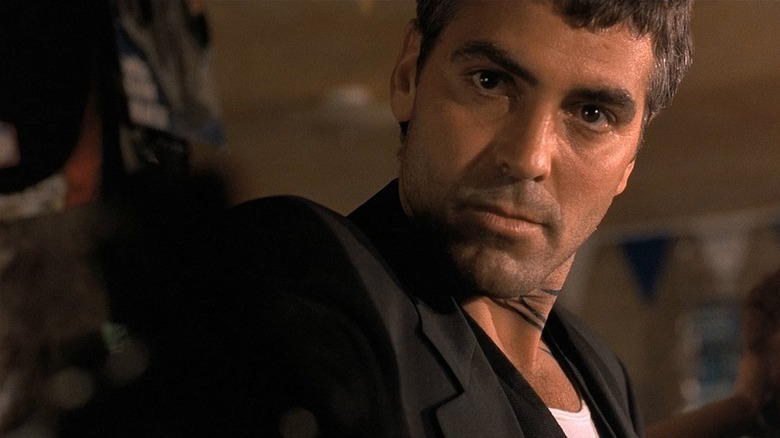
Recently put back in the spotlight thanks to the similarly structured "Sinners," which was accused by some of ripping this off, "From Dusk till Dawn" is a bonkers B-movie that shouldn't work as well as it does. Until the sudden mid-film pivot towards vampire horror, Quentin Tarantino's screenplay plays it relatively straight as a hostage thriller, which manages to remain compelling even with an actor as notoriously wooden as Tarantino himself in one of the central roles. Don't even get us started on how he uses the project as a form of foot fetishist wish fulfillment either: this is ground zero for every single joke about Tarantino and feet that's been made over the years, and the scene that introduces it is absolutely shameless.
That aside, "From Dusk Till Dawn" is significant as Tarantino's first dabble in the Western genre, which he'd return to with the second volume of "Kill Bill" almost a decade later. The divided initial critical response shows just how much his approach to combining its tropes with those of the most disreputable exploitation movies, showing off his love for both within a road trip narrative that takes as many left turns off the beaten path as it does from one genre to the next.
Naturally, it felt confounding to anybody who wouldn't get along for the ride, but the cineliteracy of his breakout movies "Reservoir Dogs" and "Pulp Fiction" were still present beneath the mayhem. Salma Hayek's character is even named after the Mexican nunsploitation flick "Satánico pandemonium." Even with Robert Rodriguez' name on the director's chair, it's pure, unfiltered Tarantino at his nerdiest.
3. Ravenous
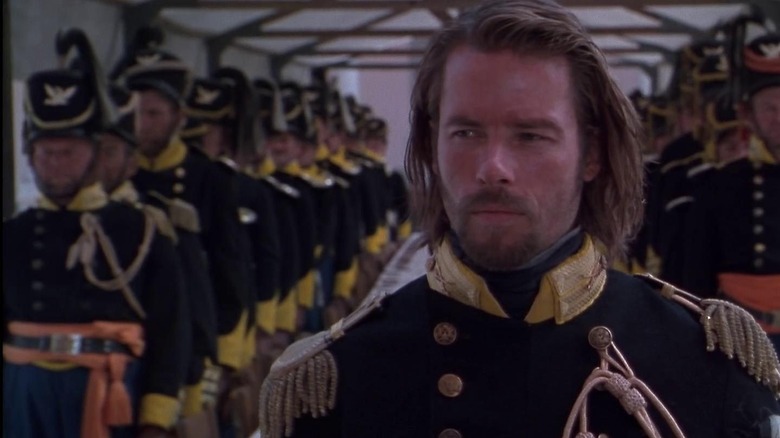
After breaking out as the terrifying Begbie in "Trainspotting," Robert Carlyle was quickly pigeonholed as the next big villain character actor, signing on to play everyone from a Bond baddie (in "The World is Not Enough") to Adolf Hitler himself in the years that followed. But it was the cult cannibal horror "Ravenous" which best took advantage of the eccentricities beneath his menacing posturing, casting him as F.W. Colqhoun. He's a stranger who first meets US army captain John Boyd (Guy Pearce) as Boyd is being sent to a remote outpost following accusations of cowardice.
Colqhoun claims that many of the men on his wagon train were eaten by an untrustworthy guide, and he doesn't know if he's the only survivor. With the Native American myth of the Wendigo — where someone's wounds can be healed immediately, but they'll be cursed with an addiction to human flesh — on their minds, Boyd's men split up, and he soon finds out that Colqhoun isn't who he says he is.
The back half of "Ravenous" explores the power imbalance between the two men, with Colqhoun even attempting to make his fellow survivor reliant on human flesh, wounding him so he'll snack on others. Through the eyes of British director Antonia Bird, it becomes a twisted commentary on many of the unspoken themes in the Western genre, such as manifest destiny and American imperialism, but with enough meat on the bone to stop it becoming a dry social allegory. Critics and audiences didn't know what to make of a movie that swerved between genres and tones so wildly, and it was one of 1999's biggest box office bombs. It's aged well but is still deserving of a bigger cult following than it's currently got; "Yellowjackets" fans in particular should seek it out.
2. Near Dark
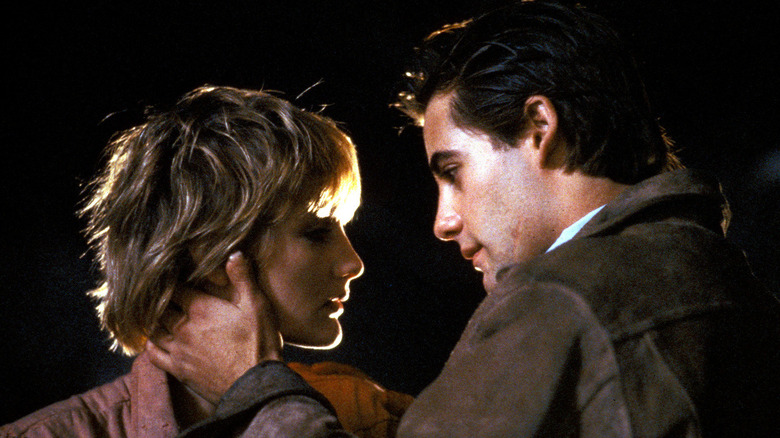
Kathryn Bigelow's breakthrough movie nearly didn't happen. Desperate to film a Western but struggling to find financial backing, she saw the success of "Fright Night" and worked with co-writer Eric Red to throw vampires into the mix. The result was something akin to "The Searchers" if told from the daughter's perspective, as young Caleb Colton (Adrian Pasdar) was brought into the ranks of a roaming vampire gang after one of them turns him, immediately coming to odds with their leader Severen (Bill Paxton) for his refusal to kill. To better marry the tropes of each genre, the band of vampires were stylized as all-American outlaws, the kind of figures who would have been running with Jesse James, but here drink blood instead of robbing trains.
Scored to a typically stunning Tangerine Dream soundtrack, it was arresting because it didn't neatly fit into any era, with modern B-movie style sitting comfortably with traditional Western hallmarks. Unfortunately, this might have been why it didn't immediately find an audience despite positive reviews, only later blossoming into a cult film.
Released two months after "The Lost Boys" told a similar story of teenage vampire infatuation in a way that better fit into mainstream movie and fashion tastes of the era, "Near Dark" felt a lot stranger in comparison; an arthouse film with a B-movie body count. Now it stands out as one of Bigelow's best movies, an accomplished foray into two genres she'd never return to, which every underwhelming political thriller she's directed since makes us wish she would.
1. Nope
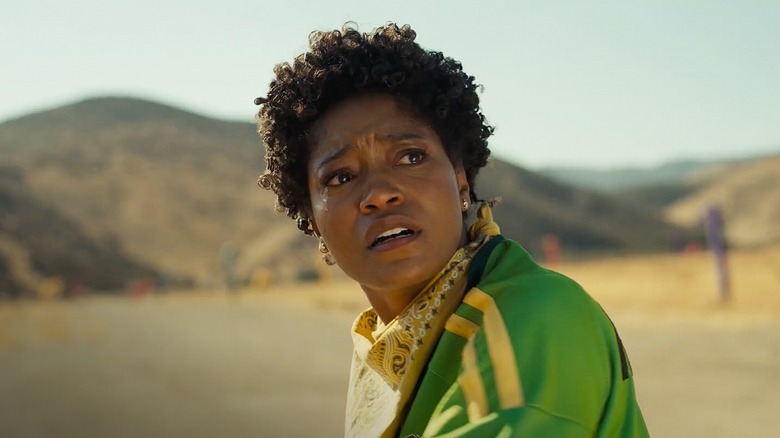
Jordan Peele's highly anticipated third movie was teased as his first flirtation with science-fiction, inspired by Spielberg (particularly "Close Encounters of the Third Kind") and teased in trailers that echoed previous marketing campaigns for sci-fi/horror hybrids like "Signs." It was Peele's first movie to be released to a divided response, but "Nope" is already aging like a fine wine, largely thanks to how it uses its Western tropes and references to early cinema history to weave his richest social commentary to date. Siblings OJ and Em (Daniel Kaluuya and Keke Palmer) are the current operators of a family ranch training horses for use in movies, their connection to show business being that they are the great-great-great grandchildren of the jockey in the silent film print "Animal Locomotion."
This early Black contribution to cinema history has been forgotten in pop culture, if not erased outright, and by using the tropes of the Western (long criticized by many for whitewashing history) Peele's protagonists aim to capture the alien threat of Jean Jacket without being erased themselves. They discover the UFO only attacks anybody that looks at it, complicating their mission to capture the footage they think will make them the money to save the ranch — an existential threat, in no uncertain terms, to a piece of in-universe Black cinema history that was already being overlooked.
"Nope" doesn't neatly fit in any of the genres it toys with, but Peele's affection for the Western feels far more sincere than expected, considering the accompanying allegory. It's as much a thrilling love letter to the genre as it is a critique, and the way that tension plays out in the narrative itself is ingenious. Time may prove it to be his strongest effort.