

What Happened To Rivendell After The Lord Of The Rings
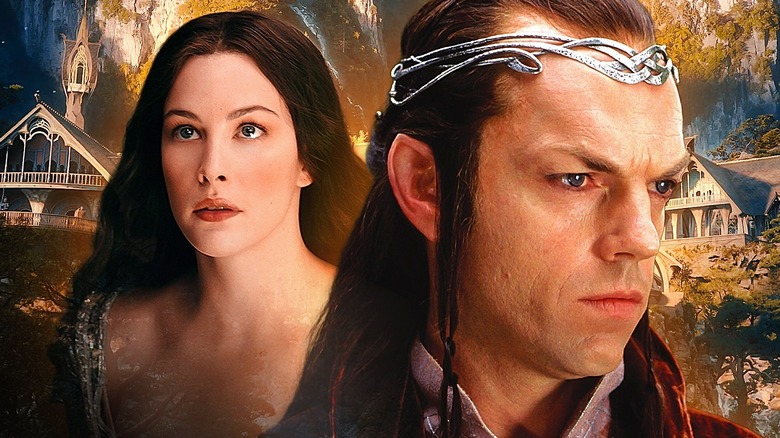
Rivendell is a really important location in J.R.R. Tolkien's world of Middle-earth. We've also seen Rivendell teased in Amazon Studios' "The Rings of Power" series, where we can expect to see the establishment of the Elven fortress before long. But while we know Rivendell is built in the Second Age, when does it stop being populated by its immortal inhabitants? We know it's still around when "The Lord of the Rings" ends an age and a half later. But its leader, Elrond, leaves Middle-earth with Bilbo, Frodo, Galadriel, and Gandalf. What happens to his home?
The short answer is that we don't have a definitive end date for when Rivendell stops functioning as an important location for the Elves. However, we do know that just over a century later, it's already abandoned, and Tolkien does give us some clues about when this happens.
After the main trilogy wraps up, we know Rivendell continues to be used by the Elves for a while (more on that in a minute). But in the appendices at the end of "The Return of the King," Tolkien gives us an account of the deaths of Aragorn and Arwen. As the two prepare to part ways in this mortal world, Aragorn says, "The hour is indeed hard, yet it was made even in that day when we met under the white birches in the gardens of Elrond where none now walk."
While we don't know all the details about what happens to each character after "The Lord of the Rings," Tolkien does tell us that Aragorn ends up living to be 210 years old — just over 120 years after he's made king at the end of "The Lord of the Rings." That means we can say that there are no more known Elves (or anyone else) living in Rivendell by then.
Elrond's family leads Rivendell in the aftermath of The Lord of the Rings
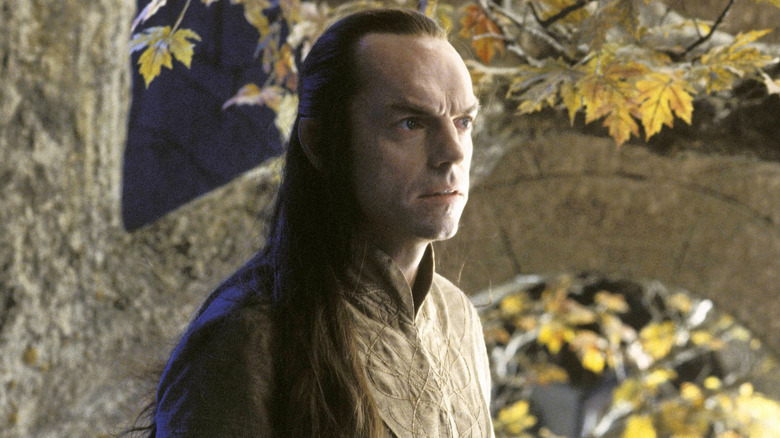
While Elrond leaves at the end of "The Return of the King" to head into the West (following in the footsteps of a journey his wife, Celebrían, took centuries earlier), his sons go on to lead Rivendell for a while. We know this because of a minor note in the prologue to "The Fellowship of the Ring," which explains how the Hobbit hero Merry gets help conducting research from the Elves of Rivendell while compiling books about various parts of the histories of Middle-earth.
The text says, "It is probably that Meriadoc obtained assistance and information from Rivendell, which he visited more than once." This is followed by one of the only meaningful mentions of post-"Lord of the Rings" Rivendell: "There, though Elrond had departed, his sons long remained, together with some of the High-elven folk." It adds that Celeborn even shows up there after Galadriel heads West, "but there is no record of the day when at last he sought the Grey Havens, and with him went the last living memory of the Elder Days in Middle-earth."
So while Elrond leaves his Elven refuge at the end of the story, it isn't immediately deserted by his people. Instead, his twin sons, Elladan and Elrohir, continue to lead the remaining Elves there. They do this up until an undisclosed point before Aragorn's death, when they abandon the place that had been so important throughout so many key moments of Middle-earth history.
Rivendell Isn't That Old (for the Elves)
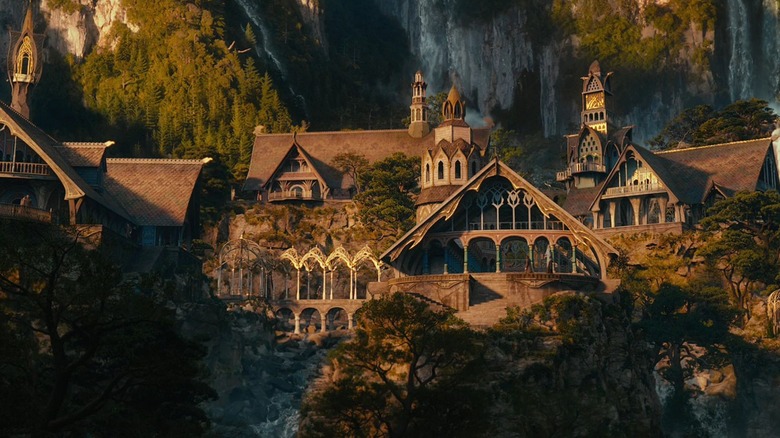
Rivendell ends not with a bang, but with a whimper. Nevertheless, it's one of the most important Elven locations in the entire Second and Third Ages of Middle-earth history. Elrond founds the stronghold during the Second Age, in the wake of Sauron's betrayal and destruction of the Elven smiths of Eregion — a catastrophic event that was just depicted at the end of "The Lord of the Rings: The Rings of Power" Season 2. When Elrond retreats with some of the survivors, he establishes Rivendell to help hold back the Dark Lord's surging military power.
This is briefly mentioned in the book "Unfinished Tales," where it says, "Elrond was able to extricate himself, but he was forced away northwards, and it was at that time ... that he established a refuge and stronghold at Imladris (Rivendell)." This kicks off a multi-millennia history in which Rivendell becomes a premier Elven location on the mainland of Middle-earth. Other immortal areas, like the Elven kingdom of Lindon, fade over time, but Elrond and Rivendell remain consistently important.
The Free Peoples of Middle-earth gather there to set out on the War of the Last Alliance (depicted in the opening scene of "The Fellowship of the Ring" movie). Rivendell remains an unconquered and critical chokepoint in the Misty Mountains for centuries afterward, too, helping the nearby kingdoms of Men resist Sauron's forces and hosting multiple important guests, gatherings, and councils. In the end, though, it is created as a place of escape and protection. And once Sauron is defeated (and suffers a fate worse than death), a lot of the function of the Elven fortress is removed. It isn't long before it's abandoned, fading away along with the Elves that built it.