

5 Best Western Movies With Female Leads, Ranked
The best Western films of all time have each left an indelible mark on pop culture. They've cultivated immense fanbases and, as seen by the numerous films homaging that famous closing shot of "The Searchers" alone, continue to influence 21st century art. However, many of these Westerns do come with unfortunately retrograde qualities. While classic Westerns like "The Ox-Bow Incident" or "High Noon" were subversive titles challenging societal status quos, many of these reinforced conventional societal hierarchies, often in toxic ways.
This was especially true for women in these stories. If they ever even appeared in many classic Westerns, ladies were only around to motivate and/or listen to male protagonists. Luckily, not all Westerns (including ones from before 1960) adhered to this standard. Many Western movies have happily eschewed this norm in favor of embracing unique stories that place women front and center. The five best Western movies with female leads (ranked from "least best" greatest below based on the authors subjective opinions) are exceptional works that offered women-identifying artists a chance to inhabit compelling characters.
To boot, these titles often went beyond just having a woman protagonist in their subversiveness. They also delivered imagery or explored themes that were often unprecedented in the Western space. In doing so, these movies expanded what Westerns could look like and delivered artistry deserving of a rich legacy.
5. Little Woods
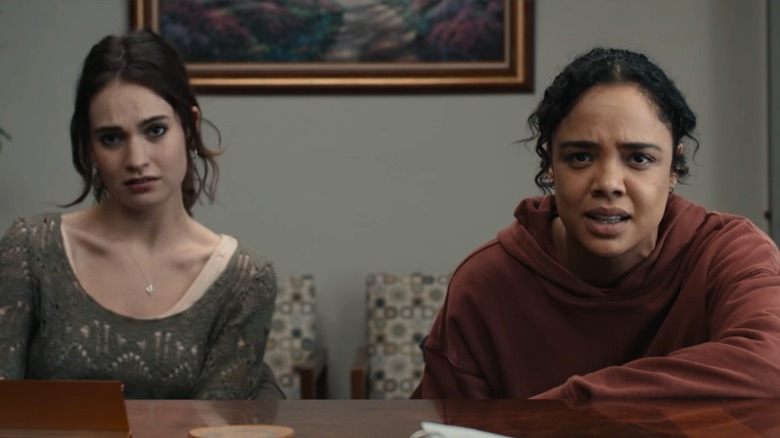
Long before helming the exhilarating sequel "28 Years Later: The Bone Temple" or 2025's deliciously realized "Hedda," filmmaker Nia DaCosta made her directorial debut with "Little Woods." This 2019 motion picture followed sisters Ollie (Tessa Thompson) and Deb (Lily James) struggling to get by in their North Dakota town. When the clock begins ticking on paying back their mother's mortgage, Ollie must briefly return to selling pills to make the money they need, even as she begins carving out a new life for herself.
Moral complexities abounded in classic Westerns, but they often went only so far with that element. Intricate definitions of good and bad defined movies that shuffled women to the background and often relegated people of color to harmful caricatures. With "Little Woods," DaCosta takes the morally complex characterization, rural backdrops, and melancholy atmospheres of classic Westerns, but centers on distinctly modern, marginalized voices this genre often excluded. After all, would a vintage John Wayne Western demonstrate the care DaCosta wields depicting Deb's desire for an abortion?
The result is a feature thriving on the rich characters and evocative atmosphere of Westerns that still feels excitingly like nothing else in the genre. This distinctiveness even extends to DaCosta's unflinching willingness to have her characters grapple with late 2010s late capitalism-induced woes. The old and the new magnificently merge in this debut that instantly established Nia DaCosta as a vital filmmaking voice.
4. True Grit (2010)
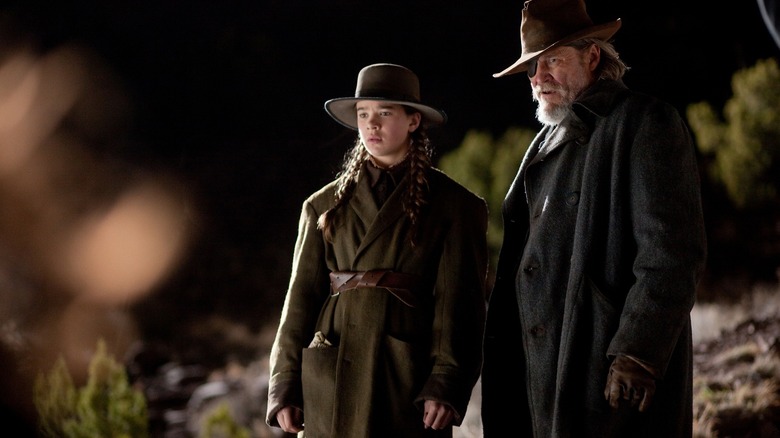
John Wayne, you've been replaced. That actor's original portrayal of Rooster Cogburn was instantly overshadowed the moment Jeff Bridges put on the weary cowboy hat for the 2010 Coen Brothers movie "True Grit." In it, Cogburn is hired by teenager Mattie Ross (Hailee Steinfeld) to take down the man, Tom Chaney (Josh Brolin), who killed her father. She's seeking revenge. Cogburn's seeking booze money. Thus, they go off on a quest to pursue Chaney, alongside Texas Ranger La Beouf (Matt Damon). It's a story many may be familiar with, but in the hands of the Coens, "True Grit" takes on fresh new life.
Part of that comes from the directing duo never forgetting the excellent comedic sensibilities that have informed so many of their works. An early scene of Cogburn recounting one of his latest escapades sets the stage for the dark humor permeating this iteration of "True Grit," an element that proves vital to making these fictional individuals work as people. Steinfeld, meanwhile, absolutely astonishes in her big screen acting debut. She's phenomenally assured, particularly in how effortlessly she holds her own against experienced pros.
"True Grit" also features some of the most accomplished imagery cinematographer Roger Deakins has ever put on-screen. His visuals are nothing short of mesmerizing. So often, remakes are simply hollow echoes of superior movies, but this new vision of "True Grit" is one of those remakes that's better than the original.
3. The Wind
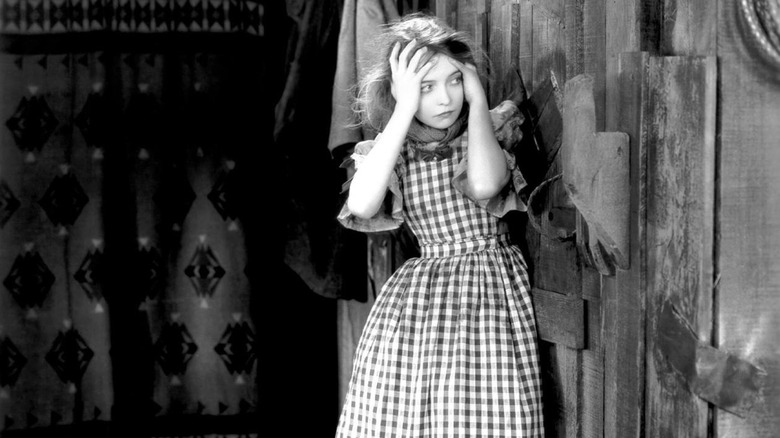
By 1928, the age of silent films was coming to an end. Even as a new era brought on by "The Jazz Singer" was emerging, though, director Victor Sjöström, the great silent cinema maestro behind works like "The Phantom Carriage," gave the world one last technically silent classic. Working from a script penned by Francis Marion, "The Wind" chronicles Letty (Lillian Gish), who suddenly found herself at her cousin's ranch in West Texas. These new confines come with many challenges, including the romantic advances of creepy neighbor Lige Hightower (Lars Hanson) and the brutal wind-dominated landscape.
The early age of sound films, unfortunately, initially inspired more rigid camerawork to account for the technological limitations and nosiness of the tech needed at the time. In contrast, "The Wind" is a luscious film full of deeply theatrical imagery and precisely realized lighting. These vibrantly executed visuals ensure that Letty's tormented interior comes through 100%. The images on-screen are as towering as her emotional experiences. Lillian Gish's performance is also tremendously riveting. Her outstanding physical acting and facial expressions alone make it obvious why she was a silent cinema icon.
Best of all, "The Wind" is a rare film that gets even better as it goes along. A third act that functions as a combination of "The Shining" and the song "Goodbye, Earl" must be seen to be believed. "The Wind" excels as both a unique Western and a swan song for silent cinema.
2. Johnny Guitar
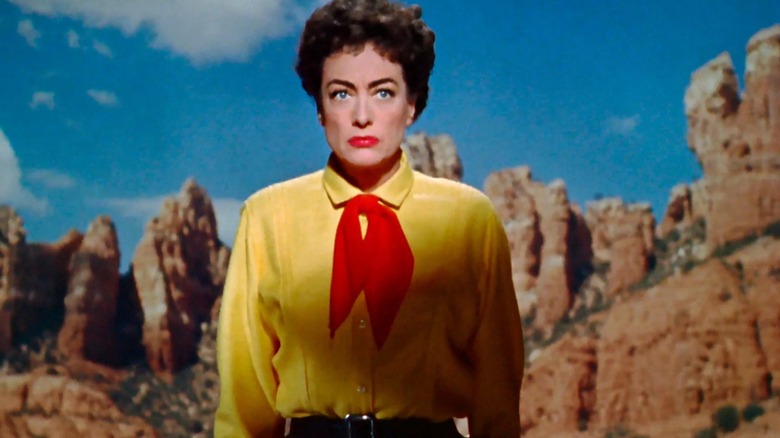
Director Nicholas Ray, the man responsible for some of the best movies of the 1950s, has a filmography crammed with unforgettable gems. However, even with such a towering body of work, "Johnny Guitar" stands out as one of his greatest accomplishments. Joan Crawford, another legend who has headlined multiple beloved cult classic movies, is the centerpiece of this 1954 Western. Here she plays Vienna, a saloon owner, which is thought of by the local townsfolks as the source of all their troubles. After all, it's a woman-owned establishment! Nothing good can come of that!
Once various crimes are pinned on Vienna by folks like Emma Small (Mercedes McCambridge), Vienna, with the aid of the titular Johnny Guitar (Sterling Hayden), work overtime to prove her innocence. This plotline informs a movie that effortlessly delivers everything a film should have. For one thing, bright colors abound in this luscious production. Ray and cinematographer Harry Stradling make the world of "Johnny Guitar" an abundantly vibrant one you can't tear your eyes away from. Similarly sublime are the production and costume design, both of which inspire "ooos" and "aaaaahs" at every turn. Plus, every performance in here, including Crawford's magnetic work, is outstanding.
Crawford's nothing short of a force of nature in her pronounced performance and "Johnny Guitar" is all the richer for it. "Johnny Guitar" is another richly entertaining and crafted masterwork from Nicholas Ray.
1. Meek's Cutoff
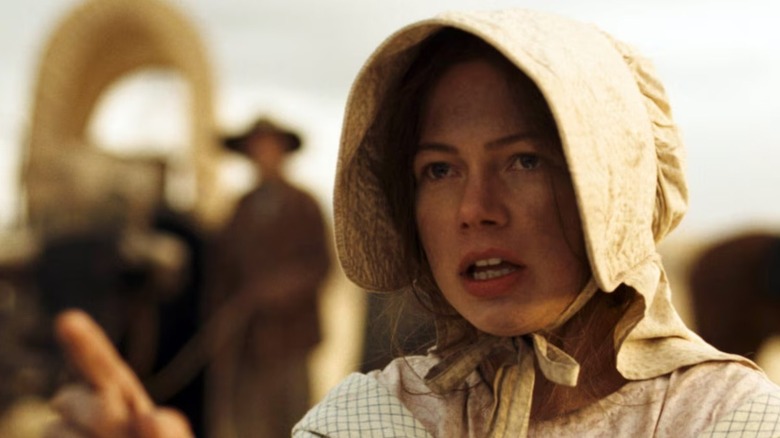
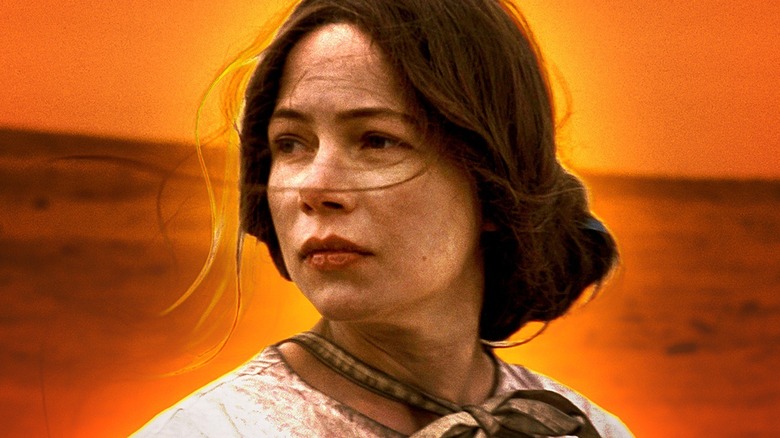
Director Kelly Reichardt is a phenomenal filmmaker with nothing but bangers in her filmography. Part of that sterling track record is her 2011 masterpiece "Meek's Cutoff," a movie set in the 1840s following settlers like Emily Tetherow (Michelle Williams) and Thomas Gately (Paul Dano) being led by Stephen Meek (Bruce Greenwood), a man refusing to acknowledge he's wrong or leading these people astray. This title is shot in the 1.33:1 aspect ratio called the Academy Ratio, one of many touches that add up to something profound.
With this detail, Reichardt frames the characters in cramped confines, mirroring the entrapment these settlers are consumed in following Stephen Meek. This visual detail also upends the expansive CinemaScore imagery used for mid-20th century Westerns that often focused on hagiographic, heroic portraits of men like Meek. Reichardt's commitment to methodical pacing and quiet atmospheres lets the anguish of these characters, including indigenous supporting figure The Indian (Rod Rondeaux), register as extra potent. Her unhurried visual sensibilities are realized with exceptional finesse.
Every time Williams and Reichardt collaborate, nothing short of cinema magic materializes. Like their other titles such as the heart-shattering "Wendy and Lucy," the duo provide unforgettable work on "Meek's Cutoff." In every respect, whether it's visuals or the characters it focuses on, "Meek's Cutoff" eschews default American Western norms. Such deviations inform the greatest aspects of yet another towering Kelly Reichardt achievement.