

5 Best Movie Remakes Of The 21st Century, Ranked
People have complained that Hollywood is running out of ideas for longer than many of us have been alive, but sometimes, copying another director's homework is a recipe for success. After all, some movies with the potential for greatness fall short of achieving it, and others struggle to translate the elements that made material which worked so well in another medium thrive on the screen. In the case of this list, some even took bigger risks in remaking movies already viewed as classics, which paid off by easily eclipsing the originals.
Our list of the best movie remakes of the 21st century was chosen by personal preference, and it was a lot easier to compile than many articles we've put together: there are five obvious picks for this category, which shine all the brighter when placed next to the many lazy, uninspired remakes that have graced cinema screens in recent years. All the following movies are bangers that deserve a place at number one, but only one can sit on the throne. So we gave the seat to the one in most need of love, as the other four have all been given their flowers by audiences and cinephiles.
For more great remakes from further back in cinema history, come back here after reading for all the movie remakes we think are better than the originals.
5. Dune
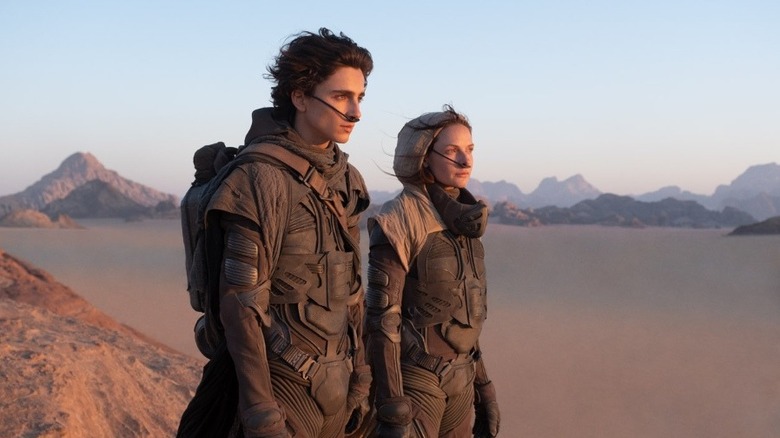
Frank Herbert's "Dune" was commonly accepted as one of the most unadaptable sci-fi novels ever until Denis Villeneuve came along. After all, failed attempts by idiosyncratic directors like Alejandro Jodorowsky (outlined in the documentary "Jodorowsky's Dune") are infamous in their unrealized ambition, and the one true adaptation we got courtesy of David Lynch was a compromised box office bomb he'd soon disown.
The only reason Villeneuve's adaptation, a triumph on the scale of Arrakis itself, is in last place on this list is simply because it's only half the story, and 2024's "Part Two" is, in our opinion, an even more exhilarating take on the material. But what a re-introduction to this far-flung world "Dune" is, taking a source considered too heady, too dense with lore to translate as a mainstream blockbuster and making it both thrilling and accessible to those furthest removed from its obsessed and nerdy fandom.
That it felt effortless, allowing the action to illustrate this world's hierarchy and rivalries rather than a barrage of exposition, was an almost unthinkable achievement on first viewing considering the sheer density of Herbert's novel. Coming hot on the heels of two prior works of sci-fi existentialism — "Arrival" and "Blade Runner 2049" — made "Dune" feel less like an ambitious undertaking and more like the epic scale intergalactic action movie Villeneuve had been working his way up to. It's only half a remake, hence its low placement, but believe us when we say that if we were counting both films as one gargantuan whole, this would be ranked a lot higher.
4. True Grit
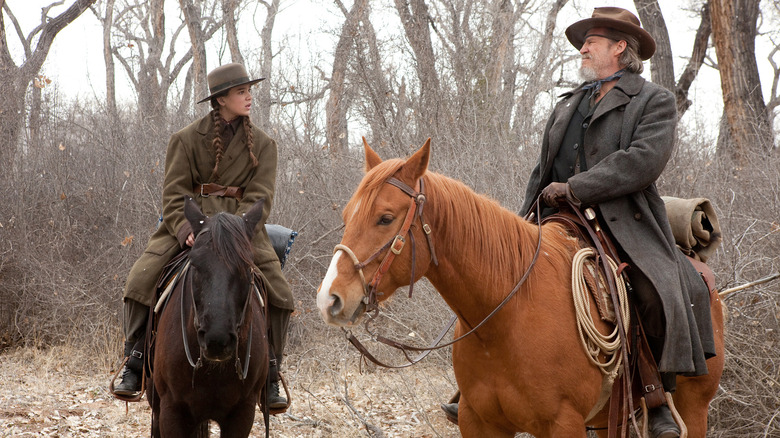
Now mostly known as the movie which finally won John Wayne his best actor Oscar, the 1969 adaptation of "True Grit" hasn't aged particularly well, with its reputation eclipsed by the fact it gave the Duke his win. Revisiting Charles Portis' 1968 novel of the same, Joel and Ethan Coen wanted to make a more faithful adaptation, told directly from the book's youthful perspective of Mattie Ross, a teen who seeks an aging bounty hunter's help to avenge her father. However, the most surprising thing about "True Grit" was that just a few years after "No Country for Old Men," the directors had traded that film's nihilism for something more straightforwardly emotional.
The Coens have been criticized many times over accusations that they look down at their characters, but "True Grit" is uncharacteristically earnest in its outlook, even as it doesn't dilute many of the darker themes in the novel that the prior adaptation did. Their Rooster Cogburn (Jeff Bridges) is the cantankerous burnout that Wayne never could fully become in a movie star vehicle, and via Hailee Steinfeld's Mattie, they told one of the strongest female coming-of-age tales you could find in an era dominated by endless YA adaptations.
It was a film that felt completely out of time, like a golden-age Western that was only rediscovered in 2010, and this might be why it's not regarded as one of the Coens' best — it doesn't bear their fingerprints quite as prominently as their finest movies. But it is an emotionally stirring tale told with crowd-pleasing panache, and proof that, when they start making movies together again, they could happily leave their sardonic comfort zones behind.
3. Ocean's 11
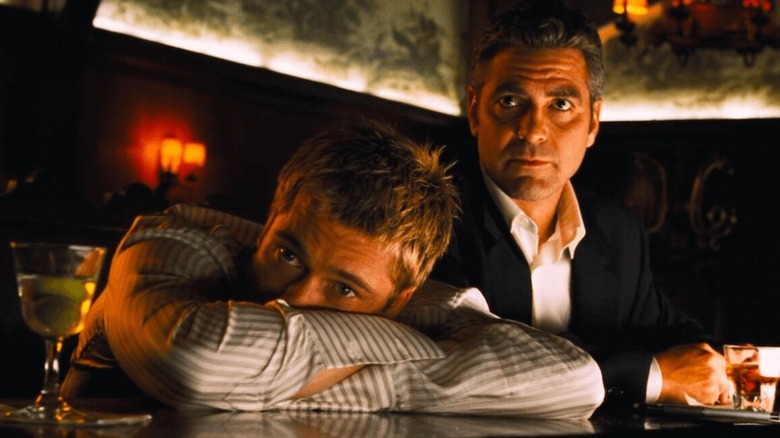
Released in 1960, the original "Ocean's 11" was regarded by the critics of its day as nothing more than a Rat Pack vanity project; a thinly held together wisecracking heist movie that seemed to exist as an excuse for Frank, Dean, and Sammy to banter, break into song, and generally coast by on a flimsy, ill-defined plot.
In the hands of director Steven Soderbergh and screenwriter Ted Griffin, this lazy, forgettable star vehicle from another era not only became the definitive George Clooney movie star role, but the blueprint for many modern action comedies. If you don't believe us, head over to any streaming service of your choice and look at the star-studded, direct-to-streaming movies they've produced. Chances are, they'll revolve around a band of mismatched elite criminals collaborating on a dangerous, elaborate heist, and their algorithmic qualities won't contain a single iota of the cool, easy-going charm of "Ocean's 11."
The extended Vegas heist scene is one of the knockout set pieces of the 2000s, but outside of that, the movie didn't receive the same rapturous reception as Soderbergh's two prior movies — "Erin Brockovich" and "Traffic" — both of which received multiple Oscar nominations and wins. If anything, it was underappreciated upon arrival for being pure popcorn escapism. Still, it has managed to stand the test of time as one of its era's finest examples of blockbuster thrills. After two politically engaged movies right before it, you can understand why Soderbergh would want to make something so comparatively light on its feet; time just ended up proving his least weighty movie to be the most enduring and endlessly watchable.
2. The Departed
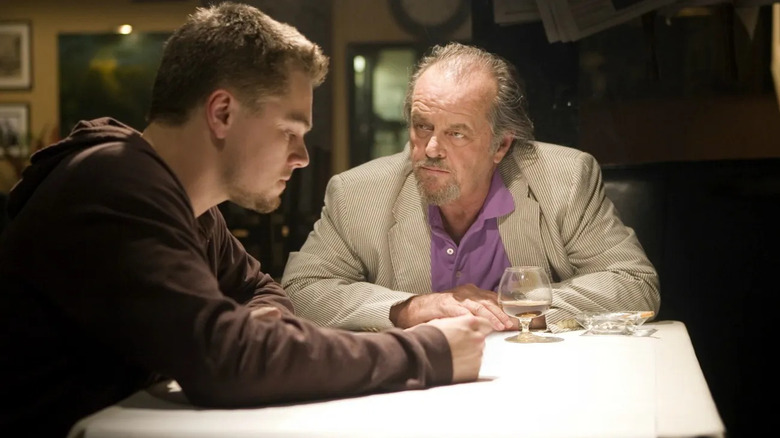
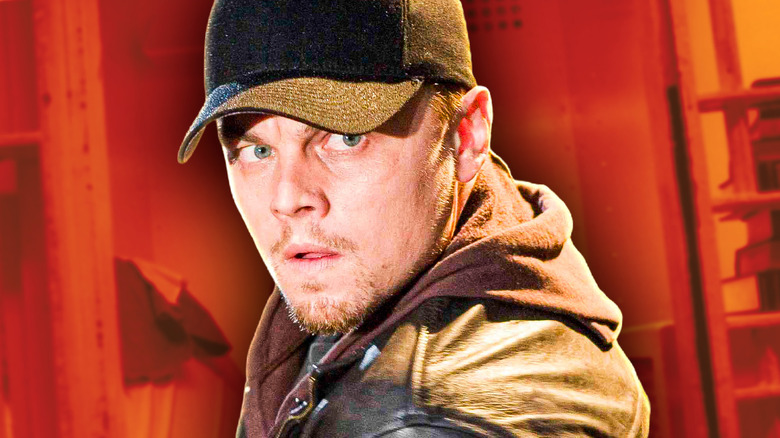
Rather than simply translating the plot of the twisty Hong Kong action saga "Infernal Affairs" to America for a Hollywood remake, screenwriter William Monaghan set his story in Boston to draw from the real-life tales of criminal corruption in Boston's infamous Winter Hill Gang, taken over by James 'Whitey' Bulger in 1979. Bulger served as the inspiration for Jack Nicholson's Frank Costello, one of several larger-than-life figures in Martin Scorsese's bloody tale of double-crossing rats on both sides of the law, who manages to make the action movie source material look restrained in comparison.
It's Nicholson's last great screen performance, and for that reason alone, "The Departed" is one of the most essential screen remakes. Through Scorsese and Monaghan's darkly comic interrogation of the dual attempts by the mob to infiltrate law enforcement, and law enforcement to infiltrate the mob, it has a far more distinct personality (and a far more foul-mouthed screenplay) than the trilogy which inspired it.
Although it won Scorsese the best director Oscar that had proven elusive throughout his career, it wasn't coasting on former glories. Instead, it was every bit the equal to his earlier crime epics for which he deserved accolades. And it was just as uncompromised as his earlier work, with the director eventually falling out with Warner Bros. due to a torturous production where they wanted him to rewrite the ending to save either of the main characters (Leonardo DiCaprio and Matt Damon) so they could have a franchise. He said no, and the brutal, blackly comic story is all the better for it.
1. West Side Story
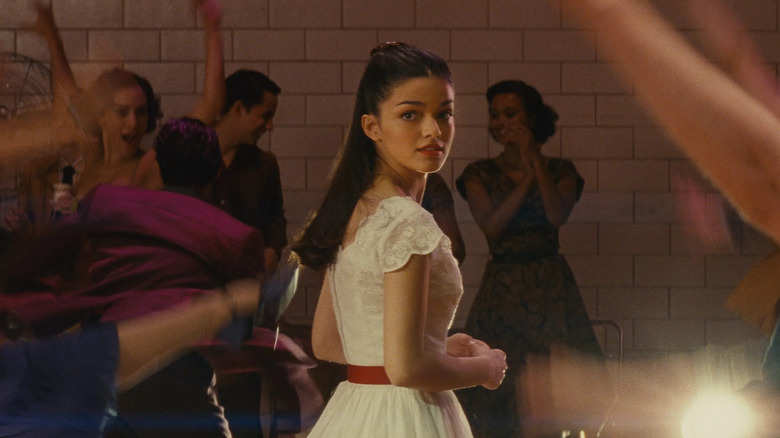
Steven Spielberg had always wanted to make a musical, and yet there was still understandable skepticism when he signed on to adapt "West Side Story." The original movie won best picture and is still rightly regarded as one of the finest in its genre. Even as one of the greatest directors in Hollywood history, could Spielberg find anything new within an already socially conscious story to make it resonate more in the modern day? The answer was a resounding yes, although to say the movie flopped is an understatement; part of the reason we've picked it as number one is because it still hasn't found the massive following in its cultural afterlife that it needs.
On a pure movie magic level, this is one of Spielberg's best movies of the 21st century, upstaging the original's musical sequences by restaging on a gargantuan scale, in some cases even shutting down New York streets to film on location (such a rarity that it feels triumphant here).
However, it's the recontextualization of this "Romeo and Juliet" tale which makes it resonate strongest, with the director once again collaborating with screenwriter Tony Kushner to update the story's social allegory in a way that better reflects the cultural divides of the Trump era. It's hardly subtle, but it makes the famously harrowing finale even more powerful, reviving a period piece as something keenly, painfully felt in the modern world. Time will prove it as one of his ultimate masterpieces; Spielberg's best blockbuster that never was.