

5 Movies That Made Changes For Their Re-Releases
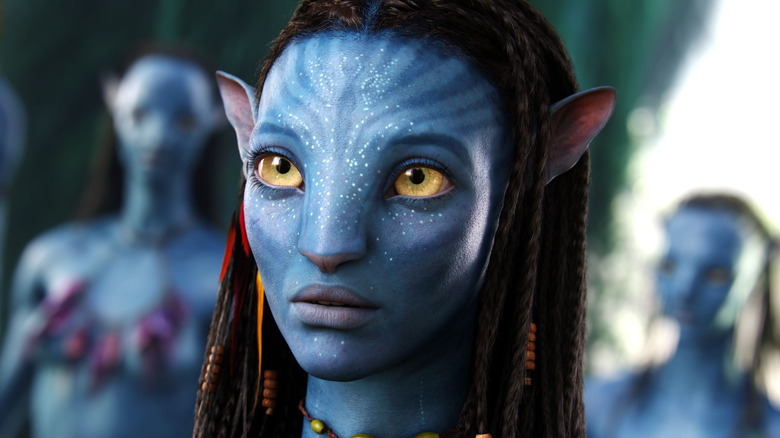
When people venture into theaters to see a theatrical re-release of a beloved older movie, the intent is often to re-experience something they're familiar with. Re-releases of titles like "Citizen Kane" and "Jaws" will inevitably attract viewers who've never witnessed them on the big screen. However, a good chunk of the audience are people craving the comfort of seeing their favorite movies back in their original artistic habitat. Thus, it's crucial that any motion picture that's warranted another theatrical run lives up to people's memories of these films.
Even with these expectations, theatrical re-releases are often where filmmakers go hog wild updating pre-existing movies. Just look at the "Avengers: Endgame Encore" re-release, which promises to incorporate new material into this 2019 blockbuster to tee up the impending Marvel Cinematic Universe title "Avengers: Doomsday." This Anthony and Joe Russo directorial effort is not alone in engaging this practice. These five memorable examples of movies that were changed for theatrical re-releases are just some instances of films being altered for their new big screen runs.
Sometimes these changes were extremely minor and flew past the heads of audiences. Other times these alterations were egregious and have become infamous among movie geeks. Whatever the reception to these tweaks, these five notable theatrical reissues paved the road for endeavors like "Avengers: Endgame Encore."
Star Wars
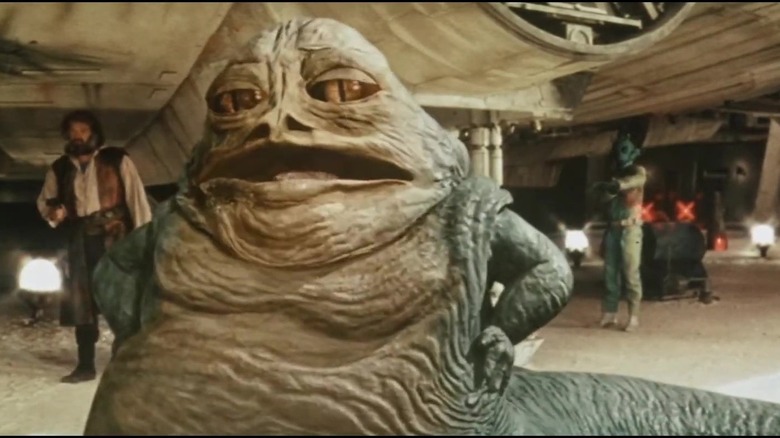
In 1995, a VHS box set of the original "Star Wars" trilogy featured a note from George Lucas that declared that this was "the final video release of 'Star Wars' in its original version." Two years later, these three movies were released back into theaters for the 20th anniversary of the initial "Star Wars" with CG "enhancements." Lucas intended for these to be the new default versions of the three films that changed American cinema forever as the Prequel Trilogy was gearing up.
The January 1997 reissue of "Star Wars: A New Hope" established the kind of changes audiences would be experiencing. The CG alterations and various other tweaks made to this 1977 masterpiece are now considered among the biggest mistakes the Star Wars franchise ever made. Even beyond the whole legendary "Han shot first" debacle (this version of "Star Wars" had Greedo shoot first before Han Solo killed him), once meticulously arranged shots were now cluttered with CG junk and creatures. Then there was a restored Jabba the Hutt sequence that killed the pacing and ruined the suspense of Jabba's eventual "Return of the Jedi" debut.
These changes have remained infamous, and only added further ominousness to that George Lucas declaration back in 1995. Audiences had no idea they were about to get such radically inferior versions of their favorite movies.
E.T.
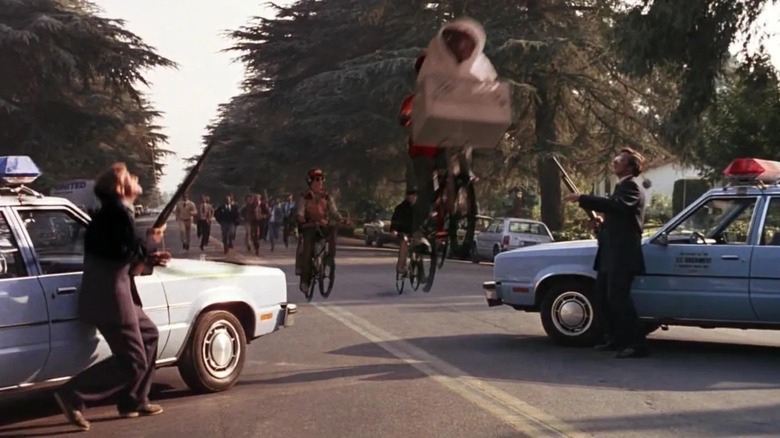
Given that "E.T. the Extra-Terrestrial" is one of the most beloved and successful movies of all time, one wouldn't imagine director Steven Spielberg and company hankering to make any changes to this revered crowdpleaser. However, that's just what the director did in 2002 when "E.T." was gearing up for its 20th anniversary re-release. Chiefly, and most infamously, a scene where cops brandished guns while preparing to stop Elliot (Henry Thomas) and E.T. (Pat Welsh) was drastically changed so that the guns were gone, largely replaced with walkie-talkies so that any hint of bullets flying around children was removed.
Additionally, a line about Elliot's brother going out on Halloween "dressed as a terrorist" was altered in the wake of 9/11 while CG tweaks were incorporated into the once entirely-puppet E.T. character. Two deleted scenes (one of which featured E.T. taking a bath) were also restored. These were all weird alterations that didn't go over well. Unsurprisingly, these are the changes Steven Spielberg regrets making on "E.T." Not only did this inspire Spielberg to never again retroactively alter his older movies, but the altered 2002 cut is no longer in circulation.
For subsequent theatrical "E.T." reissues, such as the film's 2022 IMAX release, the original theatrical cut, with the trigger-happy police officers intact, was put back on the big screen. While George Lucas stuck to his guns on the 1997 "Star Wars" changes, Spielberg happily backtracked on these controversial "E.T." tweaks.
Titanic
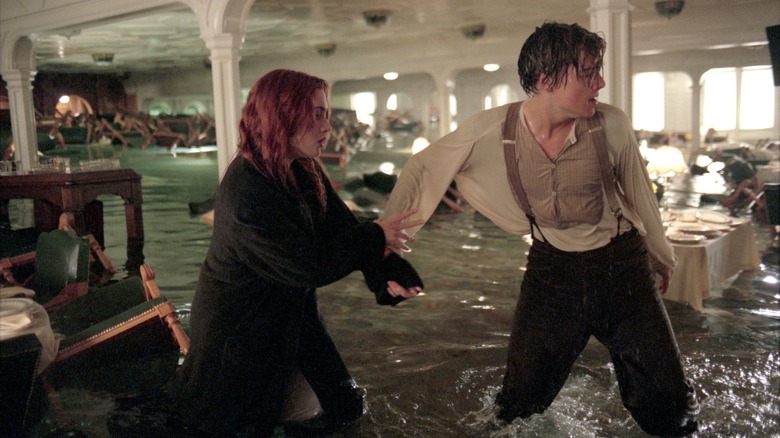
In recent years, James Cameron has understandably come under fire for overseeing dismally received 4K transfers of his older directorial efforts (chiefly "True Lies," "Aliens," and "Titanic") that have completely wiped away their original visual identity. The 2020s versions (largely released to home video) have, among other flaws, ramped up the lighting and smoothed everything in the frame, often via what appears to be AI technology, so that everything now looks unsettlingly unhuman. Cameron's been his usual unapologetic self about these transfers, a frustrating development for those looking to properly preserve popular movies for future generations.
Thankfully, the 2012 3D reissue of "Titanic" wasn't besieged by such frustrating changes. Part of the untold truth of "Titanic," though, is that one notable tweak was made for this 15th anniversary theatrical run. The original night sky constellations seen in the final scenes didn't accurately reflect what the stars looked like on the fateful night the actual Titanic ship sank into the ocean. Thus, Cameron and his team went back and digitally overhauled these constellations to adhere to reality. It's a tiny detail 99% of audiences won't notice, but it allowed the crew to utilize scientific information unavailable back when "Titanic" was initially released.
Otherwise (beyond the obvious conversion of "Titanic" into digital 3D and IMAX picture quality), this 2012 "Titanic" reissue, unlike Cameron's recent 4K releases of his beloved films, didn't touch the original classic.
The Lion King
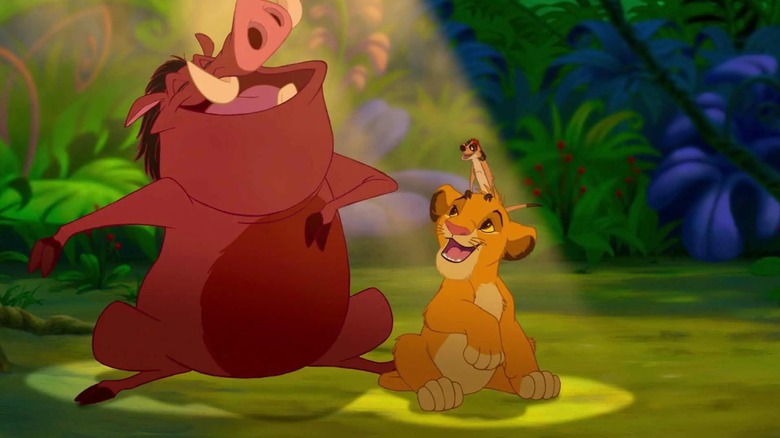
For decades, Disney's norm for its homegrown animated classics was to re-release them in theaters every seven or eight years and reap the profits. However, the November 1997 reissue of "The Little Mermaid" turned out to be the last instance of this release strategy, with a subsequent "Beauty and the Beast" reissue once scheduled for 1998 getting scuttled. With VHS (and the nascent DVD format) changing how people rewatched movies, Disney opted to prioritize home video revenue streams over generational theatrical re-releases. However, the Mouse House briefly returned to giving its animated gems big screen reissues in the early 2000s with IMAX re-releases of '90s Disney classics.
That included "The Lion King," which was released on IMAX screens in December 2002. Audiences could now experience the beloved "Lion King" characters on a bigger screen than ever before, though the film had been tweaked from its original 1994 incarnation. These changes were tiny, like new animation for some background animals in "I Just Can't Wait to Be King," a briefly-seen waterfall getting overhauled, and the removal of dust particles that spelled out "SFX" (some viewers read those particles as spelling out something bawdier).
These changes didn't exactly "ruin" the movie, but they also didn't drastically enhance it. Things could've been worse, though. Disney could've crammed in all the flaws that plagued the 2019 "Lion King" remake, an overhyped movie that ended up being terrible.
Avatar
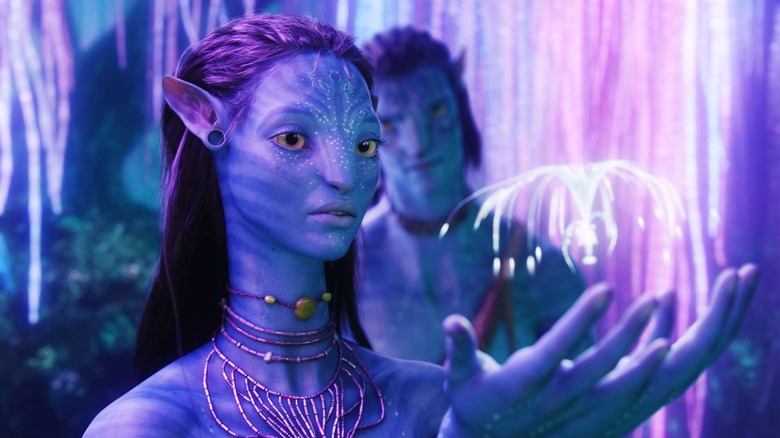
The 2009 hit "Avatar" has experienced two major theatrical re-release's since first hitting theaters. The first was in August 2010, just eight months after its theatrical debut. This iteration was basically an extended cut of "Avatar" rather than a movie repeatedly tweaking familiar scenes. Individually, the newly added segments often run under a minute long and amount to new shots of creatures or explanations for unique Pandora phenomenon (like how those mountains are able to float).
For "Avatar" die-hard fans, the most notable additions to this 2010 reissue were a brief early scene offering some hints at the tragic backstory behind Dr. Grace Augustine's (Sigourney Weaver) Na'vi school as well as a final sequence where Jake Sully (Sam Worthington) puts a pain-ridden Tsu'tey (Laz Alonso) out of his misery. All the visual effects and sound work for these sequences were also fully completed so that they'd fit into the original film seamlessly. 12 years later, in anticipation of "Avatar: The Way of Water," the 2009 film once more made its way into theaters. This "Avatar" re-release was different from the original solely by adding a brief new interaction into its climactic montage.
The scene depicting the humans being forced to leave Pandora now features Parker Selfridge (Giovanni Ribisi) pausing to tell Sully and friends "this isn't over," a hint that they'd return to Pandora to cause more misery in "The Way of Water."