

5 Most Realistic Post-Apocalyptic Movies Of All Time
How exactly would one define a "realistic" post-apocalyptic movie? It's not like anyone alive today has ever endured an apocalyptic event ... yet. It's hard to know what's realistic until one happens, and we see how humanity reacts to a cataclysmic occurrence that wipes most everyone out.
However, we can have a pretty good idea of what would go down. While things like zombies and aliens make for exciting films, those probably aren't too likely to wipe out most of mankind. For this list, the most realistic post-apocalyptic movies are those that have grounded causes for humanity's extinction. Additionally, they focus more on the psychological aspects of having to survive a world-altering event.
Of course, we're not fortune tellers. For all we know, the real world could wind up following the exact same timeline as the "Mad Max" franchise, and soon we'll all be playing flame-spewing guitars on top of giant trucks. But when you want something a little more down-to-earth, albeit an Earth that's completely scorched, these are the post-apocalyptic movies to have on your radar.
The Road
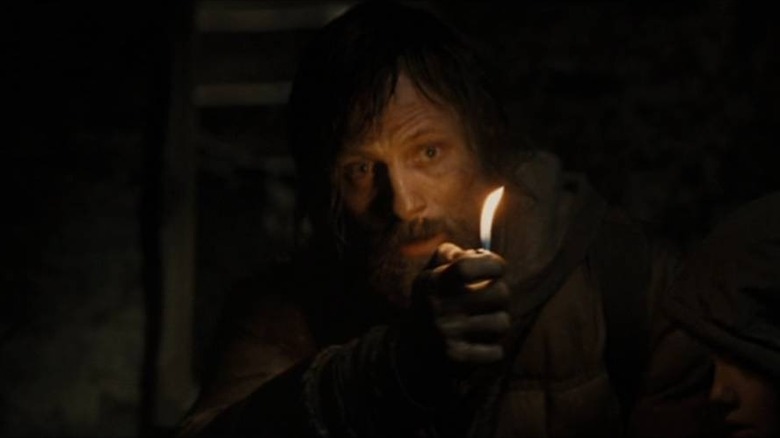
"The Road" offers one of the bleakest interpretations of what the world will be like when humans are on their final legs. The story's pretty straightforward: A man (Viggo Mortensen) and his son (Kodi Smit-McPhee) wander an ash-covered wasteland, witnessing the last remnants of mankind resort to cannibalism while they maintain what little humanity they have left. Director John Hillcoat crafts a desolate wasteland as the duo move through an America that's devoid of all plant life, all so they can find an area that may be a little kinder to them.
"The Road" doesn't focus on why the world ended. All we know is what's left. And unlike a lot of other post-apocalyptic movies like "WALL-E" and "Nausicaä of the Valley of the Wind" about trying to make the world right again, there's no hope left in "The Road." All the man and boy can do is hope to find someplace where they'll be a little bit safer and warmer. "The Road" also doesn't concern itself with typical Hollywood post-apocalyptic tropes like car chases and big fight scenes. Instead, plot points include just trying to find water and canned food.
Many Reddit users have referred to "The Road" as the most realistic post-apocalyptic movie because it focuses on the likely mundane (but very harsh) reality of surviving after society collapses. And above all else, it's about a father teaching his son to retain his humanity in a world where others have gone full-on depraved. The truth is: People wouldn't suddenly become action heroes in the apocalypse. We'd all just be cold, shivering, and looking for a nice place to rest while we wait to die.
Children of Men
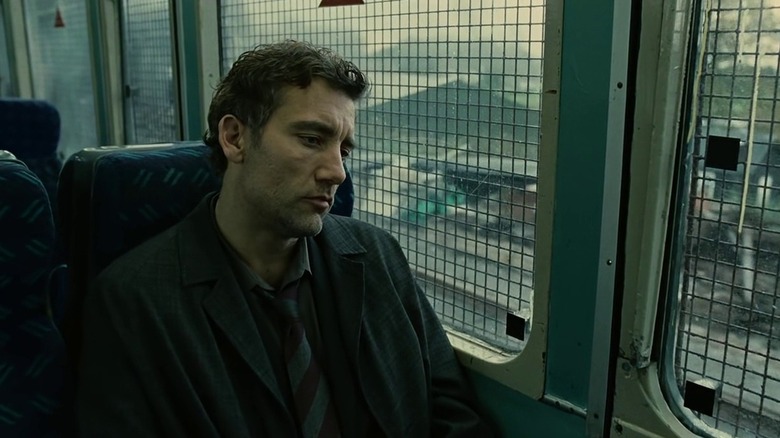
"Children of Men" doesn't have a flashy apocalypse. Many post-apocalyptic films see the world end all at once in some kind of fiery explosion or zombie uprising. More than likely, systems will simply fail one at a time while looking somewhat similar to the world that exists now. Humanity has lost all hope due to a wave of infertility that has prevented any new births in the last 18 years. And in the United Kingdom where the film takes place, a totalitarian state has been implemented that everyone treats as business as usual.
There is a glimmer of hope in this world as the disillusioned Theo (Clive Owen) becomes part of an effort to restore faith in the world by transporting a pregnant woman, the first in years, to safety. Primarily, the thing that makes "Children of Men" realistic is how so much reflects our current world. It's easy for people to lose hope and feel like there's not much of a future to work toward. But what people really need is a glimpse of hope. They need something to believe in where they can picture themselves as 80-year-olds. This starkness and reflection of the world's current state is a big reason why many consider "Children of Men" the best science-fiction movie of all time.
"Children of Men" shows a world where mankind goes out with a whimper instead of a bang. There's a stark reality where we all just start slowly dying out. There's no nuclear annihilation or alien invasion. Humans just stop being born, and we slowly die out as a small chapter in the history of the universe.
The Survivalist
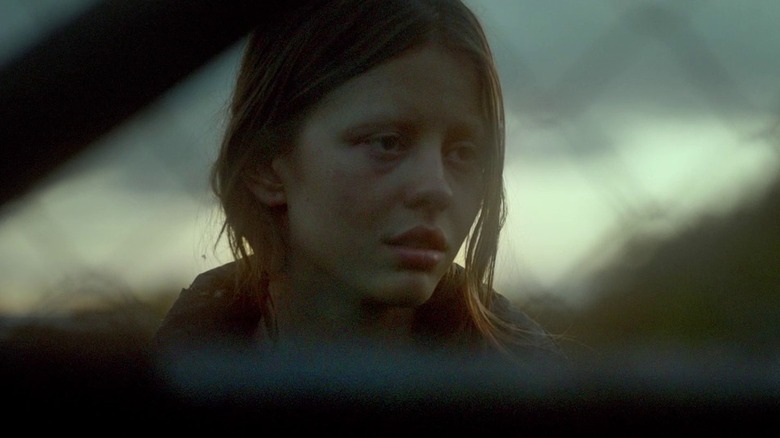
"The Survivalist" strips the post-apocalyptic genre down to its bare essentials. While "The Road" and "Children of Men" show off a lot of their respective downtrodden worlds, "The Survivalist" brings things down to a single farm. Some kind of event has stripped the world of most resources, so food and water are the only things that matter now. The film opens with a lone survivalist (Martin McCann), whose way of living is upended with the arrival of Kathryn (Olwen Fouéré) and her daughter, Milja (Mia Goth).
The three form an alliance: The two women can stay with the survivalist on the condition that the survivalist can have sex with Milja. Any semblance of human compassion becomes purely transactional, as any other human can be a threat. That soon proves to be true of the two women, as Kathryn soon begins plotting a way to kill the man. "The Survivalist" depicts a world where trust becomes a liability. But even when the opportunity presents itself to kill the survivalist, Milja wants to spare him.
When one thinks about the basest of human behavior, violence and sex probably come to mind. But empathy is as intrinsically human as anything else. Even though the two parties don't trust one another, they naturally begin protecting one another when other threats present themselves. Empathy doesn't have to be a weakness, and even when you're completely sufficient in terms of food and water, we all still need human interaction.
Right at Your Door
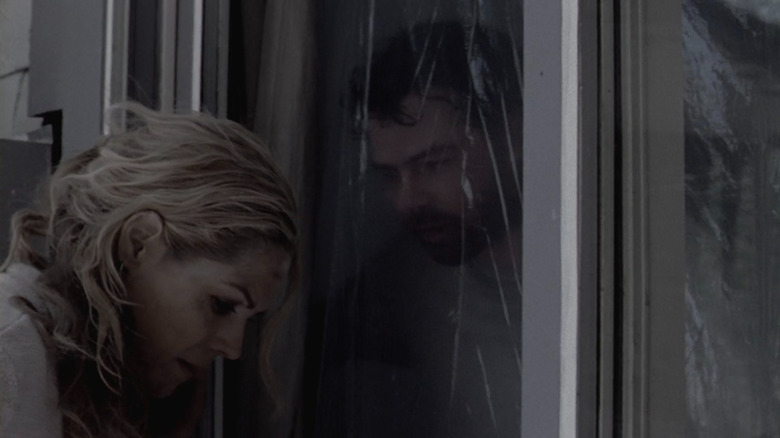
Post-apocalyptic films don't necessarily have to follow the end of the world, just the end of a certain person's existence as they know it. 2006's "Right at Your Door" is one of the most low-key apocalpyse films in recent memory, but it's incredibly effective at showing the confusion and panic that can set in when something catastrophic happens.
Out-of-work musician Brad (Rory Cochrane) goes home upon hearing that dirty bombs have gone off all over Los Angeles. Panic sets in, as he tries to figure out what's going on over the radio as he's watching black plumes envelope the city. And a major source of contention arrives when Brad's wife, Lexi (Mary McCormack), arrives home, and Brad refuses to let her in since she may already be contaminated.
"Right at Your Door" homes in on the immediate aftermath of a localized apocalypse. No one knows what's going on, and imperfect information might be going out to the masses. It's a claustrophobic thriller where characters are forced to make tough decisions because they believe it's the right thing.
It Comes at Night
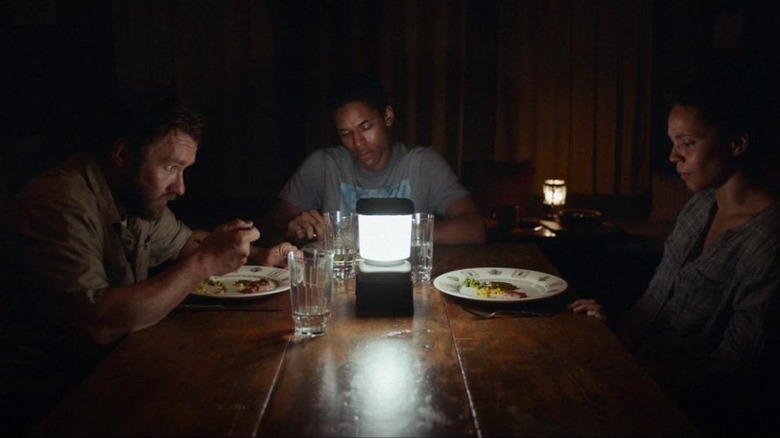
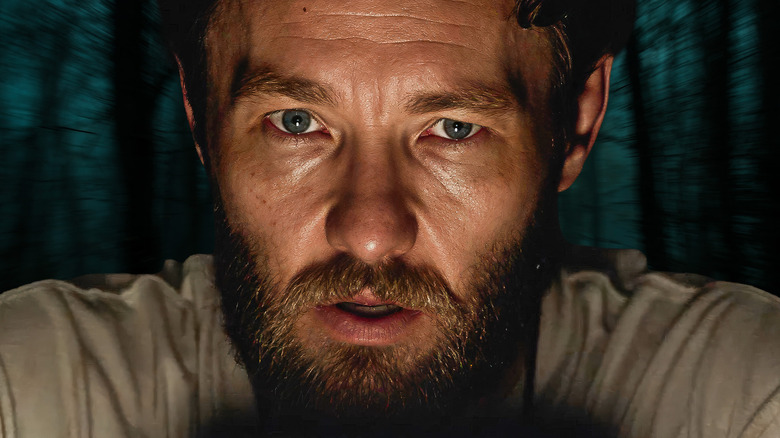
In the years following COVID-19 lockdowns, any post-apocalyptic movies about plagues have taken on a harrowing new meaning. "It Comes at Night" came out in 2017 but feels like it could be an alternate reality of what went down in the real world. The film sees much of the world's population deceased from a virus, but Paul (Joel Edgerton) protects his family in an isolated cabin. But their way of life becomes upended when another family emerges who seem safe on the surface but could threaten everything they hold dear.
A virus can be the most devastating post-apocalyptic villain of them all. There's not much in the way of outside threats from monsters, but any other human being, no matter how nice they seem, could be a carrier. Every decision Paul makes stems from a desire to protect his family. There could be a real utility in having more people under his roof, but he has trouble seeing the benefits when the dangers are lurking behind every corner.
"It Comes at Night" follows in the tradition of other realistic post-apocalyptic movies in showing how human trust breaks down when civilization collapses. The truth is we probably don't need to worry too much about supernatural monsters, aliens, or epic battles playing out. When the world ends, there will just be small fragments of humanity remaining, hoping to hold out for one day longer. But will you allow your fear to get the better of you or maintain hope and trust when the world's at its darkest?