

5 Classic '80s Movies That Are Unwatchable Today
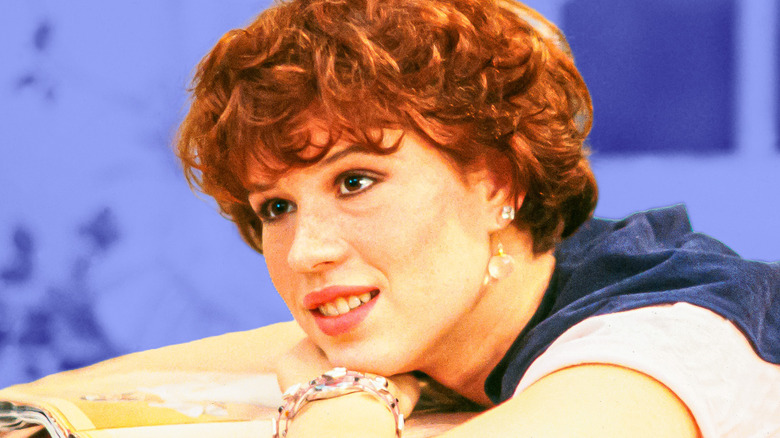
The following article includes mentions of sexual assault, child abuse, and suicide.
The 1980s gifted us some amazing movies across nearly every genre. The decade's charming nostalgia factor continues to be mined and updated for contemporary eyes in projects like the Duffer Brothers' "Stranger Things." What's more, the best movies from the 1980s still stand the test of time.
That being said, the decade wasn't completely saturated with greatness. Yes, the '80s had plenty of box office bombs, because that's the nature of the beast. However, watching them now, you'll find that even some of the era's most fondly remembered movies aren't as magnificent as you'd expect.
As the years have gone by and cultural sensibilities have changed, some 1980s films simply haven't stood the test of time. In fact, it's safe to say that they would never get made today — either because their attitudes were always unsavory, or because the passage of time and greater modern understanding has added an uncomfortable element to their approach and subject matter. Let's take a look at five of the worst offenders.
Ferris Bueller's Day Off
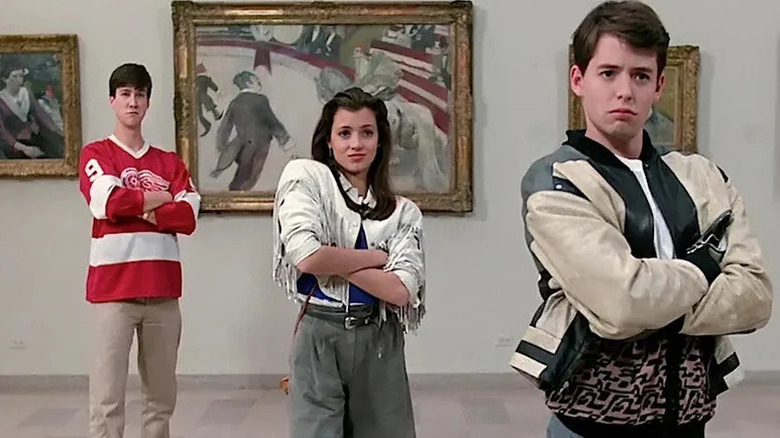
Is there a cooler high schooler than Ferris Bueller (Matthew Broderick)? John Hughes' 1986 comedy classic "Ferris Bueller's Day Off" runs on its central character being the kind of likable, yet irreverent figure that young viewers can admire and identify with. The fact that the Library of Congress has preserved "Ferris Bueller's Day Off" in the National Film Registry shows how well it is regarded.
Yet, the movie is far from perfect. Along with the many dumb things in "Ferris Bueller's Day Off" that everyone ignores, when putting its central premise in today's context, it's outright unwatchable. To achieve his goal of skipping school and chilling out, Ferris and his acquaintances lie, cheat, deceive, and even steal the film's iconic Ferrari 250 GT. All of this and more make Ferris come across as an entitled, disruptive young egomaniac who's 100% in the wrong, provided you watch the film from an adult's point of view.
There's also the movie's hapless antagonist, Dean Edward R. Rooney (Jeffrey Jones), who gets put through the wringer despite just doing his job. Real-life events have made Jones' presence even worse than Ferris' antics: In 2003, Jones received a five-year probation for soliciting sexual photographs from a 14-year-old. He avoided an additional child pornography charge with a plea deal, but was ordered to register as a sex offender. Knowing this adds a whole new layer of discomfort in seeing Jones' character work in a school and chase students.
Sixteen Candles
Our second John Hughes entry is 1984's "Sixteen Candles," a comedy classic with an 81% Tomatometer rating on Rotten Tomatoes. Molly Ringwald stars as Sam Baker, whose 16th birthday is disrupted by a number of events from forgetful parents to a sister's impending wedding to outright harassment from a geeky boy at school (Anthony Michael Hall). Unfortunately, the film's subject matter gets even worse, especially by modern standards.
Our main character — who, again, is 16 years old — becomes the target of a seduction bet and a lengthy subplot focusing heavily on her underwear, while being subjected to things like her grandparents highlighting her developing anatomy. Elsewhere, hard-partying senior Caroline (Haviland Morris) is part of an uncomfortable storyline about male characters discussing to potentially abuse her while she's in an inebriated state. It's pretty bad, honestly, and "Sixteen Candles" star Ringwald herself highlighted many of these uncomfortable aspects in The New Yorker in 2018.
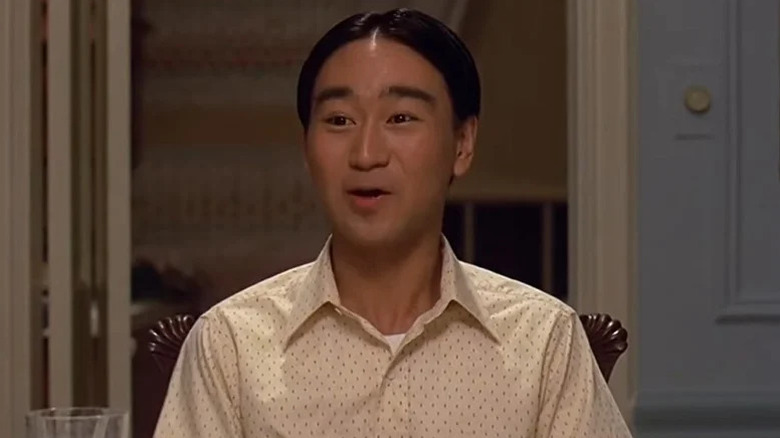
There's also the matter of Long Duk Dong (Gedde Watanabe). Even when the movie came out, some were calling out the Chinese foreign exchange student for being a collection of offensive stereotypes played for comedy. Time has not been kind to the character, either. From his accent to the gong sound effect that announces his arrival, Long Duk Dong comes across as wildly insensitive — which is doubly unfortunate because he's arguably the best-known character in the movie.
Revenge of the Nerds
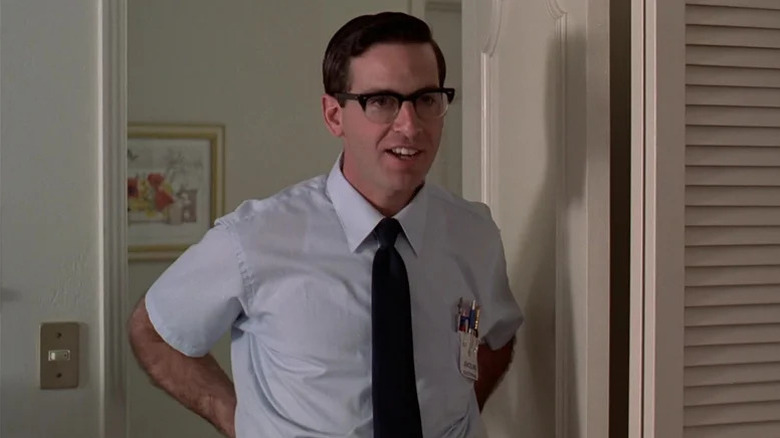
Director Jeff Kanew's 1984 comedy "Revenge of the Nerds" was never going to be the pinnacle of appropriateness given its rampant use of stereotypes, low-brow humor, stalking, voyeurism, and sexual overtones. However, one particular moment stands head and shoulders above the rest — and it makes the film an incredibly difficult watch through the lens of contemporary sensibilities.
In the movie, lead nerd Lewis Skolnick (Robert Carradine) has a sexual encounter with jock leader Stan Gable's (Ted McGinley) girlfriend, Betty Childs (Julia Montgomery). The catch is that Betty doesn't know it's Lewis; instead, the nerd initially masquerades as Stan, only revealing his true identity after certain intimate acts.
The unlikely end result of this encounter is that Betty falls for Lewis and becomes a staunch supporter of the nerds. It's a deeply questionable scene at the best of times, and this morally bankrupt act being presented as a net positive for Lewis sends all the wrong messages.
Better Off Dead
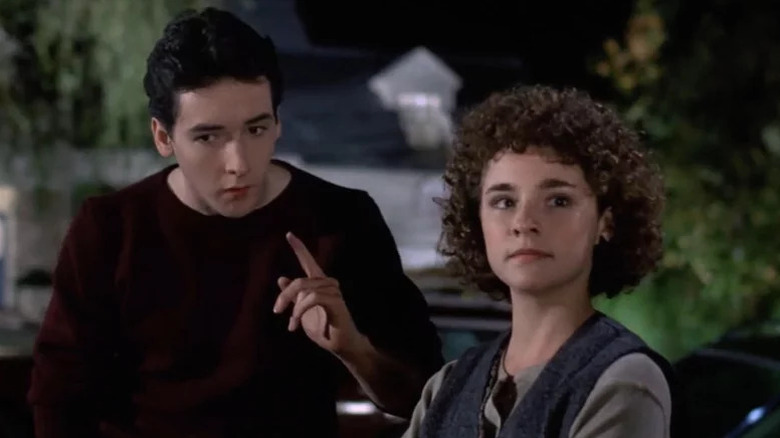
Savage Steve Holland's 1985 teen comedy "Better Off Dead" hits the "unwatchable by contemporary standards" wall with its central themes alone. It revolves around main character Lane Myer's (John Cusack) desperation and disenfranchisement after his girlfriend Beth Truss (Amanda Wyss) leaves him for the more conventionally attractive and popular Roy Stalin (Aaron Dozier) — yes, he's really called that.
It drives home Lane's state of mind with a running "joke" of multiple suicide attempts that illustrate his despair. Add in the coercion that Lane's eventual love interest, foreign exchange student Monique Junot (Diane Franklin), faces when dating the repugnant Ricky Smith (Dan Schneider), and an unsuspecting viewer is in for a whole lot of discomfort.
The real issue here is the movie's tone. While surreal and darkly funny by design, "Better Off Dead" treats much of its subject matter in a distinctly comedic fashion — up to and very much including the suicide attempts, one of which ends with Ricky's mother (Laura Waterbury) quite literally blowing up. It's hard to see that fly today, and it doesn't do any favors for the film's allure. Perhaps unsurprisingly, John Cusack regrets filming the movie.
Porky's
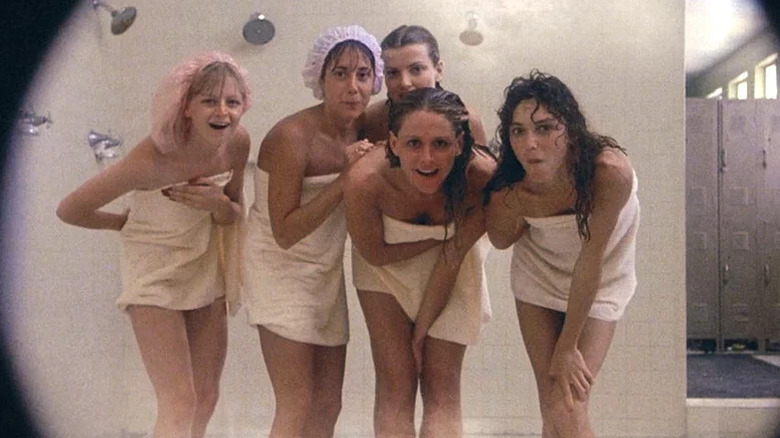
Where to even begin with "Porky's?" The basic concept of a bunch of high schoolers attempting to hire a sex worker at a strip club? The peeping Tom subplot where one of the boys sticks parts of his anatomy through a hole in the women's shower room wall? Perhaps the very existence of Coach Beulah Balbricker (Nancy Parsons) and her questionable mission to catch the aforementioned culprit by literally exposing him? Or maybe Kim Cattrall's admittedly spirited turn as a woman who's nicknamed "Lassie" based on the noises she makes during intimate encounters?
Yeah, none of that's great. However, the worst part is the rampant sexism present throughout. The late, great Roger Ebert latched on to this in his 1.5-star review of the 1981 movie, pointing out in no uncertain terms that Bob Clark's teen comedy views women as strange, potentially hostile creatures who are treated as plot devices and oddities — an assessment that has only grown more accurate in the decades since.
If you or anyone you know has been a victim of sexual assault, may be the victim of child abuse, or is struggling in crisis, contact the relevant resources below:
-
The Rape, Abuse & Incest National Network website or contact RAINN's National Helpline at 1-800-656-HOPE (4673).
-
The Childhelp National Child Abuse Hotline at 1-800-4-A-Child (1-800-422-4453) or contact their live chat services.
-
Call or text 988 or chat 988lifeline.org.