

5 Most Historically Accurate Courtroom Dramas, Ranked

Few courtroom movies manage to get the details right. On the big screen, you can expect dramatic speeches on the stand, impassioned monologues from the lawyers, and explosive evidence uncovered at the last minute, flipping the case upside down. Real life is nowhere near as exciting. To paraphrase one of the best courtroom movies, we can handle the truth, it's just nowhere near as enjoyable as what Hollywood is offering.
For this article, we're throwing all of that out the window to present our case in defense of what we believe to be the five most historically accurate movies in the genre. You can be the jury who decides whether we've made the best picks, but we'll play fair and act as defense and prosecution, putting these titles under the microscope to examine what they got right, and what they exaggerated for the big screen. Not all these movies are adapted from real cases, but the ones which are fictionalized drew some inspiration from them and have been celebrated by those in the legal profession, which is why they're included.
As always, these aren't ranked on a scale of least-to-most accurate, but from our least favorite up to our ultimate number one pick. Each of these films is worthy of your time ... although some have aged worse than others.
5. Inherit the Wind
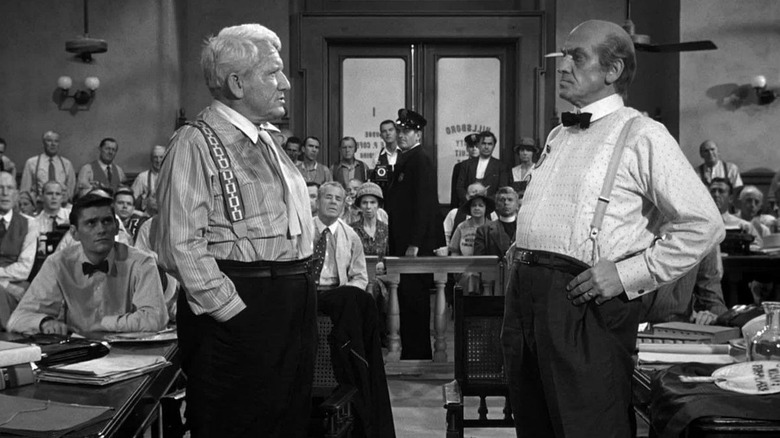
Adapted from the 1955 play of the same name, "Inherit the Wind" retells the infamous 1925 Scopes Monkey Trial as a parable for McCarthyism and the anti-intellectual wave that infected American culture throughout the 1950s. Because of the political allegory at hand, many of the details from the real trial — in which a Tennessee teacher was trialed for teaching his pupils about human evolution, breaking the state's education laws — are exaggerated, as playwright Jerome Lawrence was unambiguous about the movie being a parable for intellectual freedom.
The notes which open each publication of the play even stress that it isn't meant to be an authoritative historical account, and there's been no denials that characters like the town preacher and his daughter were wholly invented, nor were there religiously devoted townsfolk forming angry mobs against the defendants.
That being said, the screenplay adaptation by Nedrick Young and Harold Jacob Smith leans closer towards the reality of the trial than the source material. Several sequences not in the play are pulled from court transcripts of the Scopes case. Spencer Tracy's Henry Drummond might be a fictitious creation inspired by agnostic lawyer Clarence Darrow, but he makes specific legal citations and recommendations pulled straight from the historical record, giving the movie an added layer of authenticity even as it's not trying to be direct history.
"Inherit the Wind" was a groundbreaking work for its time, but it hasn't aged perfectly: It no longer reads as controversial as it thinks it is. It's an entertaining relic, which isn't as prescient as it should be, considering the historical parallels to the current day.
4. Just Mercy
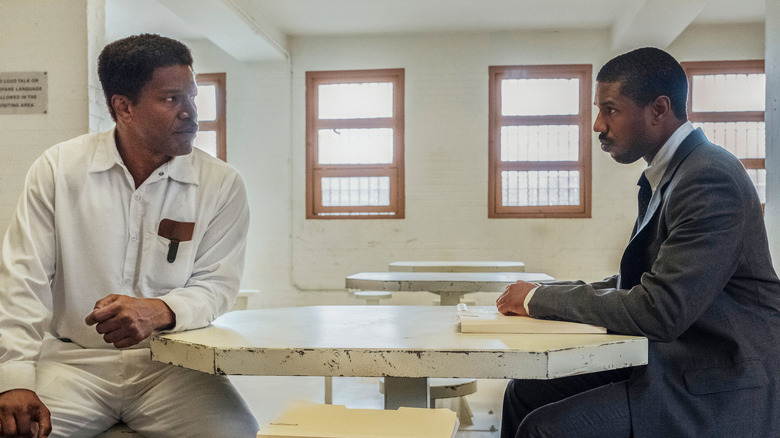
Like many fact-based movies, director Destin Daniel Cretton's legal drama takes some obvious liberties with the historical record. Centering on African American lawyer Bryan Stevenson (Michael B. Jordan) and his attempt to aid the appeal of Walter McMillan (Jamie Foxx) — wrongfully convicted of murder by an all-white Alabama jury, whose life sentence judgement was overruled by a court who placed him on death row — the miscarriage of justice at the film's core is handled faithfully, but broader details are retrofitted to better suit a cinematic narrative.
This means there are composite characters and significant changes to the timeline, although those are mostly to emphasize the horror of death row, with multiple clients that Stevenson represented throughout the entirety of his career compressed into this story's timeframe.
However, the surprisingly effects-heavy "Just Mercy" is adapted from Stevenson's own 2014 memoir of the same name, which makes this attempt to condense his life's work into a more streamlined narrative a noble one. In Montgomery, he formed the Equal Justice Initiative with Eva Ansley (portrayed by Brie Larson), and it's necessary to highlight the importance of that work by invoking some of his other cases.
The film also showcases the bureaucracy that often delayed his attempts to save his clients from a death sentence. It's a broad and often formulaic biopic, but that's necessary to bring Stevenson's work to the masses. A 2024 Stanford study found that this movie improved viewers' perceptions of incarcerated people — a fitting result for a movie based on this lawyer's lifelong mission.
3. Amistad
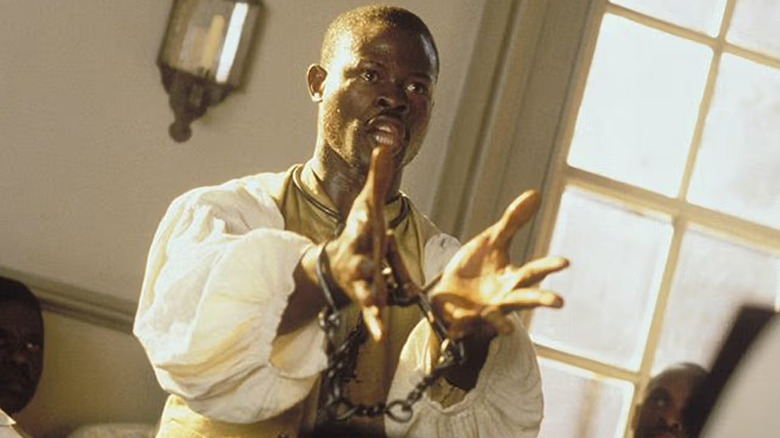
One of Steven Spielberg's lesser regarded movies, and one of his rare box office underperformers, "Amistad" charts an important legal precursor to the abolition of slavery, although it was criticized by some academics for painting too rosy a picture. It would be 20 years and a Civil War later before abolition would finally happen, which means that, even with the significance of the Supreme Court ruling at the heart of this film, there were still decades of problems to contend with. However, with the 1987 non-fiction tome "Mutiny on the Amistad" by Professor Howard Jones serving as one of the biggest sources of research by producers, the movie otherwise holds up well to scrutiny. Still, it's the inciting events of the case which are most faithfully depicted from historical record.
This is the successful attempt by the captured Mende tribe (led by Djimon Hounsou's Cinqué) to overthrow and kill their captors off the coast of Cuba — then a Spanish territory — with the two survivors transporting them to U.S waters instead of Africa, prompting an intense legal battle. Spielberg's depiction of the legal proceedings that followed, adapted from David Franzoni's screenplay, doesn't take much Hollywood license with how the case was won, but does add inter-character friction that reduces the contributions of figures such as abolitionist Lewis Tappan (Stellan Skarsgård).
The former President John Quincy Adams (Anthony Hopkins) regarded Tappan as the most crucial component in their successful case, but for a big studio movie, it made more sense to have the recognizable name be the driving force in court proceedings. Even as a mid-tier Spielberg effort, "Amistad" is a rousing work, with its alterations not affecting its well-researched portrayal of a groundbreaking case.
2. Judgement at Nuremberg
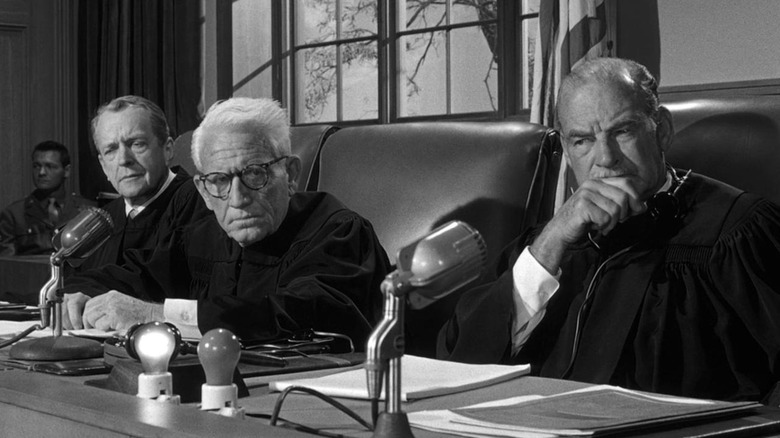
The second film on this list by director Stanley Kramer — and his direct follow-up to "Inherit the Wind," no less — reunited him with Spencer Tracy, who played the American Dan Haywood, chief judge at the Nuremberg trials. Clocking in at nearly three hours, "Judgement at Nuremberg" is only lightly inspired by the 1947 military tribunal which aimed to determine the extent of the crimes against humanity committed by the Nazi regime. The film focuses only on four defendants, as opposed to the 16 in real life, and brings together several fictionalized cases inspired by real incidents.
This light dramatizing doesn't obfuscate the true extent of the horrors, with Abby Mann's well-researched screenplay (adapted from an earlier TV play) drawing from infamous injustices under the regime. These range from the forced sterilization of those with disabilities, to the Katzenberger trial, where a kangaroo court sentenced a Jewish businessman to death over accusations he had an affair with an Aryan woman. It compresses the extensive trial into a shorter window, but never dilutes the harrowing nature of these cases, and is even more powerful for the difficult questions it asked.
The movie aims to explore ideas of collective guilt within a fascist regime, and even that of the allies who turned a blind eye for several years prior to the war, with stark archive footage from concentration camps only underlining these moral failings. It remains a powerful, uncomfortable work more than 60 years later.
1. Anatomy of a Murder
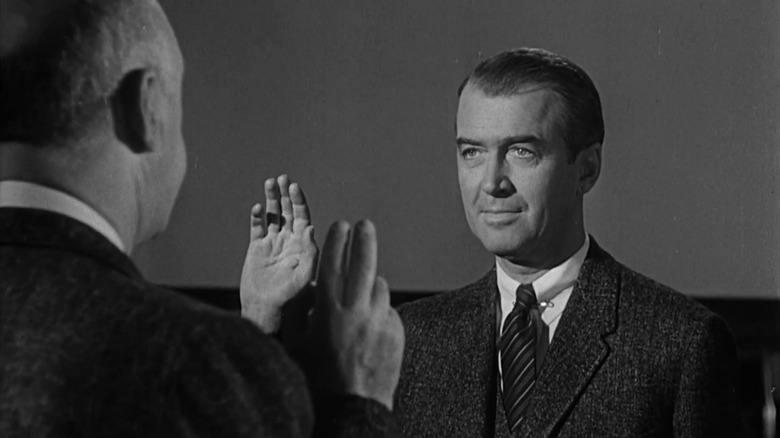
Although the most straightforwardly fictitious film on this list, "Anatomy of a Murder" is regarded as the high watermark when it comes to realism in the courtroom drama. To this day, it's used as a teaching tool in law schools for the way it accurately outlines each stage in the US criminal justice system with great detail, from the initial client interview right down to trial proceedings.
The only cause for concern is the aspect most clearly dramatized for effect, with both lawyers on both side of the case shown to be overstepping the line in coaching their witnesses' defenses, considered a major violation of legal ethics. This is easy to overlook in a movie which was otherwise groundbreaking for the blunt way in which it examined a case that dealt with sexual assault and murder, with the mayor of Chicago temporarily banning the film in his city for its use of clinical language that he considered vulgar.
Inspired by a case which took place in Michigan in 1952, "Anatomy of a Murder" also broke new ground for the legal drama due to its embrace of a moral grey area still alien to audiences accustomed to the clear-cut messages of Hays Code era movies. The explicit nature of the case isn't watered down, and the theatrics of the small-town lawyer (James Stewart) defending his client are designed to make an audience question the integrity of the proceedings. Beneath a well-observed portrayal of a criminal trial is a morally knotty examination of legal ethics, which feels as fresh and uncompromising within its genre as it did in 1959.