

Hollywood Doesn't Make Sci-Fi Epics Like This '80s Movie Today

We are living through another golden age of sci-fi movies. Films like "Mad Max: Fury Road," "Annihilation," "Arrival," "Dune," "Blade Runner 2049," "Ex Machina," and, more recently, "Project Hail Mary" have all shot science fiction back to the top of the cinematic charts, with many of those examples also having ties to another stellar decade for sci-fi cinema — the 1980s. But while there are some similarities between the grand genre epics of today and the groundbreaking work of that earlier decade — and many improvements in the interim — there's also something that's been lost, and the best way to talk about it is via Star Wars.
"The Empire Strikes Back" opened the 1980s with one of the greatest sci-fi films, and arguably the greatest sci-fi sequel, ever produced. It launched what many would call the genre's strongest decade in Hollywood, and it did so in many ways that would become common in the wake of its influence: the blend of stunning on-location photography and complex soundstage sets, sophisticated special effects work, and a scale and grandeur that extended beyond the film's own runtime. The '80s were full of sci-fi films that were ahead of their time, and "Empire" is a perfect example.
But there's also something about "Empire" that the sci-fi blockbusters of today seem to have lost: a feeling of romance — not strictly in terms of love, but in that classic sci-fi way, defined by heroic deeds, high adventure, and a sense of wonder. "Empire" walked a narrow line between Arthurian magic and harsh, lived-in sci-fi, striking a balance that the films of today have largely left behind.
Romance is the defining quality of The Empire Strikes Back
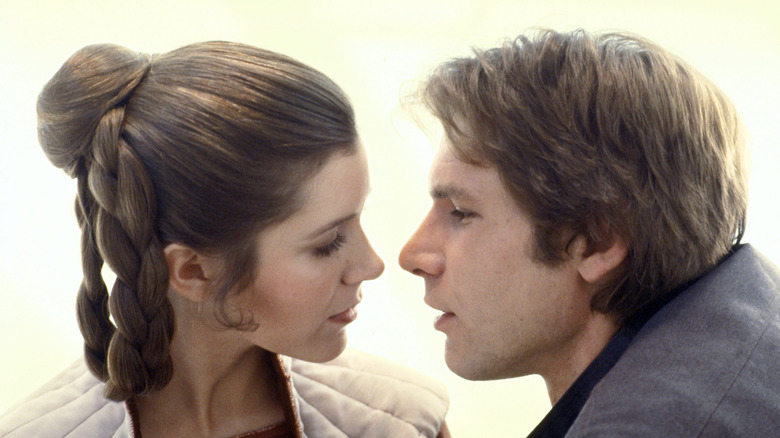
"Empire" is the love story of the original Star Wars trilogy, as the second entry in each of the successive trilogies would become. Han and Leia take center stage with an arc that colors the rest of the film in major ways, but it's not just the literal romance between those two characters that makes the film, well, romantic. It's the way Yoda speaks about the Force on Dagobah; the way the brutal landscape of Hoth holds magic, even as it tries to kill Luke; the way your breath catches in your throat the first time Cloud City comes into full frame.
"Empire" knows that space is romantic. It knows that the future is romantic. The costume design for Lando and the other sophisticates of the Bespin mining colony reflect a people trying to create something beautiful under the shadow of Imperial rule. And of course, that dream is broken as soon as Darth Vader shows up.
There is romance to the sands of Arrakis in Denis Villeneuve's "Dune" movies, but it's a romance tainted by a dark future. The universe is a cold, brutal thing in "Dune," where in Star Wars it is alive and healing. The triumphant moments in "Project Hail Mary" celebrate the endurance of the human spirit, but less the unknowable grandeur of a breathing, magical cosmos.
The Empire Strikes Back doesn't sacrifice hard sci-fi for magic
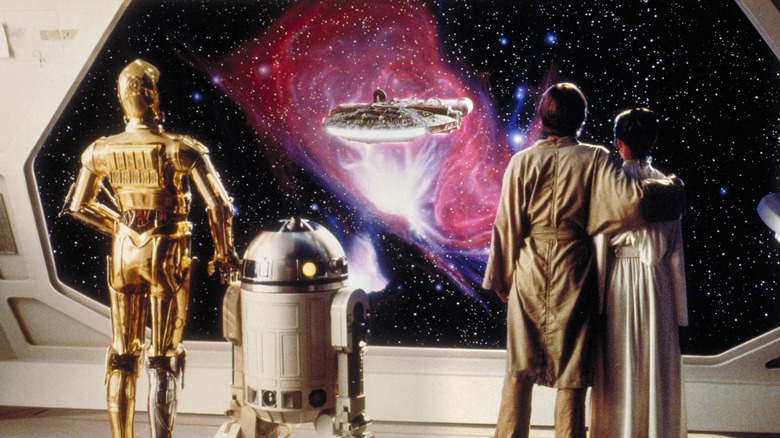
People often accuse Star Wars of being more fantasy than sci-fi, but it's more that the sci-fi is scattered around the fringes. "Empire" is filled with these sorts of details — how the T-47 snowspeeders aren't ready for Hoth's frigid climate at first because they're stuntfighters being retrofitted for the cold, or how Lando laments to Han that labor and supply issues have created problems on Cloud City due to the small size of the outpost.
These might not be the things you think about while watching the movie, but they are intentional, and they shape the story. The rebels stand at a disadvantage because their tech is not built for their purposes. Lando is forced to cut a deal that he hates because his colony is not self-sufficient.
At the same time, the sense of magic and adventure of the original trilogy pervades. The sci-fi epic has taken on an understandable aura of severity in recent years — something that wasn't really possible in the '80s due to the limitations of special effects. You could always sort of tell you were watching a movie, in a way that is a bit easier to obfuscate now. But in focusing on that severity, we've also lost some of the romance that Lucas used to balance the energy in "Empire" — a magical side to the epic that today feels distinctly of its day.