

Lanterns Review: The Mystery Thriller The DCU Needs

- The two leads are electric together
- The larger mystery is going to make week-to-week viewing a must
- Not as extravagant visually as some may want
- Perhaps a tad bit ambitious in some of its themes
HBO's "Lanterns" series is a lot of things, but most importantly, it's a necessary breath of fresh air for a brand coming off its first big flop. When James Gunn first spearheaded the new DCU, there was the pervasive sense that it was going to have a more diverse array of voices, genres, and tones than the homogeneity he experienced at Marvel. Rather, his DCU would be a haven for auteurs to carve out their own unique corners of this vast new shared universe.
But every single project released so far, from "Creature Commandos," to "Peacemaker" to "Superman," have all been aggressively Gunn-conceived ventures. "Supergirl," the first project he didn't directly write or direct, still featured his heavy hand and seemingly suffered for it, with critics not holding back. And aside from the upcoming "Clayface" (conceived by Mike Flanagan but directed by James Watkins), the next major DCU release is "Man of Tomorrow," a direct sequel to Gunn's "Superman."
"Lanterns" is different. It exists within the world Superman introduced us to and feels of a piece with what we've seen thus far, but also plays like something unexpected. Pitched as "True Detective" with a sci-fi twist, a buddy cop/noir thriller exploring a mystery at the heart of the DCU, "Lanterns" is the change of pace the franchise needs. We've only been privy to the first half of its eight-episode run, but if this sticks the landing, it'll give the DCU a much-needed shot in the arm.
Lanterns is more than just True Detective with aliens
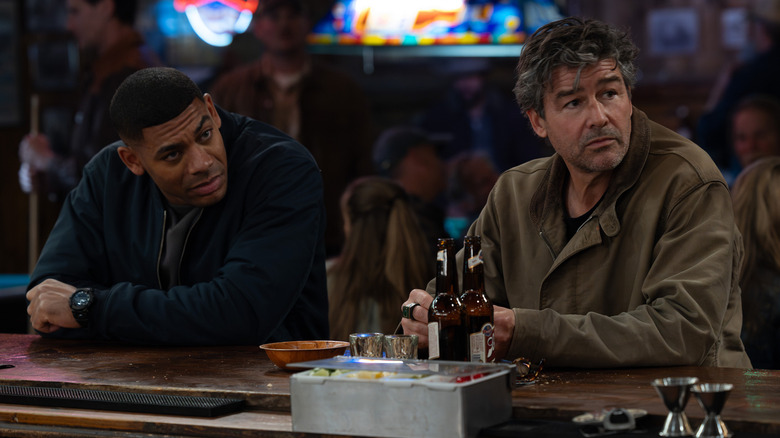
To be sure, "Lanterns" does have a lot of stylistic and structural overlap with "True Detective." It principally follows two mismatched partners, veteran Green Lantern Hal Jordan (Kyle Chandler) and his new trainee John Stewart (Aaron Pierre), as they work a mystery across multiple time periods. Hal has been Earth's first and only Green Lantern for years now, existing as one of the world's only superheroes in the pre-Superman timeline the DC Universe has loosely alluded to. But now he's getting on in years and is tasked with training John, an ex-Marine who grew up knowing about Hal's exploits from the media. Their first case together takes them to Rushville, Nebraska, a unique town that's connnected to Hal's origins with the Green Lantern ring itself.
In addition to the aforementioned HBO series, "Lanterns" also directly borrows from the central dynamic of "Training Day," while the setting of Rushville allows veteran TV helmer James Hawes to mine the Western genre just as much as it does the cop drama. The result is a rustic, grounded, and terse thriller that is concerned with narrative and character work first and science fiction world-building second. The early trailers felt so drab and desaturated that detractors thought the show was ashamed of its comic book origins. Yet the series itself is quite the opposite: People who were mad at the supposed lack of "green" won't be mollified by the first few episodes, but the specific way the show deals with the larger cosmic lore from the perspective of an Earthbound mission pays real dramatic dividends.
There's a moment early on where Hal gives a brief monologue in a bar about how the ring came into his possession and changed his life forever. There's no maximalist flashback, no cutaways to special effects-laden recreations of crash-landing spaceships. It's just Chandler's voice and eyes and face recounting a tale fans of the source material will be very familiar with, but recontextualizing that notorious event through sheer will alone. It instills chills and very efficiently sells why "Lanterns" took this particular approach.
In the wake of the 2011 "Green Lantern" film becoming a perpetual punchline, forever tethered to the chip on Ryan Reynolds' shoulder, reintroducing this mythology to the masses required a different approach. It's not ashamed of its beginnings, but it knows a little genre convention goes a long way. It's more like the first "Terminator" movie, which heavily alluded to the future robot war rather than trying to show us every inch of it. The unique way it brings Green Lantern back to the mainstream is an interesting amalgamation of its three creators' respective approaches to storytelling.
Lanterns is the product of three different visions
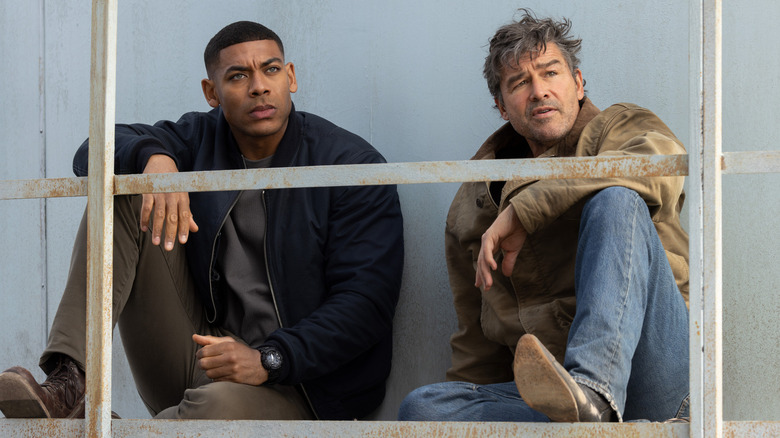
Primary showrunner Chris Mundy's biggest credit to date remains the Netflix crime drama "Ozark," and that show's confident plotting and high caliber acting are on display here, but it's the show's other two co-creators who give "Lanterns" its dueling creative identities.
Controversial "Wonder Woman" scribe Tom King has been involved with the DCU since James Gunn put his initial writers' room together, and the failed "Supergirl" film was loosely based on one of his most celebrated graphic novels. But "Lanterns," right from its shocking opening scene, feels like the clearest distillation of his cape comics in a live action setting. King likes to play fast and loose with accepted canon, making his approach to fan-favorite characters malleable within the stories he personally chooses to tell.
That's why his Hal is older, washed-up and conflicted about his own legacy. It's also likely why the unique wrinkle in the way John Stewart's connection to the mythology is dispensed with hews so closely to ex-CIA agent King's frequently maudlin and controversial explorations of combat veterans' histories. Both provide fertile ground for the series' two leads to play around in, with both Kyle Chandler and Aaron Pierre doing instantly iconic work within this new corner of the DCU.
The other big creative force here is "Lost" co-creator Damon Lindelof, and it's clear he is continuing some of the ideas that were central to his "Watchmen" adaptation. There is a palpable sense of racial politics being wrestled with inside a superhero-centric setting, particularly once Stewart's backstory begins to be excavated and his role as Hal's successor becomes more complicated than it first appears. Together, these different writers and their respective pet themes and approaches help create something that feels like a necessary step outside Gunn's authorial voice. Whether the changes work will likely depend on how much of a stickler for continuity and comic book accuracy the viewer is, especially with some of the thornier ideas surrounding race.
But "Lanterns" feels like something very necessary for the future of the DCU, especially its shaky state post-"Supergirl" and with the Paramount merger looming. Thankfully, it's an entertaining and engrossing proposition, the kind of show that's worth sticking with, whether or not the eventual finale effectively ties its disparate elements into a bow.