

5 Best Wes Craven Horror Movies, Ranked
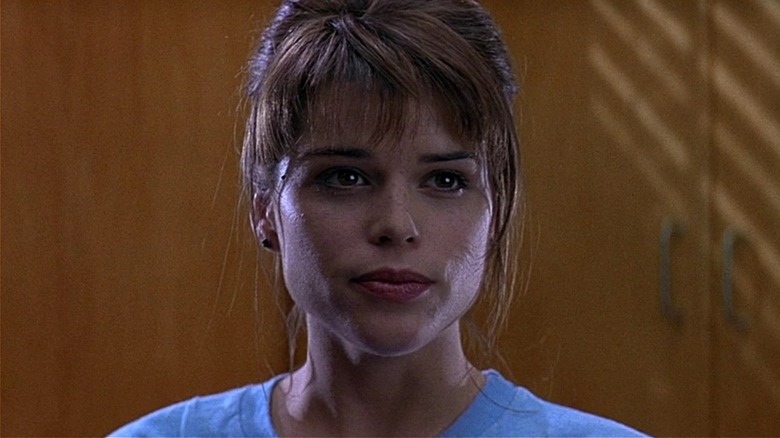
Wes Craven created two of the most iconic horror franchises in history and inspired generations of filmmakers with his subversive approach. Looking back through a filmography which began with the controversial "Last House on the Left," you see Craven was also restlessly experimental, hopping between genres and creatively integrating horror into films aimed at audiences who would never see them.
For every "Nightmare on Elm Street," "Scream," or "The Hills Have Eyes" franchise entry, there are bizarre DC comics adaptations ("Swamp Thing"), Eddie Murphy studio comedies ("Vampire in Brooklyn"), and even a Meryl Streep Oscar vehicle ("Music of the Heart"). He was a master of horror, but never wanted to be stuck in one lane, which is probably why his slasher movies are among the best, incorporating black comedy, supernatural themes, and more to elevate above the rest.
For this list, we went to Letterboxd to determine which five of Craven's horror efforts have the highest average rating from users. To ensure some variety, we only included the highest rated entry of any Craven franchise -– this list would be far less interesting if it were comprised exclusively of Scream and Elm Street movies. We then ranked based on our personal preferences from least-to-most favorite, rather than their critical ratings or Rotten Tomatoes scores.
There are no bad films here, but we have a softer spot for some more than others ...
5. The Serpent and the Rainbow
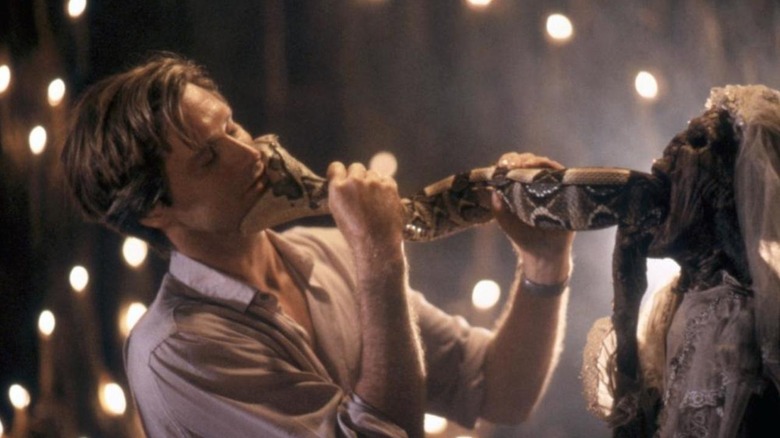
When ethnobotanist Wade Davis released his 1985 non-fiction book "The Serpent and the Rainbow," an investigation of Haitian voodoo centered on a subject who claimed to have been a zombie for two years, he was widely accused of scientific inaccuracies and fraud. But beneath his dubious claims lay an intriguing foundation for a horror movie. Once offered to Wes Craven, he saw it as a chance to be taken seriously by audiences who looked down upon the genre.
Despite being an earnest exploration of voodoo and zombies which didn't condescend towards a culture with such beliefs, Craven approached the project less as a supernatural shocker, and more of a political thriller, with Bill Pullman's Dr Dennis Alan researching in the country amidst a revolution. The director didn't court prestige respectability at the expense of his own twisted personality though –- he still saved room for possessions and testicle trauma.
Although still a novelty for the earnestness with which it explores these aspects, "The Serpent and the Rainbow" isn't quite the evolution for Craven that he believed. His sincere interest in voodoo is evident, and he mines horror from the premise without resorting to lazy, stereotypical portrayals. However, after a slow burn, it leans too hard towards the fantastical at the expense of something more thoughtful. It's a big swing from Craven, but not one that fully meets the mark.
4. Red Eye
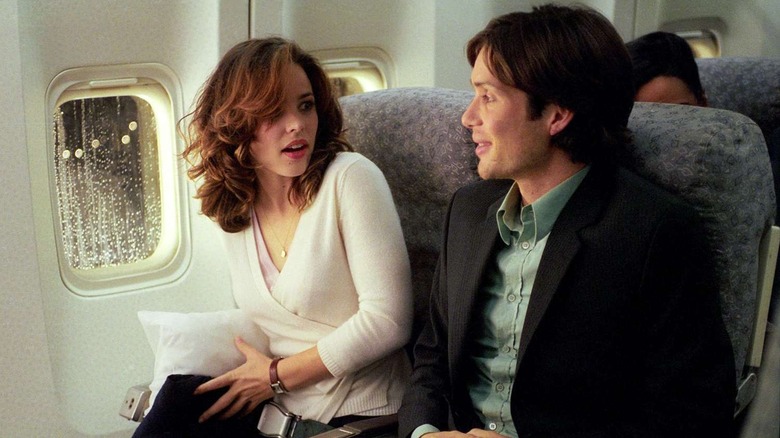
In recent years, Cillian Murphy has called "Red Eye" one of his least favorites in his filmography. Ignore him; this stripped-down shocker is Craven's last great movie, a lean, mean conspiracy thriller without an ounce of fat, offering more excitement in 85 minutes than most directors could with twice the runtime.
Murphy stars as the incredibly named Jackson Rippner, a member of a terrorist cell with plans to assassinate the Director of Homeland Security -– but to pull this off, he needs to blackmail Lisa Reisert (Rachel McAdams), the manager of a Miami hotel where the high-ranking official is staying. If she doesn't comply, he'll give the orders to kill her dad (Brian Cox), leaving her in an impossible position a mile up in the air with nowhere to run.
Nobody could accuse "Red Eye" of being realistic, with the ticking-clock narrative ensuring an audience's suspension of disbelief will be tested –- it's hard to imagine anything like this getting past airport security in a post-9/11 world. But it's irresistible as the kind of high-concept Hitchcockian thriller that rarely gets made at this level anymore, with Craven staging enough bloody set pieces to keep his fanbase happy even within a more mainstream effort. It's the Wes Craven movie for people who don't like Wes Craven movies without sacrificing what makes them so intense and exhilarating.
3. The People Under the Stairs
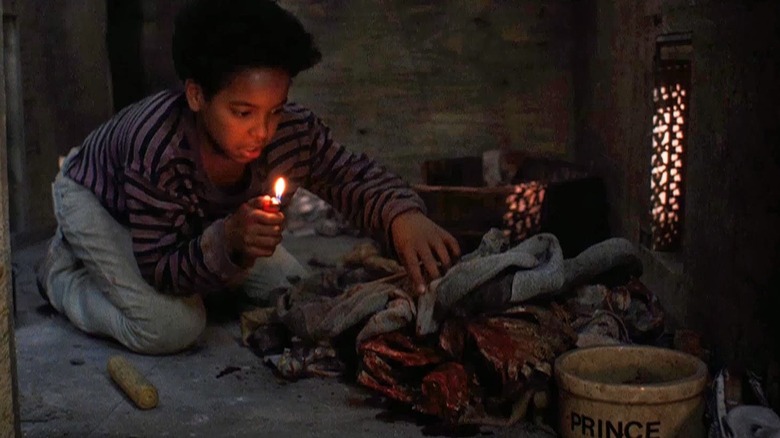
Thought the cannibals of "The Hills Have Eyes" were the most messed-up family in a Wes Craven movie? Think again — the Robeson siblings (played by Everett McGill and Wendy Robie) in "The People Under the Stairs" are far more sinister. This brother and sister pretend to be husband and wife, calling each other mommy and daddy, and profit off the misery of slumlords who buy out apartment blocks in African American neighborhoods, raising the rent so their tenants have no choice but to leave.
When young Fool (Brandon Adams) is roped in to a burglary plot by Leroy (Ving Rhames) they find themselves sneaking inside the Robesons' heavily protected home and discover an even more sinister secret. Below the stairs, children that the siblings previously adopted have been sent to rot as punishment for breaking the cult-like rules of their warped religious household, devolving into cannibals after years of neglect.
"The People Under the Stairs" is one of Craven's most overtly satirical movies without losing his flair for visceral shocks. It remains timely in its aim at the religious hypocrisy of conservatives, and the subject of gentrification in the dehumanizing era of late capitalism, but never prioritizes the political statement over the thrill of staging a claustrophobic chase movie within a house of horrors. The less you know going in, the better -– it has as many left-field turns as the Robesons' house has trap doors.
2. Scream
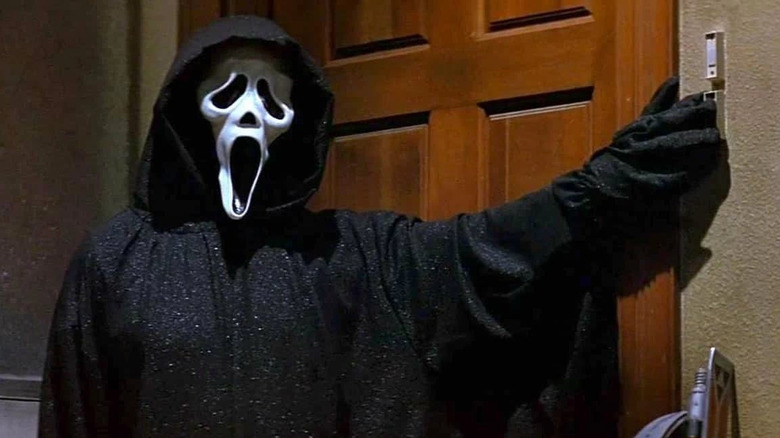
Do you like scary movies? After this year's abysmal "Scream 7," you might have forgotten just how much you did the first time Ghostface made calls to unsuspecting victims, but no dismal legacy sequel can diminish the impact of Craven's original meta commentary. The cheeky gags about the stale conventions and cliches of a typical slasher still hit the spot, but the secret to "Scream" is the commentary on the genre's dubious morality and the media's ongoing obsession with creating moral panic inspired by it.
Craven's movies had long had trouble with censorship, with "The Last House on the Left" particularly notorious for being banned in the U.K. for several decades. "Scream" satirizes decades of this pearl clutching, imagining the most over-the-top way horror fans could be influenced into murder by their beloved movies, as well as highlighting the socially conservative tropes of who survives the night and who meets their end.
Most importantly, however, "Scream" works just as well as a murder mystery as it does an ingeniously bloody dissection of the genre; if it was purely horror-skewing satire, it wouldn't have had maintained such staying power. This is as tight as a whodunnit gets, never treating its central puzzle as a joke, no matter how much it winks at the genre's silliest tropes.
1. A Nightmare on Elm Street
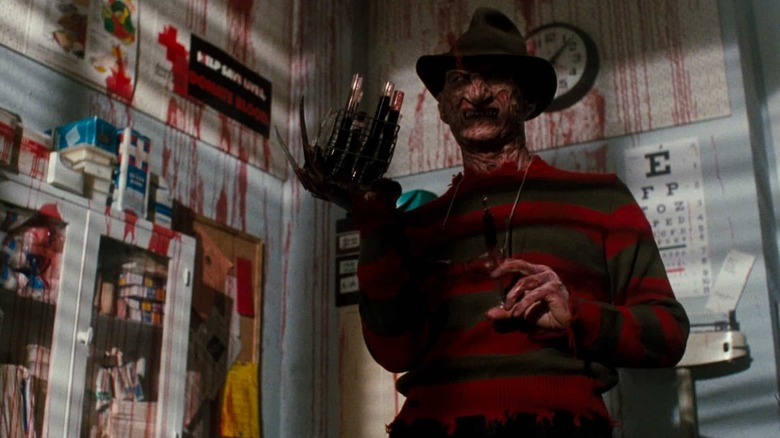
Freddy Krueger went to some odd places as the Nightmare on Elm Street franchise became a pop culture phenomenon, from hunting down previous cast members in a meta spin-off ("Wes Craven's New Nightmare"), to being called a homophobic slur by Kelly Rowland in the middle of a Friday the 13th crossover ("Freddy vs Jason"). For all the series' endearing weirdness, nothing managed to top Wes Craven's original "Nightmare," the only canon entry he wrote and directed.
Picking up the baton from John Carpenter's "Halloween" the previous decade, Craven further obliterated the idea of horror protagonists having a safe space, invading their dreams to the point they could no longer distinguish between fiction and reality.
It's easy to forget how terrifying Robert Englund's child murderer was before the sequels transformed him into a comic antihero, with this first outing essentially a dark revenge mission against the parents who burned him alive. Thanks to a conceit which had one foot in the dream world, Craven wasn't constrained when it came to developing surreal kills, resulting in some of the most iconic kills in the entire genre; has any horror fan had a bath without expecting Freddy's glove to rise out of the water since?
After a decade of low-budget exploitation movies which laughed in the face of good taste, Craven graduated to the next stage of his career without losing his nihilistic spark -– a true genre redefining masterpiece.