

5 Fantasy Movies Better Than Their Rotten Tomatoes Scores
There are plenty of badly reviewed fantasy movies we could write about, but most deserve their reputations. For a genre where scale is the most important thing, there are countless cheap-looking efforts and middling attempts to adapt expansive source material. These deserve the reactions they receive from critics and audiences. However, there are exceptions to every rule, and the following five fantasy movies are more interesting than their cultural reputation would suggest. Each one was written off immediately with stinky reviews, but all deserve another look.
These are the failed franchise starters, radical remakes, and oddball originals from acclaimed directors, each of which were dismissed too quickly. In this feature, we're going to defend five personal favorites which are far more interesting (not to mention entertaining) than you'd expect from their original response. You might not agree with us — some of these are a hard sell — but they don't deserve a place in any worst-of list of the genre. They're all movies which deserve a more passionate cult following than they currently have, largely because they're unique.
To select these five films, we went purely based on Rotten Tomatoes scores, prioritizing those with the weakest critical ratings. They're not all widely trashed. Some received more middling reviews than outright stinky ones, but the underwhelming response all played a part in their reputations. We're here to try and correct the record, argue in their defense, and hopefully start their critical re-evaluations.
A Life Less Ordinary
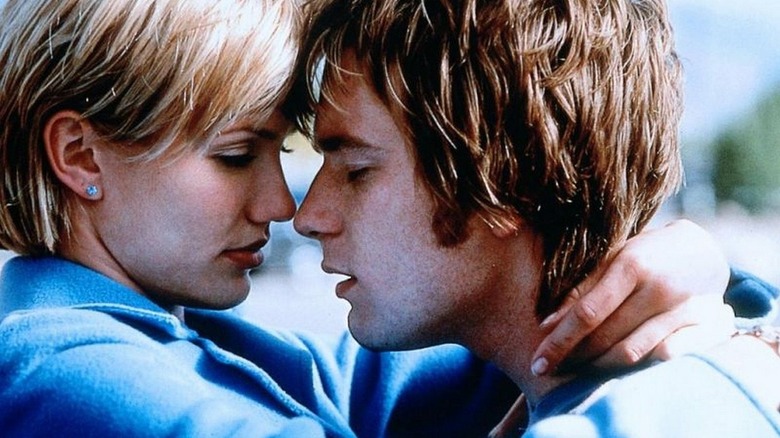
After "Trainspotting" became an international cult sensation, director Danny Boyle re-teamed with star Ewan McGregor and screenwriter John Hodge for what they likely assumed would be a more conventional crowd-pleaser: "A Life Less Ordinary," a romcom about two twenty-somethings forced together by angels of love (Holly Hunter and Delroy Lindo).
What seems like an unabashed romantic fantasy was actually something darker. The "happy" couple were a kidnapper (McGregor's Robert) and his victim (Celine, played by Cameron Diaz), the spoiled daughter of a CEO who had just replaced him as the company janitor with a robot. After getting the ransom he demanded, what unfolds is a pitch-black take on a vintage screwball comedy, as the two angels have to keep fabricating ways for this couple to remain together. If they don't succeed in making them fall in love, their wings will be removed and they'll be consigned to mortal life.
Boyle was already no stranger to big creative swings, with his prior tale of Scottish heroin addicts jumping between surreal fantasy, nihilistic comedy and heartbreaking tragedy capable of going too far. Even as it appeared to be a safer bet, "A Life Less Ordinary" proved to be a hard sell for both critics and audiences, who struggled with the tonal pivoting.
It resulted in an underwhelming 41% critic and 59% audience approval on Rotten Tomatoes. However, even as the site's consensus categorized it as a huge misfire, Boyle's film is worth a revisit. He's a humanist filmmaker who finds plenty to admire in the most flawed protagonists, and seeing characters contend with impossible odds to find love makes for a surprisingly satisfying romantasy.
Dumbo (2019)
By 2019, it felt like the last thing anybody needed was another Tim Burton remake of a classic fantasy story; a formula that had grown stale even before his "Alice in Wonderland" inexplicably crossed a billion dollars. The only thing more tired was Disney continuing to plunder their beloved back catalogue with lazy shot-for-shot remakes that lacked the visual sparkle of their animated predecessors. Hence, "Dumbo" was not exactly anticipated.
Low expectations definitely played a part in the middling reception of Burton's "Dumbo" — 46% from critics and 47% from audiences on Rotten Tomatoes – but Burton's film takes a bold path, expanding upon the themes of the original movie in a way that felt like the director was making a meta commentary on his own career.
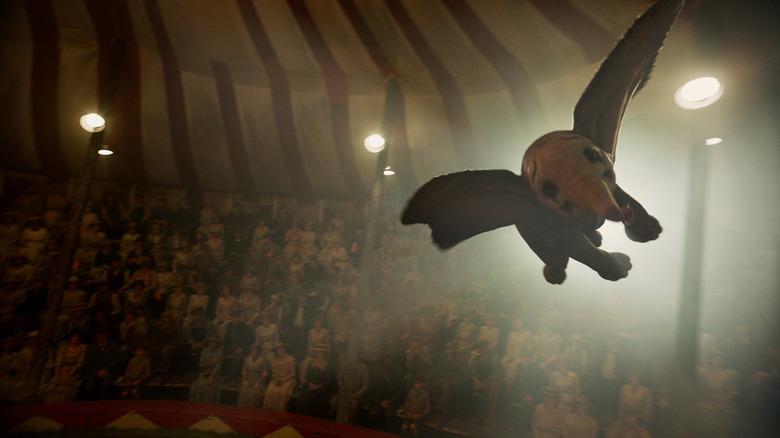
His "Dumbo" doesn't have talking animals, instead focusing on the human characters of the circus and how their lives transform once their elephant takes to the skies. This climactic moment in the original animation is here more of an inciting incident, inspiring Michael Keaton's wealthy amusement park owner to adopt Dumbo as one of his own star attractions. This is a jumping off point for one of the more nakedly personal movies Burton has made since "Edward Scissorhands," directly answering all the fans who felt he's now become a shadow of his former self.
A film for children being a barely concealed allegorical exploration of how business corrupts art — which gained extra timeliness as it was released just as Disney's purchase of 20th Century Fox was nearing completion — is likely why it was shrugged off, but it was the most alive a Burton film had felt in years. "Dumbo" is worth a second look and a wider reappraisal.
King Arthur: Legend of the Sword
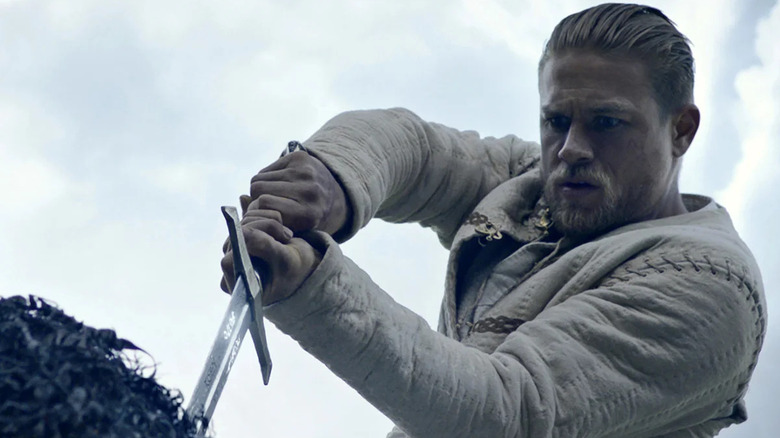
"King Arthur: Legend of the Sword" was ambitiously devised as the first in a six-movie franchise that would build up to an "Avengers" style "Knights of the Round Table" team-up. Instead, Guy Ritchie's retelling of legend instead ended its life as one of 2017's biggest box office bombs.
If the critical consensus on Rotten Tomatoes was anything to go by, the most recurring disappointment expressed in reviews was the way Ritchie adapted King Arthur's tale to the formula of a modern action hero origin narrative, losing its classic feel and mythic appeal. However, the more broadly positive 69% audience rating alludes to the film winning over a sizable cult following, largely because Ritchie reworked the material to suit his own strengths: There's the blockbuster bombast of his "Sherlock Holmes" movies — which similarly transformed more prestigious source material into a Hollywood action spectacle — combined with the crime caper stylings of his breakout efforts "Snatch" and "Lock, Stock and Two Smoking Barrels."
Different missions to save Arthur and protect their kingdom are recharacterized in the style of a heist movie. Each elaborate plan plays out with the same cheeky, self-deprecating fashion as Ritchie's earlier movies, which used their dry British wit to subvert the cliches of more confident Hollywood crime efforts. It's been said that Hollywood has always struggled to get King Arthur right, but this is the closest they've gotten. It helps that it showcases the distinct character of its director in a way few other movies on this size and scale manage to maintain.
Masters of the Universe
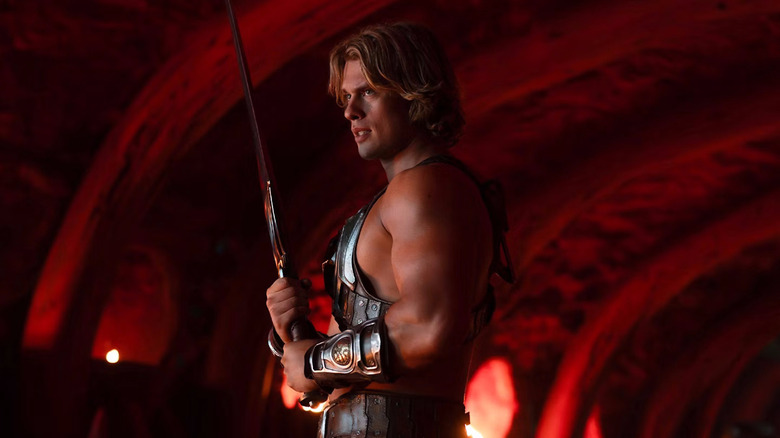
The reboot of Mattel's "Masters of the Universe" franchise wasn't trashed by critics — it holds a 67% Tomatometer score, making it the only title here with a fresh rating — but the middling reception it received from reviewers, with many of those positive write-ups of the three-star variety, make it worthy of inclusion here. They certainly played a part in why the movie underperformed (even if many weren't surprised it flopped), especially when placed next to the 86% approval rating it was gifted by audiences.
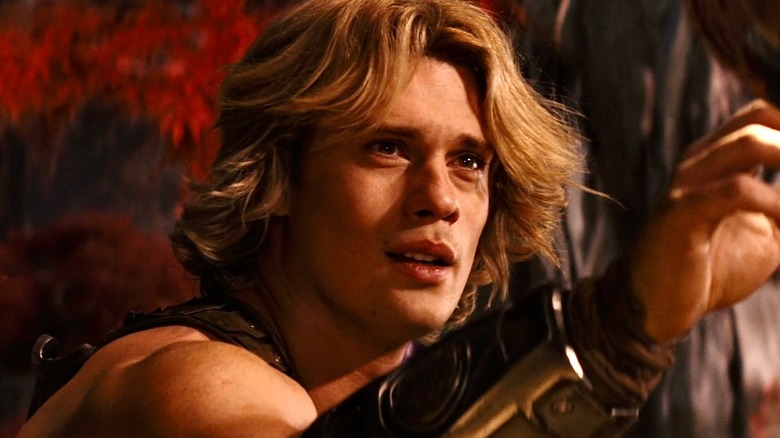
Meanwhile, we suspect a cult following will grow now it's arrived on streaming. Director Travis Knight's new take on the material manages to balance honoring the source material with acknowledging how silly it is. As seen through the eyes of Prince Adam (Nicholas Galitzine), who left his home planet of Eternia for Earth when he was a young kid, the silliest names for characters, locations and weapons are recontextualized as placeholders he came up with because he didn't stay around long enough to learn the real ones.
It's a way to ensure everything from the Sword of Power to a guy called Fisto (Jóhannes Haukur Jóhannesson) retains their original name, without making fun of the wider franchise. This is, at its core, a sincere hero's origin story with a more positive moral for its young male audience than anything we've seen recently. It explores modern masculinity and the need for sensitivity in a way that needs more eyeballs in this era of the manosphere. It's not a movie that takes itself too seriously, which allows it to smuggle in earnest social commentary under plain sight.
Monkeybone
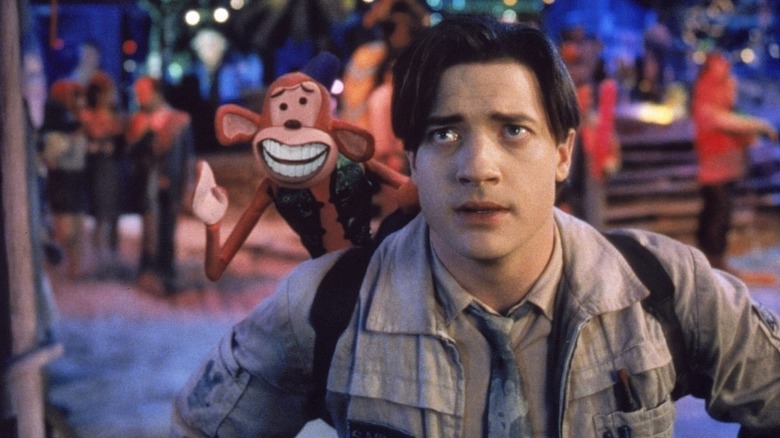
"Monkeybone" will be our hardest sell, with Henry Selick's madcap stop-motion/live-action hybrid cursed with a 21% critic score and a 28% audience score on Rotten Tomatoes. It's abrasive enough to get audiences fleeing to the exit from early in the film, as it follows jaded cartoonist Stu (Brendan Fraser) and his hit comic character Monkeybone (voiced by John Turturro), a hyperactive, obnoxious monkey that represents its creator's libido.
The theme of sexual frustration runs through the veins of this PG-13 movie, which probably explains its difficulty to find even a cult audience. It's too manic for adults, and addresses themes too mature for kids, even if they're hidden behind layers of innuendo. This is before we get into a plot which actually starts in the afterlife, with Stu's creation now sentient and fleeing from the underworld back to the surface in order take over the cartoonist's body and sign a major franchise deal.
Selick vowed never to make another live-action movie after his experiences here, but there's too much creativity and comic ingenuity here to write off. It may be a crude sex comedy, but it's packed with inspired visual gags and an elaborately realized vision of the afterlife, and features a deeply committed physical performance from Fraser that manages to sell the silliest of the slapstick.
The third act is pure insanity, with Stu possessing an organ donor's body, leading to the most haywire attempt at a modern screwball comedy we've seen. It's decidedly not for everyone, but we're still in awe of its sheer strangeness. It's rare to see a studio movie on this level that doesn't feel test-screened within an inch of its life.