

5 Best Foreign War Movies Of All Time, Ranked
There's more than one side to every story, and if you're exclusively watching American and British war movies, you're missing out on a wide range of incredible stories. From tales of life on the front lines, to horrifying, lived-in perspectives of civilians during war time, the five movies we'll discuss offer all the epic scale spectacle you're accustomed to from English language war movies, but with a less glamorous point of view. One that may feel truer to the facts, even. These aren't straightforward stories of heroes and villains, but complicated explorations of the people who have been sent to fight, and those who wind up stuck in the middle of it.
To select the definitive international war movies, a category so stacked we could have made this list several times, we consulted Letterboxd, IMDb, and various Reddit threads to determine which films had the highest average ratings, and which were cited the most by cinephiles as their favorites. From there, we ranked from our least-to-most favorite — but there's very little between the lowest and highest ranked movie here. All five of these films are essential viewing for any war movie fan, even if they're more punishing than the average Hollywood war epic.
We've missed out several incredible titles here, but for more recommendations, check out our list of the best war movies of the 21st century. There are a lot more titles there to put on your watchlist over there — but first, here are our all-time international favorites.
5. Das Boot
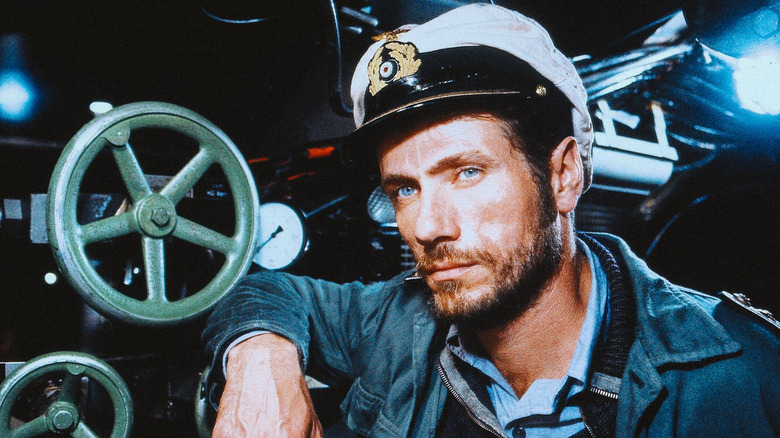
Lothar-Günther Buchheim was a war correspondent working in the German Navy's propaganda unit during the Second World War. By the early 1970s, he was finally able to write about the realities of his experiences with submarine crews during the conflict, which inspired his best-selling, semi-autobiographical novel "Das Boot."
Director Wolfgang Petersen's film adaptation follows a naive young reporter (Herbert Grönemeyer) whose view of the Nazi war effort is shattered the second he meets the dejected crew of the U-96, who are critical of the war and Hitler's leadership, and low on morale fighting a battle they feel ill-equipped for. Released in Germany with a tagline that translates as "what war is all about," it was a antithesis to the patriotic WWII Hollywood blockbuster, offering all the spectacle (on a Hollywood-sized budget) but with far more anxiety to ground it, charting the crew's mentality as they deteriorated further with each attack on the submarine.
This maritime epic — which has since been re-released in multiple extended director's cuts and as a TV miniseries — succeeds in making the audience succumb to the same claustrophobia as the crew, whose increasing cynicism ages them far beyond their years. It's easy to forget all but one is in their twenties.
It's not a simplistic depiction of resistance to the Nazi regime, either, as we frequently see the crew acting upon their orders, at one point leaving dozens of British sailors to die after torpedoing a tanker they thought was empty. It's effective at dramatizing the dehumanizing nature of war through action; a powerful anti-war tale that offers everything you'd want from a more conventional war movie.
4. Army of Shadows
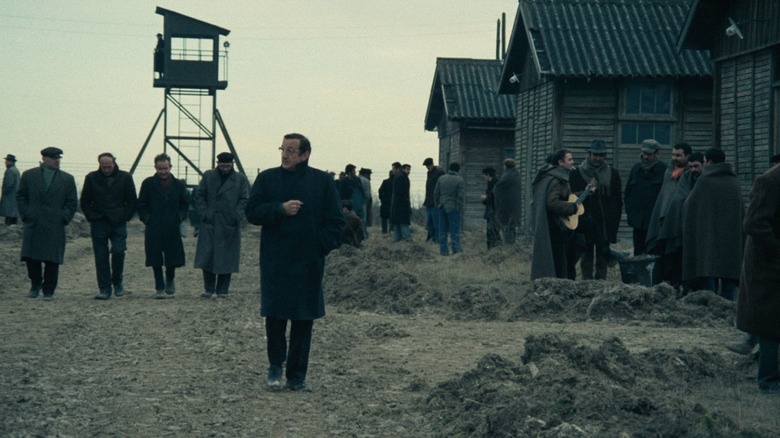
Dispatches from the Second World War dominate this list, and no two offer a similar perspective. In this 1969 thriller from filmmaker Jean-Pierre Melville, we are as far away from the battlefield as possible, following several members of the French resistance after they've been forced underground due to Nazi occupation. The film takes a methodical approach in depicting their attempts to evade capture, moving between safe houses and working with their allies to get revenge on informers to the Reich.
It's an unglamorous movie, never romanticizing the efforts of the resistance or turning them into conventional heroes. In Melville's hands, the sense of paranoia and the lingering fear of imminent death at the hands of occupying forces linger too much for them to think more than one step at a time about their plan to survive.
"Army of Shadows" was initially trashed by French critics upon release for what they saw as a hagiographic depiction of Charles de Gaulle, the leader of the Free France resistance government during the war. He had since become the country's notoriously unpopular conservative President. He's only briefly depicted awarding a medal of honor to one of the characters here, but this was enough to inspire several bad reviews. Following the lead of the French, no American distributor would touch it. When it did finally arrive stateside in 2006, it topped several critics' best of the year lists despite being nearly 40 years old. Don't make the same mistake.
3. The Battle of Algiers
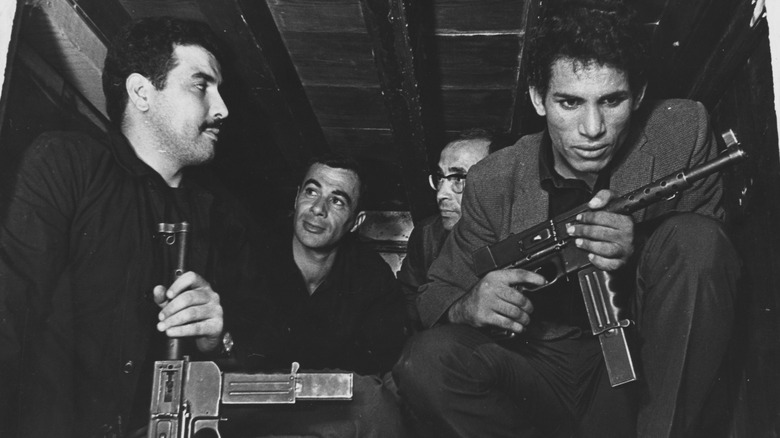
One of the sharpest jokes in "One Battle After Another" sees Leonardo DiCaprio's washed-up revolutionary Bob Ferguson settling in to watch "The Battle of Algiers" on TV, unaware that he was about to be reluctantly roped back in to fighting authoritarian powers.
The 1966 Italian film from director Gillo Pontecorvo pushed beyond social realism to offer an innovative, documentary style approach to dramatizing the mid-1950s conflict in the Algerian capital, charting the attempts of both colonizing French and guerrilla Algerian resistance forces in their bid to win independence. Pontecorvo refrained from making a one-sided movie, showing both sides of the conflict committing atrocities against citizens, and refraining from making his protagonists — inspired by real figures from the Algerian side of the conflict — into conventional heroes. It's a gripping depiction of war in all its ugliness, with a newsreel aesthetic increasing its sense of urgency.
Unsurprisingly, the movie was banned in France, but was immediately lauded everywhere else, including the US, where the explicit anti-colonial message struck a chord just as military intervention in Vietnam was ramping up. In the decades since, this most unconventional of anti-war movies has had a considerable influence on many of the biggest directors in the business. Not only has Paul Thomas Anderson cited it an influence on his Best Picture winner, but Christopher Nolan also cited it as an inspiration for both "The Dark Knight Rises" and "Dunkirk." It even went on to find its influence resonating in a galaxy far, far away through "Andor." Not a bad legacy for a defiantly leftist arthouse drama.
2. Grave of the Fireflies
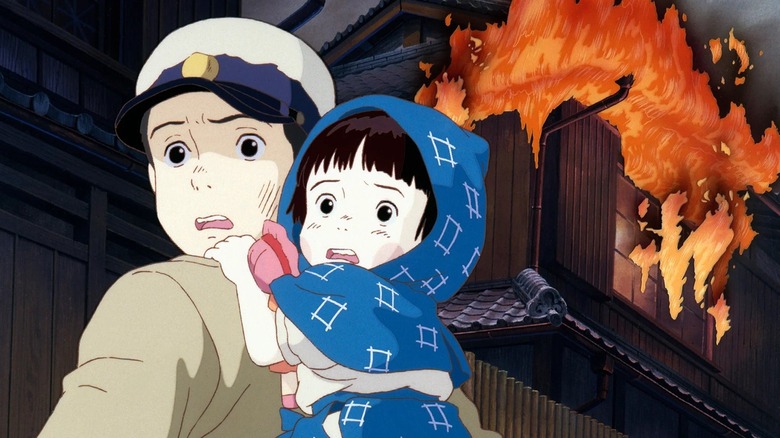
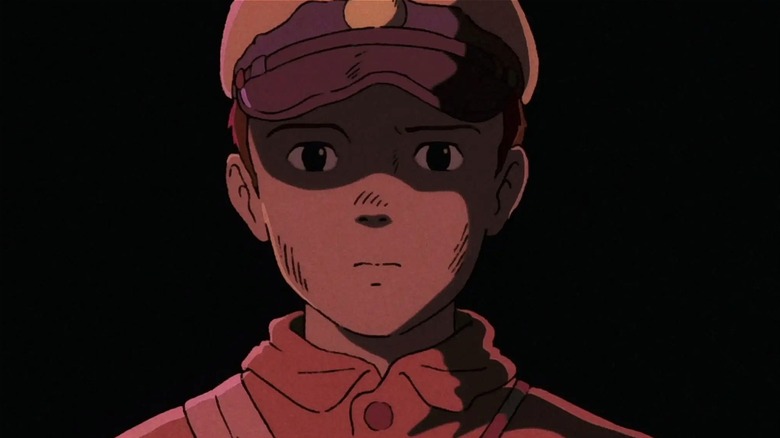
Another anti-war tale which takes place far from the frontlines but showcases the devastation of conflict better than any other is Studio Ghibli's "Grave of the Fireflies." Director Isao Takahata offers one of the most grueling movies about World War II, animated or otherwise, one that starts from a place of hopelessness that it never escapes. Following the teenage Seita and his younger sister Setsuko in the wake of the firebombing of Kobe, which has killed their mother, "Fireflies" charts Seita's attempts to conceal the worst of their new living situation from Setsuko.
With little money to their name, they're forced to move in with their aunt, but dwindling rations mean she kicks them out soon after, leaving the elder brother with few options for food and shelter for the two of them. There are brief glimpses of the magical realism you expect from a Ghibli production, but these are few and far between. It's a relentlessly punishing experience that illustrates the horror of war even if it's taking place hundreds of miles and decades away.
Takahata's movie was released in Japanese theaters as part of a double feature with Hayao Miyazaki's far more gentle escapist fantasy "My Neighbor Totoro," leading both to underperform on initial release. They're two of the very best Studio Ghibli movies, but viewers will need some breathing room after seeing "Fireflies," as not even the adorable Totoros can lift one's spirit right after the bleak finale of "Fireflies." Takahata denied that he made the movie as an anti-war effort, but it remains hard to view it in a different light. Few movies articulate the destructive effects of conflict this well, much less how it directly impacts civilian life — and death.
1. Come and See
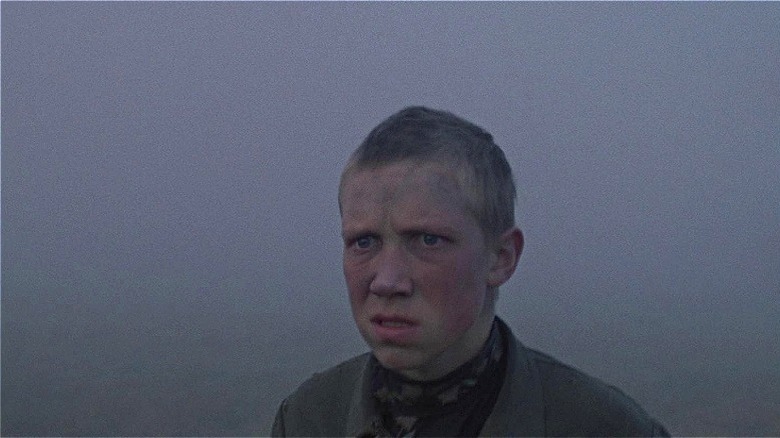
For an even more brutal perspective of life during wartime, look no further than this horrifying 1985 Soviet epic, which charts a teenager's experiences under the Nazi occupation of Belarus. Cinephiles often cite Aleksey Kravchenko's lead performance as Flyora as one of the most flawless acting performances of all time, and it's easy to see why. Unspeakable horrors unfold, but they become even harder to stomach as the boy turns his unnerving stares towards the camera, increasingly broken and horrified as the story progresses.
Opening in 1943, we're introduced to Flyora as a young boy wanting to join the Soviet partisan resistance against his mother's wishes. Soon after he's conscripted, the soldiers leave for battle and leave him in the forest, with German bombers attacking. Returning to his village, it's now deserted, with a pile of bodies barely hidden behind a house.
This is only the beginning of the intense psychological warfare inflicted on both teen and audience, with his odyssey to find food and shelter turning harrowing as Nazi troops reappear. At some points, the line between reality and nightmarish fantasy blur as the hell we're witnessing feels beyond comprehension, with nothing to spare the characters or audiences from a prolonged, muddy bloodbath.
It features some of the most unshakably horrifying images ever committed to film, going further than any movie before it in articulating the horrors of war. It taps into the naive, impressionable young protagonist's perspective, and cruelly breaks any idealized notion of being a soldier. The despairing final dream sequence reminds the audience that history can't be remade after an atrocity; Flyora is stuck with these memories, and so is anybody who made it through this sustained anxiety attack of a movie.