

5 Best John Carpenter Horror Movies, Ranked
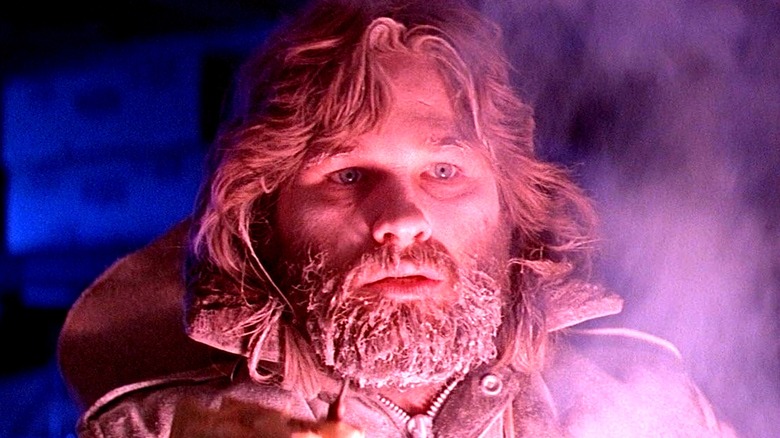
Veteran filmmaker John Carpenter has said that he would love to helm another movie under the right circumstances, with over a decade and a half having passed since the release of "The Ward" — not the best note for such an influential director to go out on. However, even if we don't get another Carpenter film, the reality is that he has absolutely nothing to prove. The Kentucky-raised horror icon has given us several masterpieces over the years. Even when paying homage to the classic B-movies of his youth, he created a handful of films that have aged like fine wine.
For this top five list, we're not counting any Carpenter pictures not explicitly within the horror genre, which means no "Big Trouble in Little China," "Escape from New York," or "They Live." To determine what his five greatest horror movies are, we went to Letterboxd and ordered his filmography by average rating, picking the top titles from the genre that users of the site have declared the best. From there, we got personal and ranked them from our least-to-most favorite. There are no bad movies here, just ones we love a little more than others.
5. Christine
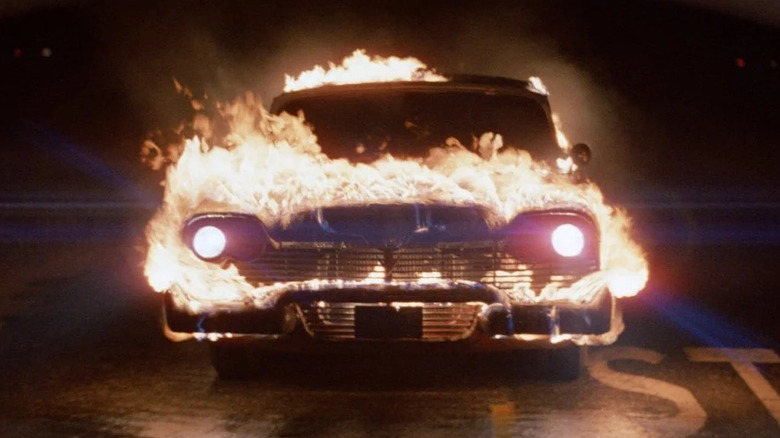
For horror fans in the 1980s, a team-up between John Carpenter and Stephen King would have sounded like a match made in heaven. That came to pass in 1983 with "Christine," the only King novel that Carpenter has adapted. It boasts one of the most effective elevator pitches of any title in the King oeuvre, charting the story of a teenage boy (Arnie Cunningham, played by Keith Gordon) who falls under the spell of a 1950s Plymouth Fury, which sends its owners into an obsessive spiral and kills anybody else who dares to vie for their attention.
This was one of the sillier premises that King had turned into a novel at this point, and Carpenter understood the best way to translate this story to the screen without it becoming a laughingstock was to lean into the 1950s B-movie aesthetic, characterizing this sentient car as a classic movie monster. There's plenty of dark comedy throughout, but there's more genuine tension than there has any right to be for a film with such a set-up. The reason it's bottom of our list is largely to do with the source material.
King's "Christine" is one of his most unnecessarily overstuffed novels, clocking in at 526 pages despite not having the epic qualities of, say, the generations-spanning "It." Even when condensing that source, Carpenter's "Christine" suffers from similar bloat, to the point that you sympathize with King saying it's one of only two adaptations of his movies that he found boring (the other being "The Shining," which he will be eternally incorrect about). The way we see it, the film's flaws stem from translating what was weak source material to begin with. The majority of critics agree that Carpenter's "Christine" is a slick and solid horror film that does well to rise above its killer car premise.
4. The Fog
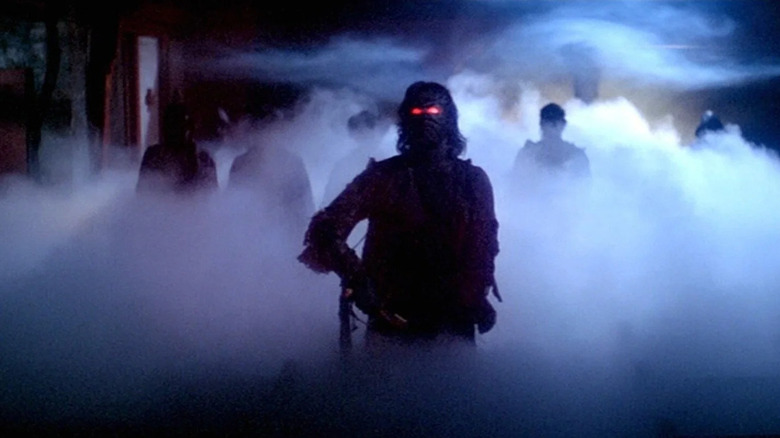
John Carpenter has made better horror movies than 1980's "The Fog," but none have managed to remain as socially relevant. Set in the Californian coastal town of Antonio Bay on the eve of its centenary celebrations, the inciting incident is the town priest Father Patrick Malone (Hal Holbrook) discovering his grandfather's diary, where he wrote that he and the other town founders deliberately wrecked a ship captained by a man afflicted with leprosy so he wouldn't settle near them. After killing him, they plundered all the gold from the ship to establish the town. 100 years later, the ship returns, captained by the re-animated crew, eager to get revenge on the town as its enveloped by a mysterious fog.
Watched now, in an era when horror is more explicitly socially conscious than ever before, "The Fog" feels ahead of its time in the way it builds a slow-burning supernatural thriller out of what could easily be interpreted as a damning commentary on American colonialism. It doesn't let its characters off the hook, even if they are nice, law-abiding citizens a full century removed from these crimes; the town's mayor (Janet Leigh) decides to ignore what happened when it's brought to her attention, because why should these horrors overshadow the town's big birthday celebration? "The Fog" is a movie about the horrors of the past coming back to haunt us when we brush them under the rug, a theme that makes it play a lot better today than it did upon its divisive initial release.
3. In the Mouth of Madness
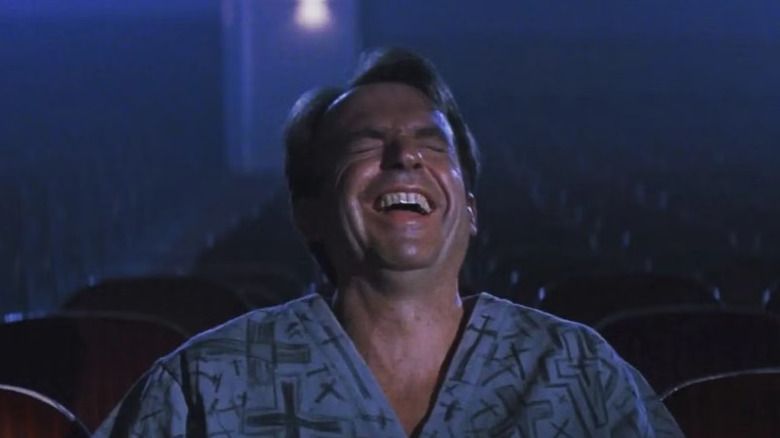
After tackling Stephen King with "Christine," John Carpenter got to deliver his own take on another influential horror novelist with his H.P. Lovecraft tribute "In the Mouth of Madness," released to mixed reviews in 1994. Although not adapted from any of the pioneering cosmic horror writer's works, it modernized many of the author's recurring themes, exploring identity and obsession within a monster movie that blurs the protagonist's perspective so he can no longer distinguish between reality and fiction.
The late, great Sam Neill plays John Trent in one of his best roles, an insurance investigator hired by a publishing house to track down missing writer Sutter Cane (Jürgen Prochnow), who has missed the deadline to hand in the final draft of his latest novel. Suspecting either fraud or a publicity stunt, John and Sutter's editor Linda (Julie Carmen) take a road trip to New Hampshire to track him down, only to wind up in the fictional town of Hobb's End, where many of his stories are set. The surreal parallels to his back catalogue keep piling up and the roads offer no escape from the town, with it gradually dawning on the pair that they're playing characters in the apocalyptic tale that's being written.
Despite the bleak nature of John's fate being established from the outset (we know he'll wind up in an institution as he can no longer decipher between fiction and reality), this fourth-wall breaking tale is one of Carpenter's most purely fun horror movies. It works as both an affectionate tribute to an author whose work has greatly influenced him and as a darkly comic thrill ride. It rarely gets mentioned when Carpenter's horror movies are brought it, which is frustrating, because "In the Mouth of Madness" deserves far more recognition.
2. Halloween
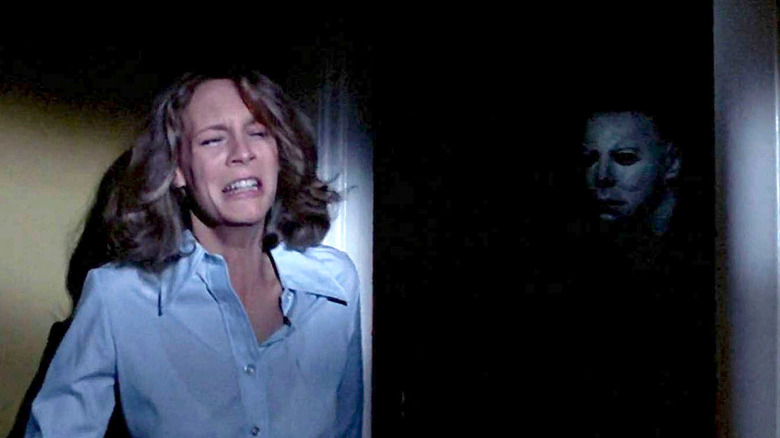
1978's "Halloween" transformed John Carpenter into an A-list horror director and launched Jamie Lee Curtis to scream queen stardom in Hollywood. The enduring impact of the movie, no matter how bad the majority of its legacy sequels may be, is partly down to its setting. Before "Halloween," horror stories were confined to haunted houses on the outskirts of town or cabins in the woods, far away from the safety of suburbia. Then Michael Myers escaped from an institution and went on a rampage through the quaint fictional town of Haddonfield, Illinois. "Halloween" was a sensation because it ripped away audience safety blankets, forcing viewers to consider the idea of horror waltzing right up to their front door and breaking it down.
Michael Myers is extra terrifying because he is characterized as the physical embodiment of every child's worst nightmare; the "boogeyman" only kids can see, who adults won't be able to clock skulking around until it's too late. Curtis' Laurie Strode isn't evenly matched to take him on, which is another masterstroke by Carpenter and co-writer Debra Hill. The movie broke new ground by offering a tough female protagonist who wouldn't become a mere damsel in distress when faced with a knife-wielding threat. Laurie became an icon because she's introduced as an ordinary young woman who finds the strength within herself to survive an onslaught from a hulking, seemingly supernatural madman. The villain, Curtis' performance, and the film's memorable score made "Halloween" an instant classic, made all the more impressive by its bizarrely low budget.
1. The Thing
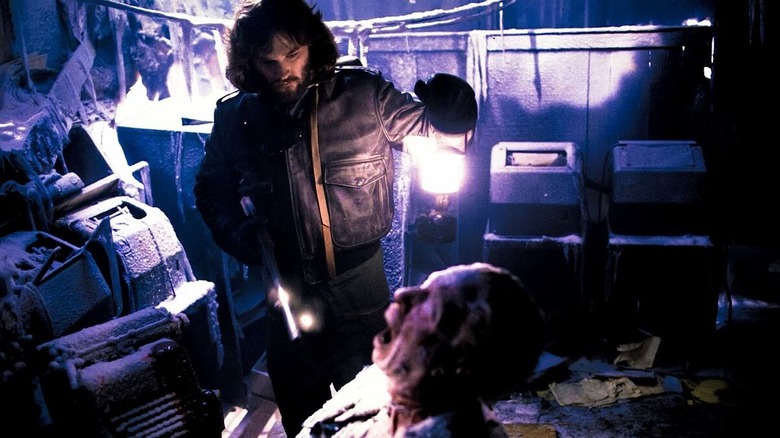
One of the best movie remakes of all time, the world was completely unready for "The Thing" when it arrived in theaters in the summer of 1982. Just a few weeks earlier, Steven Spielberg's "E.T: The Extra-Terrestrial" had kicked off its blockbuster run, with audiences moved to tears by this tale of a young boy and his friendship with a lost alien stranded on Earth. With that optimistic view of intelligent life walking amongst us chiming with audiences, you'd be hard pressed to find a worse time to release a movie as grim and nihilistic as Carpenter's ice-cold monster movie.
Here, the arrival of a shapeshifting invader from outer space leads to intense paranoia, a bloodbath in the snow, and a lingering threat to humanity's extinction, with no happy ending to lessen the blow. The fact that it didn't do well back then isn't surprising. Thankfully, time has been kind to "The Thing," which is now considered by many to be Carpenter's magnum opus and his finest collaboration with star Kurt Russell. Not only do the film's pioneering practical effects hold up today, the core theme of distrust still resonates in a post-Cold War world.
The threat of mutually assured destruction — as the mission to stop the alien shapeshifter proves to be — remains within arm's reach at any given time, and the enduring bleakness of Carpenter's shocking monster movie is through the way it taps into the helplessness of living with an existential threat we can't do anything to stop. Even taken at face value as a dark modernization of the classic B-movie of the same name, "The Thing" is still the best sci-fi horror movie of all time.