

Christopher Nolan's Best Change To The Odyssey Makes The Story Even Better
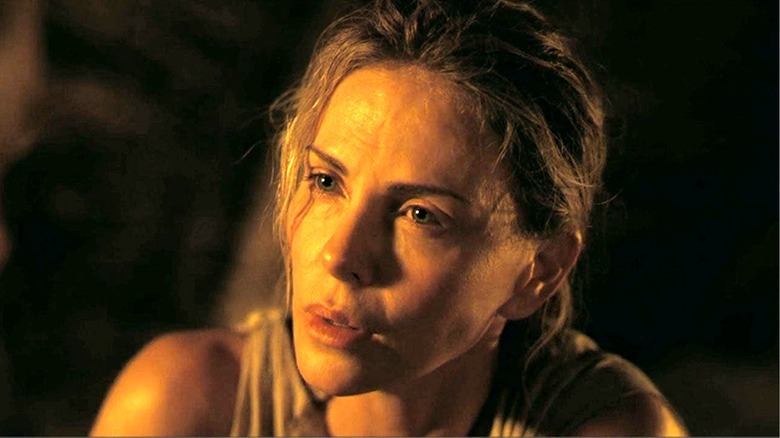
As with all adaptations, there are plenty of things Christopher Nolan's "The Odyssey" gets right and wrong about the story. Overall, Nolan stayed fairly faithful to the source material. But there are some more deliberate changes — things like leaving out Nausicaä and the Phaeacians or downplaying the parts played by the gods. While those are some of the more obvious changes, there is one subtle shift that the director used to blend two parts of "The Odyssey" together into a single episode — and we think it might have actually made the story better than the original version.
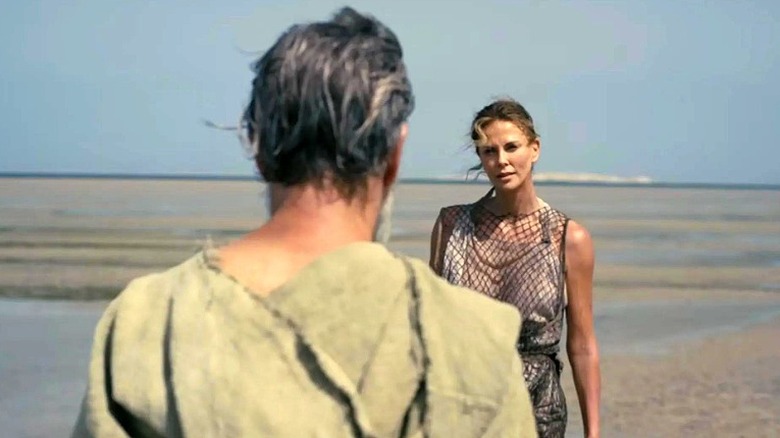
We're talking about the way Calypso (Charlize Theron) uses lotus flowers to make Odysseus (Matt Damon) forget the trials and tribulations he's gone through before he reaches her island. In the movie, it slowly comes out that the nymph-goddess is using lotus flowers to help Odysseus, but in reality, she is simply suppressing his traumatic memories. In the end, she is pressured by Zeus (indirectly — remember, the god stuff is downplayed) to wean her mortal captive off that sweet, sweet lotus bliss so he can remember who he is and how he needs to get home. It works, but it turns out that all this business about Calypso and the lotuses is nothing like the original epic poem.
In The Odyssey, the lotus-eaters and Calypso are completely separate
In Homer's "The Odyssey," the lotus plant is located in a country far away from Calypso's island. Very early in Odysseus' adventures, he and his men are blown off course and reach a strange land. When some of the men scout things out, they meet the local inhabitants, who offer them parts of the lotus plant and its fruits to eat. This infamously sweet delicacy makes them forget who they are and completely removes their motivation to return home. Odysseus literally has to drag his men by force back to their ships to escape the fiasco — only to sail straight into the whole mess with the Cyclops.
This is very early in Odysseus' trip home. It isn't until much later, after having lost everything, that Odysseus washes up on the shores of Calypso's island alone. His last ship has gone down in yet another storm, and the stranded king is basically captured by Calypso, who won't let him leave the island. She tries to gain his affection by comforting him, feeding him, sleeping with him, and even offering him immortality, an ordeal that goes on for seven years. The big difference from the movie? There are no lotus plants in sight.
Christopher Nolan's combination of the Lotus-eaters and Calypso works
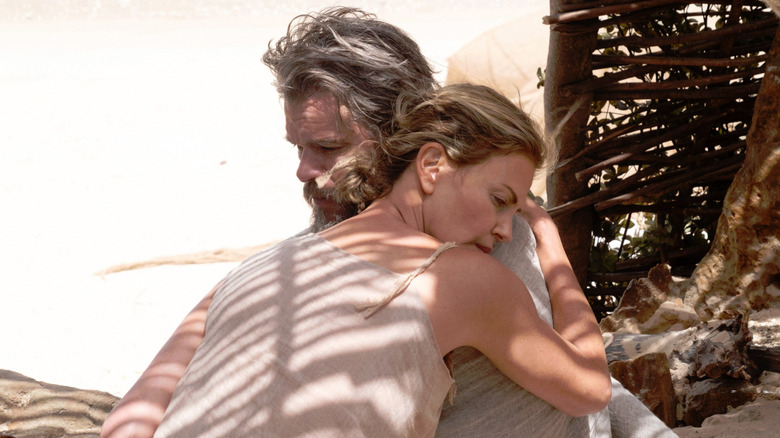
One distinct difference between the movie and the source material is that in the original poem, the one thing Odysseus can't forget is his home. He longs for his wife, his son, and his beloved Ithaca. At multiple times, we see him wandering to the shore and weeping as he sits by the sea, wishing he could leave his lengthy captivity. But in the original story, Odysseus is consciously aware of this the whole time. That's the key difference. He wants to go home, but can't — and there's a certain awkwardness about his willingness to cohabitate, sleep, and live with Calypso while she is, in effect, maintaining a terrifying degree of control over him.
In Nolan's adaptation, the director cleverly uses the power of the lotus flower as a way to make Odysseus forget his home and his family for a long period of time. Calypso is also changed from a love-struck antagonist to someone who at least started with good intentions by trying to help Odysseus cope with his trauma.
This works on multiple levels. First, "The Odyssey" is already a long movie (the kind where you need to think about the best time to use the bathroom). Adding in a random detour to the lotus-eaters would have been just another thing they had to squeeze in. The more subtle shift in Calypso's motivations also makes her serve the story better, as she helps Odysseus recover from his wounds (mental and physical), face Poseidon's wrath, and ultimately get back home. There's no arguing that Nolan deliberately changed the source material, but it benefits the story, which is just one more reason why "The Odyssey" is the director's masterpiece.