

The Odyssey Combines Two Christopher Nolan Protagonists Into One With Matt Damon
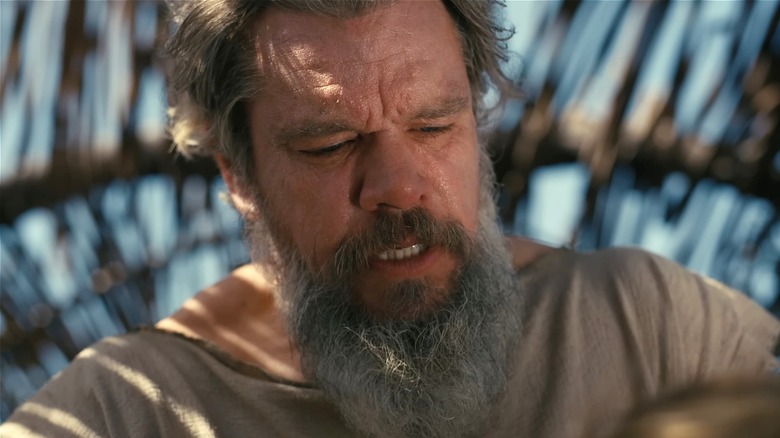
Contains spoilers for "The Odyssey"
You can often see the influence of a Christopher Nolan film from the one he made last. "Memento" and "Insomnia" are both thrillers with unreliable narrators struggling with the deceptions of their own minds. "Batman Begins" and "The Prestige" each deal with characters with split lives and identities. And "The Odyssey," like "Oppenheimer" before it, is a story about a man who breaks the world with a single creation, and carries the burden of guilt.
The parallels between Matt Damon's Odysseus and Cillian Murphy's J. Robert Oppenheimer are obvious by the time you reach the end of "The Odyssey." By building the Trojan Horse, Odysseus betrays Zeus' Law, forsaking the basic moral fabric on which his world was built. He paints a clear before and after picture, even taking blame for the so-called "people of the sea," raiders from lands unknown, who are laying waste to Greece. In his mind, the tragedy of Troy broke a cosmic truth, and the world will suffer the consequences. It is the same conundrum Nolan's Oppenheimer faces, with both men building creations to end the bloodshed of a prolonged war.
But Oppenheimer is not the only past Nolan protagonist who Odysseus resembles. He also carries uncanny similarities to Don Cobb (Leonardo DiCaprio), the main character of "Inception." Like Odysseus, Cobb lives in exile and is kept away from his family, until a journey to the core of his past transgressions allows him to return home.
The Odyssey has a lot of Inception DNA
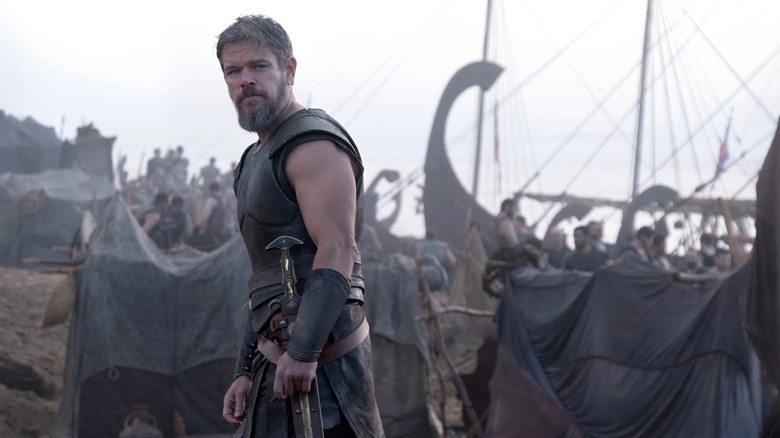
When we first meet Odysseus in "The Odyssey," he's marooned on the shores of Calypso (Charlize Theron), his memory claimed by daily consumption of the mystical lotus flower and the tragedy of the last two decades forgotten. For Nolan fans, it's likely to conjure memories of "Inception," where Cobb is shown at the start in much the same way. We meet DiCaprio's character as he appears at the end, washed up on the shores of limbo, the depths of the dream realm, his memories all but lost. By the end, both fight their way back to their senses, and eventually, find their way home.
In doing so, each must come to terms with their crimes. For Cobb, it's the death of his wife. Desperate to wake her from the dream world she doesn't want to leave, he places an idea at the center of her mind, that her world is not real. This leads to her suicide when she awakens in an effort to "wake" again. Cobb's is a personal betrayal, whereas Odysseus' ordeal is worldwide. By conquering Troy against the precepts of Zeus' Law, he forsakes, in his own words, "all that's ever sacred between people."
The theme of memory has been one of Nolan's favorites since "Memento." Even in that early film, the main character chooses to let himself believe a lie, rather than grapple with the sin he's committed.
Odysseus is the ultimate Christopher Nolan protagonist
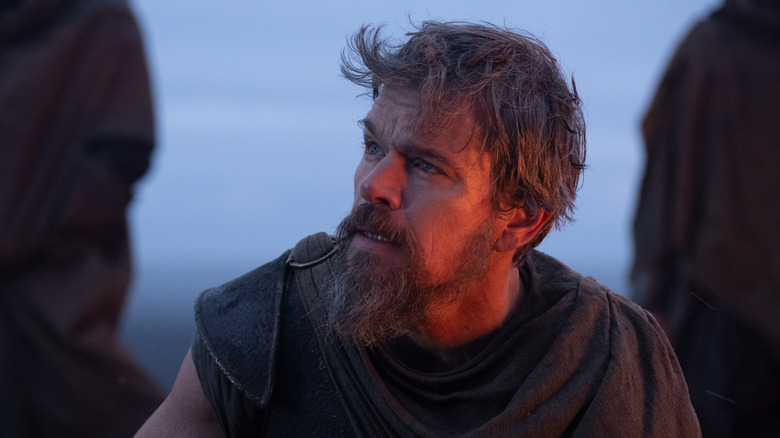
"The Odyssey" surpassed the already-high expectations of critics, which makes sense given how it combines so many of Christopher Nolan's calling cards. It has the epic sensibility, the tragedy, the darkness, the fixation on memory and fear, and the long journey home. So it's fitting that its main character is also the platonic ideal of the Nolan protagonist, embodying not just Don Cobb and J. Robert Oppenheimer, but so many of the director's other leading men.
Like Joseph Cooper (Matthew McConaughey) in "Interstellar," he's blown off-course and forced to miss his children growing up in his absence. He is also haunted by the lives he couldn't save as with Nolan's Bruce Wayne, and similar to Will Dormer (Al Pacino) in "Insomnia," he struggles to contend with the dark things he has done. That denial only sends him further astray.
But ultimately, it's Oppenheimer and Cobb whom Nolan blends into this weary, scarred portrait of Odysseus — a man who journeys to the pit of his own soul to get home to his family, only to arrive back in a world made forever more dangerous by his decisions.