

5 Worst Casting Choices In Star Trek History, Ranked
As anyone who's seen the initial 1960s "Star Trek" TV series knows, this franchise has not always had the biggest budgets at its disposal. Unable to rely on gargantuan spectacle to carry the day, all corners of "Star Trek" (but especially the small screen side of this saga) have often leaned on compelling actors to captivate audiences. The Gorn in "Star Trek" may look obviously like dudes in plastic suits, but Leonard Nimoy's distinctive performance or Patrick Stewart's commanding aura make the "Star Trek" universe instantly transfixing. Even the costlier modern "Star Trek" movies that do feature expensive action sequences have never forgotten the importance of shrewd casting, as seen by the inspired use of performers like Karl Urban and Anton Yelchin.
Still, there's no way a franchise like "Star Trek" can deliver 60+ years of storytelling without some inevitable duds in casting. That's especially true given how so many "Star Trek" shows have large ensemble casts to fill out, and not every actor can be as talented as Jonathan Frakes or Holly Hunter. This inevitability ensured the existence of the five worst casting choices in "Star Trek" history (ranked below from "least worst" to absolute worst). There are endlessly varied reasons why these castings went awry, including weird moves in post-production or the actors being intrinsically wrong for their parts.
Whatever informs the subpar nature of these choices, the five biggest "Star Trek" casting misfires are the polar opposite of the iconic actors forever intertwined with this universe.
5. Ed Speleers in Star Trek: Picard
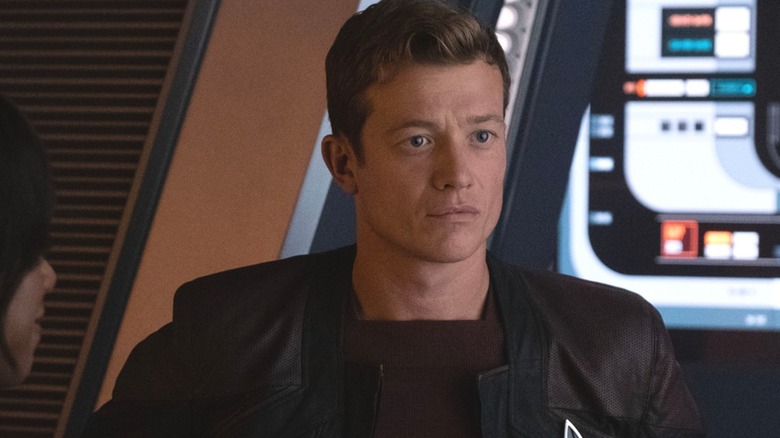
Ed Speleers had a grand debut as an actor in any medium by playing the titular lead role of 2006's fantasy epic "Eragon." In another timeline, that feature would've spawned endless sequels and given Speleers his own "Harry Potter" to headline. In this timeline, though, "Eragon" fizzled out financially, though Speleers still carved out a solid acting career afterward. Much of that career has been focused on major television shows like "Downton Abbey" and "Outlander." In 2023, Speleers took his acting exploits to the cosmos by taking on the role of Jack Crusher in the third "Star Trek: Picard" season. This role made him the offspring of two "Next Generation" legends, Jean-Luc Picard and Beverly Crusher.
While working on "Star Trek: Picard" was like "getting the keys to the castle" for Ed Speleers, audiences had a more frustrated response to his presence on the show. Specifically, fans were perplexed that Speleers, an actor in his mid-30s, was cast to play somebody who was supposed to be roughly 20. That age and especially the idea of an older Picard talking to a young son were supposedly crucial for "Picard." Quibbles also persisted over the accent Speleers brought to this role.
Much like Ben Platt trying to headline the "Dear Evan Hansen" movie adaptation, though, Speleers just couldn't convincingly play someone younger than his years. The end result was a thorny "Picard" performance that was often more frustrating than exciting for Trekkies.
4. Winona Ryder in Star Trek
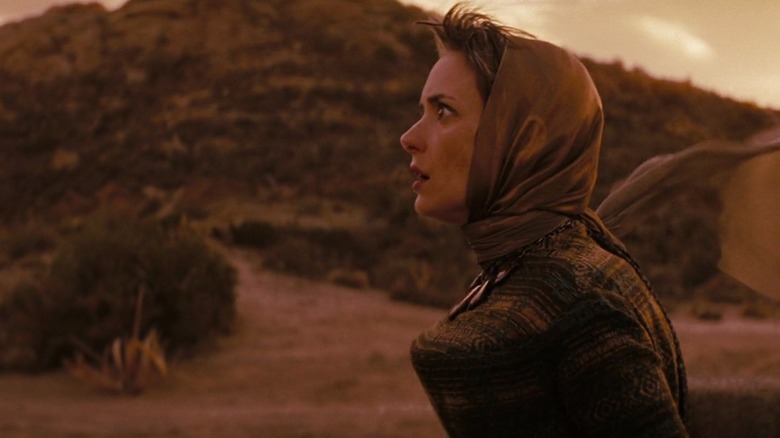
The "Star Trek" Kelvin timeline had several time-related weird elements ingrained in its DNA as a result of 2009's "Star Trek" hinging its storyline on time travel. One of those elements was the strange casting of Winona Ryder as Spock's Earthling mother, Amanda Grayson. In the film, the briefly seen Grayson is played by a performer who was only six years older than Zachary Quinto, the actor playing Spock. Watching only the final cut of "Star Trek," this comes off as one of the most baffling casting choices imaginable. To boot, Grayson's brief screentime doesn't come anywhere close to utilizing the immense talents of Winona Ryder.
However, there were some behind-the-scenes shenanigans that can lend a modicum of logic behind this casting. Ryder shot several additional scenes as Grayson that were set in Spock's childhood. Interacting with an adolescent Spock (when Grayson was in her late 30s) would've made the casting of Ryder much more sensible. Unfortunately, that information is only available for "Star Trek" nerds who live online. For the general public, the final version of "Star Trek" is all that they have to go on regarding the casting of Winona Ryder.
In that regard, Ryder's casting still resonates as strange and a waste of this woman's chops. Looking at every Winona Ryder movie, it's clear she always brings something memorable to the table. Why not use those skills in a role that isn't just a mom whose death motivates Spock?
3. Robert Beltran as Chakotay in Star Trek: Voyager
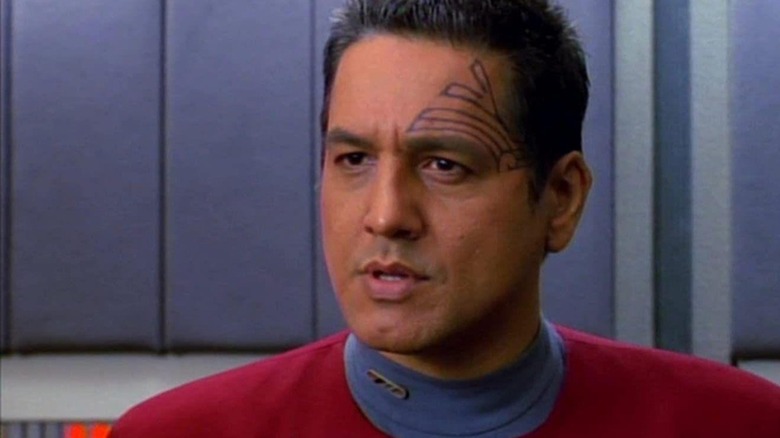
Once "The Next Generation" ended its run on broadcast television, new chapters in the history of small-screen "Star Trek" storytelling began airing. One of these included "Star Trek: Voyager," which centered on Kate Mulgrew's Captain Kathryn Janeway and her crew. A member of that crew was Chakotay (Robert Beltran), the first prominent Indigenous character in "Star Trek" history. To say Chakotay and the handling of Indigenous representation on "Voyager" proved controversial is an understatement. Decades later, Chakotay is only known for inspiring essays and examinations breaking down how the character played into larger American culture problems related to Indigenous characters.
Meanwhile, the choice of casting a Mexican-American actor as an Indigenous character was an incredibly tone-deaf decision. Modern shows like "Echo" and "Reservation Dogs" have shown it's possible to populate entire TV show casts with Indigenous performers. Refusing to do so for the sole Indigenous "Voyager" character was inexcusable. This already started Beltran's entire performance off on a horribly wrong foot, and nothing in his time on the show could recover Chakotay's potential. The widely derided storytelling choices that "Voyager" kept saddling Chakotay with only amplified the immense problems ingrained in the character.
Beltran's performance was a deeply miscalculated endeavor from the word go. That's a shame, since the idea of emphasizing an Indigenous Starfleet member sounds perfectly in keeping with the inclusivity defining this franchise. Unfortunately, deeply troublesome casting kept Chakotay from living up to all that potential.
2. Scott Bakula in Star Trek: Enterprise
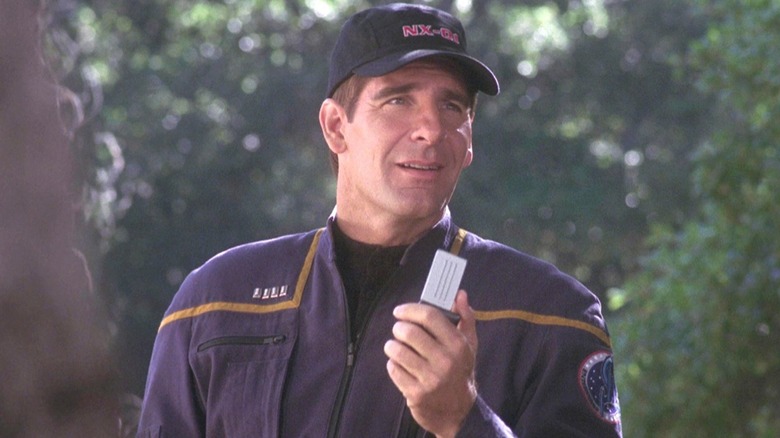
There was apparently a ton of behind-the-scenes tension regarding whether or not Scott Bakula would actually sign on to play Captain Jonathan Archer on "Star Trek: Enterprise." In other words, Scott Bakula's "Star Trek: Enterprise" casting almost didn't happen, though Bakula ended up anchoring all four seasons of this program. Making this long-desired casting a reality was a dream come true for the "Enterprise" creative team, even though Scott Bakula's hair created a huge problem for "Star Trek: Enterprise" during the shooting of its pilot. Many fans have had more intense gripes with Bakula's work on the show. Chiefly, Trekkie criticisms centered on Bakula exuding such a soft-spoken persona that it was difficult to ascertain Archer's personality.
Other corners of the internet see "Star Trek" devotees lamenting how Bakula's performance lacked the effortlessness that came with past "Star Trek" TV leads like Patrick Stewart, Leonard Nimoy, and Kate Mulgrew. Still others felt that no matter what Bakula did in the part, he was just inherently miscast as Captain Archer thanks to his generic acting flourishes and rigid line deliveries. The more divisive responses to Bakula's leading-man work epitomize the mixed reception "Star Trek: Enterprise" secured during its 98-episode run. If a TV show's central character isn't working, then it's doubtful the rest of the production can thrive.
Perhaps the difficulties in landing Scott Bakula for "Star Trek: Enterprise" should've warned this show's creative team that better choices for Captain Jonathan Archer were out there.
1. Benedict Cumberbatch in Star Trek Into Darkness
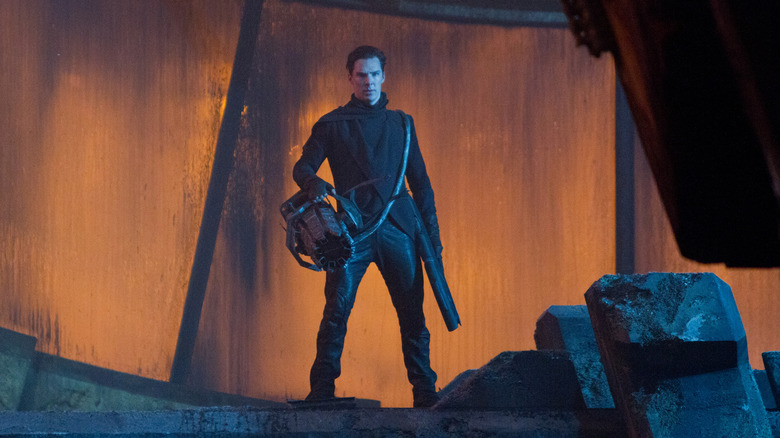
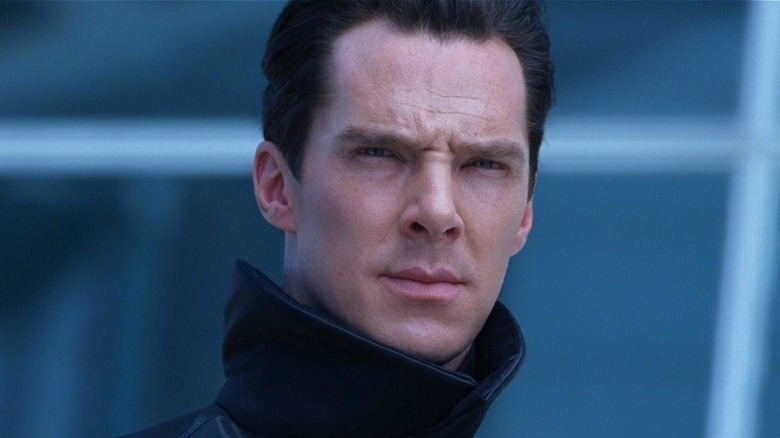
Benedict Cumberbatch appearing in a "Star Trek" production should've been a cause for celebration. His work in this franchise should've been an easy addition to the canon of Benedict Cumberbatch's best TV and movie roles. Unfortunately, he was taking on the role of Khan in "Star Trek Into Darkness." Right away, it was weird that one of the whitest actors imaginable (just look at Cumberbatch's unmistakably English name) would be playing a non-white Sikh character. "Into Darkness" constantly makes callbacks to earlier "Star Trek" media, which only made it even harder to forget prior incarnations of the character. Even original "Star Trek" cast member George Takei commented on the underlying problems with this casting.
Engaging in whitewashing was bad enough for this use of Cumberbatch. The fact that "Into Darkness" didn't give him much to do (including lengthy scenes where he's trapped inside a prison on the Enterprise) made it extra baffling why an actor of this stature was hired for the role. In the third act, Cumberbatch does nothing beyond being endlessly punched by Spock. There was just no end to the ways Benedict Cumberbatch's Khan casting was a severe miscalculation.
No wonder this "Star Trek" appearance has languished in relative obscurity compared to Cumberbatch's more famous blockbuster movie roles. Casting this "Sherlock" veteran for this particular "Star Trek" character is certainly something nobody's eager to remember.