

5 Most Historically Accurate Samurai Movies, Ranked
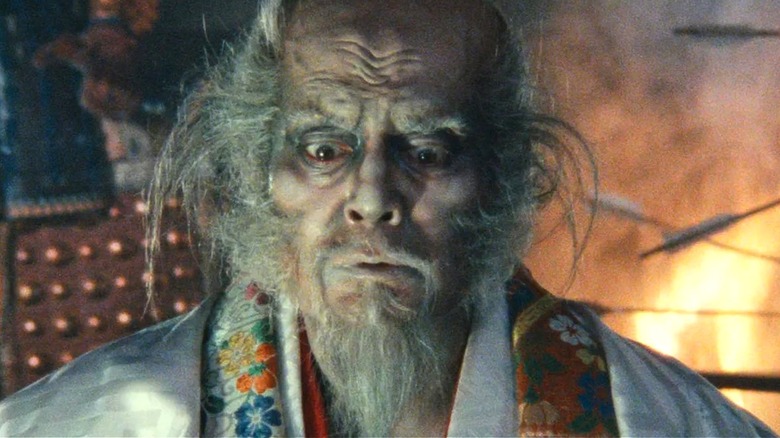
Samurai are among the most fascinating people in history, and they've been the subject of feature films for nearly as long as the medium has existed. While there were several samurai movies throughout the second quarter of the 20th century, they didn't become well-known until the 1950s, when famed director Akira Kurosawa transformed Japanese cinema with some of the best samurai movies ever made. Kurosawa defined how modern samurai films should look, and many filmmakers followed in his footsteps.
Like any genre that deals with the past, some samurai movies are better than others, especially when it comes to historical accuracy. A samurai film doesn't need to be about a real, historical event to be accurate, but they do need to honor the culture, traditions, costumes, and themes of the samurai to be anywhere close to historical accuracy. Other films, especially western movies like "Kill Bill," eschew accuracy for modern homages, but there remain plenty of accurate films from earlier in the genre's history.
Most accurate samurai movies aren't based on real events, though there are many excellent examples that are. Still, when determining historical accuracy, it's important to weigh entertainment with realism. Thus, even the best examples aren't entirely accurate. Each of these five samurai films is among the most beloved the genre has to offer, and they're the most historically accurate ones ever made. They're ranked based on an average of their aggregate scores from Rotten Tomatoes, IMDb, and Metacritic.
5. Harakiri
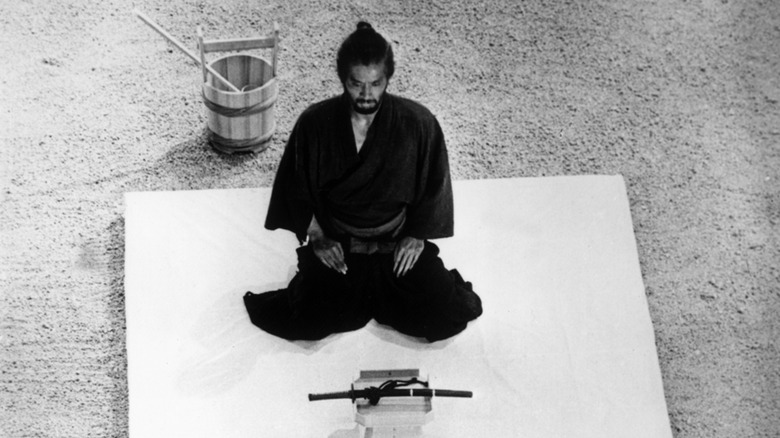
One of the least understood aspects of samurai culture in the West is the practice of seppuku, also known as harakiri. Put simply, it's a form of ritualistic suicide involving disembowelment that's undertaken when a samurai needs to restore honor to their name and to their families. It's also the central theme of "Harakiri," which is one of the greatest samurai movies every fan needs to watch at least once.
"Harakiri" is set during Japan's Edo period in the year 1630, and it centers around Tsugumo Hanshirō (Tatsuya Nakadai), a rōnin (masterless samurai) intent on performing the titular act within the courtyard of the Iyi clan's palace. At first he's dissuaded from moving forward and is told about others who came before him; none of these tales end well. Despite this, he pushes on, but his words and actions uncover a broader plot resulting in a great deal of death and dishonor.
What makes "Harakiri" unlike most samurai movies is how anti-samurai it is. The narrative is deeply rooted in the samurai code, which is where it maintains its historical authenticity. Still, while it's realistic in its depiction of the period and culture, "Harakiri" manages to do so by picking apart the flaws in the system. They've been hidden behind a code of honor that falls apart upon closer inspection.
If you or someone you know is struggling or in crisis, help is available. Call or text 988 or chat 988lifeline.org
4. Yojimbo
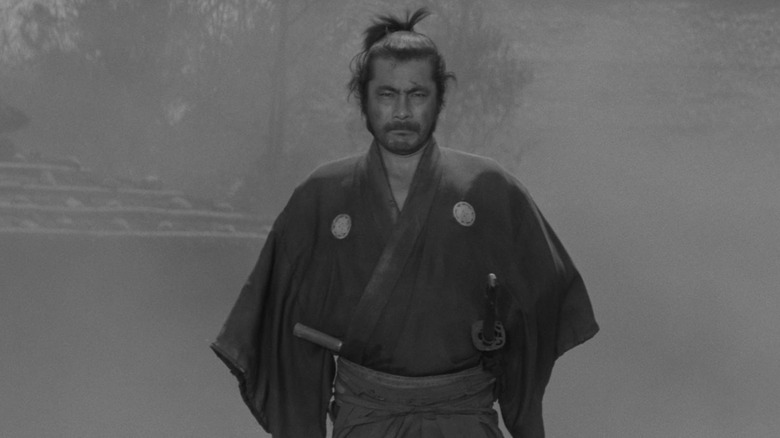
He's already been mentioned, but get ready to see Akira Kurosawa's work throughout the rest of this article. The legendary director was arguably the greatest samurai filmmaker of all time. "Yojimbo" is one of the director's most celebrated films, and while its story is fictitious, the nature of the lead, the organized crime running rampant, and his manner of taking care of the problem are all accurate to the Edo period, in 1860.
"Yojimbo" focuses on a wandering rōnin, Kuwabatake Sanjuro (Toshiro Mifune), who finds himself in a small town beset by war between two rival gangs. He inserts himself into the mix, proving his prowess with the blade as he deftly dispatches several men in rapid succession. As things continue to heat up, Sanjuro's actions provoke more conflict, resulting in a climax that features some of the genre's best fighting. Not only is "Yojimbo" a historically accurate film, but it's also one of the best movies released in the 1960s.
While a samurai movie, the themes of "Yojimbo'" effectively make it a Western set in Japan, where the wandering stranger comes to town, confronts the bad guys, and makes things right — a storyline that, as Western fans know, is familiar fare. It's fair to say that "Yojimbo" is one of the most influential samurai movies ever made. It even led to a lawsuit regarding "A Fistful of Dollars," which most closely mirrors its plot, contrasted to the more loosely inspired "Shane" and "High Noon."
3. Ran
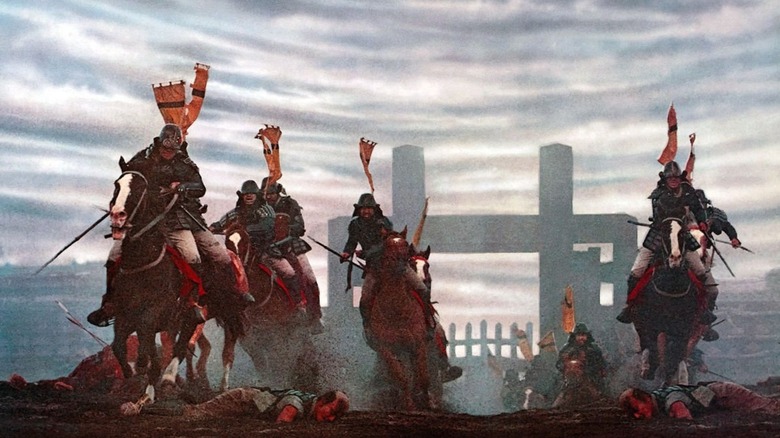
If you look at Akira Kurosawa's body of work, you'll notice several influences, and chief among them is William Shakespeare. Kurosawa tapped into the Bard's work frequently, and one of his most epic films, "Ran," is a retelling of "King Lear." "Ran" was Kurosawa's last epic, having arrived in 1985, and it's one of the director's most ambitious projects. It's the only Kurosawa film that earned a best director nomination at the Academy Awards. Everything about "Ran" is grand in scale, including the filmmaker's use of color, which makes everything pop. Especially the historically accurate costumes.
Kurosawa saw the film as the culmination of his life's work, and it's difficult to disagree. Taking the plot of "King Lear" and transporting it to 16th-century Japan while incorporating real world historical stories about daimyō (feudal lord) Mōri Motonari makes "Ran" truly impressive. While the film isn't historically accurate concerning Motonari and other figures, the costumes, especially of the samurai, were brilliantly crafted using 16th-century dyeing techniques.
This added a whopping $1 million to the production budget. Kurosawa insisted, and the film earned an Academy Award for best costume design for Emi Wada, which is the only statue "Ran" claimed at the Oscars. In addition to the costumes, the combat scenes were plucked from history, ensuring that the film's versions were as accurate as possible. This culminates in an incredible five-minute battle that's devoid of dialogue, with little sound outside of the film's score.
2. Rashōmon
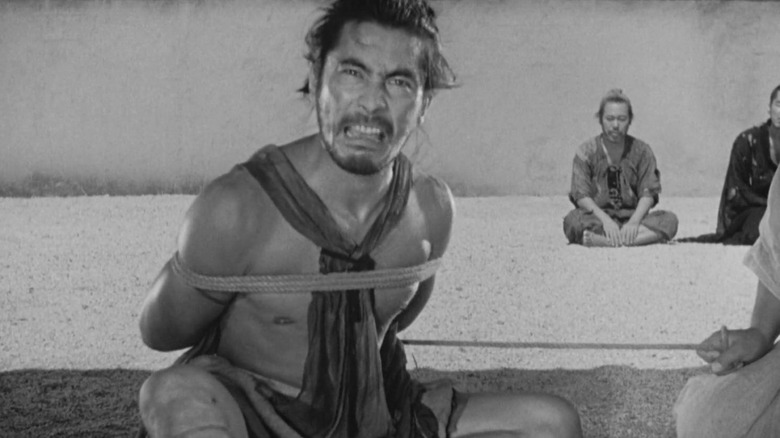
"Rashōmon" was an experimental movie when it was released in 1950, as its structure is unlike anything filmed prior. Akira Kurosawa's psychological thriller focuses on the murder of a samurai, which is told from four separate points of view. Unreliable narrators with conflicting stories is now known as the Rashōmon Effect, thanks to Kurosawa. The movie influenced many filmmakers, including Ridley Scott, whose "The Last Duel" copies "Rashōmon's" narrative style.
The film is a character study, as it's less about the death of the samurai and more about the people recalling the event. Each element of the story is there, but the telling transforms what happens, depending on who is currently describing it. This repetition isn't boring in any way, instead becoming an exploration of how people lie, depending on their position and situation. Kurosawa explained this, saying, "Human beings are unable to be honest with themselves about themselves. They cannot talk about themselves without embellishing. This script portrays such human beings."
Like Kurosawa's other films centered around samurai and their culture, "Rashōmon" is fictional but adheres to historical accuracy via its presentation. The setting, costumes, and culture are all there, and while it's an amazing samurai movie, the focus is devoted to the killing. Ultimately, the audience remains without a concrete answer, as it's left open to interpretation. Not only does that make "Rashōmon" a brilliant film in and of itself, but as a samurai film, it's stellar.
1. Seven Samurai
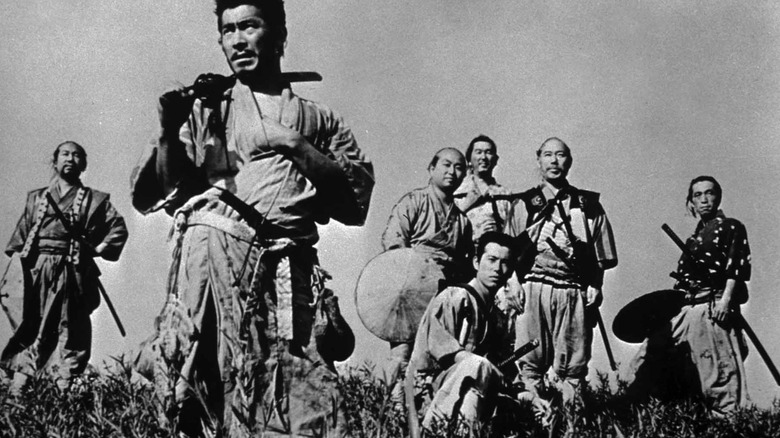
Of all Akira Kurosawa's samurai movies, the most influential is "Seven Samurai." The story is relatively simple: a village is terrorized by bandits, so a group of warriors is hired to protect them. In the end, they help the villagers by teaching them to fight, and if that sounds familiar to you, there's a good reason. "A Bug's Life," "The Three Amigos," "The Magnificent Seven," and even one episode of "The Mandalorian" copied the plot (just to list a handful), so its influence cannot be understated.
It all started with "Seven Samurai," which is set during the Edo period and focuses on the titular warriors who gather together to help the peasants. The depiction of these two classes, peasants and samurai, is historically accurate, as are the costumes and much of the samurai culture depicted in the film. There's a Western influence in the narrative, which is common in Kurosawa's movies, and "Seven Samurai" is widely considered to be the greatest samurai movie ever made.
The film impacted numerous genres, which is made clear by the inspired stories listed above. But most notable is the performance of Kurosawa's longtime collaborator, Toshiro Mifune, who plays Kikuchiyo. An ensemble picture, Mifune is nonetheless the film's most important character, even as he's not a "traditional" samurai. If you've never seen a samurai movie, start with "Seven Samurai." It's effectively a primer to the genre, flawless in its representation and adherence to historical accuracy while still telling a fantastic narrative. If you only pick one film, it's this one. But don't let it overshadow the rest; there's too much nuance in samurai history to listen to one tale alone.