

Evil Dead Burn Ending Explained: Third Act And Post-Credits Scene Breakdown
Contains spoilers for "Evil Dead Burn"
The sixth "Evil Dead" movie delivers all the bloody mayhem fans have come to expect from the franchise, with Sébastien Vaniček's "Evil Dead Burn" going from the hilariously gross (you can turn into a Deadite if they lick your dentures, apparently) to the genuinely intense and upsetting. In terms of its place in the overarching "Evil Dead" story, it's a self-contained tale within one of the most uncomfortable family reunions ever depicted onscreen. It appears the franchise has strayed almost entirely away from Bruce Campbell's Ash Williams to tell stand-alone stories about anybody unfortunate enough to find the Necronomicon.
Closer inspection reveals that nothing here is quite that simple. Like "Evil Dead Rise," this does work on its own outside of a larger timeline — and will likely win over a lot of new fans because of it — but eventually reveals itself to be part of a bigger picture that complicates where we stand. This won't get in the way of viewers enjoying this fun and deliriously nasty movie, but it may leave people with some nagging questions about how the supernatural lore re-established here ties into what we already know from previous films. We're breaking down the third act and the finale of "Evil Dead Burn" to find out where we stand heading into the next installment.
The ending of Evil Dead Burn is about exposing abuse
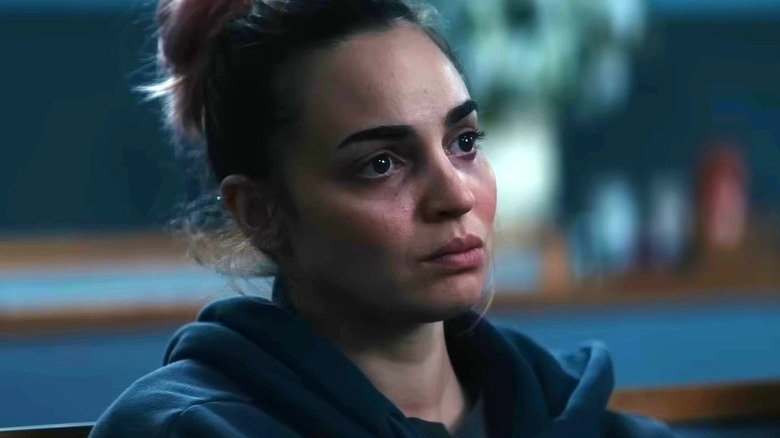
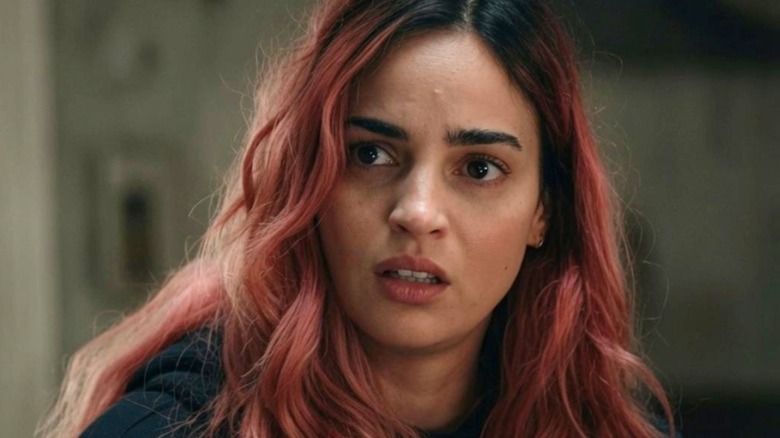
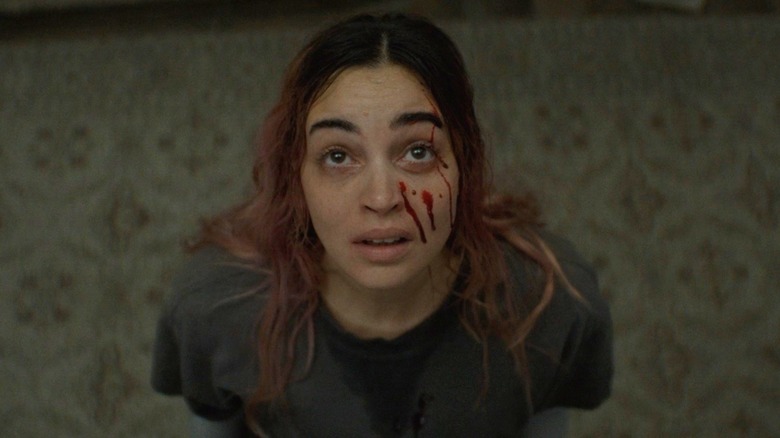
"Evil Dead Burn" continues the 2026 trend of horror allegories for toxic, abusive relationships, arriving hot on the heels of the box office hit "Obsession." The film revolves around a young woman convening with the family of her recently deceased husband. Prior to his death, all we see of Will (George Pullar) is him starting an argument with Alice (Souheila Yacoub), accusing her of flirting with his brother Joseph (Hunter Doohan). Following his death, she's clearly uncomfortable around his family at his funeral, struggling to display any emotion, much to their dismay. She wants to escape from their clutches and return to Paris, which angers them, even though she's displaying signs of abuse at Will's hands — we see a hot water burn across her stomach from an earlier attack, highlighting the extent of the abuse his family chooses to ignore.
Equally crucial to teeing up the bloody finale is what Will's mother, Susan (Tandi Wright), says after being turned: "They're not our enemies, they just want back something my father stole." This is a reference to the Kandarian Dagger, an ancient weapon that's been used to fight off evil for centuries. But the Deadite quest to obtain it is secondary to Alice's catharsis. When Will reanimates, she gets her revenge on the toxic man still claiming that he won't let her live without him. She stabs him with the dagger before crushing his skull after he returns from Deadite to human form, giving her the release she's been yearning for. The importance of the finale isn't that Alice defeats the Deadites, but that she's removed the roadblocks stopping her from speaking up about the abuse. When paramedics arrive on the scene, she says that her "ex-husband did this," in reference to scars new and old.
The origins of the Kandarian Dagger explained
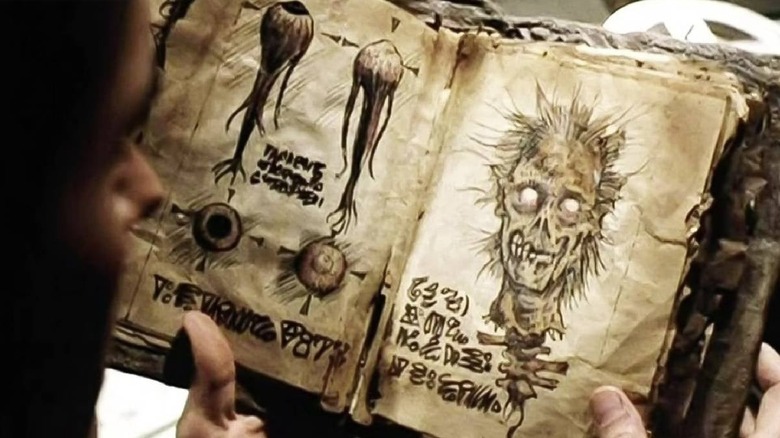
The Kandarian Dagger is an important item in "Evil Dead" lore, though its origins are somewhat murky, and "Evil Dead Burn" further muddies the waters. First appearing in 1981's "The Evil Dead," the dagger — alongside the Necronomicon — was left in the cellar of the secluded cabin in the woods where Ash Williams and his friends came to stay. The cabin belonged to the archeologist Raymond Knowby, who had recovered the items from King Arthur's Castle Kandar during a dig. Things get more complicated from there when you factor in the multiple realities of the "Evil Dead" universe. Different iterations of the Kandarian Dagger are found throughout it, such as in the Starz series "Ash vs Evil Dead," where it had been owned for years by Ruby (Lucy Lawless), a demon in humanoid form.
In "Evil Dead Burn," the dagger is found upstairs in the family attic next to the Necronomicon (three canonical copies of the book exist within the extended "Evil Dead" universe), field recordings, and some diaries, far removed from the cabin in the woods where it was found in the first film. This version is consistent with "Evil Dead Rise," which didn't feature the dagger, although another volume of the book, as well as a priest's recordings researching it dating back to 1923, were found beneath the apartment block in the 2013 film. It was suggested by "Rise" director Lee Cronin that Bruce Campbell, who voiced the priest in a cameo, was a time displaced Ash Williams, stuck in the early 20th Century, warning others not to read from the book.
Will's family is connected to an important player in the Evil Dead story
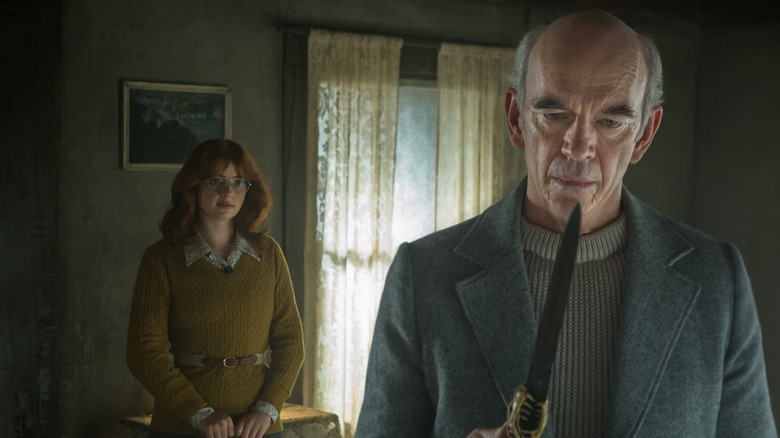
Who is the absent grandfather who left the cursed artifacts to rot in the family attic? We don't hear the family surname, or the man's name directly, but we do learn that he was a researcher who travelled with Raymond Knowby and shared his obsession with the Necronomicon. This is the new film's most direct tie to the original trilogy, and it's a great way to tie the franchise's history into the specific theme of family legacy being explored in "Evil Dead Burn."
The events of Sébastien Vaniček's film were set in motion by a patriarch who is seen as a pariah for his obsessive research and long periods of absence. He's something of a buried secret — just like the late Will's treatment of his wife, which nobody in the family feels comfortable acknowledging. Like the Deadite curse, this is something that can only be kept in the dark for so long, with the movie using the supernatural lore of the franchise to flesh out a metaphor about hiding abuse.
In "Evil Dead Burn," the franchise's history returns via the character of Joseph, who is obsessively writing his own book about the grandfather he barely knew, which is why he's been hoarding so much. In a recent Out magazine profile, Joseph actor Hunter Doohan said: "His grandfather knew Professor Knowby. I loved how this script not only ties back a little bit to 'Evil Dead Rise,' but this movie connects the lore through the whole franchise, which I found really exciting."
The needle drop that dissects the toxic relationship
For a sign that Will and Alice's relationship was toxic from the start, look no further than the lyrics to their wedding song, Jacques Brel's "La Chanson Des Vieux Amants" (The Song of Old Lovers). The final verse, translated into English, reads: "And much of the time we act like we're at a funeral/And much of the time we create pain/But this is not the worst trap/That living in peace is for some lovers. Certainly, you cry a little less early, I fall apart a little later/We protect our secrets less, we leave less to chance/We guard against going with the flow/Yet there is always a tender war." To modern eyes, this sounds like excusing destructive behavior, a series of red flags misinterpreted as emotional honesty. This being the couple's first dance song suggests Will's behavior had always been there and either shrugged off or merely excused as passion from the start.
As well as being used quite pointedly at his funeral — which the lyrics point out their relationship felt like most of the time — it appears in a reprise in the final act, as the Deadite Will is alerted to Alice's presence in the construction site via the song playing over her phone speaker. Coupled with his threat later in that scene that he won't let her live without him, it plays out at one last attempt at emotional manipulation, directly alluding to the years of abuse. This moment ultimately offers more catharsis about escaping from a manipulative relationship than the ending of "Obsession" does, and it manages to address this serious theme without compromising on the over-the-top gore fans have come to expect.
Does the mid-credits scene set up Evil Dead Wrath?
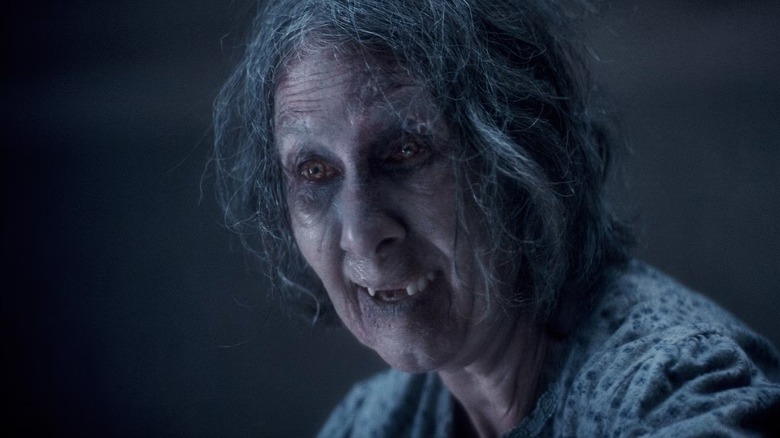
The film's mid-credits sting rewards fans with one last campy kill. We see grandmother Polly (Maude Davey) miles away from the family home, still under the Deadite curse that has temporarily cured her dementia, crawling by the side of the road after her legs have been ripped off. A young woman pulls up beside her to ask if she needs help, leading Polly to respond, "He stole my legs... but yours will do just fine!" This isn't setting up the next unfortunate antagonist in the series, however, as it's already been revealed by producer Robert Tapert that the next movie will be a prequel. However, with her husband established as a past associate of Raymond Knowby, that doesn't rule out a younger actress playing Polly decades earlier.
2028's "Evil Dead Wrath" will take place in 1972, a decade before Ash Williams set foot in that fateful cabin, so don't expect the mid-credits scene from "Evil Dead Burn" to set up any direct continuity. What you should expect is a stylish throwback to the exploitation movies of that era. "That one, unlike 'Burn,' has a lot of coming-of-age sexual hijinks in it, which the 'Evil Dead' universe is not really known for, but this one does," Tapert told Dread Central, adding, "It's going to be the one since the first 'Evil Dead' movie that may have the most difficulty with the MPAA." Tapert also said that "Evil Dead Wrath" will utilize Ektachrome 100 to give it the look and feel of a 1970s movie.
The post-credits scene sets up an Evil Dead cinematic universe
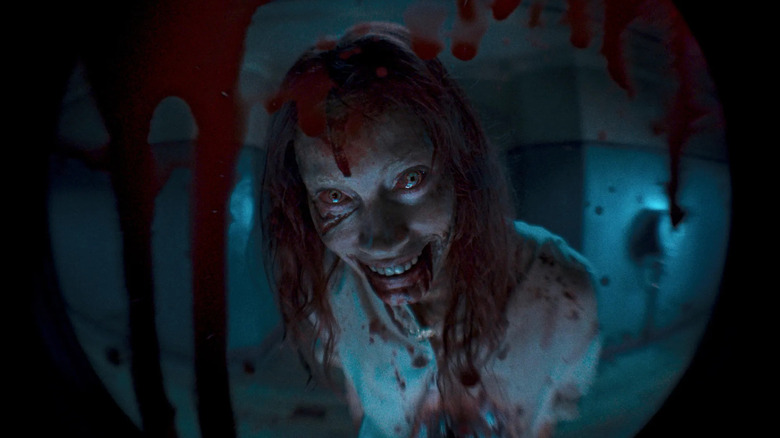
The incredible post-credits scene in "Evil Dead Burn" ties back into 2023's "Evil Dead Rise" after revealing that the ashes of single mother Ellie (former "Vikings" cast member Alyssa Sutherland), shockingly possessed in the previous film, are being held at the same crematorium where Will's funeral took place. A little girl reads over the names of the urns and lands on one marked "Ellie." The lights flicker, and suddenly the previous movie's big bad is standing in the mirror. The girl reaches out, and we see that Ellie is right there in the room, quickly snapping her neck before cheekily turning to the camera and delivering her kiss-off line. It's hilarious, nasty, and, above all, it suggests that these supposedly standalone sequels are building a bigger, interconnected universe tied together by this shared curse.
This post-credits scene raises more questions than it answers, as Ellie had fused together with her children to become a multi-limbed Marauder — far more powerful than the usual Deadite — by the ending of "Evil Dead Rise." Were they somehow separated and put into different urns? It's not really clear, and we have no idea when Ellie will return to the big screen, but Robert Tapert has already revealed that this is part of a grander plan to connect all the sequels. He told Forbes: "We said to Sébastien [Vaniček] that you have to connect back to 'Evil Dead Rise' somehow. Left to all the directors' devices, they don't want to carry the water for what came before or what's coming afterwards, but the one thing that Sam [Raimi] and I feel is that the 'Evil Dead' movies can't just be a whole series of standalones because the audience wants to start connecting the dots."