

5 Best Police Procedural TV Shows Nobody Talks About Anymore
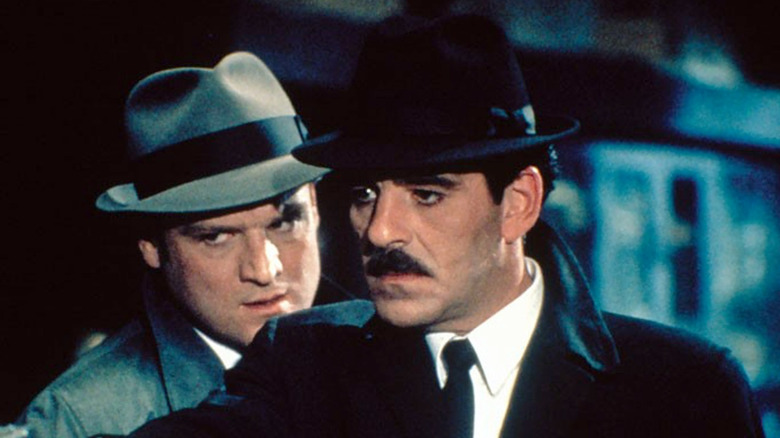
Among the best cop shows of all time, you'll find a mix of hugely popular entries that remain on the air to this day ("Law & Order"); those that have ended but remain oft discussed and regularly rewatched ("Brooklyn Nine-Nine"); and those that perhaps aren't talked about a ton but continue to get their due for being trailblazers ("Hill Street Blues"). There are also plenty of awful cop shows you forgot about, and you're better off for it. And in between those two extremes are the dozens of decent, mid-tier police procedurals that exist in the public consciousness about as much as they deserve to.
What does that leave on the table? Plenty of cop TV that was well-received in their day and should still be discussed as much as any of the good-to-great shows, but for one reason or another, that doesn't happen. These shows have fallen out of everything but the most niche public discourse and rarely make lists of the best cop shows or even the most underrated cop shows. They've just been forgotten about entirely, and given their critical acclaim and/or popularity — one show has over 800 episodes! — it's, well, a crime that we even need to be making this list to remind people of them.
Hunter
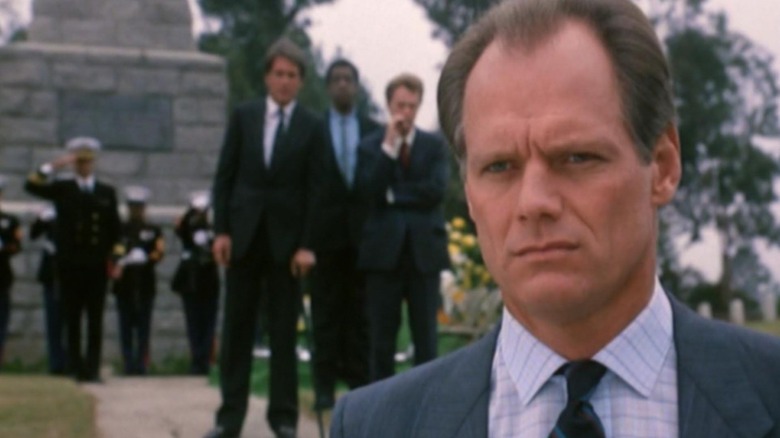
Airing for seven seasons between 1984 and 1991, "Hunter" starred retired NFL player Fred Dryer as Los Angeles detective sergeant Rick Hunter. Hunter moves through the most dangerous areas of the city in plain clothes, ready to surprise unsuspecting criminals with his no-nonsense brand of perp busting. But Hunter isn't a tough guy 24-7, as he's always ready to crack jokes back at the station and knows to take a slightly softer touch with partner Dee Dee McCall (Stepfanie Kramer) — not that she isn't every bit as tough as he is.
The longevity of "Hunter" speaks for itself in terms of its popularity at the time, especially with an incredibly stacked competition of cop shows during that era. It justified its existence alongside peers like "Magnum, P.I.," "Miami Vice," "Hill Street Blues," "Cagney & Lacey," and many more. Four years after it ended, it also got a made-for-TV reunion movie, "The Return of Hunter: Everyone Walks in L.A."
Fast forward another 7 years to the second reunion movie, "Hunter: Return to Justice," which did well enough that it kicked off a "Hunter" revival series. But only a handful of episodes aired before the plugged was pulled — and that's the last we heard from Rick Hunter, with the brand rather quickly fading into obscurity after that. Dryer later played Marine Master Sergeant Thomas Fletcher on "NCIS" in 2018, just before his screen credits stop in 2020.
Naked City
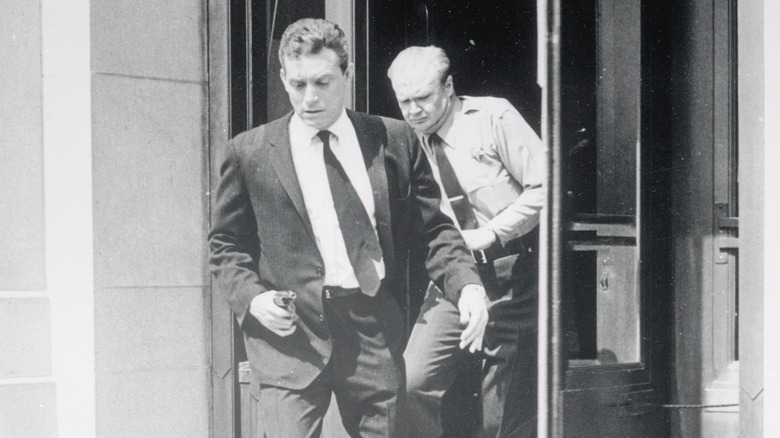
It might seem like a foregone conclusion that a police procedural that aired from 1958 to 1963 would be forgotten about. But a number of crime dramas from around that time — "Dragnet," "Perry Mason," "Peter Gunn," "The Avengers," etc. — seem to have had no trouble maintaining a legacy. It probably helps that a few of those shows got later movie adaptations, revival TV shows, and were mainstays in Nick at Nite programming blocks. It still doesn't explain why those shows got that treatment but "Naked City" did not.
Based on, and loosely connected to, the 1958 movie of the same name, "Naked City" follows what is called a semi-documentary style. That is, it tells entirely fictional stories, but mentions real people, events, and other types of factual information in the periphery to make the stories feel more authentic. This approach was also utilized in the movie, as well as in the aforementioned cop show "Dragnet." The show centers around a specific precinct of the NYPD, and while the regular police officers are technically the protagonists, the various criminals and perpetrators — generally played by a well-known guest star — end up being the main focus of each episode.
The fact that some of those guest stars include actors that remain household names to this day — William Shatner, Martin Sheen, James Caan, Gene Hackman, Dustin Hoffman, Robert Redford, Ed Asner, the list goes on and on — should've helped "Naked City" enjoy a lasting legacy. Yet it didn't take long after "Naked City" wrapped up in 1963 to be overshadowed by the newer, hipper action shows of the '60s and beyond. It never really crawled out from under.
Z-Cars
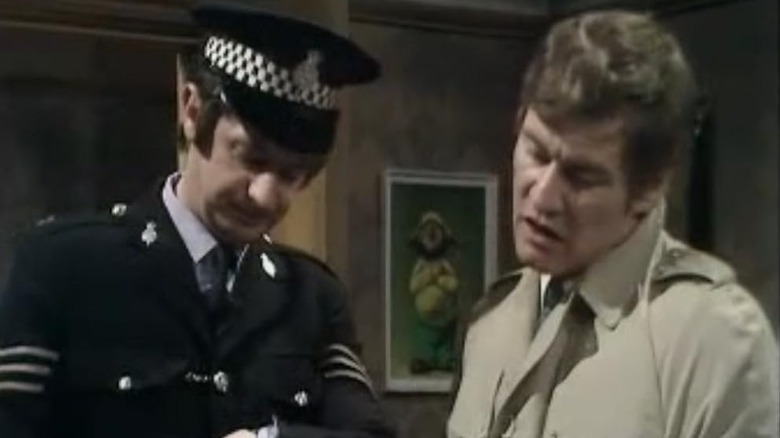
How can a show that ran for 16 years and aired over 800 episodes subsequently become mostly forgotten? Surely UK television viewers remember the BBC's long running police procedural "Z-Cars," which follows a group of Criminal Investigation Division (CID) officers working in a small, fictional British town. But given that "Z-Cars" never got an official airing in the United States, Americans never even got the chance to see the show at all — let alone have the option to remember it.
Any show that can run for as long as "Z-Cars" did must've been doing something right. It remains one of the longest-running British TV shows of all time, tying "Red Dwarf" for number of seasons. The British Film Institute named it one of the top 100 British shows of all time in 2000, and it's a two-time winner of the Writers' Guild of Great Britain award for best British dramatic series. Even with all that acclaim, "Z-Cars" was deemed too idiosyncratic; too British to appeal to American audiences. So it remained a distinctly British show for British viewers, and wasn't given the opportunity to see worldwide success. That would've ensured it a more lasting legacy.
Also not helping matters is that nearly half the episodes of "Z-Car" are considered permanently lost. Not unlike how we'll never be able to watch every "Doctor Who" episode, the BBC's poor handling of its media archives in those days means that those who haven't already seen the entire run of "Z-Car," won't ever have the option to do so.
Crime Story
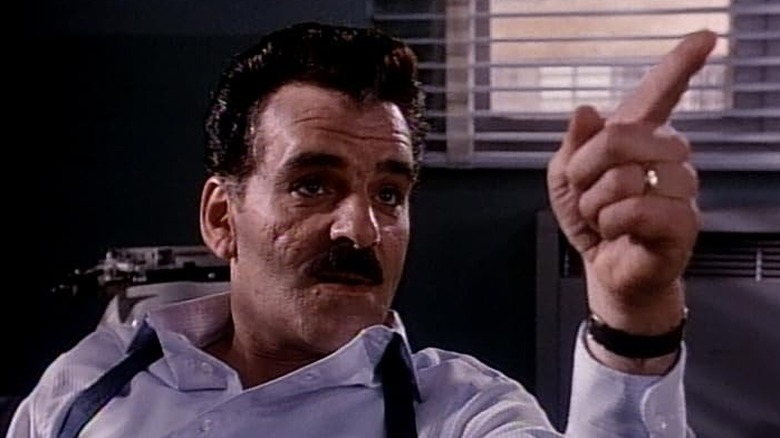
It feels like almost every police procedural that was made in the '80s, '90s, and 2000s featured at least a guest spot by actor Dennis Farina, typically as a law enforcement agent. Farina was a real-life cop for two decades, and he put that experience to use in not only his main role as Det. Fontana on "Law & Order," but his appearances on shows like "Miami Vice," "Remington Steele," and even the aforementioned "Hunter." But for as visible as Farina has been in TV and on film, one of his best roles is one that most people either haven't seen, or simply forgotten.
Farina was the lead character in the 1986 police procedural "Crime Story," executive produced by "Miami Vice" creator Michael Mann. In the show, Farina plays Lt. Mike Torello as he tries to take down mob boss Ray Luca (Anthony Denison) in 1960s Chicago and Las Vegas. Unlike the vast majority of shows from the era, even cop shows, "Crime Story" had the ambition to tell a serialized story. And that might have proven to be the show's downfall, as '80s TV watchers weren't ready for or interested in that type of commitment. "Crime Story" would last for only two seasons of 44 total episodes.
Time Magazine would subsequently proclaim "Crime Story" one of the best shows of the decade, but it wouldn't be long after that until the show stopped getting brought up almost entirely. Today, there is still very little written or discussed about it online — although in early 2026, the YouTube channel DoubleReelTV did a video on it entitled, "Crime Story (1986): A Victim Of Horrible Timing." And that pretty much sums it up.
The Equalizer (1985)
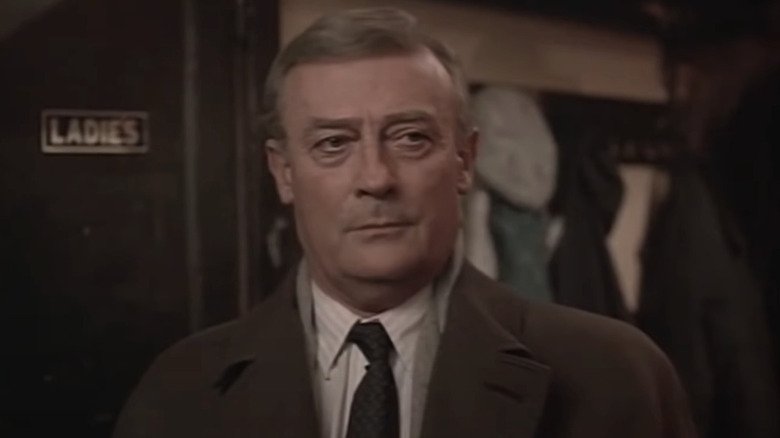
Today, "The Equalizer" is a multimedia franchise that consists of a 2021-2025 TV show, three films — starring Denzel Washington, no less — and a handful of novels. So how can we claim that something from said franchise is obscure? Well, considering the fact that most people thought the 2021 TV show was only based on the "Equalizer" movies, that's a big indicator of how few people realize that the entire brand actually started on television.
Debuting in 1985, the original "The Equalizer" marked the debut of Robert McCall as a character — only he was played by actor Edward Woodward about 25 years before Washington first took it on. Like the films, McCall is a vigilante, though the word wasn't used much on the show. But he indeed has started taking justice into his own hands, using his skills from his former career as a covert special ops agent for the U.S. government. "Karate Kid" star William Zabka plays McCall's initially estranged son, though they mend their relationship as the series progresses.
Lasting for four seasons and nominated for seven Primetime Emmy Awards — five for Woodward's performance — "The Equalizer" was beloved by the generation that watched it, but by none of the ones that came after. It doesn't help that it's almost impossible to find today, and it's only because it was reborn as a film series that it didn't completely drop off the pop culture map. Now, whenever "The Equalizer" is brought up, it's almost certainly for the projects bearing its name that have been released from 2014 on — with most people inevitably surprised to learn that it's actually much, much older.