

5 Twilight Zone Episodes That Are Unwatchable Today
We may receive a commission on purchases made from links.
"The Twilight Zone" may harken back to the 1950s, but it's still one of the most binge-worthy sci-fi shows of all time. Each episode would see host Rod Serling introduce some new, freaky tale in its own self-contained story. Many installments remain relevant and thought-provoking to this day. Some "Twilight Zone" episodes have even seemingly predicted the future, which is just a testament to the superb writing and foresight put on display.
The best part about "The Twilight Zone" being an anthology series is that even if one episode doesn't necessarily speak to you, you never know what the next might hold. And you might need a palate cleanser after a few "Twilight Zone" episodes that really missed the mark. The vast majority of episodes are still entertaining to watch in some regard, but as one might expect from a show that began in 1959, other episodes haven't aged particularly well.
That's not even necessarily due to themes regarding race and gender. Some are severe technical issues, while others are just plain boring and wouldn't speak to a modern audience. As you go down your next marathon, you can feel safe in avoiding these truly unwatchable "Twilight Zone" episodes.
The Chaser (Season 1, Episode 31)
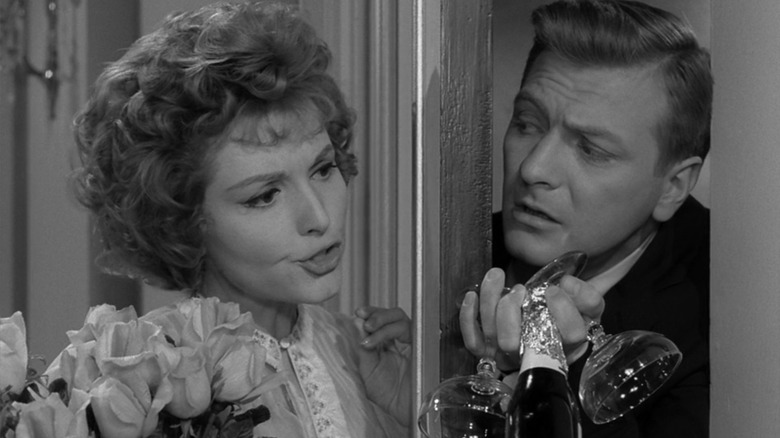
"The Chaser" is an incredibly problematic episode of "The Twilight Zone" for what it says about men stripping women of their autonomy without even a strong moral lesson in the end. Roger (George Grizzard) buys a love potion from a man named A. Daemon (John McIntire). Life hack: Never do business with someone whose name is literally "a demon." Roger uses the love potion on his crush, Leila (Patricia Barry), and she falls madly in love with him. Too much in love, in fact, to the point where it becomes suffocating for Roger.
Roger winds up purchasing poison from Daemon to kill Leila, but can't go through with it upon discovering that she's pregnant. The whole thing's truly horrifying in that Roger forcefully made Leila love him and then impregnated her against her will. The true Leila, who wanted nothing to do with Roger, wouldn't have wanted this, so even though the cruel twist of fate may seem to be put on Roger by the end, Leila's the one whose life is permanently taken away from her.
It's like an old-school retelling of "Obsession," which blew everyone away at the box office. What's even more sickening is that Roger would've definitely killed Leila, but he stopped just because of a baby. He allows an unborn child to have greater influence and autonomy than the woman he's supposed to be in love with.
The Encounter (Season 5, Episode 31)
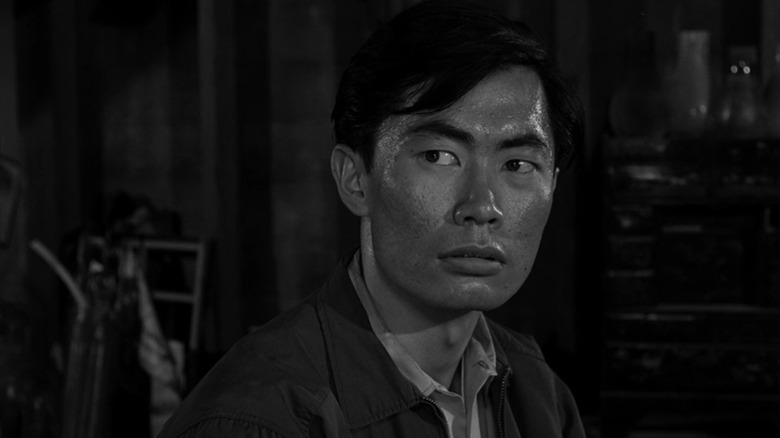
When it comes to unwatchable "Twilight Zone" episodes, we're mostly just talking about installments that are cringey or have bad sensibilities today. But "The Encounter" was literally unwatchable for several decades due to its racist undertones.
The episode sees two men — military veteran Fenton (Neville Brand) and a young Japanese-American man, Arthur Takamori (George Takei) — trapped in an attic. While there, Arthur slowly grows under the insidious influence of a Japanese sword, and they both unveil unsettling revelations. Fenton killed a Japanese man during the war, while Arthur's father was a traitor at Pearl Harbor who aided the attack on that fateful day.
Fenton engages in racist rhetoric toward Arthur, but he appears remorseful when realizing how he's talking down to this other man. The main reason why the episode was banned for decades is primarily due to Arthur saying his father betrayed Americans at Pearl Harbor. It was that kind of belief that resulted in the mass incarceration of Japanese-Americans in the aftermath of Pearl Harbor, fueling anti-Japanese sentiment across the country. Thousands of families were sent to internment camps, including Takei himself, who starred in the episode.
"The Encounter" is now available to watch with the rest of "The Twilight Zone" on Tubi, but it's still a tough watch. Many sci-fi shows have had episodes so controversial they got banned, so it's only natural for "The Twilight Zone" to wind up in that category, too.
The Bard (Season 4, Episode 18)
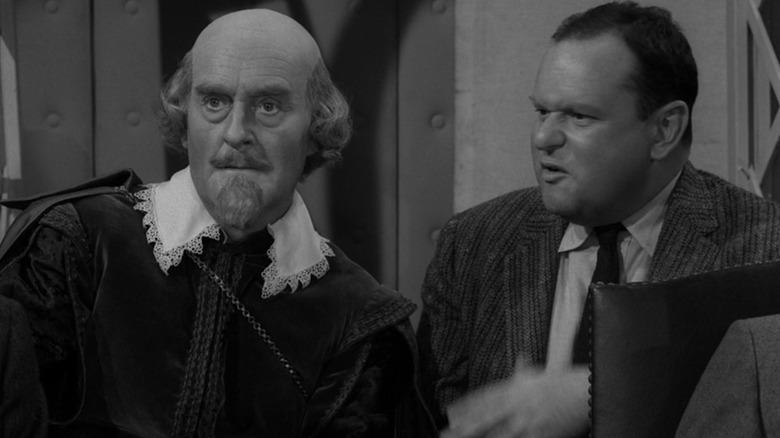
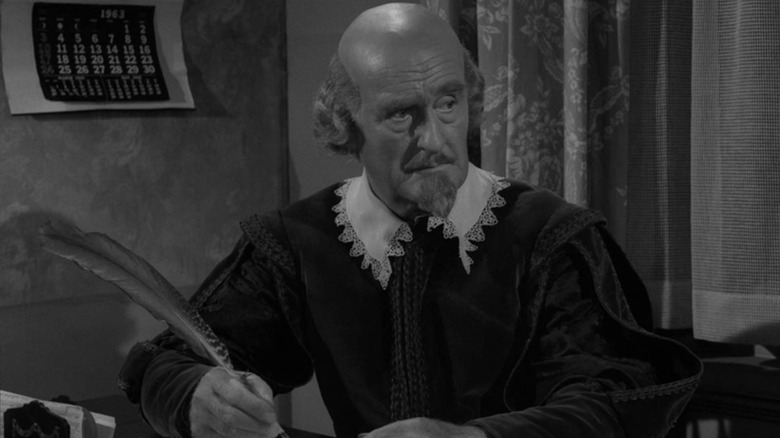
"The Bard" is easily the worst episode of "The Twilight Zone" ever. One thing you can say about most bad "Twilight Zone" installments is that there's at least a kernel of a good idea in there. But "The Bard" trades in supernatural horror and eerie science-fiction for pure slapstick comedy, which wouldn't be an inherently bad thing if it were, you know, funny.
Struggling screenwriter Julius Moomer (Jack Weston) summons William Shakespeare (John Williams) back to life to help him write a TV pilot. What follows is a comedy of errors where Shakespeare gets gradually annoyed at Moomer for taking credit for his work. Things go even worse for Shakespeare in the climax when he discovers how much the network executives changed his work. It's supposed to be a comedy with Shakespeare being horrified at the state of modern writing and acting. It might make for an amusing four-minute sketch on "Saturday Night Live." But here, it's a drag.
It doesn't help that, for some reason, this is an hour-long episode, so you have to endure mediocrity for twice as long. "The Bard" wasn't funny when it came out, and it certainly isn't funny today. In fact, you'd be better off watching the "Brian Griffin's House of Payne" episode of "Family Guy," which has the same theme, wittier observations, and some actually good jokes.
The Bewitchin' Pool (Season 5, Episode 36)
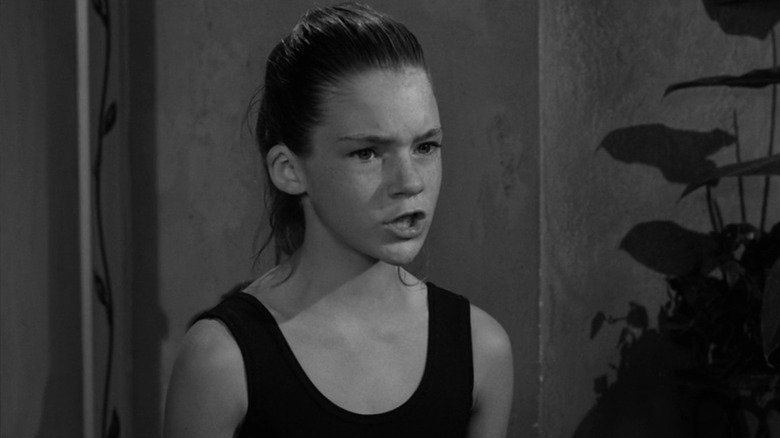
"The Bewitchin' Pool" is the very final episode of "The Twilight Zone" during its original run. And it's such a shame the show went out with such a dud. It's an episode where it feels like everything that could've gone wrong did go wrong, and it's such a mess that it's best to go about thinking it doesn't exist.
The overarching plot is fine. When their parents' marriage is on the rocks, two kids jump into a pool to escape into an alternate reality where all their troubles are far away. The main issue, as revealed in "A Critical History of Television's The Twilight Zone, 1959-1964," stems from the fact that any dialogue recorded outside was unusable, so they had to dub over everyone's lines. This was a problem for Mary Badham, who played the daughter Sport, as she had already flown back home to Alabama, and instead of bringing her back, the studio hired June Foray, a grown woman, to voice a literal child.
That means when you hear Sport speak inside, she sounds normal. But when she's talking outside, she sounds like an adult woman. As if that wasn't bad enough, the episode clearly ran short of the allotted runtime, as several scenes get shown repeatedly to pad the runtime.
For such an influential show, it's such a disrespectful way to go out. One would imagine "The Twilight Zone" had made enough money that flying Badham back out wouldn't have bankrupted anyone. And just putting a little more time into filling out the rest of the episode could've made it a real classic. Instead, we're left with an installment that exudes incompetence and suggests the show was running on its last legs anyway.
Come Wander With Me (Season 5, Episode 34)
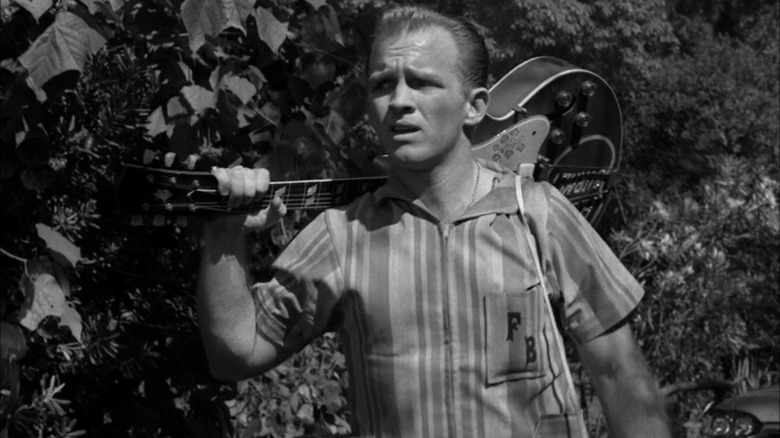
Between "The Bewitchin' Pool" and "Come Wander With Me" both being among the last few "Twilight Zone" episodes, it's clear the show was running out of steam toward the end. Maybe it was best for it to go off the air at that time because we don't want to know what kind of failures would be in store for a prospective Season 6.
"Come Wander With Me" is all the more disappointing because there's a great idea within all this mud. Floyd Burney (Gary Crosby) is a rockabilly singer in search of a great song and wants to take one from a strange woman in the woods. She sings a little for him, which he records, but after Floyd kills another man, the recording changes to include new lyrics about what he has just done and what may be coming for him next.
A supernatural horror story about appropriating folk music is a pretty cool idea, but the episode isn't really interested in that. Instead, it pivots to a lackluster suspense tale. And any suspense instantly gets removed early on in the installment when we see Floyd's grave. This suggests a time loop or perhaps some kind of purgatory, but nothing is ever cemented.
It's not even ambiguous in a neat way; it's all just baffling. It's an incoherent story that feels like a first draft of something that could've been a lot better with a more polished script. As is, it's worth skipping, and you'd be better off devoting more attention to some of the more underrated episodes of "The Twilight Zone."