

Toy Story 5 Feels Like A Sequel To A Different Pixar Franchise
Contains spoilers for "Toy Story 5"
Once a critically acclaimed movie starts getting sequels, there's always a fear that the stories are going to get stuck in a creative rut, especially if that first film becomes a cultural phenomenon. Thankfully, the "Toy Story" series has been able to maintain a consistent level of quality with each installment. "Toy Story 5," which Looper's Reuben Baron reviews as an uneven but charming Pixar sequel, largely stays true to the series' longstanding tradition of these beloved characters learning things about themselves in relation to the children that play with them.
The circumstances that set them off on their adventures, however, are always different, with the latest revolving around the impact of physical toys amid the rise of multi-use electronic devices like Lilypad (Greta Lee). It makes for a solid "Toy Story" movie that also secretly works as a thematic follow-up to "Inside Out."
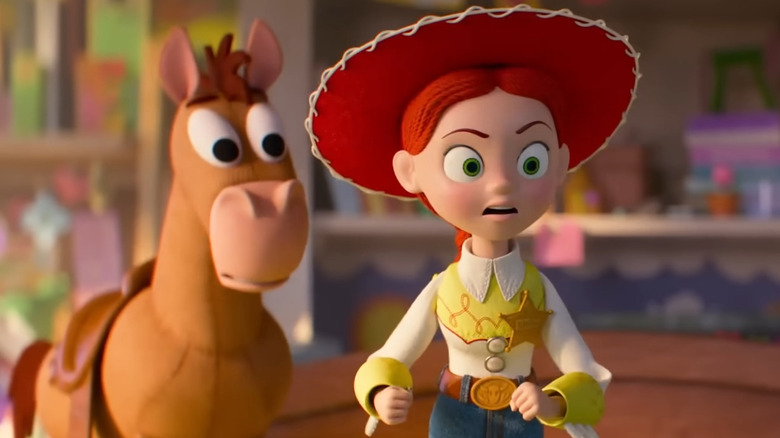
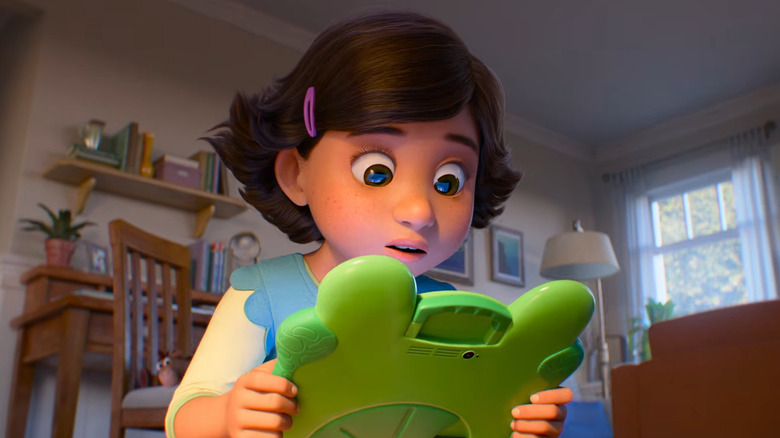
"Toy Story 5" sees cowgirl Jessie (Joan Cusack) taking on a leadership position following Woody's (Tom Hanks) mission to rescue lost toys at the end of the last film. As such, she's compelled by a responsibility to protect her owner Bonnie (Scarlett Spears) at all costs. Tension arises, however, when Lilypad becomes Bonnie's go-to toy. Jessie's concern of how this always-online friendship will affect Bonnie ultimately leads her to get separated, and only through finding a compromise with Lilypad is she able to make her way home again. At the same time, we see Bonnie grappling with her social standing as a result of still playing with her toys. It's an "Inside Out" movie by any other name.
Toy Story 5 shares a lot in common with the Inside Out series
2015's "Inside Out" took Pixar in a new direction with the concept of anthropomorphizing the emotions of a young girl named Riley (Kaitlyn Dias). Joy (Amy Poehler) is presented as the literal head honcho, ensuring the other emotions play their parts in a way that keeps their kid happy. But when the presence of Sadness (Phyllis Smith) accidentally affects a core memory, it forces Joy to learn the nuances of co-existence in order for Riley to thrive during a transitional time in her life.
In thematic conversation with "Toy Story 5," Joy and Jessie come from a similar background of looking out for their owner (who is unaware of their guardians) from a place of insecurity. The dynamic of both films may stem from the original Woody/Buzz Lightyear (Tim Allen) rivalry, but the new "Toy Story" is more aligned with the nuances of "Inside Out."
In 2024's "Inside Out 2," Riley finds herself in a situation where she wants to impress the cool hockey kids and, in doing so, casts her actual friends aside. Anxiety (Maya Hawke), much like Lilypad, takes control of this change as a result of their unchecked internal programming.
Once they learn how much damage they can cause, because these emotions fuel each other (which is something adults will really notice), a compromise is reached. And in "Toy Story 5," Lilypad witnesses firsthand how destructive her unregulated access is to a developing child like Bonnie. Jessie, meanwhile, is able to find a middle ground between toys and technology as Lilypad is the only way to get her and Blaze (Mykal-Michelle Harris), a girl her age who has similar interests, to connect in person.
Bonnie's story centers the child character in a way the Toy Story movies rarely have
While the kids of the "Toy Story" series have always factored into the story, they're largely supporting roles who inform the toys' mission. Andy's story came at a time when toys were routinely bought and played with, and nuance doesn't emerge until "Toy Story 3," where he has to make a decision about what to do with his old toys before going away for college. Bonnie's character, however, arrived during the tablet boom, so it makes sense that her movies would reflect that journey. After all, "Toy Story 4" teases Bonnie's loneliness with the kindergarten orientation that leads to the creation of Forky (Tony Hale).
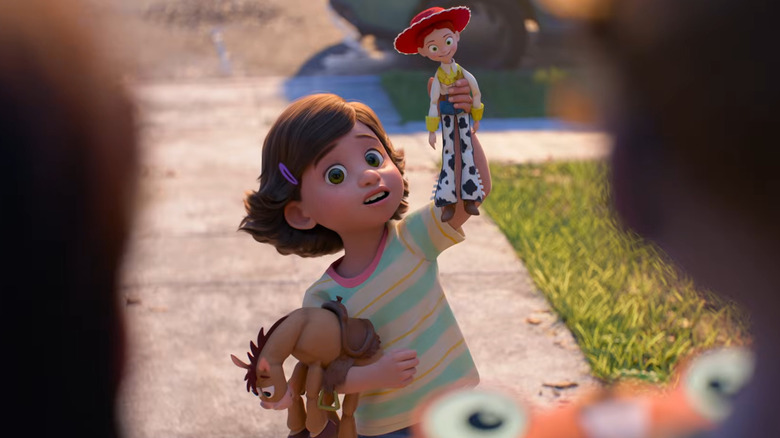
By the time we get to "Toy Story 5," Bonnie is in a similar predicament to Riley in that she's compelled by the allure of "cool" kids who don't have her best interests in mind. The film allows us to see this change from Bonnie's perspective, which leads to some of its most heartbreaking moments — such as her wondering why no one wants to be her friend, or her mom reading those awful messages on the Pond group chat. The arrival of tech actually allows her to become a more interesting character than the kid with unconditional love archetype, which the filmmakers could have gone with again.
Lilypad and the toys may set up the meeting that leads her back to Blaze, especially after the first encounter led the dispirited Bonnie to reject Jessie and Bullseye, but it's ultimately shared human connection that truly makes them friends. "Toy Story 5" (while ranking toward the bottom of the series' films) isn't rehashing the "Inside Out" films so much as rhyming with them.