

All 7 Star Wars Lightsaber Forms Explained
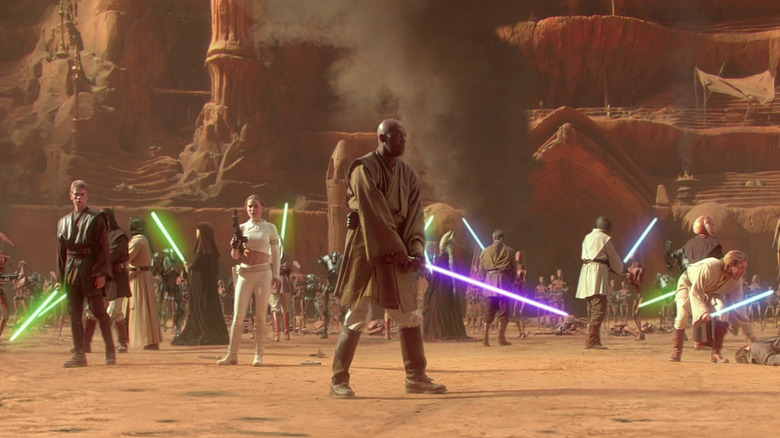
The simple lightsaber that once came in just two colors quickly expanded to three, then four, then white, black, yellow, orange, double-sided and curved, cross-guarded, shoto-short, that dumb one in "Rise of Skywalker" that folds out like a nunchuck, that other dumb one that spins around like a helicopter — you get the idea. The different lightsaber designs are well documented at this point. But the different fighting styles for the weapon remain the subject of deep-cut fandom.
The premise of documented lightsaber forms has always been a more fringe topic in Star Wars, poured over by diehards but rarely mentioned in the core films or TV shows. There have been occasional references, like when the Grand Inquisitor calls out Kanan Jarrus for his reliance on Form III during a duel in "Star Wars Rebels," but for the most part, the Seven Forms have been relegated to video games, novel references, and source books. David West Reynolds, a longtime author of the latter, detailed the basics in 2002 back in Star Wars Insider Issue 62, just a few months after "Attack of the Clones" hit theaters. "Since the dawn of Jedi history, seven fighting disciplines have arisen," Reynolds wrote, "known as the Seven Forms." From there, the idea has been spun out and expanded on over the last quarter century, with the same basic ideas being quickly recanonized after the Disney acquisition of Lucasfilm.
Today, the Seven Forms are most strongly associated with the Prequel era and early points on the Star Wars timeline like the Old Republic and the High Republic, when the martial training of both Jedi and Sith was at its peak. The more elegant styles are a far cry from the slower fencing choreography of the Original Trilogy, and once you get a grasp of the different lightsaber forms, you'll start noticing some fun details on watches and rewatches.
Let's take a closer look.
Form I: Shii-Cho, The Way of the Sarlacc
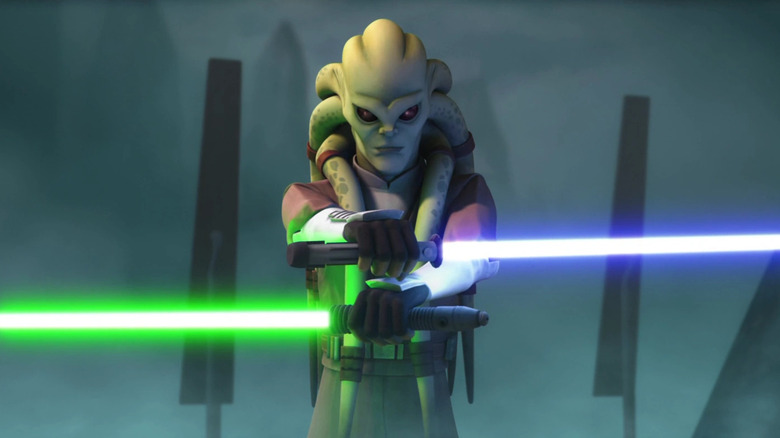
As you might expect, Form I is the most basic lightsaber fighting style, tracing its origins all the way back to the order's first use of the weapons. Even in the final days of the Republic, all Jedi trained in Form I early in the Jedi education.
In his 2002 Star Wars Insider article on the Seven Forms, David West Reynolds explained, "Jedi Masters created Form I from ancient sword-fighting traditions" after "advanced technology replaced metal swords with energy-beam lightsabers." In that same piece, Form I is cited as having originated "millenia before the Clone Wars."
Fighting styles quickly evolved beyond this most basic form, leaving it as more of a training tool and a foundation for practitioners to build on. That said, Form I is more aggressive in nature than you might suspect for such an old and simple style. This is partially due to lightsabers being far more deadly than the ordinary swords that inspired the form. It is also not a form typically used for lightsaber dueling, as it was created in an era prior to the large-scale Jedi/Sith wars, and is therefore more applicable in combat against groups of opponents. Kit Fisto is often cited as a later Jedi who focused heavily on Form I.
Form II: Makashi, The Way of the Ysalamiri
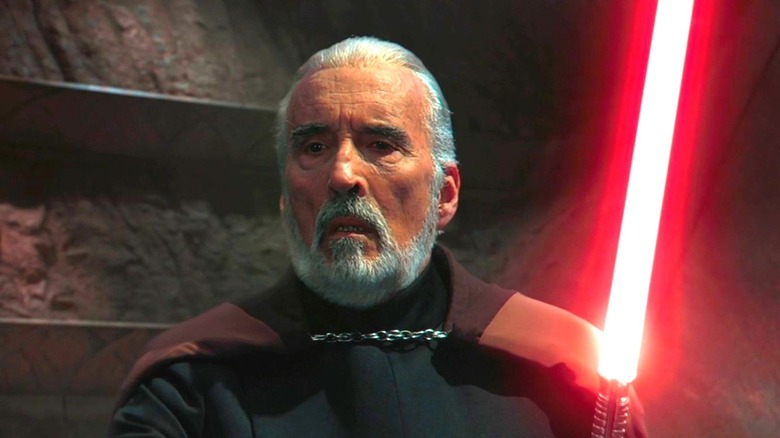
Eventually, the Jedi began to realize that lightsaber duels were inevitable. The rise of the early Sith and the fall of other Jedi to the dark side led to the development of a form specifically meant to counter other lightsaber-wielders. And so, Form II, Makashi, was born.
This style was less prominent by the era of the Prequel Trilogy due to the Sith being absent from the galactic spotlight for a thousand years (and presumed extinct). However, some Jedi still stayed proficient in the form, with Count Dooku (who later became Darth Tyrannus) being the most famous example. Dooku's curved hilt is specifically designed for the dueling style, and if you rewatch his fights in the movies or "The Clone Wars," you'll see just how fencing-inspired his moves are. The Grand Inquisitor in "Star Wars Rebels" also favors the style, and you can easily identify the similarities if you know what to look for — quick, precise, economical movements, absent the massive sweeping blows that defined Form I. Hence the style's namesake, the lizard-like ysalamiri.
David West Reynolds called Form II "the ultimate refinement of lightsaber-to-lightsaber combat," adding that it helped produce "the greatest dueling masters the galaxy has ever seen."
Form III: Soresu, the Way of the Mynock
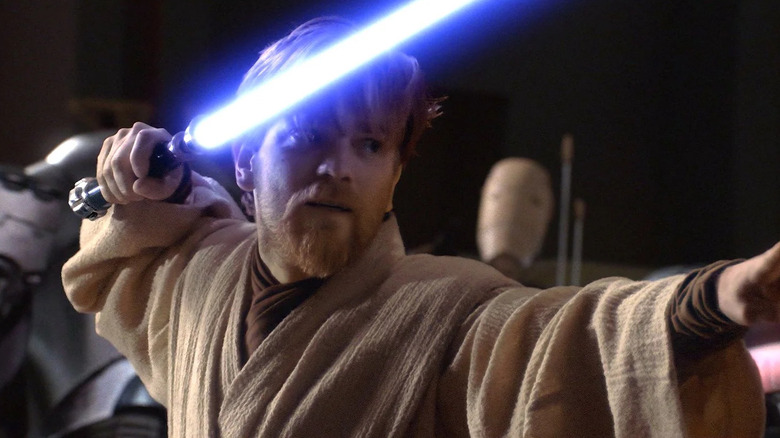
While the first two lightsaber forms aren't seen too often in the franchise's major installments, Form III, Soresu, is much more common. Known as the Resilience Form, it's a defense-first style designed primarily to counter opponents with blasters and multiple opponents. Obi-Wan Kenobi is the most famous master of Form III, with his iconic stance — blade held back over his shoulder, pointed forward at his foes — having become the shorthand symbol for Soresu. Kanan Jarrus is another notable practitioner of the form, and the recent "Maul: Shadow Lord" show works in some fun lightsaber Easter eggs with Form III and young Jedi Devon Izara.
As blasters became the dominant weapon across the galaxy, and the Jedi doctrine of defense continued its influence on the order, Form III turned into a natural style for many. One could argue that its continued popularity in the order was due in large part to its natural fit with Jedi philosophy, as the style demanded full focus and a kind of in-battle serenity to fully actualize its defensive potential.
"Form III thus arose from 'laserblast' deflection training," David West Reynolds wrote in 2002. "Over the centuries it has transcended this origin to become a highly refined expression of non-aggressive Jedi philosophy." The best Star Wars movie lightsaber fights often feature Soresu to some degree.
Form IV: Ataru, the Way of the Hawk-Bat
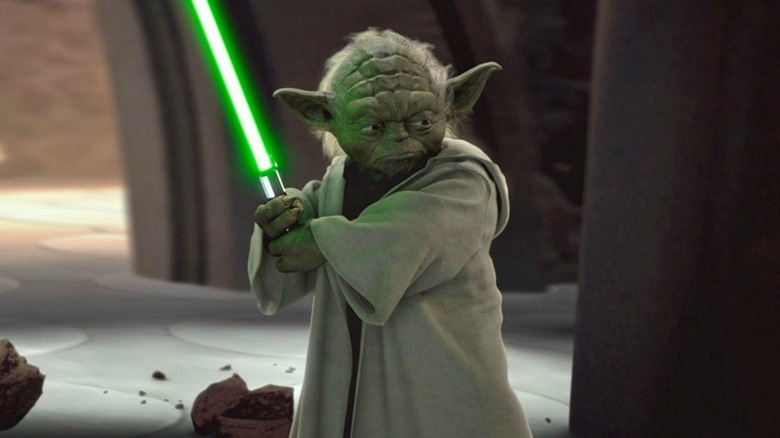
If Form III is all about defense, Form IV, Ataru, is all about aggression. It's literally called the Aggression Form, though that aggression is less grounded in pure swordsmanship and more built on the combination of saber maneuvering, acrobatics, and use of the Force. Yoda is perhaps the best example of Ataru in action, as all of his fight scenes involve heavy Force use and a non-stop flurry of flips and quick strikes. Qui-Gon Jinn's own furious fighting style, seen in his skirmishes against Darth Maul in "The Phantom Menace," is another instance of Form IV.
"Masters of Form IV incorporate all of the ways in which the Force helps them go beyond what is physically possible," David West Reynolds wrote in his original treatise on the Seven Forms. When you think of the most dynamic fight sequences in the prequels or "The Clone Wars," you're likely thinking of Ataru, at least in part.
Form V: Shien and Djem So, the Way of the Krayt Dragon
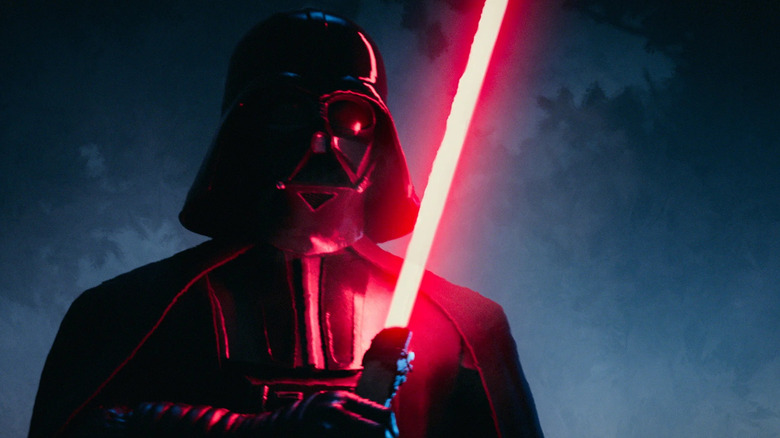
As outlined by David West Reynolds and other Star Wars contributors since 2002, Form V was born out of Form III when some Jedi decided that the older style was too defensive and did not present enough opportunities to defeat an opponent. Form V came into practice around the same time as Form IV, with both being responses to the Jedi Order's growing role as a peacekeeping force in the galaxy. Anakin Skywalker is the most notable Form V user, embracing the style both during his time as a Jedi and as Darth Vader.
Unlike the previous forms, Form V has two distinct disciplines: Shien, which is primarily designed for a lightsaber-wielder facing various non-melee opponents, and Djem So, designed for dueling. Both take the defense-first strategy of Soresu as their foundation, but with a heightened emphasis on counterattacks. The overwhelming strength used by Anakin is emblematic of Form V, and his iconic double-handed overhead stance — seen both before and after his turn to the dark side — is a foundational part of Form V. Shien also expanded on the basic blaster deflection principle by having practitioners redirect such attacks back at their senders, as seen in moments like Vader's famous "Rogue One" hallway scene.
As Anakin's apprentice, Ahsoka Tano also was a heavy user of Form V, with her unique backhanded saber hold being more common in Shien than in other styles. The style's nickname, "The Way of the Krayt Dragon," reflects its focus on overwhelming power, rather than the more rapid flurry common to its twin, Ataru.
Form VI: Niman, the Way of the Rancor
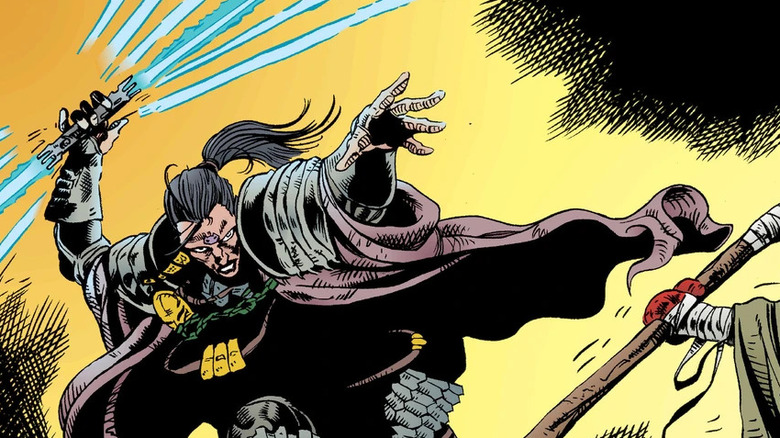
The Jedi eventually sought to develop a lightsaber Form that was balanced and non-aggressive, incorporating the best elements of previous styles. The result was Niman, Form VI, which, according to David West Reynolds, had become "the current standard of Jedi lightsaber training" by the time the Clone Wars began. He explained that the form was intended to help further the Jedi goal of reaching "true harmony and justice without resorting to the rule of power," adding that it was "less intensive in its demands than the other disciplines."
Those reasons ultimately made Niman a less popular style, even as it gained ground as a foundational training tool. Without the strong advantages of more specific forms like Ataru, Soresu, or Djem So, Form VI made more sense in peacetime — a philosophical expression more than a martial advantage.
The old Star Wars Expanded Universe, now known as the Legends timeline, had a more detailed history of Niman, which included it being the favored style of the deadly Jedi-turned-Sith Exar Kun, as well as a style often used by Jedi Consulars ("Old Republic" players know). The consulars' role as diplomats was a natural fit with Niman, which is also known as the Diplomat's Form.
Form VII: Juyo and Vaapad, the Way of the Vornskr
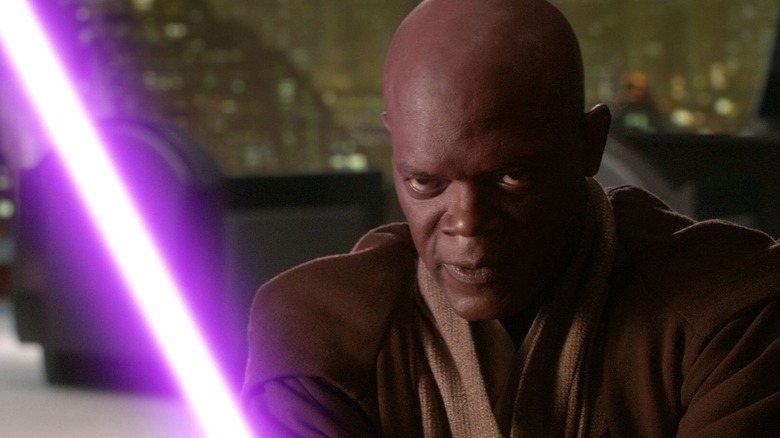
The final lightsaber form is the most aggressive, and the most aligned with the tenets of the dark side. In the EU especially, it is often characterized as a Sith form, rejected by many members of the Jedi for being too explosive and dangerous. That original version of Form VII, known as Juyo, found its origins in the most aggressive tenets of Form I, which were quickly worked out of that style in keeping with the Jedi principles of serenity and defense.
In the Prequel era, however, Mace Windu refined a second style of Form VII called Vaapad, which he claimed made it a usable fighting form absent the risk of dark side corruption. In both Legends and the canon Star Wars timeline, Windu is the progenitor of Vaapad, which is why many in the fandom often refer to him as the closest thing the Jedi have to a Sith in that era.
"Form VII tactics overwhelm opponents with seemingly unconnected staccato sequences," David West Reynolds wrote in Star Wars Insider Issue 62, "making the form highly unpredictable in battle."