

The Terrible Stephen King Novel That Could Make A Shockingly Great Film

I know, I know. When you hear the phrase "terrible Stephen King" novel, your first thought is "Dreamcatcher." Well, guess what? It's not "Dreamcatcher" we're here to talk about. Surprise!
The Stephen King novel I actually hate with a burning passion is "Revival." After reading it a few years ago, I couldn't shake off the "ugh" feeling and chucked it into the dungeon of other terrible books, aka the bottom shelf in the study. However, even if I hate the novel — and listen, I'd argue it's far from any list of essential Stephen King books everyone should read at least once — it would make an excellent film.
Why? Well, for me, it starts with a personal connection. What made me pick up "Revival" in the first place is the fact that when I was younger, I remember attending a church where they would conduct so-called "miracles" — something the book's story revolves around. As you get older, you realize most of these "miracles" never happened and were either staged, or people just believed they had been cured of whatever imaginary ailment they had. "Revival" features a similar premise, as former minister Charles Jacobs turns people into believers of his ability to cure them with the power of electricity à la Dr. Frankenstein. Unfortunately, the plot loses the plot across five convoluted decades and culminates in a wild H.P Lovecraft-inspired finale.
Brevity isn't King's strong point. But a talented filmmaker could rein in the disorder and chaos to lead this to narrative glory. In fact, Mike Flanagan has already tackled a similar premise in "Midnight Mass," and he was eyed for a "Revival" adaptation once upon a time, so there's the solution right there: Hollywood, please send the check and let Flanaganmania run wild.
Revival, as a book, features too many time jumps ... and a weird ending
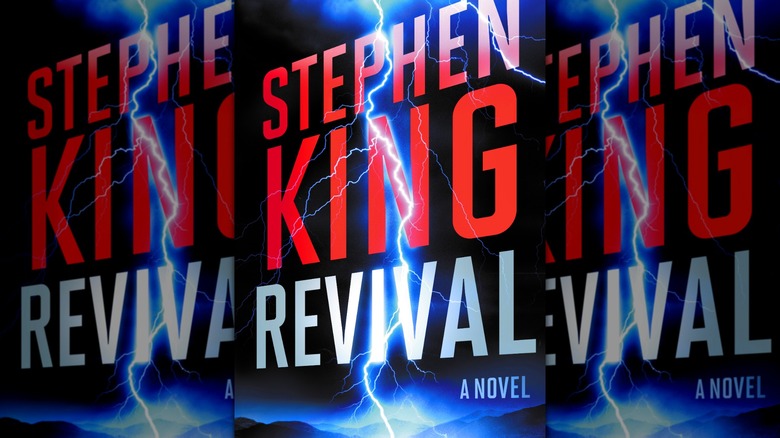
"Revival" introduces the young Jamie Morton who becomes fascinated by the feats of minister Charles Jacobs. A tragedy, though, results in Charles denouncing religion, but he continues his "healing" practices on the road. A chance encounter in adulthood brings Jamie to Charles again, whereby the former receives healing. This sets off a years-long journey where Jamie explores all of Charles' miracles and the fate of the people, resulting in a bonkers finale about the afterlife.
Conceptually, "Revival" has a solid basis. As explained earlier, I remember encountering miracle men in church and being fascinated by their antics. They would lay their hands on people, who would speak in tongues then burst into tears about being cured. One of them even climbed out of a wheelchair and walked out of the building. Yet it never dawned on me until later how these people weren't regulars at church; they would only arrive on those special days.
When "Revival" focuses on the miracle aspect of the story and blends it with a Frankenstein element, it's stronger. Even when Charles turns away from God and religion, it still holds your attention, because it keeps everybody guessing where his powers come from, or if he's really just an excellent scam artist.
The problem kicks in when this story stretches out further than it has any right to go. As displayed in one of Stephen King's best books, "It," the author loves working across multiple timelines. However, "Revival" features more time jumps than necessary and muddies the message in the process. Add in that unexpected and blustering finale (which may have worked best as a suggestion rather than a reveal), and there's a book that never fulfills its true potential.
Mike Flanagan would be the right person to adapt Revival
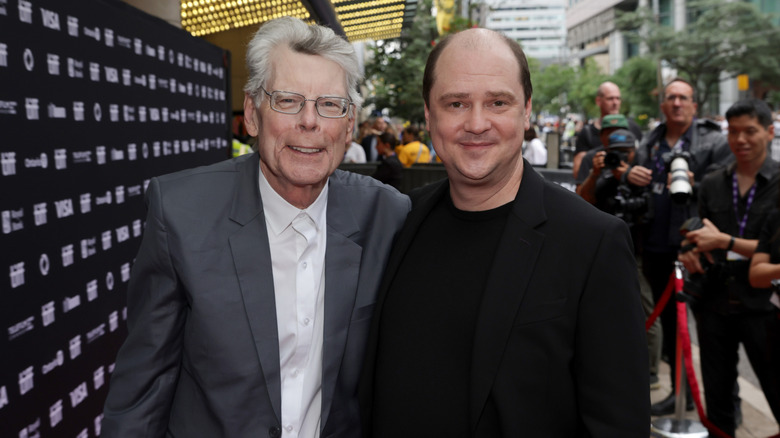
Mike Flanagan knows how to make memorable projects, including adaptations of Stephen King's work. He's proven time and time again that he understands how to get to the substance of a horror story, forcing the viewer to emotionally interact with what they watch rather than just experience the fright factor. He's somebody who could dig into "Revival," strip away all the unnecessary parts, and find the heart of the narrative.
He's already done something similar in "Midnight Mass," and his approach in the Netflix miniseries is exactly how any director or writer should approach "Revival." This story should be about asking tough questions about society's relationship with organized religion, or those who claim to be miracle workers. The desire to believe in the impossible is often used against people, whereby men like Charles Jacobs exploit or manipulate them for their own sinister purposes. This is the story that needs to be told — not the additional fluff.
Flanagan's greatest strength is his ability to sift through the weeds and find the gemstones. He understands how to unpack and reorganize timelines into cohesive structures that don't overwhelm or isolate viewers. He also doesn't rely on cheap parlor tricks to elicit attention, since his sensational dialogue and power of suggestion do the heavy lifting for him.
The filmmaker was set to adapt "Revival" before, but that project fell to the wayside. The good news is he's continued to adapt King's work, so there's always the chance this one could resurface in the future. If it does, it's an opportunity to do the story a better way — the Flanagan way.