

The Amazing Digital Circus: The Last Act's Climax Combines 2024's Best Movies
contains spoilers for "The Amazing Digital Circus: The Last Act"
Gooseworx's hit animated series "The Amazing Digital Circus" draws inspiration from a wide variety of sources. Its premise of a group of humans trapped and tormented by an all-powerful AI draws directly from the disturbing Harlan Ellison short story "I Have No Mouth and I Must Scream." The animation recalls the primitive CGI of old computer games and Disney Channel preschool shows, while the humor leans more in the Adult Swim direction (without getting too inappropriate for older kids). The adventures have referenced everything from "Max Max" to "Looney Tunes" to "2001: A Space Odyssey."
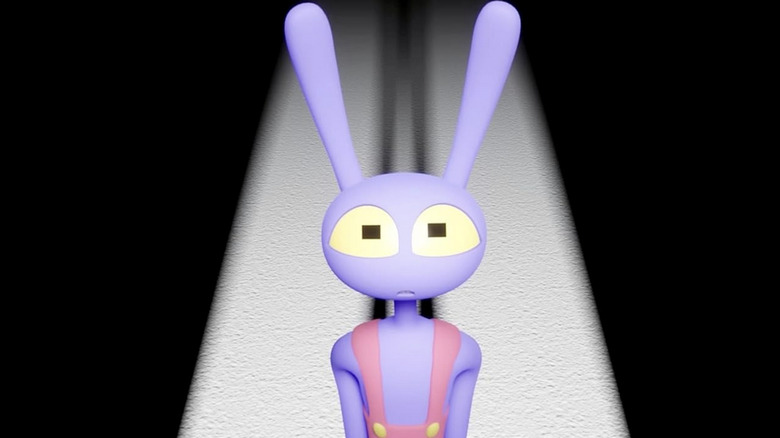
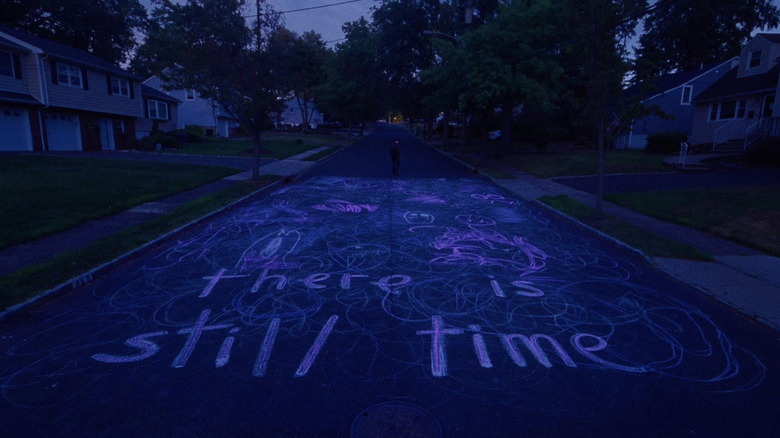
With the ninth and final episode, now playing in theaters ahead of its release on YouTube on June 19, we might be able to add two of the best movies of 2024 to that list of influences. The episode's emotional climax, a lengthy sequence wherein Pomni (Lizzie Freeman) goes inside the mind of Jax (Michael Kovach) and witnesses the edgelord rabbit's memories before they abstract, plays like a combination of the central themes of "I Saw the TV Glow" with the visual style of "Nickel Boys." Whether or not Gooseworx or any of her crew were directly drawing from those two films, the fact such comparisons can even be made is evidence of this finale's artistic richness.
How I Saw the TV Glow and The Amazing Digital Circus explore the closet
"The Amazing Digital Circus: The Final Act" proves true the fan theories about Jax being somewhere on the transfeminine spectrum — though neither the Digital Circus Jax nor original human Leeroy Mateo has yet to fully accept this aspect of their identity in the end. One door in Jax's mind remains locked, but Pomni does get to see a conversation between Jax and Ribbit (Skye Redden) wherein Jax alluded to their deepest secret. This "secret" was laughed at by Jax's mother, whom Jax fought physically with and ran away from in shame, but Ribbit lent Jax her bow in a show of acceptance. The next day, Jax pretended the whole heart-to-heart talk was lies, rejecting Ribbit's acceptance.
A note on pronouns: Pomni continues to use he/him pronouns for Jax after learning their secret, perhaps out of respect for the fact neither Jax nor Leeroy publicly came out (though Leeroy is implied to be coming closer). However, the use of the Stevie Wonder song "Isn't She Lovely?" as Jax abstracts implies "she" might be more fitting for Jax. In respect to the ambiguity, this article uses they/them pronouns for Jax.
Some part of Jax knows what might make them happier, but tragically refuses to accept their identity — a more aggressive, spiteful equivalent to Owen (Justice Smith) in "I Saw the TV Glow." Gooseworx, a trans woman, has described Jax as her "self-insert" character, so she's exploring personal issues not unlike Jane Schoenbrun did with "TV Glow." Gooseworx and Schoenbrun both avoid explicitly using the word "transgender" in these stories, framing the issue through metaphors of unstable realities, a la the Wachowski sisters' "Matrix" movies.
First-person cinematography as a means of empathy-building

The comparison to "Nickel Boys" is a bit more surface level than the heavier thematic parallels with "I Saw the TV Glow." It comes down to this: like almost the entirety of RaMell Ross' adaptation of Colson Whitehead's novel, the Jax memory sequence in "The Amazing Digital Circus" finale is shown to us in first-person from the character's point of view.
Given the obvious influence of video games on the world of "The Amazing Digital Circus," it's possible, maybe even likely, that choice of first-person cinematography in the finale had more to do with the gaming medium than any potential inspiration from "Nickel Boys." However, the use of this technique for Jax's backstory feels closer to how "Nickel Boys" uses it than how the average first-person shooter does — making the audience see life through the eyes of a tragic character becomes a means to cinematically build empathy.