

5 Reasons Why The Wheel Of Time Series Failed
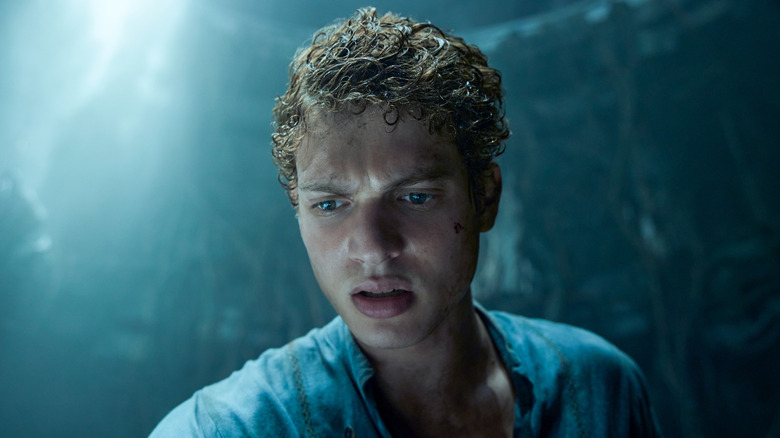
Amazon Studios' adaptation of Robert Jordan's "The Wheel of Time" books came to an abrupt halt in May 2025. The studio announced that the show wouldn't be picked up for a fourth season, and just like that, the impressive project became one of the 10 best Prime Video series that were canceled too soon.
The sudden end really was a surprise in some ways. Ratings had steadily climbed throughout the first three seasons — and not unsubstantially. Season 1 received an abysmal initial Rotten Tomatoes audience score of around 38% (jumping to 62% since the show's cancellation). After the rocky start, the audience reviews reached 81% for Season 2 and then an impressive 85% for what turned out to be the show's final season. The critics were even kinder, with Season 3 earning a resounding 97% on the Tomatometer. The show's supporters were so numerous that the cancellation sparked a robust petition to save the show, which, as of this writing, had reached 238,272 signatures and sponsored "Save the Wheel of Time" billboards and signage all over the world.
In other words, this was a show loved by critics and fans alike, and it was only getting more popular with each passing season. So, why cancel it, then? What was it about "The Wheel of Time" series that prevented it from telling its originally planned story, which was supposed to jump through time across eight full seasons? Let's take a look at what led to the unexpected turning of the Wheel that brought the show to an untimely end unworthy of the One Power.
The Wheel of Time couldn't turn enough profit in a challenging economy
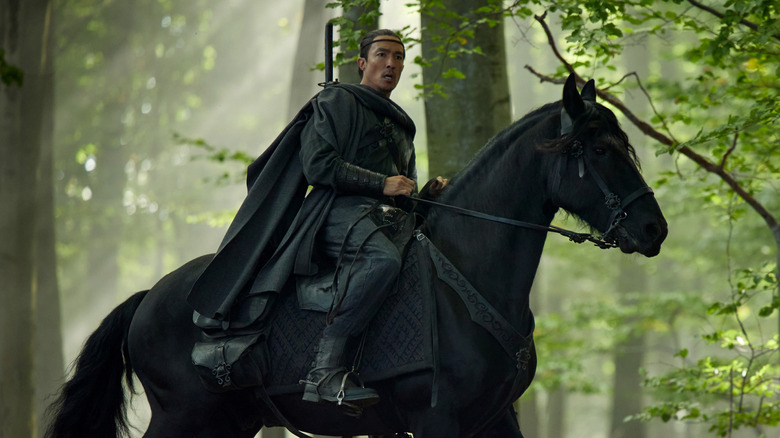
Let's start by getting right down to the brass tacks: "The Wheel of Time" couldn't turn enough profit to stay afloat. That's not to say that it was losing money. While the data Amazon Studios has released is vague, and streaming is always hard to quantify, some estimates based on quarterly viewing numbers had "The Wheel of Time" generating around $360 million through subscriber revenue. In contrast, the studios' other mammoth fantasy series, "The Lord of the Rings: The Rings of Power," generated around $367 million.
There are a few things to note here. On one hand, "The Wheel of Time" ran for an extra year ahead of the release of "The Rings of Power." At the same time, the cost per episode of "The Wheel of Time" was significantly smaller, making it easier to turn a profit. Still, when it came down to which projects to prioritize, it was the Robert Jordan adaptation that got the axe — and it was based purely on financial reasons, not creative ones.
In other words, despite its popularity even with its studio backers, the show simply couldn't generate enough money fast enough to be renewed over other projects. When Looper talked to the Season 2 producers on set before Season 3 came out, the cost to maintain the show was made clear too. Between hundreds of sets, elaborate special effects, and countless characters, the studio was clearly shelling out a lot of guac to keep the lights on in Robert Jordan's world.
The Wheel of Time had a comparatively niche audience

Despite its popularity, it's evident that "The Wheel of Time" was a fantasy series with a niche audience. But before anyone challenges the use of the words "niche audience," let's make one thing clear: We're talking about comparative popularity. There's no doubt that tens of millions of people have enjoyed Robert Jordan's books, and there are millions of people who have remained avid fans ever since that experience.
Yet when you look at the numbers, this pales in comparison to the built-in audience for other IPs in this genre. Let's take the obvious comparison again: "The Lord of the Rings." Estimates put sales of J.R.R. Tolkien's flagship trilogy at 150 million copies to date. Now, at first glance, this actually isn't far off from Jordan's books, which come in at a collective 100 million copies sold. But there are only three books in "The Lord of the Rings" trilogy, and that doesn't even include "The Hobbit," which has sold over 100 million copies on its own. In contrast, the 100 million "Wheel of Time" books sold are divided across 15 volumes.
An even better series comparison is "The Chronicles of Narnia," which has sold over 120 million copies spread across seven books (justifying its own upcoming Netflix adaptation with Greta Gerwig directing). And the seven "Harry Potter" books? That series' total comes to over 500 million, including 120 million copies of the first book alone. However you slice it, "The Wheel of Time" came into its adaptive journey with a smaller core fan following, which naturally makes it harder for any massive project to maintain momentum over time.
The Wheel of Time has too many characters to keep track of

So far, we've broken down details around the show's budget, revenue, and audience. But what about the story itself? "The Wheel of Time" is a mesmerizing tale with plenty of action and adventure to keep people engrossed — that is, if they can keep track of all of the names involved. While we didn't take the time to count up every name across all 15 books, there are typically two numbers you run into. Older estimates have around 1800 named characters in the story. Newer, more exhaustive estimates put the number closer to 2700, give or take several dozen.
We're talking about a ton of names to keep track of. While most of these are people who pop in and out of the story, there are still dozens and dozens of first-person, inner-thought points of view that readers encounter throughout Robert Jordan's text — 148 different points of view, to be exact. Suddenly, the nine members of the Fellowship of the Ring aren't too hard to recall, are they?
There's no question that "The Wheel of Time" has an avalanche of individuals who are difficult to keep track of at any point in the story. When it comes to the adaptation, the attempt to truncate the 14 primary books into eight seasons only exacerbated the issue. Obviously, hundreds of characters had to be cut. Others were rolled together, as was the case when the sniffer role in Season 2 was given to Elyas Machera (Gary Beadle), removing the character Hurin from the story. Even with the reduction, the overwhelming ensemble cast (with few apart from Rosamund Pike being easily recognizable) made it difficult for fairweather fans to keep up with the adaptation from day one.
The Wheel of Time world, story, and timeline are convoluted too
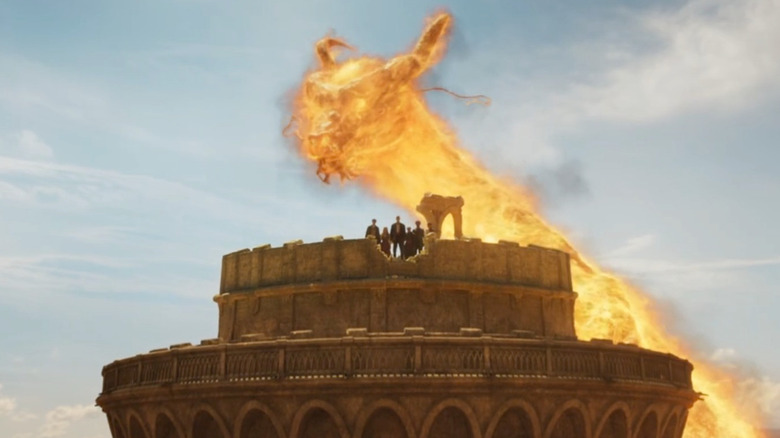
If the character list alone wasn't enough of an issue, the sheer size of Robert Jordan's world is enough to leave any but the most avid readers behind. Each book shifts its focus to different cities, regions, and cultures, all with their own backstories, political structures, and independent crises.
Again, this isn't a knock on what Jordan has done. On the contrary, weaving all of this together is an incredible feat, and if you're super-focused as you read, you can just about keep track of everything. But for wider audiences, the experience is bewildering and convoluted at every turn.
Rather than list the number of named places this time, here's a better example of just how big Robert Jordan's source material is. In order to get through the entire series, you need to read 11,898 pages. That's an average of 793.20 pages per book for a grand total of 4,410,036 words. Not much of a reader? The audiobooks aren't much easier to tackle. Listening nonstop, it takes 19 days, five hours, and 25 minutes to get through the entire saga.
Make no mistake. Jordan used this mammoth literary playground to build one of the most comprehensive, inclusive, and all-encompassing epics the fiction world has ever seen. But in doing so, he created a beast so big that it was impossible to adapt into a digestible form for wider audiences (the shortening of which naturally had the opposite effect of upsetting diehard fans). It was simply too much of a task, even for a group as clearly committed as Amazon Studios' team.
Prime Video kind of cubbyholed the project
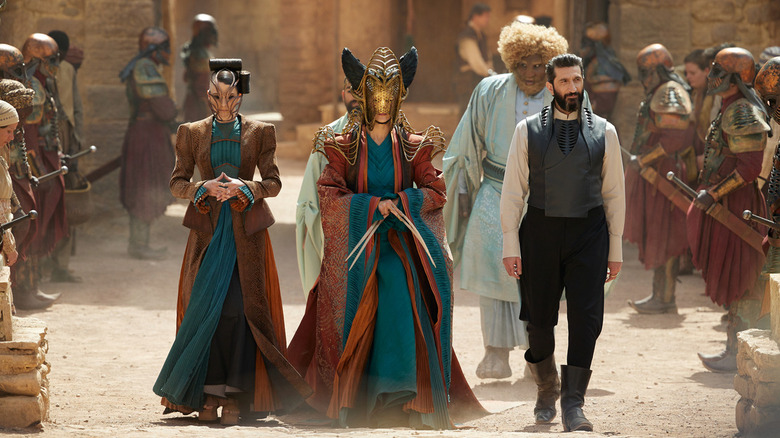
"The Wheel of Time" was clearly a major investment for Amazon Studios, but that doesn't mean the powers-that-be behind the scenes treated it like a flagship series. On the contrary, studio execs and promotional teams attracted criticism for seemingly providing only lackluster support to push each season of the show in front of potential viewers.
Fan sites have called out Amazon Studios and Prime Video going back to 2024, citing the company's lack of promotion for the show, the occasionally rushed nature of the storytelling, and even the relative brevity of each season (with eight episodes as opposed to 10 or more) as evidence of Amazon's reluctance to make "The Wheel of Time" a cornerstone of its programming.
While each season of "The Wheel of Time" was promoted in some capacity as it rolled out, the reality is that it never received the same kind of focus and, dare we say, preferential treatment as bigger investments like "The Rings of Power." Combine this with the naturally smaller core audience and overwhelming task of adapting the source material, and it's no surprise that the show eventually dropped far enough below an acceptable level of profitability to get the axe despite its stellar (and rising) ratings. Here's hoping that petition gets in front of the right people and the show gets a new turn of the Wheel — but alas, that hope seems unlikely a year after its cancellation.