

5 Most Disappointing Stephen King Movie Adaptations, Ranked
In the decades since Stephen King began writing novels, short stories, and novellas, Hollywood has been eager to milk his sagas for film adaptations. There's now a vast collection of Stephen King film adaptations, some of which have proven artistically worthwhile. The best Stephen King movies exemplify what happens when this author's works are properly mixed with sublime live-action filmmaking. Of course, there are countless weaker features rooted in King's works. Some, though, weren't surprising in their badness. Who could've been shocked that 2016's Z-grade "Cell" would become a critical disaster?
Throughout the history of Stephen King motion pictures, though, some creative misfires are more painful than others. These are the ones that left tremendous potential on the table since, from the outset, it felt like they had the potential to be special. The five most disappointing Stephen King movie adaptations (ranked below from least disappointing to most devastatingly underwhelming) all reflect what happens when good intentions go awry. Some of these films seemed to be destined for greatness because they were remakes of earlier subpar movies. Others were helmed by tremendous directors who seemingly assured artistic greatness was around the corner. Still others were adapting rich texts that could totally have informed classic motion pictures under the right circumstances.
However these projects stumbled, they all started life with immense promise before crumbling into unforgettably disappointing disaster. Read on to discover the five Stephen King movie adaptations that still keep people up at night with their wasted potential.
5. The Running Man
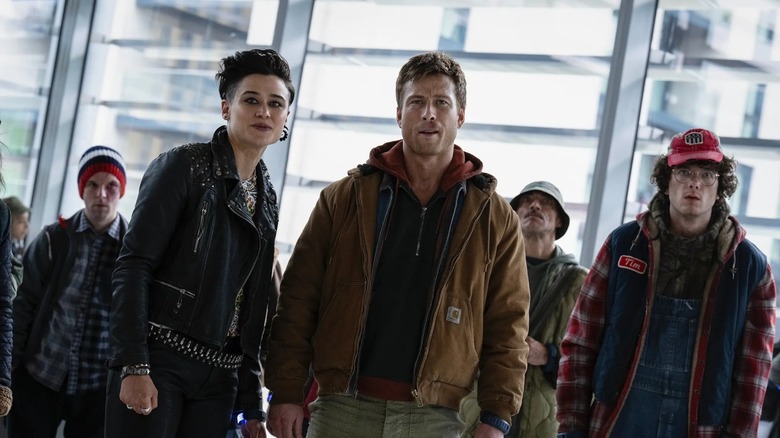
Combining Stephen King and Edgar Wright's propulsive filmmaking should've been a slam dunk. Unfortunately, 2025's adaptation of King's "The Running Man" was a bafflingly inept misfire. Wright's vision of "Running Man," anchored by Glen Powell, tried to fuse Paul Verhoeven's social commentary with "John Wick" action. The execution, though, left something to be desired. For one thing, the commentary lacked bite or tact. An extended scene where Powell's Ben Richards didactically lays out economic inequality to the wealthy Amelia Williams (Emilia Jones), for instance, conveys the movie's thesis in an unimaginative and rote fashion.
There's no sting or danger to "The Running Man" speaking truth to power. It just feels like the characters are reading from cue cards and refraining from taking their verbiage anywhere truly radical. Worse, "The Running Man" lacks fun or compelling suspense. Save for one scene where Michael Cera's conspiracy-theorist character unleashes a barrage of creative booby traps around his house, the various hand-to-hand skirmishes blur together visually. Worst of all, though, Powell is woefully miscast as an "aggressive" guy prone to anger.
Any time this actor tries selling Richards as a ball of rage, it comes off as forced. It's no wonder "The Running Man" was a failure at the box office, given its endless artistic struggles. If there's any film on this list that really seemed like a modern classic on paper, it was this one, which just makes its eventual quality all the more bitterly disappointing.
4. Pet Sematary (2019)
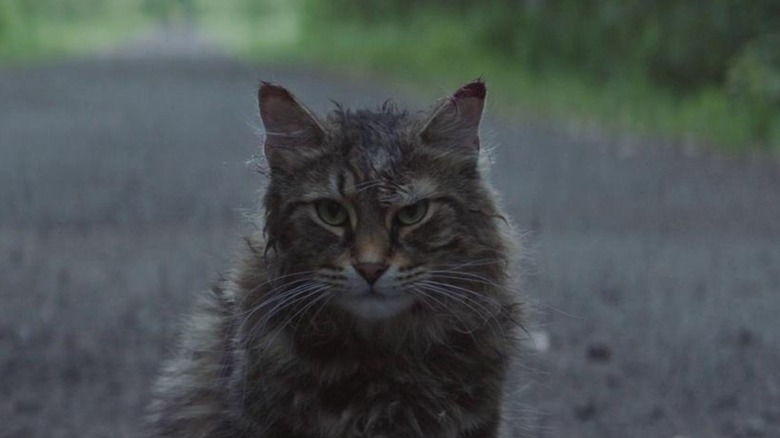
Director Mary Lambert's 1989 take on Stephen King's "Pet Sematary" has amassed a cult following over the years. However, the general reception to this project wasn't universally positive. If there was any King text that could totally receive a remake that vastly improved on the original film, it was "Pet Sematary." Unfortunately, this incarnation of the Creed family, including father Louis (Jason Clarke) and Rachel (Amy Seimetz), learning "sometimes dead is better" is a deeply underwhelming affair that just finds new ways to leave audiences disappointed.
Directors Kevin Kölsch and Dennis Widmyer display frustrating visual instincts that hamper the rhythm between cramped shots, which proves fatal when the filmmakers try building up tension for scares. Meanwhile, the various frights lack specificity to the film they inhabit. "Pet Sematary" leans on shrug-worthy jump scares that could've been cribbed from any forgettable 2000s horror film like "Mirrors." Not even deeply talented actors like Clarke, Seimetz, or John Lithgow can imbue personality into the proceedings. Everything here just comes up short and leaves one persistently thinking about how easily "Pet Sematary" could be made scarier.
Thankfully, there are better cinematic options out there for moviegoers looking for unnerving features about mortality. A year after "Pet Sematary," one of its main actors, Seimetz, would direct a much more compelling and visually audacious movie about death, "She Dies Tomorrow." Spend your time on that project rather than watching this lifeless 2019 rehash of King's "Pet Sematary."
3. Firestarter
When ranking every Blumhouse movie from worst to best, it becomes clear that this production outfit from producer Jason Blum has never had a spotless track record. The worst Blumhouse movies ever, like "Night Swim," make that glaringly apparent. However, in its first decade of regularly producing movies, Blumhouse did frequently finance non-sequels that delivered vitally original concepts, like "Get Out," "Whiplash," or "BlacKkKlansman." Unfortunately, in the 2020s, Blumhouse has gone all in on brand names and largely oriented its output around remakes and legacy sequels. "Fantasy Island," "The Exorcist: Believer," and "Wolf Man" have been some of the most egregious examples of this trend.
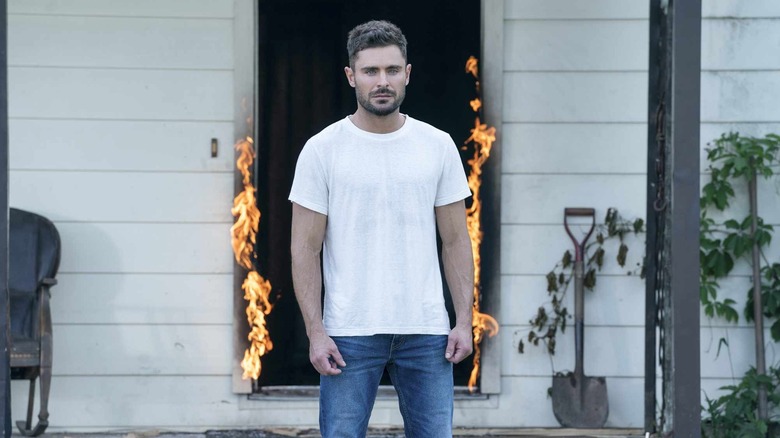
Also in that subpar company is 2022's "Firestarter" remake. Stephen King's novel of the same name was already turned into a 1984 motion picture starring Drew Barrymore. Thirty-eight years later, director Keith Thomas returns to this source material for a dismal production totally lacking in scares. This new "Firestarter" is much like the one people have already seen, except now the production is shot with inert digital camerawork and lots of indistinguishable grey hallways. In addition, 2022's "Firestarter" has the "distinctive" addition of one of Zac Efron's worst performances. This actor, so good in many things, is sleepwalking through this role with his dreadful line deliveries.
Both critics and Stephen King himself hate the original "Firestarter" feature. There was so much room to improve with a new adaptation. Instead, this new "Firestarter" left all its potential on the table in favor of tedious storytelling and eschewing effective scares.
2. It: Chapter Two
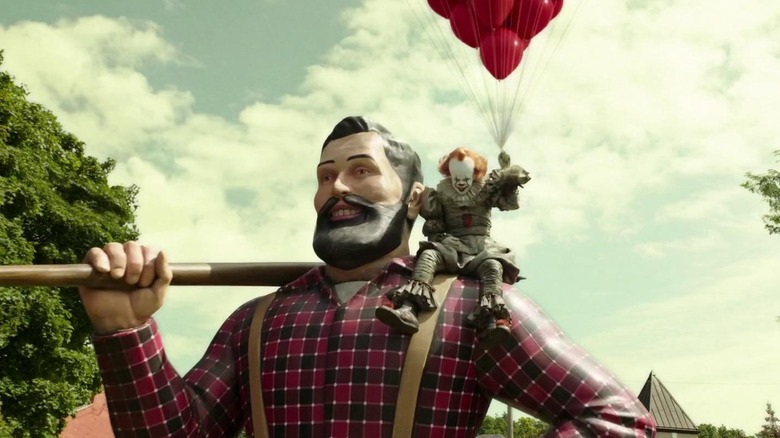
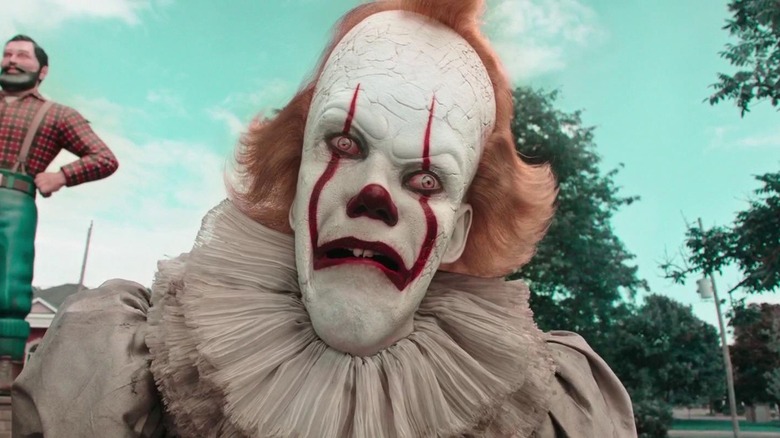
In 2017, "It" already had some glaring problems that kept it from being anywhere near the level of "The Life of Chuck, ""Misery," or "Carrie" in the pantheon of greatest Stephen King movie adaptations. Still, there were enjoyable charms to this installment, particularly Bill Skarsgård's committed work as Pennywise. Unfortunately, director Andy Muschietti and company couldn't keep even that level of quality maintained for "It: Chapter Two," which adapted the second half of Stephen King's "It" novel. Not only did this sequel come up short compared to its predecessor, but it was also a staggeringly miscalculated enterprise marred by incompetence.
One of the worst things in "It: Chapter Two" is easily Muschietti's failure to balance a messy tone. Some filmmakers, like Bong Joon-ho, can navigate wild atmospheric shifts effortlessly. Muschietti, meanwhile, oscillates between derivative jump-scares and lengthy scenes of characters trading stale quips. Neither mode is effective, and the pivots between the aesthetics are dreadful. An abrupt and awkward creature vomiting on one of the leads while "Angel of the Morning" blares on the soundtrack epitomizes "It: Chapter Two" failing to nail either scares or dark comedy. Meanwhile, the poorly paced screenplay just keeps hitting similar beats involving grown-up Losers Club members encountering weird sights.
These interchangeable set pieces feel like the very definition of padding. Even Pennywise feels too familiar to be scary this go-around. All the potential for an effective sequel "It" laid in 2017 went unexplored with the abysmal "It: Chapter Two."
1. The Dark Tower
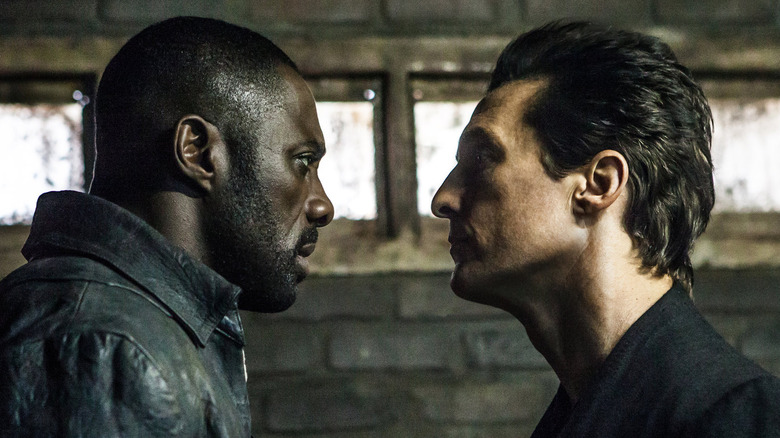
Put all of Stephen King's "Dark Tower" books together, and they span over 4,000 pages. Translating the world of gunslinger Roland and his quest against The Man in Black into a motion picture was always going to be a challenging one. There had to be a better way of bringing this property to the big screen, though, than 2017's "The Dark Tower." It's not really sufficient to ask what went wrong with "The Dark Tower" since everything went haywire on this production. Deeply talented actors like Idris Elba, Matthew McConaughey, and Jackie Earle Haley (among many others) were tragically wasted in this woebegotten enterprise.
Among the many defects here was the bizarre decision to spend roughly half of the movie outside of the fantastical realm of Mid-World. Instead, "The Dark Tower" eventually plops Roland into New York City, where the title begins mimicking family features like "Enchanted," "Elf," or "The Smurfs," where otherworldly characters encounter the "Big Apple." It's a bizarre storytelling choice that makes "The Dark Tower" feel like so many other movies rather than embracing the idiosyncrasies of its source material. There's also no style in the camerawork, while all the character drama is the very definition of weightless.
Even with a 95-minute runtime, "The Dark Tower" is so monotonous that it feels endless. How did a movie based on such dense source material end up so empty? Not even the devious Man in Black could have accomplished something so evil. "The Dark Tower" is a waste in every respect imaginable.