

The Mandalorian And Grogu Ending Explained
Contains spoilers for "The Mandalorian and Grogu"
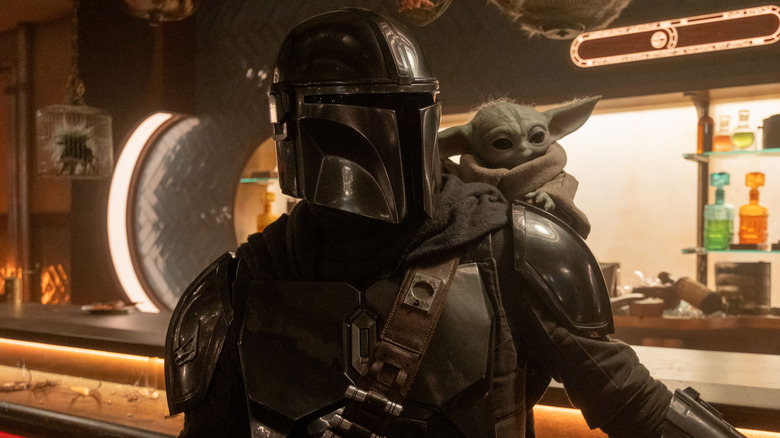
We all remember the first time we saw Grogu (then just known as Baby Yoda or The Child) on our TV screens. "The Mandalorian" first aired on Disney+ in 2019 as one of the first original offerings on the streaming platform, and it was everything people wanted out of smaller-scale Star Wars adventures. It had new characters (even if they resembled existing ones) and it didn't try to tie itself to larger conflicts within the franchise. Instead, it focused on a bounty hunter trying to earn some credits while protecting a cute "kid" (he's actually 50 at this point) who can tap into the Force.
"The Mandalorian" was proof that live-action Star Wars could work as an episodic TV series. It worked so well, in fact, that Lucasfilm decided to take the concept to the big screen. "The Mandalorian and Grogu" sends the titular duo on an epic galactic journey where they have to contend with all sorts of monsters and a pair of sinister Hutts. Critics didn't hold back in their reactions to "The Mandalorian and Grogu," but many fans will surely just be happy to have Star Wars in cinemas again. Here's where the ending of "The Mandalorian and Grogu" leaves this found father-son pairing.
What you need to remember about the plot of The Mandalorian and Grogu
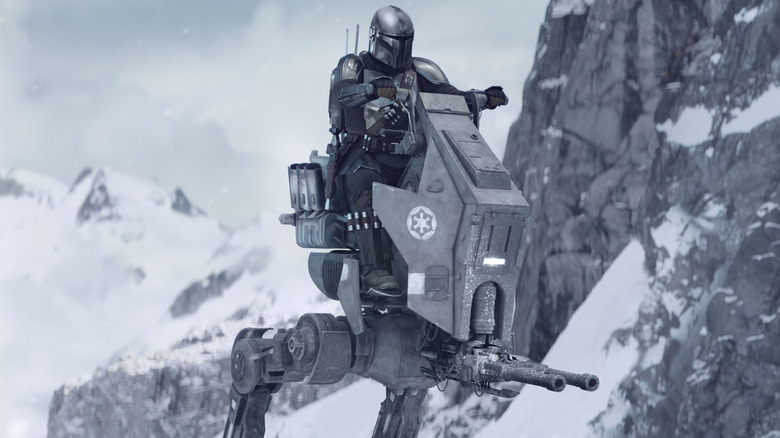
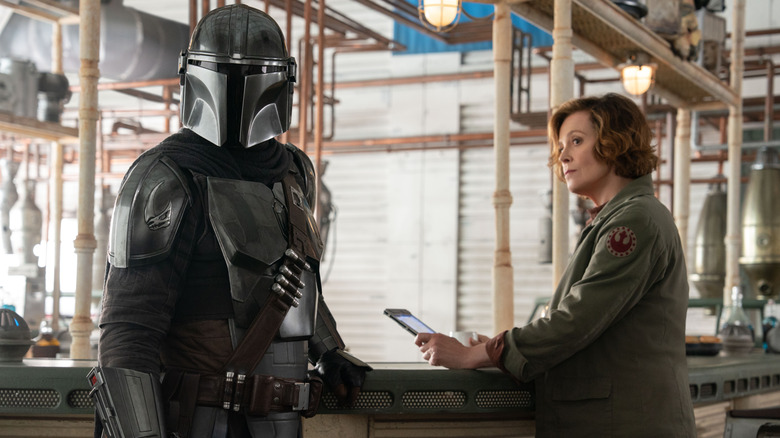
Din Djarin (Pedro Pascal) and Grogu kill yet another Imperial officer, which doesn't sit right with their New Republic employer, Ward (Sigourney Weaver). They need to bring these Empire sympathizers in alive so that they can be questioned and avoid another Imperial faction rising to power. Ward gives Djarin and Grogu another job — locate Commander Coin. The Hutt twins know his identity, but Djarin first has to do a job for them, which involves rescuing their nephew, Rotta the Hutt (Jeremy Allen White).
Rotta is a gladiator fighter on Shakari, and he only has one more match to get out of his contract with Lord Janu (Jonny Coyne). Djarin visits Janu to buy Rotta out of his contract but learns that Janu intends to kill Rotta in his final match. Despite trying to save him, Djarin gets wrapped up in the bout as well, so Rotta and Djarin team up to take on a slew of monsters, which run amok, allowing them to escape. As Djarin's taking Rotta back to his aunt and uncle, he informs the Mandalorian that they intend to kill him: As Jabba's son, he stands in the way of them ascending to power.
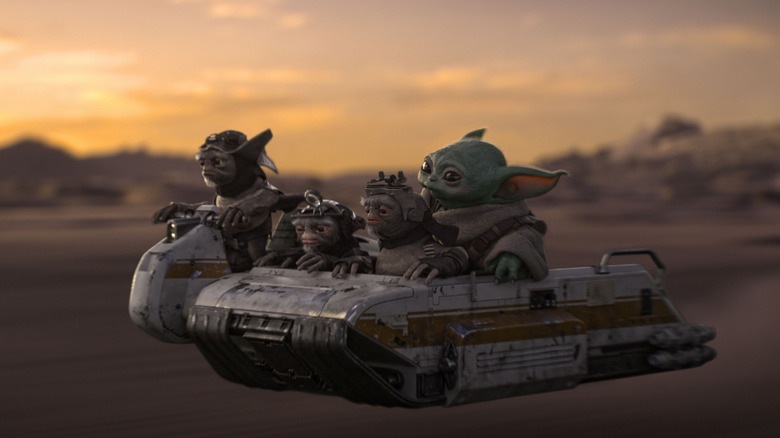
Rotta informs Djarin that Janu is actually Commander Coin using another name, so they divert course to apprehend him. Djarin takes Coin to Ward, who isn't happy about subverting the Hutt twins but will question Coin. Djarin and Grogu take some time off to relax and work on the N-1 Starfighter with the aid of Anzellans, but their vacation is cut short when the bounty hunter Embo kidnaps Djarin and one of the Anzellans to bring to the Hutts. Grogu travels with the Anzellans for a rescue attempt.
What happened at the end of The Mandalorian and Grogu?
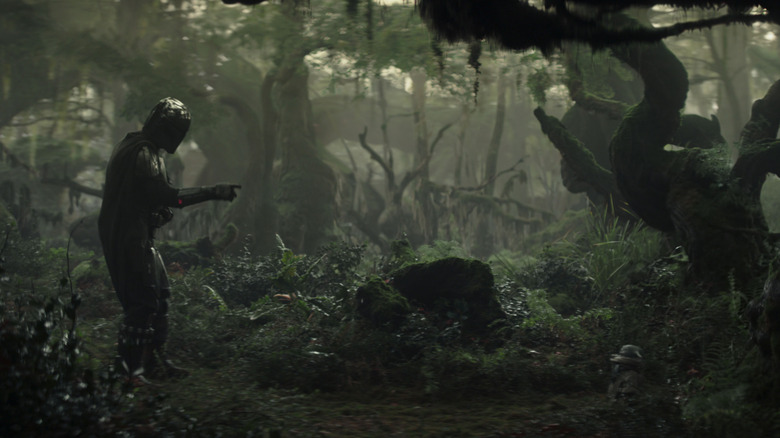
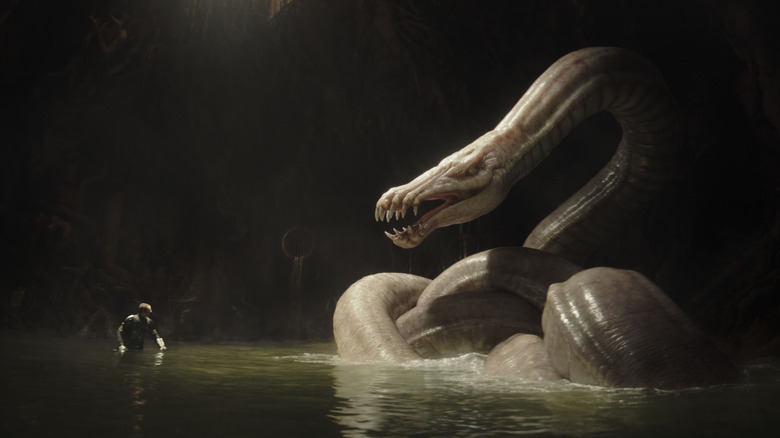
For his betrayal, the Hutt twins make Din Djarin fight a Dragonsnake, which bites and poisons him. Thanks to Grogu and the Anzellans blowing a hole in the tank, Djarin escapes but can't get off-world due to the Anzellan ship being way too small for him. Djarin nearly succumbs to his poison, but Grogu stays behind to look after him. Grogu builds a shelter to hide Djarin from Embo and his dog and spends days looking for food and meditating, ultimately befriending a swamp dweller who provides Grogu with a substance that'll help Djarin.
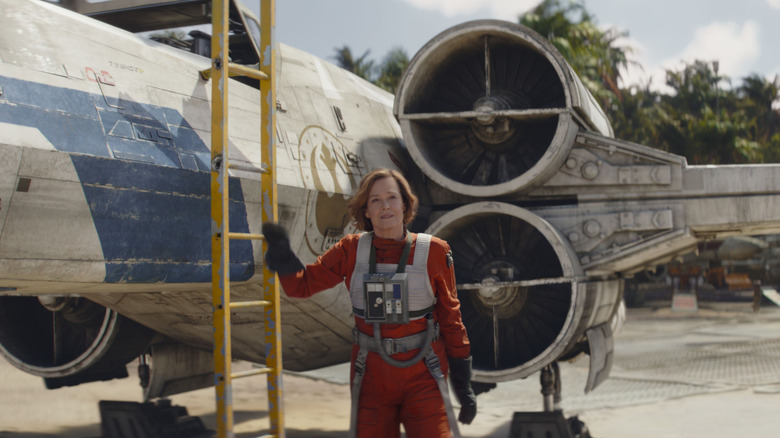
Fully healed, Djarin and Grogu plan to rescue Rotta from the clutches of his relatives. They attack their fortress and fight the twins as well as Embo. Rotta battles his fellow Hutts, and all three fall down the chamber that contains the Dragonsnake. However, Grogu uses the Force to prevent Rotta from falling while the Dragonsnake eats the twins. Meanwhile, the Anzellans return with New Republic pilots to rescue Djarin, Grogu, and Rotta. They barely make it out of the fortress in time as the pilots blow it up.
Back at the base, Ward informs Djarin that Coin informed her that the twins were playing both sides and providing information to Imperial remnants. Rotta says that even though he can do whatever he wants now, he's going to stick around the New Republic base. And for Djarin and Grogu, another adventure surely awaits them...
What the end of The Mandalorian and Grogu means
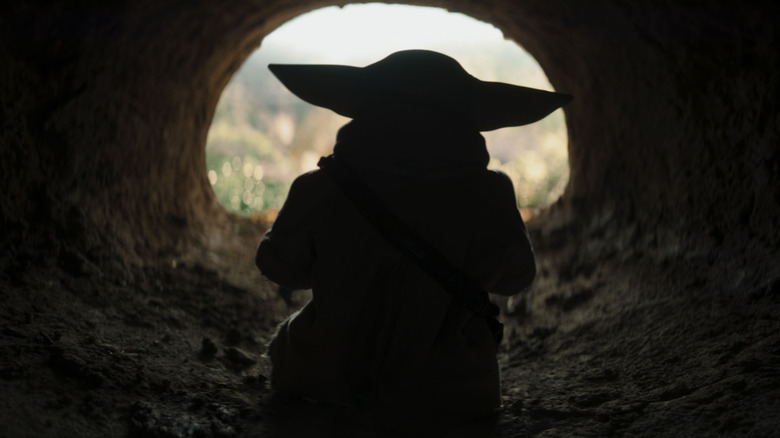
"The Mandalorian and Grogu" is all about fatherhood. The ending of "The Mandalorian" Episode 1 sees Din Djarin receive a job to bring back a target, who turns out to be Grogu. He goes back on his orders and rescues Grogu, and the two form a profound bond that's explored throughout the first season and the ones that follow it. But "The Mandalorian and Grogu" reverses this dynamic when Djarin gets poisoned. It's now up to Grogu to protect him. "The old protect the young. And then the young protect the old." Djarin's line serves as the thematic core of the film.
Grogu comes into his own as a protective figure who can look out for himself, perhaps hinting at what's to come. But Djarin isn't the only father figure invoked. Rotta the Hutt, who was introduced in the 2008 movie "Star Wars: The Clone Wars," talks about his father, Jabba. While Jabba was feared, Rotta is respected through his fights. He's found a place for himself out of his father's shadow, and by the looks of it, he's not going to be yet another crime lord. He could help the New Republic going forward. There are many paths one can take in life, and one's future doesn't have to be dictated by their past. All it takes is someone intervening at the right moment, which is what Djarin did for both Grogu and Rotta.
What does the ending mean for The Mandalorian Season 4?
The ending of "The Mandalorian" Season 3 sees Din Djarin taking contract work for the New Republic, establishing the structure for "The Mandalorian and Grogu." But there's also a lot of plot points with Mandalore and the Darksaber that don't factor into the movie at all. Those other plot points could re-emerge in a prospective Season 4 that director Jon Favreau is currently playing coy with. At the premiere of "The Mandalorian and Grogu," Variety asked Favreau if Season 4 would even happen, to which he responded, "It's a good question. You should talk to Dave Filoni over there because he's running the show now. I want to get through tonight — I'm going to enjoy this — and we'll see where everything goes."
Favreau has previously spoken about how the original plan was to have a fourth season instead of a movie and how that would have focused heavily on Grand Admiral Thrawn (Lars Mikkelsen), setting the stage for "Ahsoka" Season 2. The second season of "Ahsoka" is currently slated to come out in early 2027, so it'll continue Ahsoka's (Rosario Dawson) arc without "The Mandalorian" teeing it up. If "The Mandalorian" returns for another TV season, it'll have to follow a different storyline, but it's a big galaxy out there. The ending of "The Mandalorian and Grogu" sees the two of them flying off into space, so Season 4, while not confirmed yet, could pick up with them in virtually any capacity. The film leaves things open ended in terms of where the duo might go next.
What's next for Star Wars?
Starting in 2015, a Star Wars movie came out every single year until 2019 with "Star Wars: Episode IX — The Rise of Skywalker." The franchise took a hiatus from the big screen to focus on Disney+ endeavors after that, but Disney seems to be getting back into the swing of things. Following on from "The Mandalorian and Grogu," the franchise's next live-action film will drop next year — "Star Wars: Starfighter" comes out on May 28, 2027. Shawn Levy directs the film and Ryan Gosling stars.
"Starfighter" takes place roughly five years after "The Rise of Skywalker," which puts it in a different time period than "The Mandalorian and Grogu," but given how Grogu's species can live for centuries, we're still hoping to see a slightly older version of the character show up. Former Lucasfilm president Kathleen Kennedy said that some sequel trilogy characters may appear in "Starfighter," which could be interesting, but it's safe to say that most fans would love more Grogu given what Jon Favreau has teased about his future.
Speaking to GamesRadar, Favreau revealed big plans for Grogu: "He's on a path to be both a Jedi and a Mandalorian. He's making certain choices and decisions, and he has a great teacher now. And so, as he develops and grows, there's opportunities for stories that would emanate from that." There was talk of a sort of "Mandoverse" crossover movie that would bring together characters from "The Mandalorian" and "Ahsoka" into an epic team-up, but we haven't heard much about that for a while. Rumors suggest the proposed movie could be turned into a TV series, but nothing official has come out of Lucasfilm.
The Mandalorian and Grogu fails to touch on the most interesting aspect of this story
Watching "The Mandalorian and Grogu," one might yearn for the days of "The Mandalorian" Season 1. That first season wasn't just fun. It offered commentary on the state of the galaxy after the Empire fell. In "The Mandalorian" Season 1, Episode 7, the Client (Werner Herzog) offers this musing: "The Empire improves every system it touches. Judge by any metric: safety, prosperity, trade opportunity, peace. Compare Imperial rule to what is happening now. Look outside. Is the world more peaceful since the revolution? I see nothing but death and chaos."
As we've seen in "Andor" and other Star Wars properties, there was absolutely plenty wrong with the Empire. It was evil; let's be real. But for a lot of the galaxy's citizens, they probably didn't notice much in their day-to-day lives as long as they fell in line. It says a lot about real-world fascism where people are fine turning a blind eye to injustices as long as they can buy bread and fuel up their cars. The Rebellion brought Palpatine (Ian McDiarmid) down, but it didn't have much of a plan for after.
Din Djarin's now working for the New Republic, which wants to avoid another Empire. But we know that doesn't happen. The First Order will rise up in its place by the time "The Force Awakens" comes around. The idea that the New Republic's efforts are all for naught is a fascinating tragedy for a project to explore. It's a shame "The Mandalorian and Grogu" has no interest in that side of Star Wars and the idea that all it takes is promises of something a little better to get people to be okay with authoritarian rule.
Why does The Mandalorian and Grogu feel like a season of TV?
One of the most common complaints being lobbied against "The Mandalorian and Grogu" is that it feels more like a bunch of TV episodes strung together than a proper movie. Looper's review of "The Mandalorian and Grogu" said as much. Watching the film, it's hard not to see where each episode would begin and end. Episode 1 would end with Din Djarin getting the job to speak with the Hutt twins to track down Commander Coin. Episode 2 would end when he gets knocked out and wakes up in the arena to fight Rotta. It feels like a season of television with a loose overarching plot thread to give Djarin and Grogu things to do.
More than anything, "The Mandalorian and Grogu" feels like a TV season because it fails to impact the larger Star Wars mythos. Yes, the appeal of "The Mandalorian" was always that it didn't feel the need to tie back to the Skywalker Saga, but it would have been nice to get something that upended the status quo a bit, even if that something came in the final moments. As it is, they just take off together at the end and it's like nothing ever happened. If we do ever get "The Mandalorian" Season 4, people can completely skip the movie without missing a beat, and that says a lot about "The Mandalorian and Grogu." To call it a feature-length filler episode is perhaps a bit harsh, though not entirely inaccurate.
How does The Mandalorian and Grogu push Grogu forward?
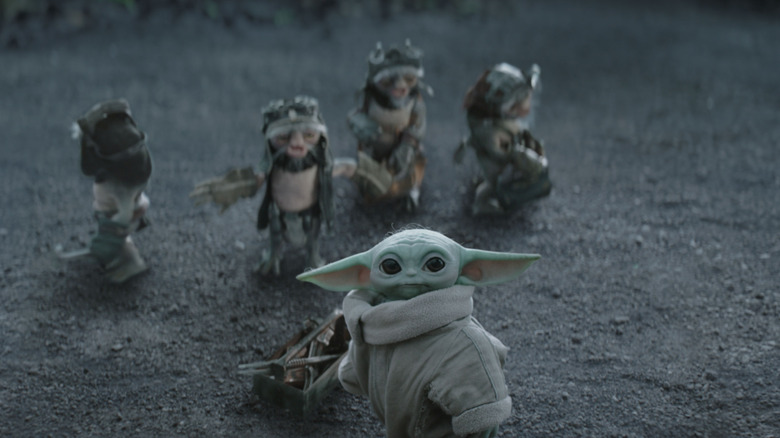
If there's one standout sequence in "The Mandalorian and Grogu," it's when Din Djarin succumbs to the poison and nearly dies. Grogu heals the wound and then takes care of him, hiding him in a mud structure while collecting food and meditating. It's a great change of pace that gets away from endless expository dialogue and fight scenes and just focuses on a little puppet getting things done in a swamp.
It continues the journey Grogu began when Luke Skywalker (Mark Hamill) picked him up at the end of "The Mandalorian" Season 2. Grogu pursues Jedi training for a bit but eventually abandons the order to return to his father figure. This means Grogu is wise in the ways of both the Jedi and the Mandalorians, which, as Jon Favreau has hinted at in interviews, will give him a unique perspective when he grows up.
With the swamp sequence, we see that Grogu is no longer a helpless child. He can take care of both himself and his father. Hopefully, this means Grogu can have a larger role going forward in any future "Mandalorian" projects. The young have begun to protect the old. With Grogu coming into his own as a fighter and protector, he could soon become a tremendous force to be reckoned with in the galaxy.
What does The Mandalorian and Grogu say about the state of Star Wars?
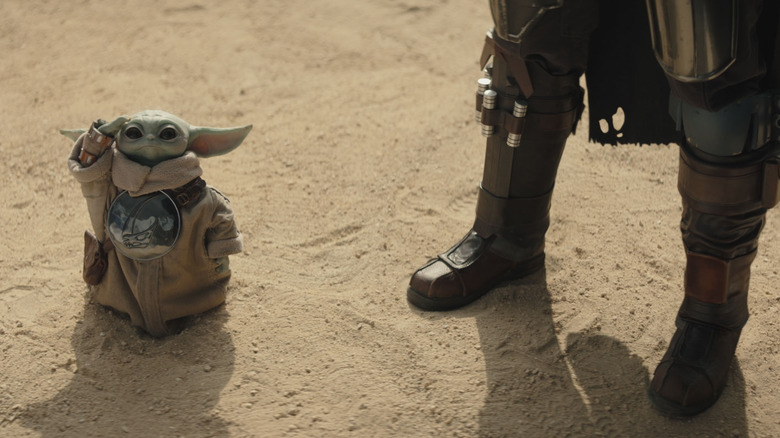
"The Mandalorian and Grogu" isn't just another Star Wars movie. It's a status report on the franchise as a whole. Star Wars last came to cinemas in 2019, and since that time, it's been relegated to a bunch of Disney+ shows. Some were great, like "Andor." Others struggled to find their footing, like "The Book of Boba Fett," which abandoned its central premise halfway through to give us "The Mandalorian" Season 2.5. So what do people want out of a Star Wars movie now? It seems like Disney and Lucasfilm are trying to figure that out.
There's no clear path ahead for Star Wars at the moment. Do they check in with Rey (Daisy Ridley) and see her re-establish a Jedi Order? Do we go back in time to the Old Republic? No one seems to know. "The Mandalorian and Grogu" is a spinoff, while next year's "Star Wars: Starfighter" is a wholly new idea. It feels like Lucasfilm is throwing a bunch of ideas at the wall to see what sticks. If audiences respond well to "The Mandalorian and Grogu," we may well see a sequel (or at least a fourth season of the show).
One of the jobs that "The Mandalorian and Grogu" had was to reassure everyone that good Star Wars movies are still possible and that the future of the franchise isn't solely on Disney+, but it hasn't really done that. If anything, we're more worried than ever before. Is Lucasfilm resting an entire franchise on an adorable puppet? Star Wars feels directionless at the moment, but with Dave Filoni taking over as president and chief creative officer of Lucasfilm, hopefully a clearer path will become apparent soon.
Why does The Mandalorian and Grogu fall flat?
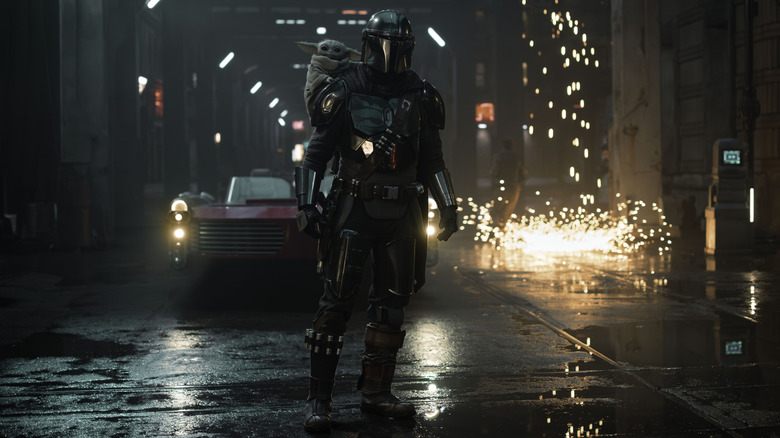
When a TV show gets its own movie, there should be a reason why this particular story is heading to the big screen. The "Mission: Impossible" franchise added death-defying stunts to the old show's spy missions. "South Park: Bigger, Longer & Uncut" had epic musical numbers and commentary on censorship that extended beyond the means of what 22 minutes could do. "The Mandalorian and Grogu," meanwhile, just offers more of the same. Even the visuals aren't that much more impressive, which is strange when you consider the budget: An episode of "The Mandalorian" costs about $15 million to make, meaning an eight-episode season costs around $120 million, yet the movie has a budget of just under $165 million. Despite this, it looks just like the TV show for the most part.
The movie really needed to do something inventive with its story, but the narrative is just a series of bounty hunting jobs and fight scenes, exactly like the show. At one point, it seems like the film will do something memorable and kill off Din Djarin, but Grogu comes to save the day. "The Mandalorian and Grogu" could have also tied into the greater machinations of the New Republic, perhaps showcasing their inefficiencies in preventing another Empire from taking control, but we barely spend time with Ward, and everything runs smoothly with their operations. Even having Grogu say his first words would have given the film some extra oomph. But nothing really happens, which makes the whole thing feel forgettable and pointless.