

5 Saddest Marvel Origin Stories Of All Time, Ranked
There's an unwritten rule that a superhero has to first endure some sort of tragedy before they can claim that status. In Marvel Comics, the most popular superhero, Spider-Man, only became a hero after his actions led to the death of Uncle Ben. That lesson taught Peter Parker that "With great power comes great responsibility." Over in DC Comics, the same thing keeps happening with characters like Bruce Wayne being violently orphaned to become Batman, and Superman only exists because his planet was destroyed.
Tragedy is something that almost every Marvel superhero has in common, and it's unlikely to change. Think about it — how many people would become a vigilante and put their lives on the line if they never endured some horrific event? Look around at all the "real" superheroes in the world for your answer, and that's why tragic origin stories are a superhero's bread and butter. There are a multitude of Marvel superheroes who endured nightmarish realities before becoming who they are, and the list is long.
It often takes something horrific for a regular person, or a mutant, to decide their best course of action is to jump into some spandex, hide their identity, and fight for what's right. That's not limited to heroes, as it's often the case that a villain goes through something similar but chooses a darker path. These five Marvel characters have the saddest origin stories of all time, ranked by how horrific they'd be if they happened in real life.
5. Laura Kinney was cloned from Wolverine and trained from birth to become the assassin X-23
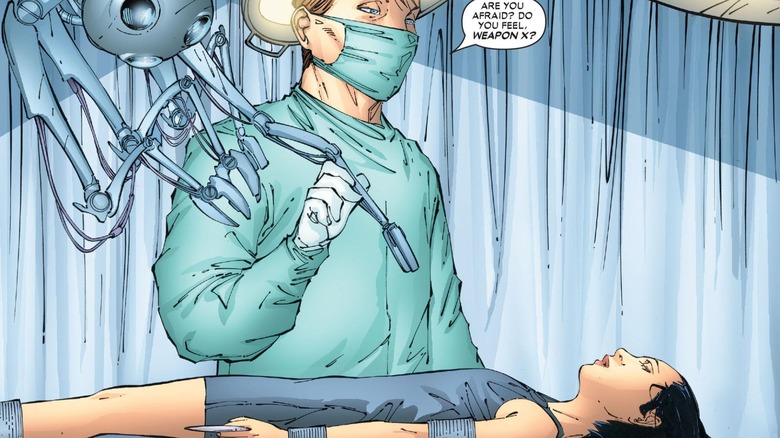
While many superheroes or villains find their calling later in life, Laura Kinney was denied the option. In fact, she was denied a childhood and a life of her own from the day she was born. It all started when the Facility decided to reproduce a particular aspect of the Weapon X program that successfully bonded adamantium to James Howlett's bones, transforming him into Wolverine.
After obtaining his DNA, the project commences, but fails 22 times, as the DNA sample's Y chromosome was damaged. The 23rd attempt results in the eventual birth of X-23, who was born with retractable claws in her hands and feet. She was denied a name outside of her designation and spent her entire childhood learning how to kill and become an assassin. Only the woman who carried her to term, Sarah Kinney, becomes close to X-23, and she eventually gives her the name Laura. She later meets and befriends her "father," becoming one of Wolverine's many children.
As her story continues to unfold in the comics, Laura becomes a hero, and eventually takes her father's codename as the next Wolverine. Laura's origin story is sad because she was denied an identity, her childhood, and a choice to make her own way in life. The Facility saw her as nothing more than a weapon, and while she certainly becomes one, Laura eventually finds her own identity and path in life.
4. Bruce Banner's tragic origin began long before the gamma bomb
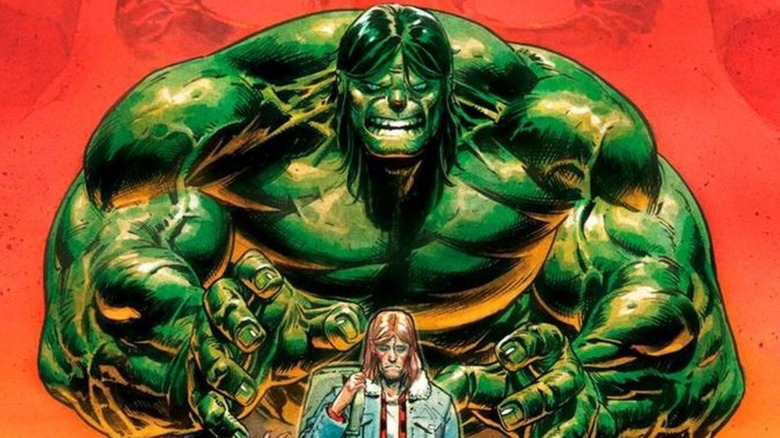
If there ever was a tragic figure in Marvel Comics, it's Bruce Banner. His path to becoming the Incredible Hulk began during childhood. Bruce grew up being abused by his father, resulting in a fracturing of his identity that manifests as undiagnosed dissociative identity disorder (DID). Despite his upbringing, Bruce matures and becomes one of the smartest people in the Marvel Universe.
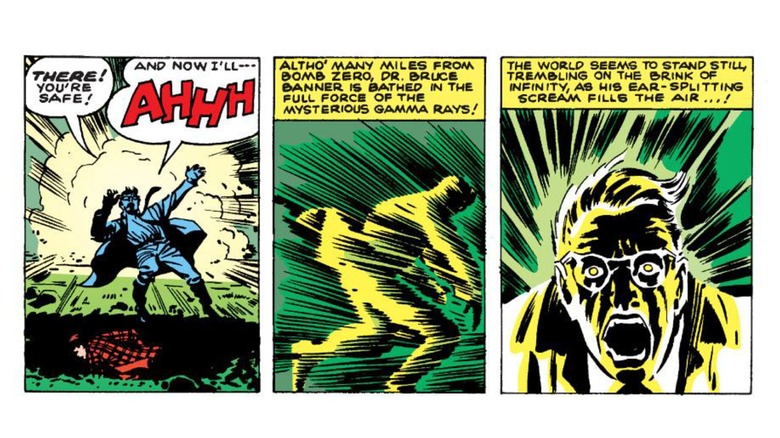
In "The Incredible Hulk" #1, Bruce conducts a gamma bomb test, but notices a young man within the blast radius. He rushes into danger and saves Rick Jones, but is caught in the explosion. Because of the incredible amount of gamma radiation he receives, which couples with his DID, Banner transforms into the Hulk. Though grey at first, the character would be fleshed out over the years into the Jade Giant better known today.
Another aspect of Bruce's DID that manifests in the form of the Green Goliath involves the many versions of the Hulk. Outside of Professor Hulk, Bruce is mostly lost within the Hulk's consciousness, and vice-versa. Bruce literally loses control of who he is when he transforms, so it's best to listen to him when he says, "Don't make me angry. You wouldn't like me when I'm angry," because he doesn't even like himself.
If you or someone you know may be the victim of child abuse, please contact the Childhelp National Child Abuse Hotline at 1-800-4-A-Child (1-800-422-4453) or contact their live chat services.
3. Luther Manning died and was resurrected as a cyborg to become Deathlok
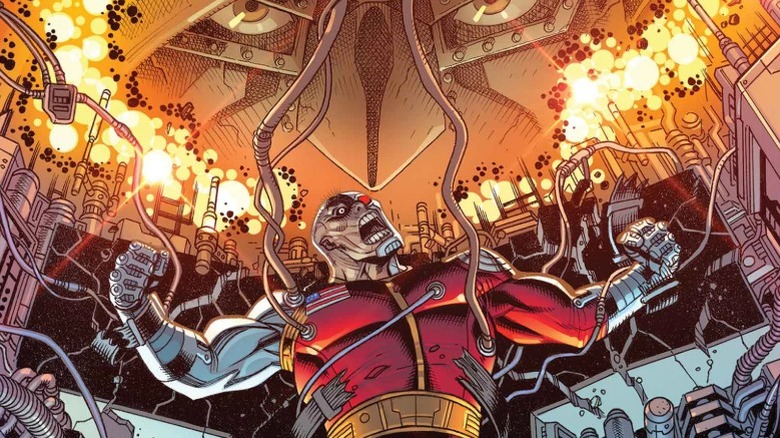
Col. Luther Manning was once a decorated soldier operating in Earth-7484, where the Heroic Age came to an end in 1983. That's when Roxxon Oil Company's Nth Command banished Earth's superhumans to another dimension. Two years after the Heroic Age came to an end, Manning is killed in a training exercise by a concussion blast. That should have been the end of Manning's story, but instead, he's selected for Project: Alpha-Mech, a CIA-led project designed to build cyborg super-soldiers.
Manning remained in stasis for five years before being activated with the codename Deathlok. Initially, Manning has no memory of his past life, but as time passes, he begins to regain his identity, pushing him to rebel against his controllers. Worse, he also discovers that his wife, believing him dead, has remarried. Manning's own former friend is now the man raising his son. Harsh. Deathlok begins working with the CIA, and attempts are made to restore him, but they fail, leaving Manning trapped in his new cybernetic body. After some time, Deathlok is transported to Earth-616, the primary Marvel Comics universe, though he'd go back and forth several times over the years.
Deathlok eventually becomes a hero who works with the superheroes of Earth-616 to save both universes. If his story sounds somewhat familiar, that's because Deathlok's tragic origin has been repeated in popular culture. RoboCop is one example, as is the 1992 film "Universal Soldier." At one point, Marvel worked on a Deathlok film, but it was canceled, so he's not as well known as some of the publisher's other characters.
2. Frank Castle became the Punisher after his family was killed
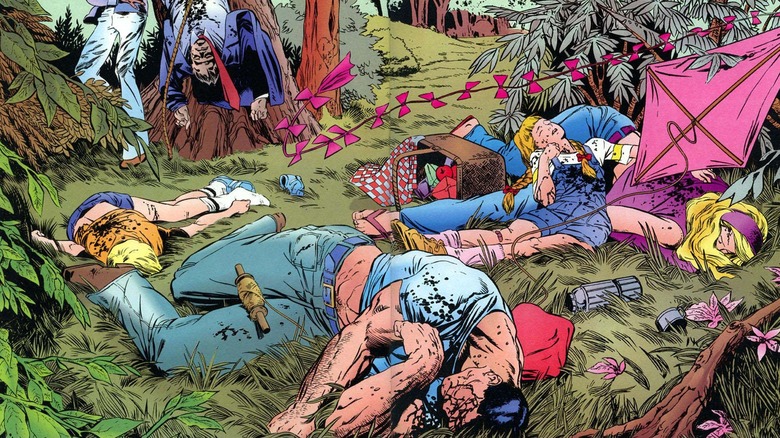
Frank Castle initially wanted to become a priest, but his view of the world ultimately pushes him to enlist in the U.S. Marines. He eventually becomes a Navy SEAL, and he fights through four combat tours, for which he's highly decorated. After leaving the Marines, Frank settles down with his wife and two children, and life is good ... for a while. On one fateful day in Central Park, the Castle family stumbles across a Mafia hit.
The mobsters gun down the entire family to leave no witnesses, but Frank survives. He memorized the faces of each man who took part, but the police offer little help in giving Frank the satisfaction he desires. From that point forward, Frank decides to fight fire with fire, becoming a vigilante anti-hero called the Punisher. He not only finds and kills those responsible for his family's deaths, but also anyone who meets his description of a villain. Which is a lot of people.
In many ways, Frank becomes the thing he despises — a killer, though in his mind, he's in the right. What makes the Punisher's origin story so tragic is that it's about the only one in Marvel Comics that's realistic. He wasn't exposed to gamma radiation to become a monster, and he's not a resurrected cyborg. Instead, he's a family man who witnesses the slaying of his wife and two children, and now, the Punisher is the deadliest person in the Marvel Universe.
1. Max Eisenhardt survived the Holocaust to become Magneto
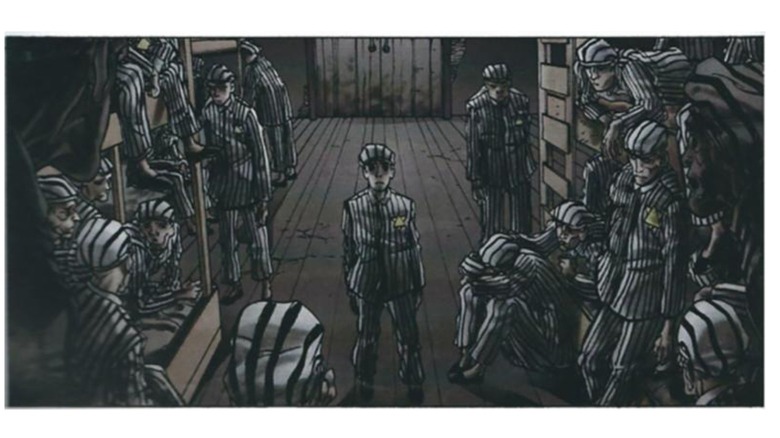
One of Marvel Comics' most tragic characters isn't a superhero, though he's been an anti-hero a time or two. Magneto is the Master of Magnetism, but long before he forms the Brotherhood of Evil Mutants, who seek to replace homo sapiens with homo superior (mutants), Magneto was a Jewish child named Max Eisenhardt growing up in Germany during World War II. Max and his family are persecuted by the Nazis, and after his parents and sister are killed, he's sent to the Auschwitz concentration camp in Poland.
As Max matures, he urges his fellow captives to rebel against the Nazis, and he's successful. Max escapes with Magda and the two marry and have a daughter shortly after their liberation. Sadly, a fire erupts, killing Max's daughter, and it's during this event that his mutant powers manifest. His daughter, Anya, died because angry authorities intervened, and Max unleashes his mutant abilities, killing the people responsible. The results push Magda to flee from Max in terror.
After this, Max uses forged documents to change his name to Erik Magnus Lehnsherr and settles in Israel, where he meets and befriends Charles Xavier. Over time, his childhood and early adult experiences of persecution push Max/Erik into becoming the supervillain Magneto. While he'd have become a powerful mutant regardless of his painful upbringing, it was Max's treatment by the Nazis and other intolerant humans that transformed him into one of Marvel Comics' most powerful (and understandable) villains.