
8 Most Controversial Movies Of 2026 (So Far)
Movies — or any piece of art, for that matter — will inevitably produce a response from audiences. It's often not exactly what the artists behind the creation expected, but that's the exciting thing about putting one's work out into the world; you never know how something will resonate with people. Sometimes, that means your movie takes on new layers of personal resonance with communities that don't seem to have a direct connection to the production. Conversely, motion pictures can generate immense scorn from people that can sometimes overwhelm the film itself. Suddenly, your production is only known for generating social media posts and derision-filled headlines, rather than anything in the actual movie.
The latter situation is a mighty familiar one to the eight most controversial movies of 2026 so far. These motion pictures have all scored the worst possible kind of attention from audiences and film critics alike. How that attention manifests, though, has wildly varied. Sometimes, that controversy stems from these movies being rooted in source material that's being egregiously ignored in the messy process of adaptation. Other times, the behind-the-scenes machinations of these films gruesomely intersect with politically controversial topics. There's no shortage of reasons a movie can draw people's ire.
Whatever's gotten people talking about these movies or whatever genre these titles inhabit, all eight of these motion pictures have become infamous for their controversies above all else. Read on to discover which 2026 movies have stirred up immense brouhahas you can't escape. Warning: Tons of spoilers are ahead.
Animal Farm
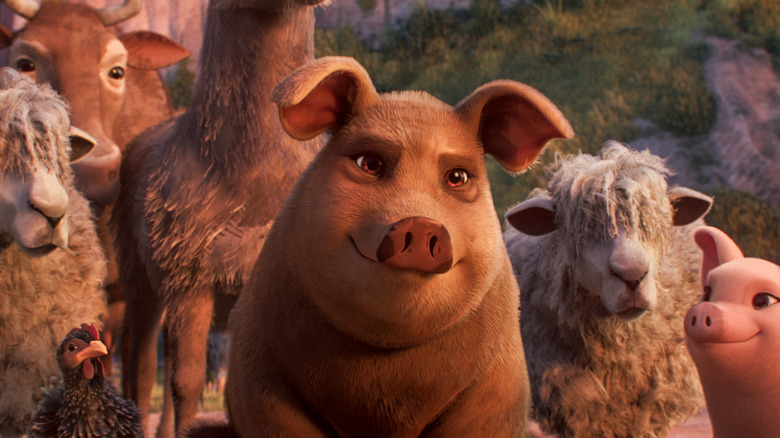
It's always tragic watching passion projects curdle into half-formed shells of their former selves. Andy Serkis had been planning an "Animal Farm" adaptation for over a decade before its release, with the project initially being a motion-capture animated production (in the vein of his 2018 movie "Mowgli: Legend of the Jungle") for Netflix. As the years passed, though, "Animal Farm" began changing. Soon, it was no longer a motion-capture animated title, but rather a CG keyframe animated production. To boot, its visual would come courtesy of the British animation studio Cinesite, which had done the animation for titles like "The Star" and the two recent "Addams Family" movies.
This all made "Animal Farm" a far cry from its initial, more grandiose pitch. The gulf between those early ambitions and what audiences actually got seemed to crystallize with the release of the first "Animal Farm" trailer. Immediately, the internet was bamboozled and outraged that George Orwell's original "Animal Farm" text had been translated into something full of loud gags and pop song needle drops. The final film only exacerbated the controversy, as the final "Animal Farm" cut featured elements like an opening rap song and extended fart jokes.
The feature's script was also criticized for undercutting Orwell's intended brutal message. Once upon a time, Andy Serkis had daunting plans for bringing "Animal Farm" to the big screen. The end result, though, was one of 2026's most lambasted motion pictures.
The Drama
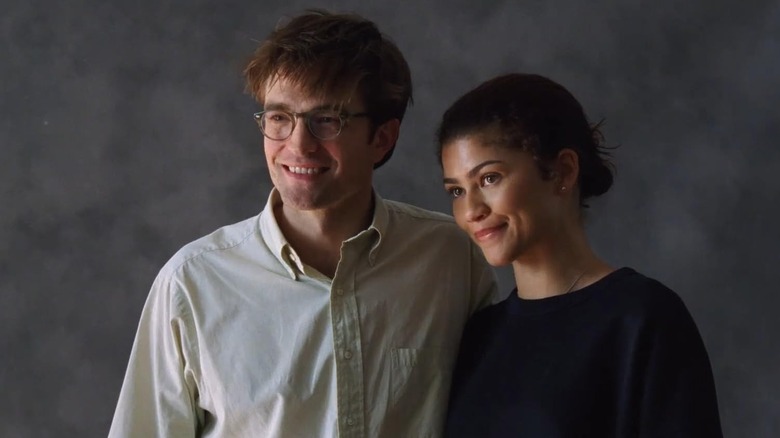
The official "The Drama" trailer kept audiences in suspense over what secret from Emma's (Zendaya) past could send her fiancée, Charlie (Robert Pattinson), and friends spiraling out into rage and shock. When people began seeing the feature, that secret was finally revealed: Emma planned to pull off a school shooting, and only gave up this plot because of the ramifications of another public shooting massacre. Invoking the memory of such tragedies like Columbine is not a routine narrative maneuver for a mainstream American movie. Inevitably, "The Drama" and its school shooting subplot was going to drum up controversy.
That controversy went in all kinds of directions, including comments from actual school shooting survivors. One such individual, Mia Tretta, insisted that this topic wasn't suitable for a comedic film like "The Drama." The organization March For Our Lives, meanwhile, lambasted the secretive marketing campaign preceding "The Drama" hitting theaters. However, other viewers lauded writer and director Kristoffer Borgli's commitment to grappling with challenging and unsettling material in a mainstream package. Sometimes, emphasizing such material makes a movie seem too heavy for audiences, which can hurt its box office numbers.
All the chatter over "The Drama" caused it to earn over $100 million at the worldwide box office. Rather than alienating people, "The Drama" became the buzzy motion picture you had to have an opinion about. In purely box office terms, keeping Emma's secret out of "The Drama's" marketing was an incredibly wise and lucrative move.
Wuthering Heights
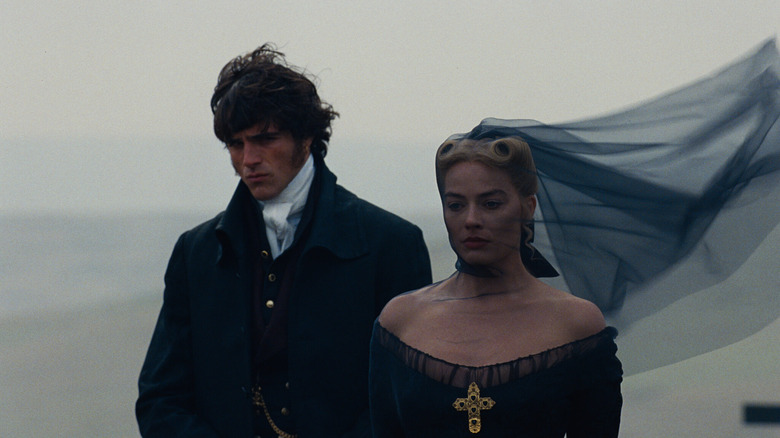
Emily Brontë's "Wuthering Heights" book was first published in 1847, yet it was still making waves nearly 180 years later by way of a new film adaptation from writer and director Emerald Fennell. Much of that conversation stemmed from discourse over the casting of Heathcliff, who was played by Jacob Elordi (previously the star of Fennell's 2023 feature "Saltburn"). The decidedly Caucasian Australian was not who many people had in mind for the role, considering Heathcliff is described in the text as "dark-skinned" and receives many racially motivated insults that heavily suggest he's a person of color.
To boot, Heathcliff being non-white factors heavily into the larger themes (namely class) that defines Brontë's seminal text. These elements all played a role in Heathcliff's whitewashing dominating the pre-release conversation cycle for "Wuthering Heights." Once the film was finally released, further controversy erupted over the drastic liberties Fennell had taken in adapting this project for the big screen.
Even the casting of Hong Chau and Shazad Latif in key supporting roles (albeit ones that didn't really comment on or thoughtfully use their racial identities) lent new critical angles to the previous whitewashing controversy. "Wuthering Heights" was a movie plagued by tremendous discourse, though that didn't stop it from grossing $241.6 million worldwide.
Melania
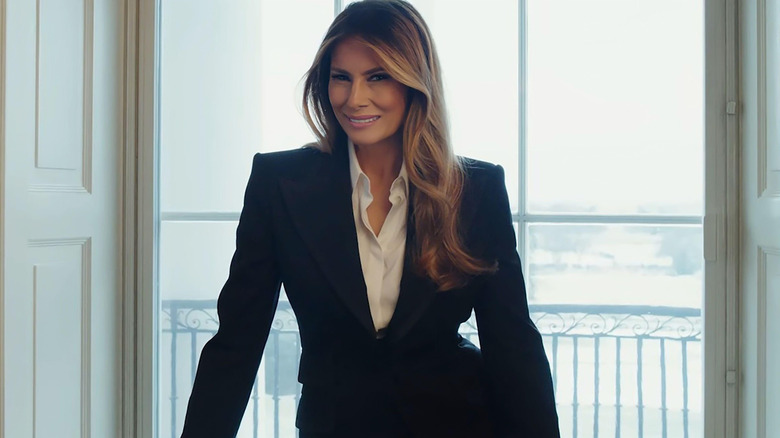
It's rare for any movie to get referenced in Capitol Hill, but perhaps that fate was inevitable for a documentary like "Melania" chronicling the First Lady of the United States. Specifically, documentary filmmaker David Borenstein testified that the financials behind Amazon's purchase of "Melania" seemed fishy. While his recent project, "Mr. Nobody Against Putin," cost $800,000 to make, Amazon MGM Studios spent $40 million to purchase "Melania." For further context, a concert film documentary filmed with costly cameras and full of glossy spectacle like "Billie Eilish — Hit Me Hard and Soft: The Tour (Live in 3D)" still only cost $20 million.
The bizarre financials behind this deal have led to many, including former Amazon Original Movies head of production Ted Hope, accusing Amazon's financing of "Melania" as being simply a "bribe" towards the Donald Trump administration. Many documentary filmmakers also questioned the integrity of this project and what it said about Amazon's larger creative ambitions as a film studio. Further controversy erupted over "Melania" following its release when the creative team behind "Phantom Thread" claimed that music from this film was used without their permission. It's also impossible not to talk about the controversy behind "Melania" being directed by Brett Ratner, who was accused of sexual misconduct and harassment.
All this controversy tremendously overshadowed the movie itself, which received dismal reviews for — among other flaws — being boring. Controversy, not artistry, defined "Melania," a movie one Letterboxd user succinctly declared "an absolute triumph of the will!"
Return to Silent Hill
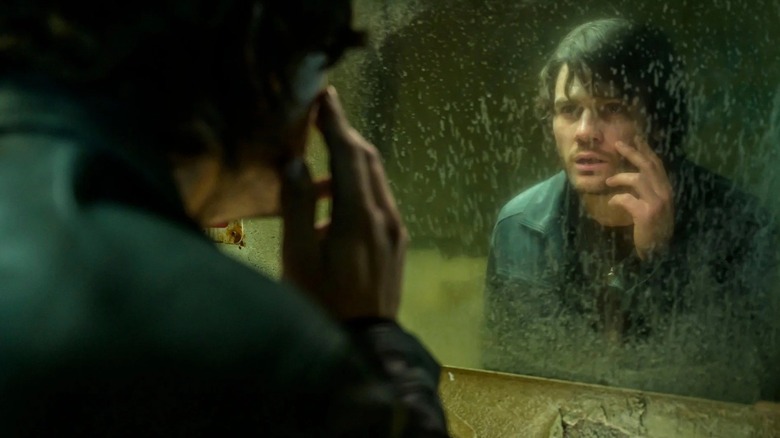
In recounting his experience making the original "Silent Hill" film to Variety, director Christophe Gans recalled how fans sent him death threats over their concerns with the feature's potential quality. Despite such toxicity, Gans returned to the "Silent Hill" movie franchise two decades later with "Return to Silent Hill." Hopping back into this horror property, Gans and company were clearly hoping to avoid making one of the biggest video game movie box office bombs and instead craft something that could stand toe-to-toe with the best "Silent Hill" games. The film's eventual reception signaled that mission had gone horribly wrong.
Even before "Return to Silent Hill" debuted, its marketing materials were criticized by viewers as looking low-budget and underwhelming. Once the production was actually playing in theaters, the reception didn't get any better. Longtime "Silent Hill" fans expressed befuddlement with how much this project had changed from the source material. As just a standalone horror, "Return to Silent Hill" also didn't receive great reviews, with widespread complaints bemoaning its generic scares and storyline. There were even criticisms that the project was misogynistic, betraying the more thoughtful gender-based material of past "Silent Hill" content.
The dreadful reviews and fan backlash to "Return to Silent Hill" made this production one of the worst video game movie adaptations in many people's eyes. That's an impressive feat, given how many awful productions exist in this subgenre.
Run Amok
In 2013, "Glee" unleashed on an unknowing populace an episode entitled "Shooting Star." This episode follows various William McKinley High School students as they hear gunshots, lock themselves in classrooms, and prepare to survive a school shooting. This 44 minutes of television programming tried to combine memories of tragedies like the Columbine massacre with theater kids performing Elton John's "Your Song" and John Mayer's "Say." To say this "Glee" installment received bad reviews was an understatement. Easily one of the worst "Glee" episodes, "Shooting Star" merging school shootings and plucky high schoolers breaking into song was not a winning combination.
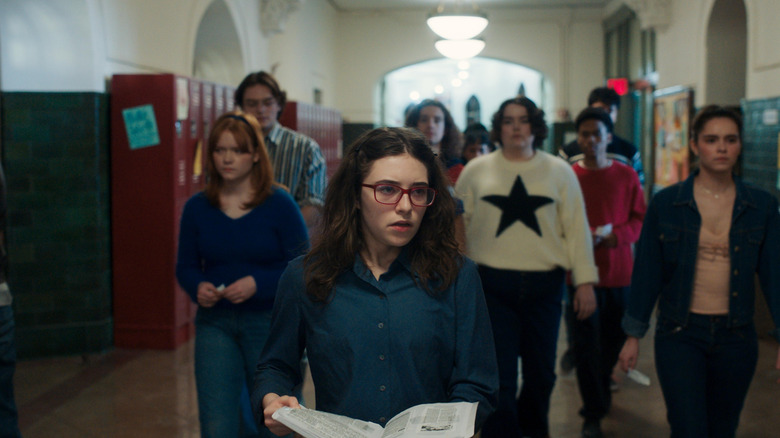
13 years later, writer and director NB Mager revealed "Run Amok" at the 2026 Sundance Film Festival. This drama centered on teenager Meg (Alyssa Marvin) trying to pull off a musical centering on the school's recent public shooting tragedy. While "Run Amok" didn't get anywhere near as toxic of reviews as "Shooting Star," it was greeted with mixed notices and discourse surrounding its struggles to nail a cohesive tone. Some reviewers were even outright appalled at the fusion of a cutesy Sundance teen comedy with the bleak aftermath of a school shooting.
Letterboxd reviews critique tone-deaf pop song needle drops on the "Run Amok" soundtrack, which are only exacerbated by the tumultuous reputation surrounding this title. Filmed media should confront grim parts of reality; however, "Shooting Star" and "Run Amok" reflect one especially unsuccessful way of accomplishing that confrontation.
The Strangers: Chapter 3
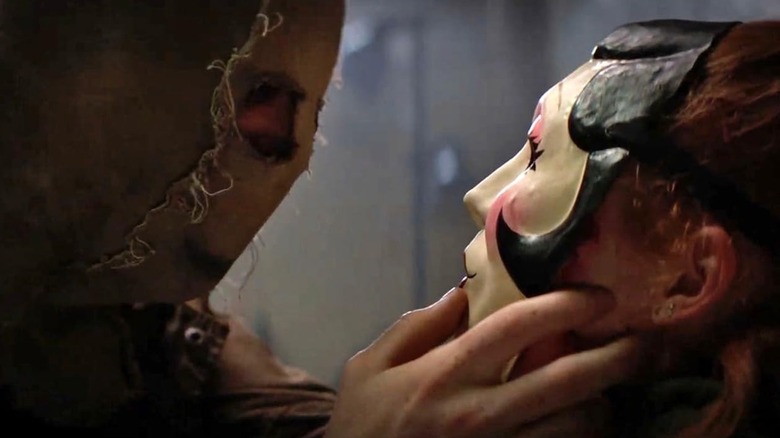
Whenever movie geeks talk about trilogies that don't have a single good film, they'll have to inevitably bring up Renny Harlin's trio of "Strangers" movies. One of the most baffling franchises in horror cinema history, this saga following Maya (Madelaine Petsch) took the self-contained, horrifyingly ambiguous frights of 2008's "The Strangers" and blew them up into lore-obsessed nonsense. These three films were full of obvious narrative padding, unimaginative scares, and screenwriting that criminally misunderstood what made the original "Strangers" work. At least these cinematic crimes came to an end with "The Strangers: Chapter 3."
For the few that even saw "Chapter 3," controversy erupted over the decision to give concrete motivations and origin stories for the franchise's three masked villains. All the uncertainty that once made these characters so scary was thrown out the window in favor of definitive backstories. There was also a minor uproar surrounding "Chapter 3" failing to justify why this particular "Strangers" story had to be told over three movies. While the very best trilogy conclusions only enhance the preceding movies, "The Strangers: Chapter 3" only left viewers with reminders of how much time they'd wasted watching these terrible films. "Chapter 3" was an endlessly abysmal train wreck that reeked of cynical brand name exploitation.
Anyone who saws the dreadful "The Strangers: Chapter 1" couldn't have been surprised that the sequels never improved. Still, that didn't stop "The Strangers: Chapter 3" from generating an outcry over its atrociousness.
Scream 7
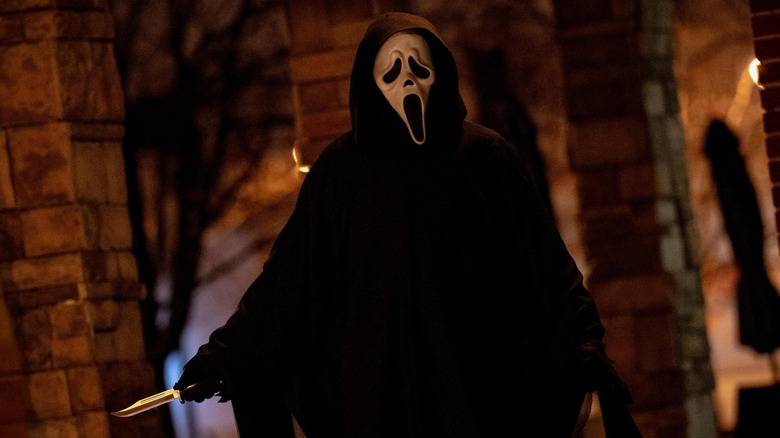
In November 2023, the "Scream" franchise changed forever. This is when "Scream" and "Scream VI" star Melissa Barrera was fired from "Scream 7" over comments she made about the Israeli–Palestinian conflict. With that, original "Scream 7" director Christopher Landon left the project while fellow "Scream VI" leading lady Jenna Ortega also departed the franchise. After all of these events, "Scream 7" was later overhauled into a new project following Neve Campbell's Sidney Evans and her daughter having to contend with a new Ghostface killer. However, this shift didn't mean this horror sequel was done dealing with immense controversy. In fact, it was far from it.
For one thing, protestors sympathizing with Barrera and Palestine picketed the premiere of "Scream 7." A few days into the theatrical run of "Scream 7," meanwhile, cast member Anna Camp apologized for resharing a post that mocked these protestors. Even beyond the fallout of firing the lead of the previous two "Scream" movies, though, "Scream 7" also received criticism for engaging in a promotional partnership with generative AI program Meta AI. Then there was all the controversy surrounding the film's fan service moments, including a strained technology-informed way of bring David Arquette's Dewey back for another appearance.
All the controversy surrounding Melissa Barrera's "Scream 7" firing was just the start of a tidal wave of problems for this horror sequel. This project was about as tortured as Sidney trying to enjoy a quiet evening in Woodsboro.