

5 Most Disturbing Twilight Zone Episodes, Ranked
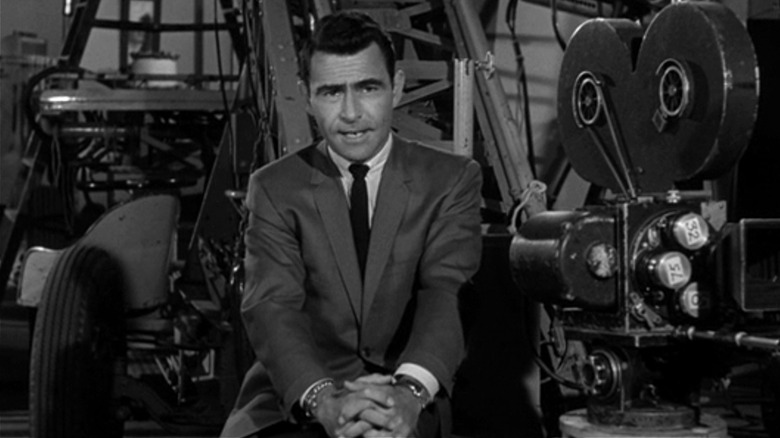
There are a lot of adjectives one could use to describe "The Twilight Zone," Rod Serling's groundbreaking anthology show that originally aired on CBS between 1959 and 1964. Some episodes of the series are stone-cold classics, enduring across the decades thanks to their trademark blend of high-concept storytelling, pared-back ingenuity, and fearless social commentary. While often thought-provoking, "The Twilight Zone" could also be funny; some episodes aimed purely to entertain. And when it wanted to be, "The Twilight Zone" could be scary.
While some of the scarier segments delivered iconically grotesque imagery and shocking visuals, there were also the "Twilight Zone" episodes that lingered in one's mind, the ones that made you feel like you had entered a dimension that, as Serling put it, "lies between the pit of man's fears and the summit of his knowledge." Some episodes aimed not just to shock, but to disturb, unsettle, worm their way inside your subconscious, and change the way you saw the world. Others made you look at other people differently for the rest of your life.
The episodes below are must-watch episodes of "The Twilight Zone," all of which still work just as well today. Some are disturbing because of how they only seem to have grown in relevance; others are so artistically accomplished that they stand out in the entire history of television, not just as spooky sci-fi shows from the mid-20th century. Imagine that theme song playing, and read on, because this is Looper's roundup of the most disturbing episodes of "The Twilight Zone."
5. Living Doll (Season 5, Episode 6)
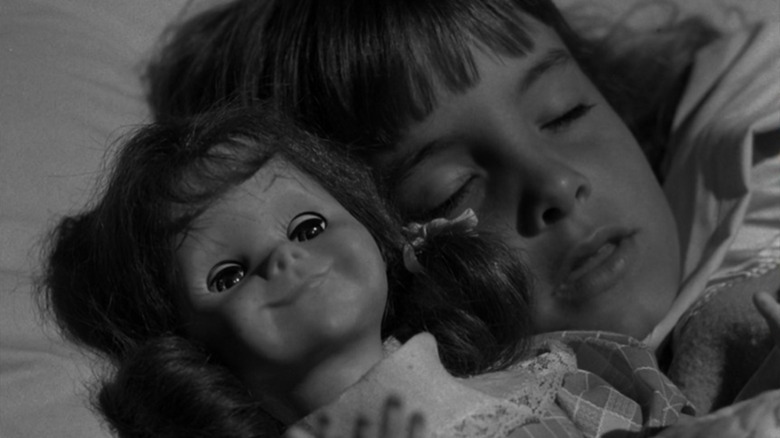
Legendary voice actor June Foray is best known for having voiced Grandmother Fa in "Mulan," Lucifer the cat in "Cinderella," and Cindy Lou Who in the animated "How The Grinch Stole Christmas" special, among many others. Foray also provided two voices to "The Twilight Zone": in "The Bewitchin' Pool" — one of the show's 12 worst episodes – Foray dubbed the voice of a young girl named Sport to distracting effect after on-set audio proved unusable. But her role in "Living Doll" was much better, and in fact, her performance is part of why the episode ranks as one of the most disturbing in "Twilight Zone" history.
"Living Doll" is about a girl who gets a Talky Tina — a toy clearly based on the hit Chatty Cathy line that was popular in the 1960s. Foray provided the speaking voice behind Chatty Cathy, so when audiences heard her voice coming out of Talky Tina on "The Twilight Zone," it would have resonated on an extra level. Even if you're not familiar with Chatty Cathy, though, you'll understand why Talky Tina became a reliable cause of nightmares for any kid brave enough to chance "The Twilight Zone."
After all, the young girl's father (Telly Savalas) hears the doll say things no one else does. When that chipper, happy child-like voice says, "I'm Talky Tina, and I'm going to kill you!", there's no denying how disturbing "The Twilight Zone" could be.
4. An Occurrence At Owl Creek Bridge (Season 5, Episode 22)
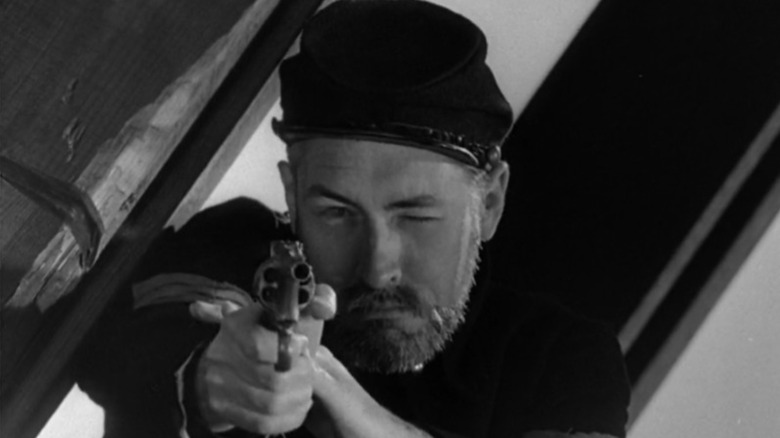
"An Occurrence at Owl Creek Bridge" stands out in the "Twilight Zone" canon because it wasn't actually produced for the show. Based on the Ambrose Bierce story, this episode was a French short that went all the way to the Academy Awards. It was only after "An Occurrence at Owl Creek Bridge" picked up the Oscar for best live action short subject that Rod Serling picked up the rights and aired it as part of the show's fifth season.
"An Occurrence at Owl Creek Bridge" is about a Confederate soldier (Roger Jacquet) who is caught in an act of sabotage during the Civil War. He is sentenced to death by hanging, but when the Northern soldiers drop the platform below the gallows, the soldier instead plummets into the river below. The short film — which is made up of evocative, dreamlike shots far more beautiful than the vast majority of the cinematography you find on television — follows his journey home and his desperate attempt to reunite with the love of his life.
This episode contains one of the best twists in "Twilight Zone" history, cementing its legacy as one of the most disturbing outings the show ever aired. This isn't just the story of a soldier trying to get home; it's a tale of retribution and regret, culminating in an absolutely brutal depiction of violence. Aside from its lush score, the episode is nearly silent — until it isn't.
3. The Monsters Are Due On Maple Street (Season 1, Episode 22)
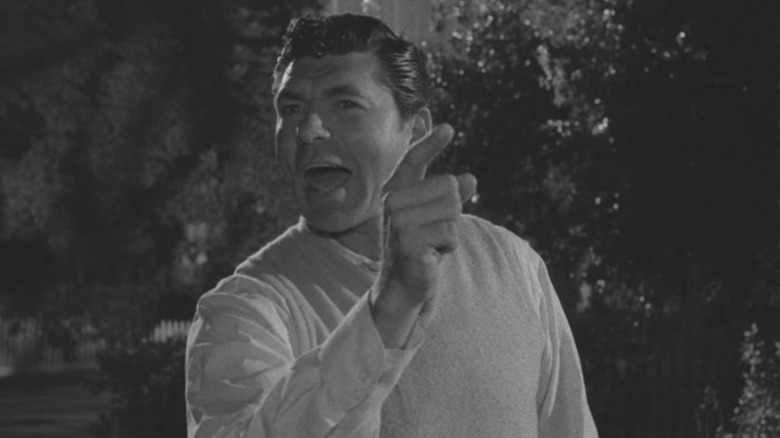
Especially for its time, "The Twilight Zone" perfectly embodied the subversive potential of science fiction. Lots of sci-fi gets the future right, but it often does so by extrapolating out current trends that the filmmaker is able to spot in contemporary society, guessing at where things will lead.
Even though "The Monsters Are Due On Maple Street" is about a possible alien invasion, that's not really the point. After the residents of a small town experience a mysterious power outage, which may or may not only be affecting Maple Street, one of the kids on the block suggests that it might be the result of an alien experiment. The neighbors then go wild with suspicion and turn on one another, the picturesque, picket-fence-lined street consumed by paranoia as everyone insists that there's an undercover extraterrestrial among them pretending to be human. They fear that someone hiding among them has been sent to study them, and if they don't figure out who it is, their entire way of life might come to an end.
In other words, it's about McCarthyism. In the 1950s, the government fixated on rooting out communists, encouraging people to turn each other in if they expressed any "anti-American sentiment." Droves of Hollywood screenwriters were blacklisted from the industry, and lives everywhere were destroyed by accusations of subversive activity. "The Monsters Are Due On Maple Street" expertly depicts the undercurrent of mistrust bubbling through society, ready to erupt the moment it's given permission to do so.
2. Deaths-Head Revisited (Season 3, Episode 9)
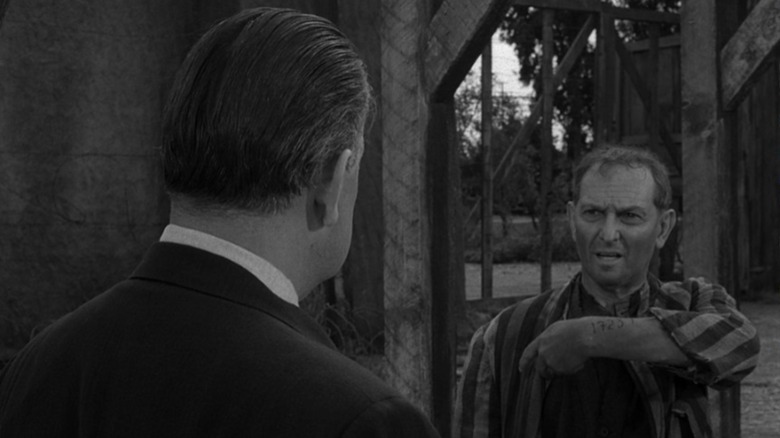
Even though "The Twilight Zone" premiered at the tail end of the 1950s, society at the time was very much still grappling with the after-effects of World War II. People who had fought in Europe had returned home, and it took a very long time to track down and prosecute anyone who was complicit in carrying out the Holocaust. Despite its frequently fantastical sci-fi premises, "The Twilight Zone" told the truth about a lot of contemporary issues, and its WWII episodes are no different.
"Deaths-Head Revisited" is one of the most disturbing episodes of "The Twilight Zone" because of its depiction of an unrepentant Nazi named Lutze (Oscar Beregi) who returns to his old stomping ground: Dachau. As the episode opens, he's looking forward to reminiscing about his time at the camp; it's extremely unsettling just how blithely he seems to treat his memory of what happened there.
Thankfully, the Rod Serling-penned script isn't interested in letting him get away with that. Lutze instead has visions of one of his victims, Alfred Becker (Joseph Schildkraut, who starred in the 1959 film version of "The Diary of Anne Frank" as Anne's father, a casting feat that would have resonated with audiences at the time). Becker forces Lutze to confront the realty of the horrific acts he participated in at Dachau, and the episode is accompanied by the ever-present sound of a hollow wind, as though Dachau is a void, the site of something so harrowing and dark that it's beyond human comprehension — which, of course, it is.
1. It's A Good Life (Season 3, Episode 8)
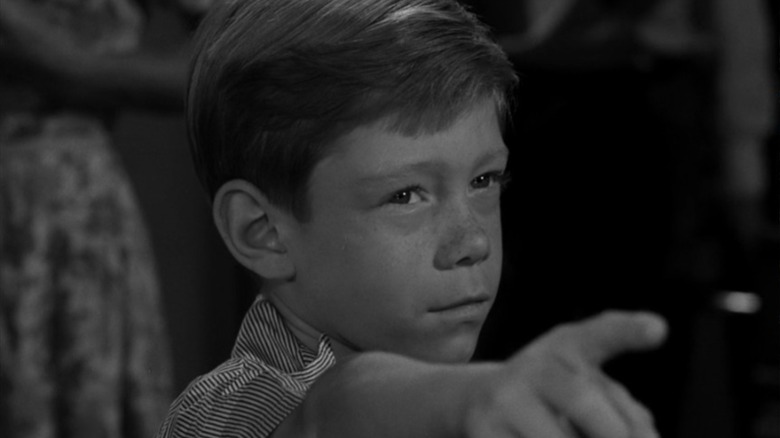
"It's A Good Life" is the most disturbing episode of "The Twilight Zone," thanks to two things: child actor Bill Mumy's upsetting performance as a kid with psychic powers, and an ingenious teleplay from Rod Serling that explores the implications of a town ruled by a child with unlimited powers.
The show was never afraid to shy away from critiquing conformity, and "It's A Good Life" distilled the concept down to its best representation. Six-year-old Anthony Fremont can make things happen just by thinking about them; Aside from his hometown of Peaksville, Ohio, for example, the entire rest of the world blinks out of existence. When he wants something, he gets it. When someone upsets him, he can wish them away "to the cornfield," making humans also disappear for good.
The entire town lives in mortal terror of this child. He can read their thoughts, so in trying to be everything Anthony wants them to be, they try not to think. Serling's screenplay is about the blind worship of tempermental leaders who don't deserve it, about the intolerable cruelty that people will allow to happen to others in the name of protecting themselves. This episode is the perfect example of why "The Twilight Zone" is one of the most rewatchable sci-fi shows of all time — because in some cases, its most disturbing ideas only get more relevant with time.