

5 Powerful '70s War Movies That Still Hit Hard

There's been no shortage of war movies throughout Hollywood history, as directors have used the medium to dramatize every military conflict in our young country's brief history. During WWII, Hollywood functioned almost like a propaganda factory, churning out movies that dramatized America's brave efforts to defeat fascism across the globe. These films set the template for what war movies would look like for decades, with heroes like John Wayne (who never served in the military despite making many films about it) fighting against evil with strength, gusto, and the American way. Yet as times changed, so did the movies, and during the New Hollywood renaissance of the 1970s, many films adopted a more critical view of the American military.
This turn towards a more complex, nuanced, and at times critical depiction of war was undoubtedly due to America's involvement in Vietnam, which played out in bloody detail on the nightly news. The anti-war movement grew to a fever pitch throughout the '60s and '70s, as young men refused to fight in a conflict they deemed unjust. Many of those who did serve came back severely wounded — both mentally and physically — and many wondered what their time fighting overseas had really been about. Although John Wayne tried to make his own take on Vietnam with "The Green Berets," the days of uncritical dramatization of America's military efforts were long gone. Here are five powerful '70s war movies that still hit hard, many of which are among the best war movies of all time.
Patton
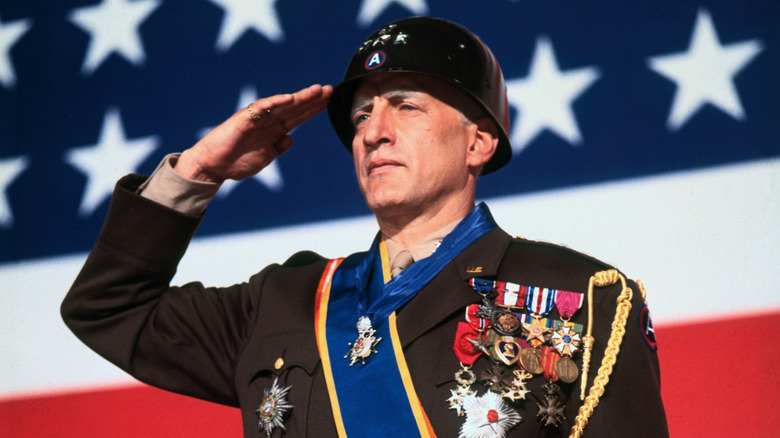
During World War II, General George S. Patton (George C. Scott) is put in charge of the II Corps in North Africa after their devastating defeat at the Battle of Kasserine Pass. A career military man who believes he has been reincarnated from great warriors of the past, Gen. Patton whips his soldiers into shape, instilling in them an appreciation for rules, order, and discipline. His methods are often criticized, especially when he slaps a young recruit he accuses of cowardice. Yet his various military campaigns proved successful, helping lead the Allied forces to victory against the Axis powers. He remains outspoken to his own detriment, eventually being relieved of his duties after comparing American politics to the Third Reich.
"Patton" was released in 1970, the same year that Robert Altman's pitch-black Korean War satire "M*A*S*H" helped usher in the New Hollywood. As such, Franklin J. Schaffner's WWII epic is often remembered as the stuffier war movie of the two, and in all fairness, it's as old-fashioned a Hollywood epic as you can get. Yet that discounts the tremendous power of George C. Scott's performance as the controversial general, whose brilliance for military strategy is matched only by his own inflated sense of self. One of the best World War II movies of all time, "Patton" earned 10 Oscar nominations and won seven prizes, including best picture, best director, best original screenplay (Francis Ford Coppola and Edmund H. North), and best actor for Scott, who famously refused his award.
Cross of Iron
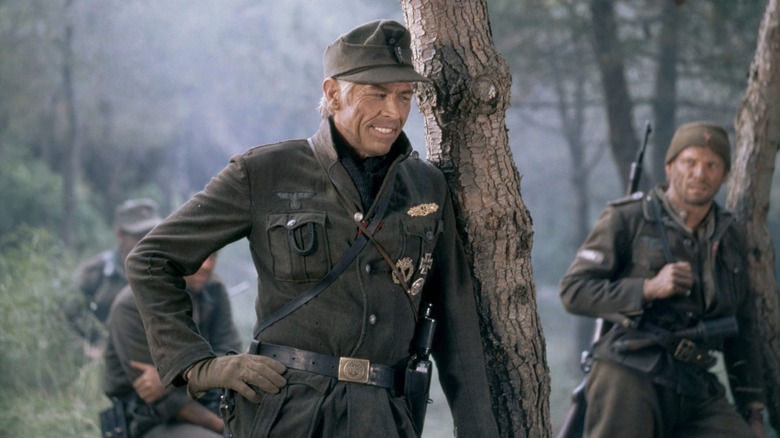
During WWII, embittered German army Corporal Rolf Steiner (James Coburn) receives one of the country's highest military honors: the Iron Cross. The newly arrived Captain Stransky (Maximilian Schell) desperately wants an Iron Cross of his own, which he makes no secret of to Colonel Brandt (James Mason). The aristocratic Stransky clashes with Steiner over the handling of a Russian soldier his platoon captured: Stransky wants the boy shot, while Steiner hides him in a bunker. Their feud continues as Steiner leads his men into battle on the Russian front, and the cowardly Stransky takes credit for a gruesome military attack. When Steiner squashes Stransky's hopes of receiving the Iron Cross, he takes his revenge by forcing Steiner's platoon to make a dangerous trek through enemy territory.
Although most WWII movies center on the brave efforts of the Allied forces, Sam Peckinpah's "Cross of Iron" views the war from the German perspective, dramatizing the class conflict between the high-society Nazis and the grunts forced to fight their battles for them. Released in 1977, it's as violent and bleak as war movies get, and its impact is all the more powerful for focusing on the futile efforts of losers fighting for a dishonorable cause, whether they want to or not. Among its fans were Orson Welles, who likened it to the 1930 Oscar-winning classic "All Quiet on the Western Front," and Quentin Tarantino, who used it as inspiration for one of his best movies, the Nazi-bashing "Inglourious Basterds."
The Deer Hunter
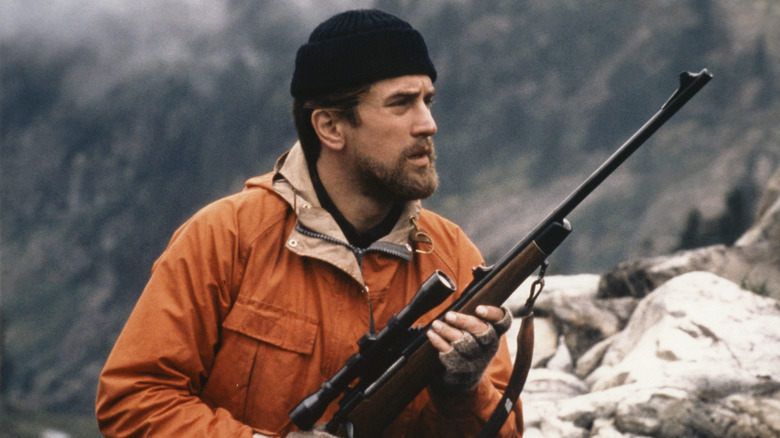
In 1968, lifelong friends Mike (Robert De Niro), Nick (Christopher Walken in one of his most memorable roles), and Steven (John Savage) prepare for a tour of duty in Vietnam. Before they deploy, the Pennsylvania steelworkers attend Steven's lavish Russian Orthodox wedding and go deer hunting one last time. While in Vietnam, they are captured and placed in a POW camp, where they are forced to play Russian roulette. The three are separated after making a daring escape, with Mike returning home and forging a tentative relationship with Nick's sweetheart, Linda (Meryl Streep). He finds Steven confined to a wheelchair in a veterans hospital, and returns to Saigon during its chaotic fall to rescue Nick, who has become an underground Russian roulette champion.
"The Deer Hunter" had a seismic impact when it hit theaters in 1978, only a few short years after the end of the Vietnam War. Clocking in at three hours, Michael Cimino's epic drama dramatized the impact of the war on the ordinary men and women who fought it in devastating detail. Although it has been criticized for its portrayal of the Vietnamese people and dubious depiction of Russian roulette as a POW torture technique (most notably by Jane Fonda, whose Vietnam drama "Coming Home" was released that same year), there's no denying the awesome power of everything else surrounding it. The film earned nine Oscar nominations and won five prizes: best picture, best director, best supporting actor (Walken), best film editing, and best sound.
Apocalypse Now
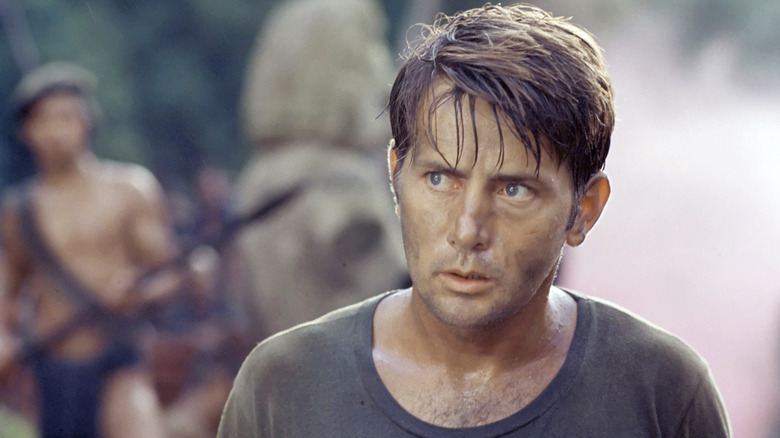
As the Vietnam War rages on, Captain Benjamin L. Willard (Martin Sheen) spends his nights getting drunk in a cheap motel room, unable to deal with his trauma. He is recruited by a shadowy military group to assassinate Colonel Kurtz (Marlon Brando), a high-ranking special forces officer who has reportedly gone rogue. Traveling by riverboat with the crew of a Navy patrol boat, Willard's journey becomes increasingly hallucinatory and violent, from an air raid with the surf-obsessed Colonel Kilgore (Robert Duvall) to the massacre of a Vietnamese family aboard a fishing boat. He finds Kurtz in the jungles of Cambodia, where he lords over the natives in a decrepit temple riddled with dead bodies. As he attempts to kill Kurtz, Willard confronts his own heart of darkness.
Released in 1979, "Apocalypse Now" was Francis Ford Coppola's attempt to make the definitive film about the war that had dominated the better part of two decades. Taking its inspiration from Joseph Conrad's novella "Heart of Darkness," it's less about the Vietnam War and more about the very nature of warfare itself, from the devastation of its carnage to its impact on the human psyche. Although the many bizarre things that happened on set nearly ruined its director (detailed in the documentary "Hearts of Darkness: A Filmmaker's Apocalypse," directed by Coppola's wife, Eleanor), its power is overwhelming, and its images are awe-inspiring. One of the best historical movies of all time, "Apocalypse Now" earned eight Oscar nominations, including best picture, and won prizes for its cinematography and sound.
The Tin Drum
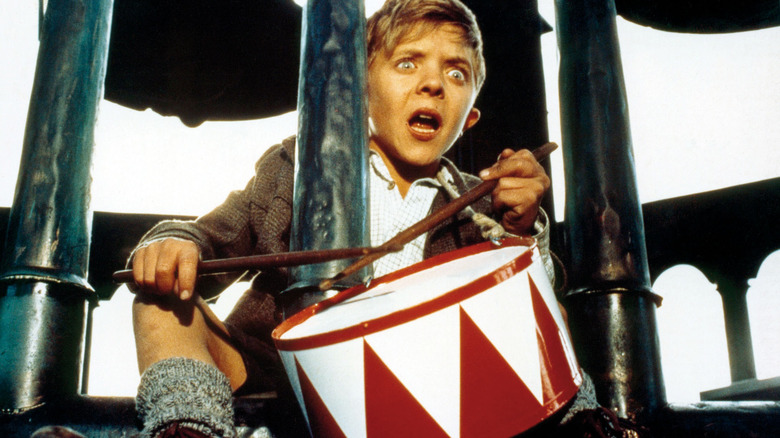
While in his mother's womb, German baby Oskar Matzerath (David Bennent) refuses to come out until he's promised a tin drum. So his mother, Agnes (Angela Winkler), gifts her son the desired instrument on his third birthday. Reluctant to enter a world filled with adult problems, Oskar refuses to grow older and remains stuck inside the body of a three-year-old boy as the years pass. Angered by the dishonesty and treachery surrounding him, Oskar bangs his tin drum in protest, screaming as he clangs it louder and louder. As the years pass, Oskar matures as his body remains the same, fighting back against impending adulthood even while engaging in its many troubles. His desire to remain unsullied intensifies with the rise of Nazism and the chaos of WWII, which he responds to by beating his drum.
Adapted from the novel by Günter Grass, "The Tin Drum" employs magical realism to examine the horrors of WWII. Director Volker Schlöndorff takes a darkly comedic approach to the material, which stands in stark contrast to the bleakness of its subject matter. Yet in many ways, satire is the only rational way to deal with such tragedies, much like Oskar's banging on the drum is the only way to respond to hypocrisy and injustice that goes unpunished. Released in 1979, "The Tin Drum" won the Oscar for best foreign language film and tied another 1970s war movie, "Apocalypse Now," for the prestigious Palme d'Or prize at the Cannes Film Festival.