

5 Creepy '90s Horror Movies With Cult Followings
Horror ruled the 1980s, but by the time the following decade rolled around, fans had gotten a little tired of endless slasher franchising. Understandable, after being served movie after movie where attractive teenagers are chased through the night and cut to bits. After "Scream" changed the game in 1996 — proving that audiences were too savvy now for horror movies that weren't in on the joke — the rest of the decade brought us ... well, a lot of movies like "Scream." As a result, many fans tend to overlook '90s horror movies, because there weren't nearly as many classics as there had been in earlier decades.
Still, there are lots of lesser-known '90s horror movies that have since picked up devotees. While the movies on this list may not have set the box office alight, they've persisted, winning growing numbers of fans as the video-store market of the '80s and '90s gave way to the DVD boom of the '00s and the streaming glut of the 2010s. All of these movies have found additional lives far beyond their initial runs, showing that sometimes, the oddball, offbeat horror movies are the ones that linger, echoing around your subconscious long after mainstream pop culture has moved on. These creepy '90s horror movies all have cult followings, and they're all well-deserved.
The Exorcist III (1990)
William Friedkin's 1973 film "The Exorcist" is one of the best supernatural horror movies of all time. It's considered one of the scariest films ever made, and with good reason. Especially at the time, when audiences hadn't seen anything like it before, watching that movie felt like being gripped by a religious psychosis. The young Linda Blair's startling performance as the possessed Regan MacNeil is one of the most terrifying in film history, and Ellen Burstyn's bruised turn as her mother, Chris, anchors the film with real gravitas. But the sequel, "Exorcist II: The Heretic," is — to put it mildly — real bad.
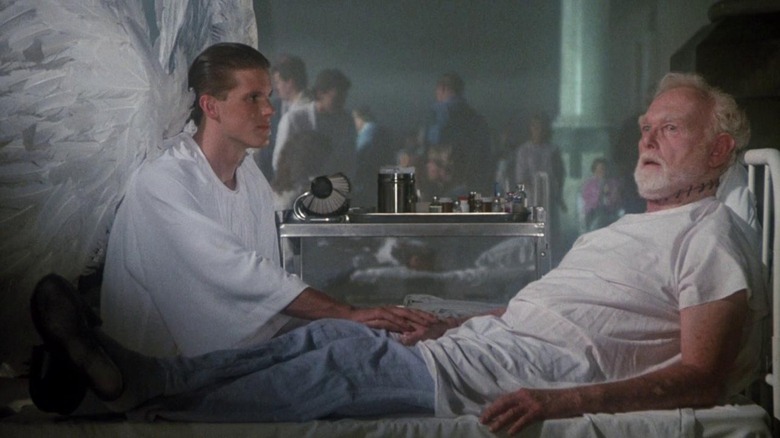
Thankfully, in 1990, the franchise sprang back to life with "The Exorcist III," a movie that's so weird and clunky that it wraps all the way back around to being incredibly unsettling. The movie was directed by William Peter Blatty, the novelist who wrote the source material for the original film. He directs "The Exorcist III" as though somehow he's peered into a nightmare, and the result is a film where cause and effect don't really work the way you're used to. The scene transitions are strange, the thematic material underpinning everything is strange, the performances are strange, and the visuals are strange. You'll even spot romance novel cover hunk Fabio as an angel!
It's like a movie made by someone who doesn't understand how movies usually behave, almost as if there was a malevolent spirit possessing the form of a film.
The People Under The Stairs (1991)
Wes Craven directed several stone-cold classics in the 1990s, including the 1994 film "Wes Craven's New Nightmare" and the aforementioned "Scream." Both brought a satirical, self-aware spirit to the horror film, serving up slashers that knew full well that their audiences understood every single beat they should expect to see.
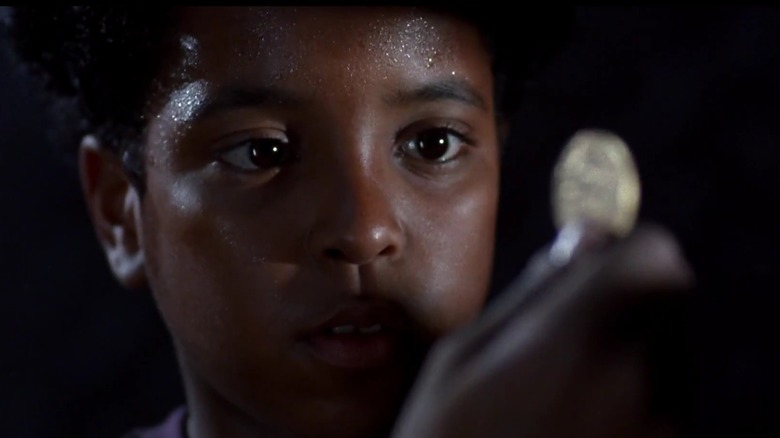
It's his 1991 film "The People Under the Stairs," however, that has developed the most underground cult following of the bunch. The movie is a fairy tale of sorts, following a young boy named Fool (Brandon Adams) who breaks into a strange old house in his neighborhood. He thinks he's going to assist with a burglary, but instead he finds himself trapped in the house, chased through the halls by a wildly unstable couple ("Twin Peaks" stars Wendy Robie and Everett McGill). As Fool explores, he meets the house's other inhabitants — a whole culture of people who live in the walls. This movie has one of the creepiest basements in horror movie history.
"The People Under the Stairs" isn't just a fairy tale but a fable, an allegory for a certain growing resentment in society at the tail of the end of the '80s. It's that radical, pro-underclass bent that has won the movie so many fans in the decades since its premiere.
Mimic (1997)
These days, Guillermo del Toro is one of the most celebrated names in horror. He's given us thought-provoking, wondrously beautiful films like "Pan's Labyrinth," "Pinocchio," "Crimson Peak," and 2025's "Frankenstein." Del Toro even gave up his salary to fund "The Shape of Water," the Oscar-winning story of a woman who falls in love with an aquatic, man-shaped creature.
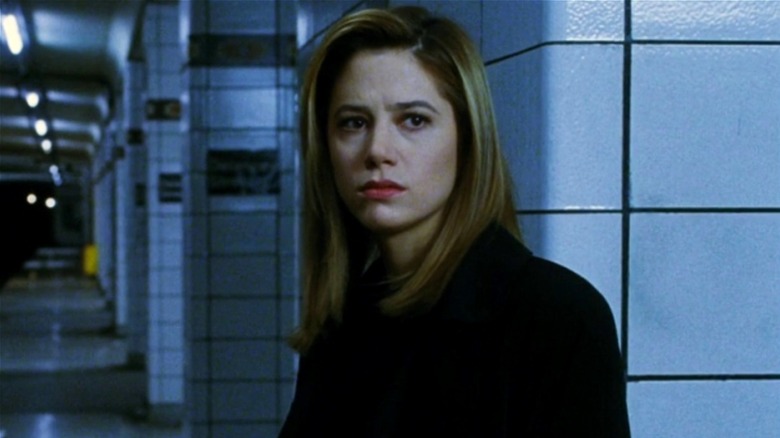
His first English-language film, "Mimic," is instead a film about a woman who unintentionally creates a monster. The 1997 film stars Mira Sorvino as Dr. Susan Tyler, an insect scientist who attempts to solve the cockroach problem in New York City by creating a breed that kills other cockroaches. Unfortunately, she doesn't take into account the quick life cycle of cockroaches, and within a few years, her "Judas breed" have gone through thousands of generations, evolving into something much more terrifying than the average roach.
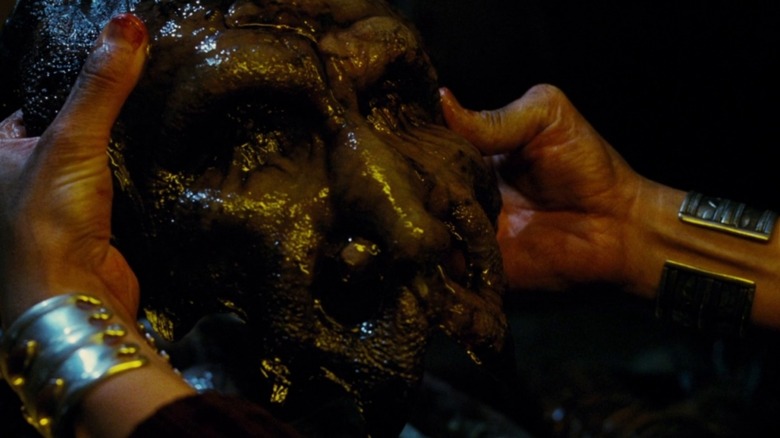
After del Toro went on to much greater success, he revisited "Mimic" and crafted a Director's Cut that ended up closer to his original vision. He told Den of Geek, "I hope people will rediscover how beautiful the movie is to look at." He's not wrong — his love of practical, goopy-gory effects is on full display, but as always, everything is crafted with an eye toward beauty, which makes the result unsettling in ways most creature features don't bother to be.
Cube (1997)
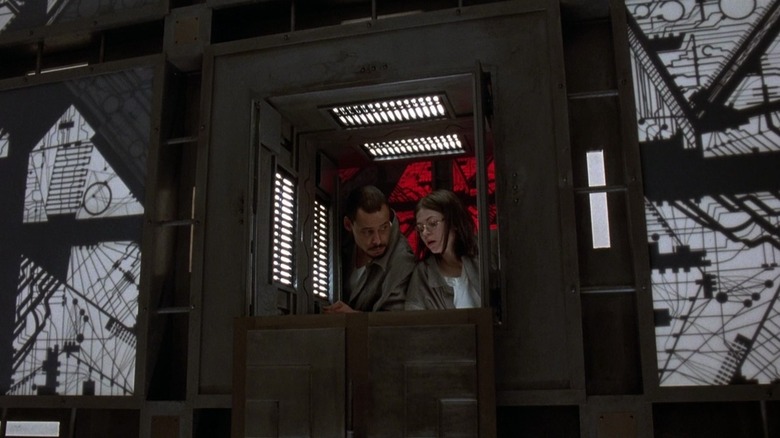
While some of the films on this list were high-profile movies that only grew in acclaim over time, "Cube" is a film that started out small. Director Vincenzo Natali created a simple yet frightening concept that would be relatively easy to shoot on the cheap, delivering its thrills from its destabilizing concept and an atmosphere that might be best described as downright mean.
"Cube" is about a group of people who wake up in a futuristic white room. They're not sure how they got there, and they're not sure where "there" is, exactly. As they attempt to leave the room, they find themselves in another, identical cube ... and each version of this same room may or may not be full of sadistic weaponry. Some of these kills are cruel, which understandably put mainstream audiences off of the film when it was initially released. But it also helped "Cube" develop a cult audience willing to follow a filmmaker where they want to go.
Natali's ingeniously simple premise and confidently creepy execution led to an interesting career for the director. He went on to helm another cult favorite, "Splice," and Natali even pitched one of many cancelled "Predator" movies we never got to see. He went on to direct a number of episodes of "Hannibal," proving that the director of "Cube" knows a thing or two about creep factor.
Kolobos (1999)
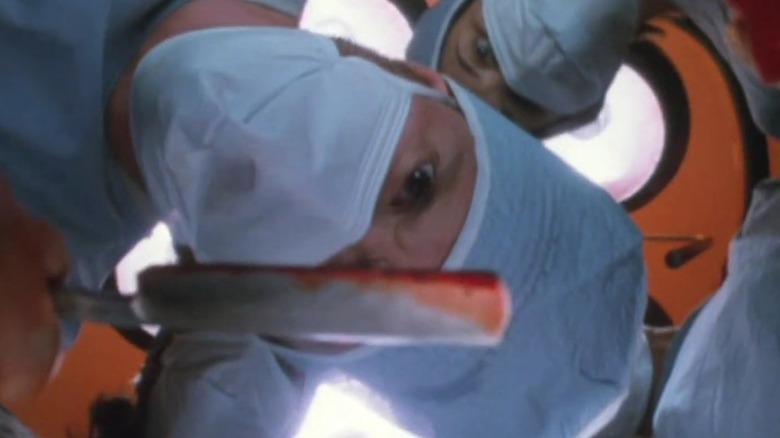
The final year of the '90s signaled an important shift as the horror genre looked toward the new millennium. That year brought us "The Blair Witch Project," an iconic 1990s horror film that took only eight days to shoot. The movie's blend of horror with the aesthetics of documentary felt revolutionary for the time, and its online marketing campaign further muddied the waters, priming horror fans to expect that found-footage movies might have a connection to actual reality.
That same year also gave us "Kolobos," a movie that did not become the cultural juggernaut that "The Blair Witch Project" was at the time. Like the latter film, "Kolobos" is a found footage movie, one that takes on the aesthetics of the burgeoning reality television subgenre. Unlike "The Blair Witch Project," however, it quickly becomes clear that "Kolobos" doesn't quite take place in our version of reality. Instead, as its TV star characters contend with an all-powerful force that seems to be watching them at all times, it's like the movie itself goes mad.
"Kolobos" has developed a devoted cult following thanks to its expressive visuals, which owe as much of a debt to the films of Dario Argento as they do to "The Real World." This is a colorful, yet deeply weird movie, something that approaches Lovecraftian. It wants to destabilize your understanding of not just reality television but reality itself, and as viewers have discovered over the decades, it very much succeeds.