

5 Worst Things Kirk Ever Did On Star Trek, Ranked
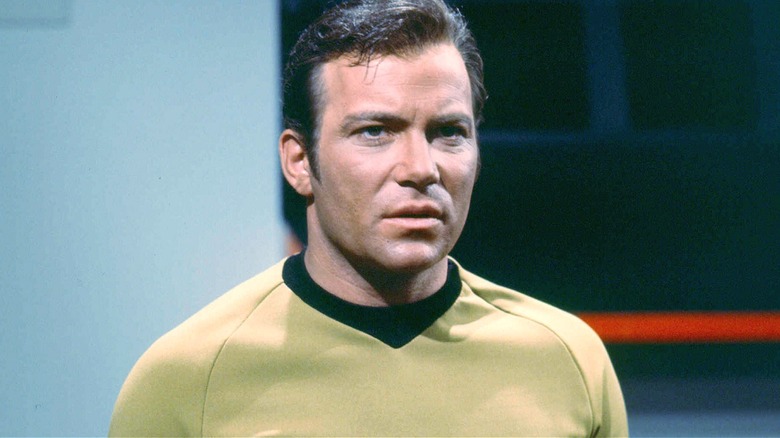
Leader, diplomat, lover, overgrown Boy Scout — Captain James Tiberius Kirk (William Shatner) of "Star Trek: The Original Series" has one of the most larger-than-life personalities in the history of Starfleet. But look a little closer and you might just realize you've got Captain Kirk all wrong. Sure, Jim Kirk is inarguably one of the Federation's most iconic and historically revered captains. But his cowboy diplomacy wouldn't necessarily hold up in the 24th century, and the captain's brand of easy, bedimpled charm certainly can't erase some of Kirk's more problematic command decisions.
Between all of Kirk's history-making moments, you'll find plenty of boundary-crossing or even ethically questionable scenes hidden in the fine print. The man had a clear love of fisticuffs and never turned down a chance to get a good shirt rip in or to make out with the locals. Although he'll always be a one-of-a-kind who paved the way for some of the finest captains to command the Enterprise, James Kirk didn't always get it right. Here are the five worst things Captain Kirk ever did, ranked from morally questionable to downright wrong.
5. When he takes over the Enterprise in Star Trek: The Motion Picture
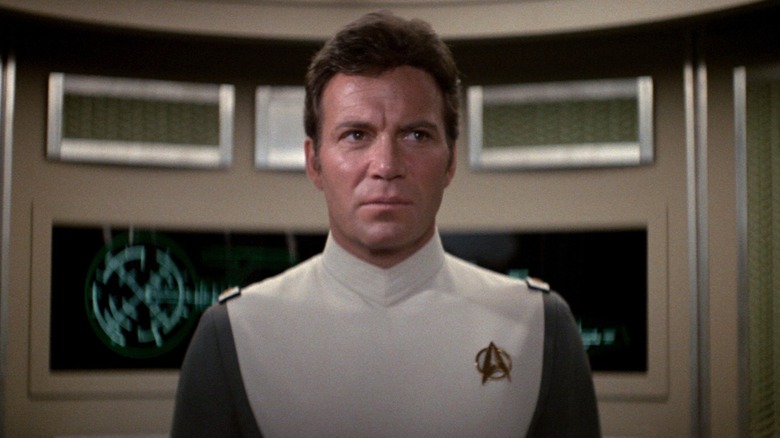
In a world of Harry Mudds, Nus Brakas, and various aliens with a "Finders Keepers" mentality, nobody in the "Star Trek" canon enjoys stealing (or, ahem, commandeering) ships more than James T. Kirk. And he first gets his taste for it in "Star Trek: The Motion Picture" when he plays the seniority card to commandeer the Enterprise, much to the chagrin of its current captain at the time, William Decker (Stephen Collins).
After spending two years as Chief of Starfleet Operations and landing a more recent promotion to admiral, the dream finish line for most Starfleet command officers, Kirk is clearly chomping at the bit to get back on the newly refitted Enterprise when the V'Ger probe comes along to give him the excuse he's been waiting for. Despite being duly warned by Scotty (James Doohan) that the ship is untested with an "untried captain," Kirk strolls right onto the bridge to let Decker know he's being temporarily demoted for the ship's relaunch.
Whether or not the V'Ger crisis warrants Kirk's involvement, his complete lack of hesitation at taking over command is a major red flag to just how opportunistic Kirk's coup is. The indignant Decker sees right through Kirk's ploy (even if he has no choice but to step aside), reminding Kirk, "You told me how envious you were, and how much you hoped you'd find a way to get a starship command again. Well, it looks like you found a way." The fact that Decker ends up merging with V'Ger and never makes it back to command the Enterprise is just salt in the wound.
4. When he cheats on his Starfleet exam
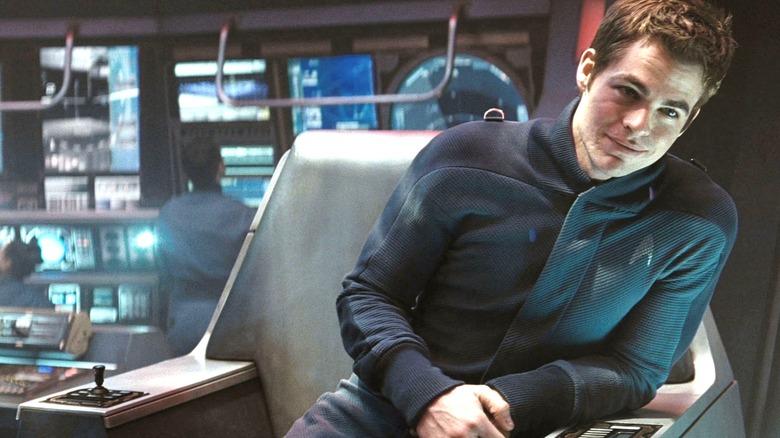
Captain Kirk's big claim to fame at Starfleet Academy is the clever solution he comes up with for the Academy's famously "no-win scenario" training test, the Kobayashi Maru. The test, which forces cadets into violating treaties by rescuing survivors in the Neutral Zone and often ends with their crew getting destroyed by the Klingons, is meant to prepare participants for similar real-life scenarios. But young cadet Kirk would have none of that and decides to reprogram the test and make it survivable, somehow making him the only Starfleet graduate to ever beat it. This type of thing would never fly on the LSAT.
In a world where college exams are often monitored for proxies and academic dishonesty can cost someone his or her entire college diploma or career, the idea that Starfleet would in any way reward this behavior makes the story feel like more of a campus legend than an actual win. Hypocritically, Kirk later tells Saavik (Kirstie Alley) in "Star Trek II: The Wrath of Khan, "A no-win situation is a possibility every commander may face ... how we deal with death is at least as important as how we deal with life." That's some pretty big talk for a guy who literally scammed the system.
3. When he steals the Enterprise in Star Trek III: The Search for Spock
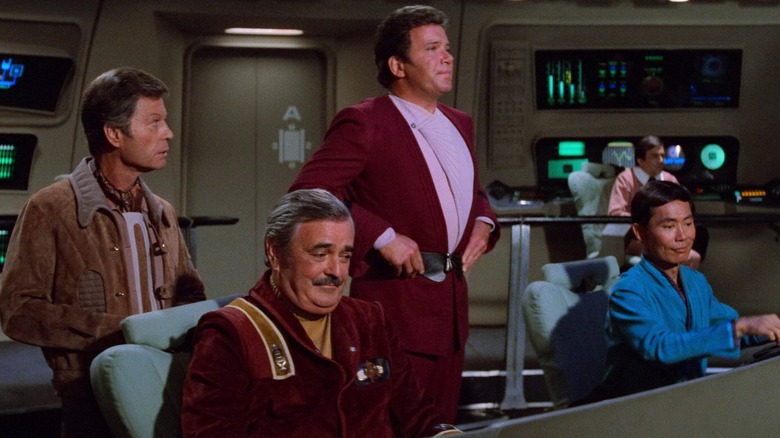
After commandeering the Enterprise in "Star Trek: The Motion Picture," he has no problem disabusing himself of all maritime law to fully swipe the old ship in "Star Trek III: The Search for Spock" — taking all of his buddies along for the ride. Once again, of course, Jim has his reasons — reasons that aren't strong enough to persuade Fleet Admiral Morrow (Robert Hooks), despite Kirk literally begging.
But when Kirk's talk about potentially saving Spock's (Leonard Nimoy) eternal soul fails to score the Enterprise keys, Morrow makes it clear this isn't just about the inevitable beating he knows Captain Kirk will put the ship through dragging it to Genesis to look for his bestie. Only the science team is okayed to visit Genesis, Morrow insists before warning Kirk, "Jim, your life and your career stand for rationality, not intellectual chaos. Keep up this emotional behaviour and you'll lose everything. You'll destroy yourself!"
After taking a moment to reflect on Morrow's sage advice, Kirk instead decides to engage in a good old-fashioned prison break to liberate Bones (DeForest Kelley), whose mind-meld with pre-death Spock seems to have left him just a mite whimsical in the brainpan. Never one to miss a chance for fisticuffs, Kirk takes the opportunity to KO a prison guard who is just doing his job before misusing his old crew's loyalty to enlist their help in the full-blown theft of the Enterprise.
2. When he destroys an entire way of life in The Apple
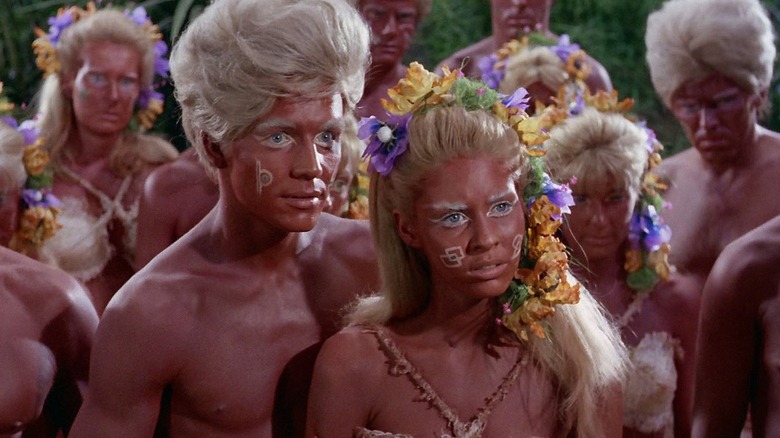
"Star Trek" captains love to talk about the Prime Directive, Starfleet's mandate of non-interference when it comes to pre-warp civilizations because goodness knows it's already crowded enough up in space these days. That, and heaven forbid any species get access to technology until the high and mighty Federation deems them ready.
But even with the potential threat of a court martial hanging over their head, Starfleet captains seem to love coming up with excuses to violate the Prime Directive every bit as much as they love talking about its importance. And Captain Kirk is no exception, with his most egregiously flagrant Prime Directive violation taking place in the "TOS" episode "The Apple," when he literally kills a god. And in doing so, he shatters the idyllic existence of the Edenesque Feeders of Vaal living on Gamma Trianguli VI, all because their artificial intelligence "god" is messing with the Enterprise's systems.
But Vaal isn't just any old overseer — it's a machine that maintains their planet's perfect climate, providing food and freeing them up to exist in a simple, post-scarcity state where they are effectively immortal. Rather than try to figure out some other way that doesn't involve literally killing the Vaal Feeders, Kirk orders Vaal destroyed before leaving the newly mortal locals to figure out things like sexual reproduction, an abbreviated lifespan, and work all on their own, dismissively telling them, "That's what we call freedom." Rich words for someone who gets his lunch from a food synthesizer.
1. When he completely mishandles Khan
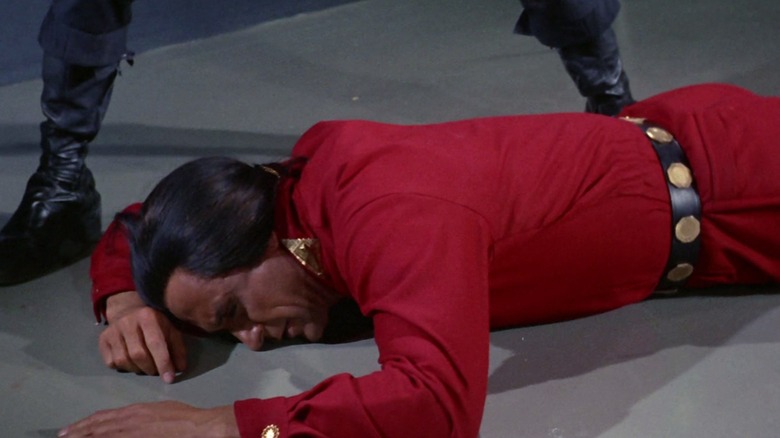
Starfleet has protocols for everything — managing Away teams, navigating the Chain of Command, and of course, dealing with the Prime Directive. Surely there are protocols in place for dealing with interstellar prisoners like Khan Noonien Singh (Ricardo Montalban), the eugenics-spawned warlord the Enterprise crew revives from his cryo chamber after his 200-year nap aboard the SS Botany Bay in "Space Seed."
Although at first, Kirk's crew fails to realize they've found the man once responsible for ruling a fourth of the Earth with an iron fist, they catch on just in time for Khan to start taking over the ship, presumably part of his plan to rebuild the Master Race. After retaking command of the ship from Khan and his followers, Kirk wastes no time in holding a trial aboard the Enterprise. The fact that the Federation is in no way involved in this whole Kangaroo Court is the first red flag here, with the second being Kirk's unilateral decision to dismiss all the charges before marooning Khan and his people aboard Ceti Alpha V — a decision that will most certainly yield no serious consequences down the line at any point.