

10 Worst Episodes Of Star Trek: Deep Space Nine
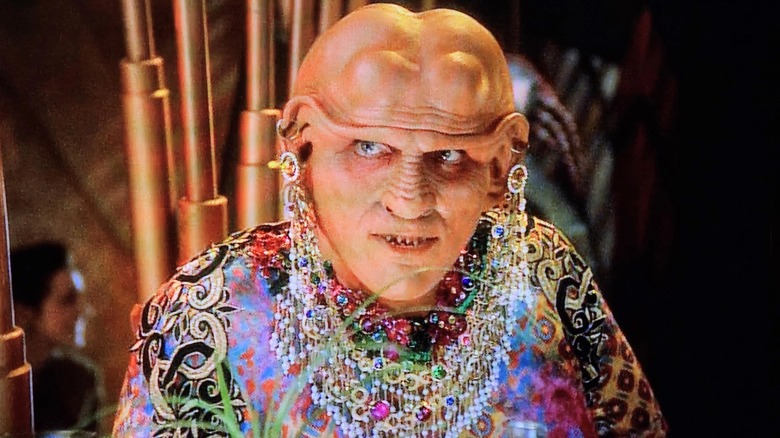
Of every "Star Trek" series, "Star Trek: Deep Space Nine" is unique, taking place on the titular space station instead of a spaceship. However, "Deep Space Nine" does have one thing in common with the other installments in the franchise: despite being one of the best "Trek" shows out there, it has its share of genuinely bad episodes.
Because of its space station premise and the comparative lack of boldly going that comes with it, "Deep Space Nine" takes a very different tone of storytelling from its franchise siblings, often focusing on long-term storylines such as Benjamin Sisko's (Avery Brooks) status as the Emissary of the Prophets and the Dominion War. This means that the episodes that are clearly worse than others stand out like a sore thumb. Because the show has a clear grand arc, the occasional clunker has a harder time hiding behind its isolated "case-of-the-week" status. Let's take a look at 10 of the worst offenders, based on the episodes' IMDb rankings and overall fan sentiment.
10. Second Sight (Season 2, Episode 9)
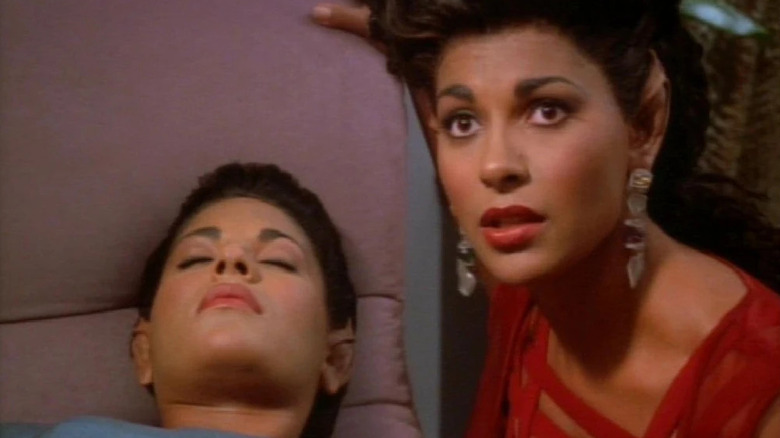
As several of the worst episodes of "Star Trek: The Original Series" will attest, the franchise has an uncomfortable storyline trend where a female guest character is locked in one awful scenario or another. "Second Sight" is the "Star Trek: Deep Space Nine" take on the theme.
At a 6.2/10 on IMDb, "Second Sight" revolves around Fenna (Salli Richardson-Whitfield), who quickly becomes Benjamin Sisko's romantic interest. Or rather, it explicitly doesn't revolve around Fenna, who doesn't exist. She's a projection who only turns up when the telepath creating her, Nidell (Richardson-Whitfield), is under duress. If that wasn't complicated enough, Nidell is under duress a whole lot, seeing as she's trapped in a loveless marriage with no possibility for divorce, per the customs of her culture. In other words, Sisko isn't in love with a woman. He's in love with a psychic creation made by another woman, who's so frustrated with her situation that it's literally killing her.
On paper, the situation seems like it could have something interesting to say about the nature of love and companionship. Instead, it comes across as prolonged torment for both Sisko and Nidell, neither of whom deserves this kind of thing. Yes, Nidell's story ends on a positive note when her jerk husband (Richard Kiley) solves the big science problem of the episode (reigniting a dead star) at the cost of his own life. Still, it feels like a random and unsatisfying solution, especially since Nidell doesn't share Fenna's memories and Sisko is left alone.
9. Fascination (Season 3, Episode 10)
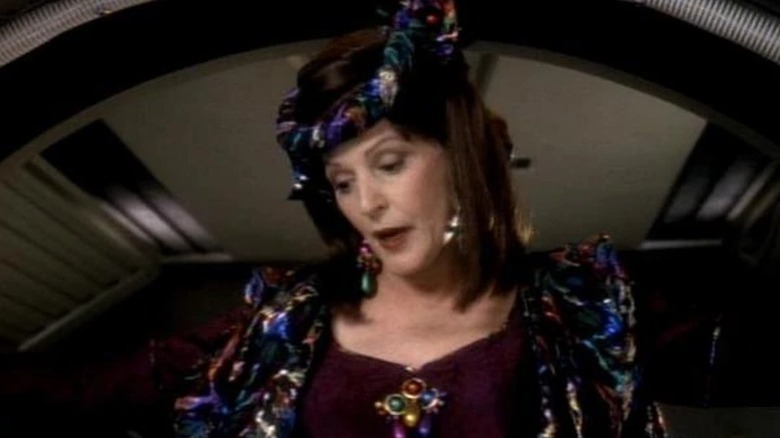
The "Star Trek" franchise has been known to flirt with Shakespeare before. Yet, "The Original Series" Season 3 episode "Elaan of Troyius" and its uncomfortable stealth adaptation of "The Taming of the Shrew" didn't teach any lessons to "Star Trek: Deep Space Nine." Instead, the show chose to tackle one of the Bard's most famous plays in the Avery Brooks-directed "Fascination," which draws inspiration from "A Midsummer Night's Dream."
"Fascination" features one of the franchise's reliable recurring agents of chaos, the Betazoid ambassador Lwaxana Troi (Majel Barrett). She visits the station with an infatuation for Odo (René Auberjonois). As it turns out, she's brought something else on board, too. Thanks to a peculiar illness she's unaware of, the telepath suffers from disorientation that causes everyone around her to develop romantic feelings for each other. This could potentially lead to much hilarity. There are fun individual moments, as characters who you'd never imagine together suddenly become interested in each other, and even come to blows over conflicting interests. Yet, in practice, the chaos never quite gels.
At the end of the day, the whole tale comes across as a bottle episode where Troi's condition is basically an excuse to get everyone to behave nonsensically for a while without having to face the consequences afterward. "Fascination" would be an entirely pointless episode if it weren't for the fact that it does slightly move the needle on the slow-brewing romantic storyline between Odo and Kira Nerys (Nana Visitor).
8. Time's Orphan (Season 6, Episode 24)
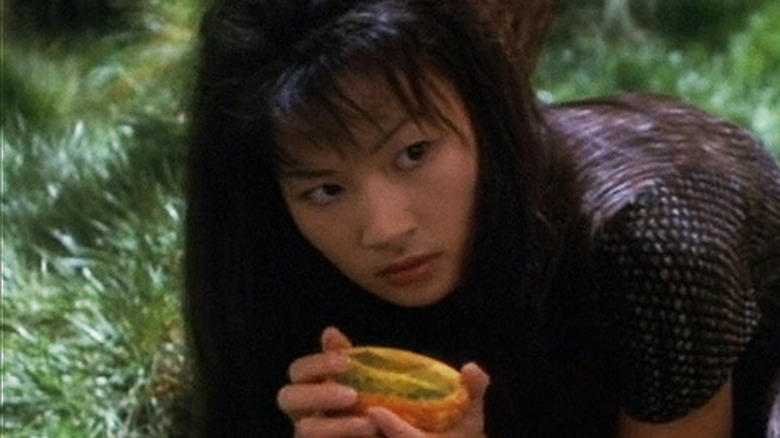
Miles O'Brien's (Colm Meaney) family woes have the unfortunate distinction of playing out in some of the worst episodes of "Star Trek: Deep Space Nine." His marital issues are part of the aforementioned "Fascination," whereas "Time's Orphan" gives us one of the more convoluted family twists in the entire franchise. When the O'Briens are having a perfectly normal picnic on planet Golana, the 8-year-old Molly (Hana Hatae) falls into a portal and is rescued a full decade older. Understandably, the now 18-year-old Molly (Michelle Krusiec) isn't quite herself, having gone feral during her years fending for herself.
There is an occasionally entertaining subplot about assorted characters dealing with the O'Briens' baby Yoshi (Clara Bravo) to varying degrees of effectiveness and enthusiasm. Still, the episode's intense focus on childcare and rehabilitating Molly is a lot, especially since both Molly and Yoshi storylines feature their share of bummers.
In the end, "Time's Orphan" resolves its problem the exact way it created it: through an incredibly unlikely happenstance at the very same Golana portal. The original Molly returns, and the viewer is left thinking that the whole situation seems like it could have been easily avoided. After all, while it's nothing new for "Star Trek" characters to venture blindly on planets with mysterious alien technology, you'd think that they'd vet the locations a bit more carefully before actually bringing their children along.
7. The Storyteller (Season 1, Episode 14)
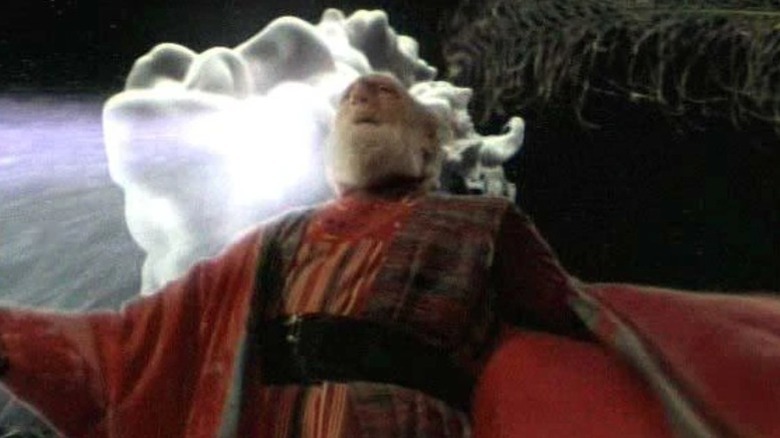
There's a reason why the "Star Trek: Deep Space Nine" episodes fans always skip on a rewatch tend to be in the early run of the show. "The Storyteller" is a prime example of a Season 1 episode that brings very little to the table.
Here, Miles O'Brien (yes, him again) and Dr. Julian Bashir (Alexander Siddig) undertake a mission in a Bajoran village. However, what they thought was a mere medical emergency turns out to be a far more complex situation that involves local disputes and a strange cloud monster plaguing the area. Before long, monster-controlling storyteller Sirah (Kay E. Kuter) decides that Chief O'Brien, of all people, is his successor in this task. If all of this sounds convoluted and not very interesting, that's because it is — and we haven't even gotten to the underwhelming extra twist about the monster being a glorified crowd control device that's meant to keep the locals working together.
The episode's premise of putting O'Brien in a spiritual leader position and having him absolutely suck at the job seems like a weird swipe at Benjamin Sisko's Emissary of the Prophets status, especially since it turns out to be a ploy to get the storyteller's apprentice Hovath (Lawrence Monoson) to step up. Yes, it's fun to see O'Brien's doomed attempt at filling the storyteller role in the end. However, getting there is a massive slog that's honestly not worth the viewer's time.
6. Move Along Home (Season 1, Episode 10)
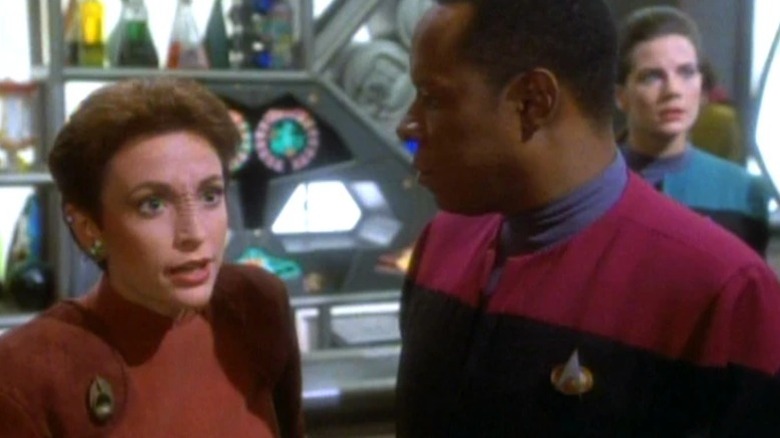
Many of the best "Star Trek: Deep Space Nine" episodes bake in massive stakes, involve alien races that are regular fixtures on the show, and feature poignant storylines that will stay with you for a long time. "Move Along Home" has the exact opposite of all those things.
The episode revolves entirely around games — namely, a particularly complex and seemingly lethal one that an extremely forgettable alien race called the Wadi force upon the DS9 crew after Quark (Armin Shimerman) cheats them in some lower-stakes shenanigans. Granted, the extremely realistic game of Chula seems genuinely life-threatening. However, the Wadi never come across as folks who might pose a legitimate danger to the main characters, which undermines the threat from the get-go.
Therefore, the episode's big reveal that it was all a game and absolutely no one was in danger at any point is an incredible anticlimax. Unsurprisingly, the Wadi failed to become a "Star Trek" mainstay of the Klingon and Vulcan variety.
5. The Muse (Season 4, Episode 20)
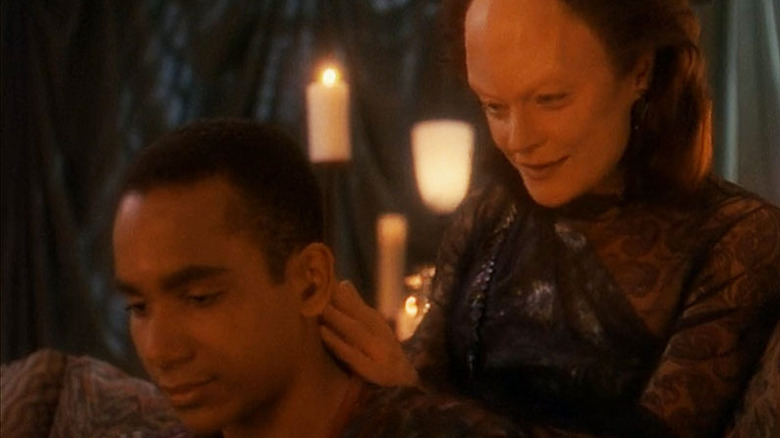
Majel Barrett's Lwaxana Troi appears on our list again. Here, however, her pregnancy-and-marriage-scheme storyline with Odo is actually the more interesting of the two main throughlines of the episode, even though it's still pretty awkward.
The true culprit of why "The Muse" is so bad is the frankly goofy A-plot about Jake Sisko (Cirroc Lofton). He meets a mysterious woman called Onaya (Meg Foster), who offers him writing inspiration by stimulating his brain. However, it turns out that the ideas Onaya provides are far more transactional than they initially appear. She's actually a sort of vampire, and the brain energy she's siphoning off Jake is threatening to kill him. When confronted about this, she makes a ham-fisted metaphor about living forever through one's art and buzzes off as a cloud of energy.
"The Muse" has its place in "Deep Space Nine" history because it jump-starts Jake's novelist career with the opening pages of "Anslem", a noted book that carries all the way over into Jake's return in "Star Trek: Starfleet Academy" Season 1, Episode 5. Even so, the episode's silly storylines and straight-faced execution make it veer dangerously close to space telenovela territory, making "The Muse" impossible to take seriously.
4. Resurrection (Season 6, Episode 8)
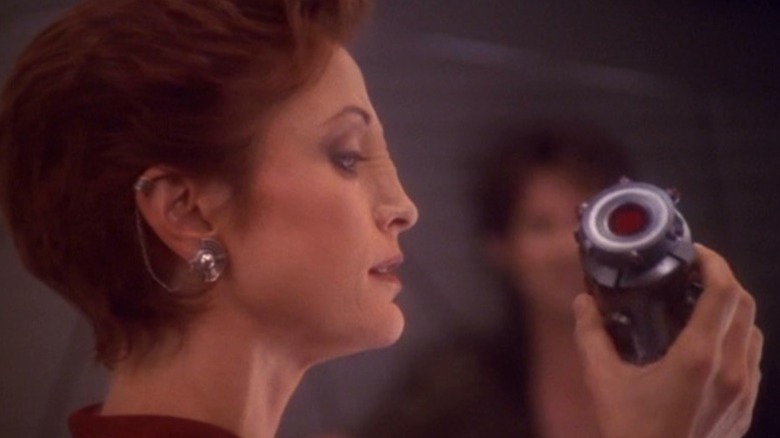
The Season 6 episode "Resurrection" brings back everyone's favorite sci-fi alternate universe. The "Star Trek" Mirror Universe has seen its share of highs and lows throughout the decades, and it's probably fair to say that very few fans would rank this among its finest hours.
"Resurrection" flips the classic script of characters visiting the Mirror Universe and encountering devious versions of themselves. Here, the Mirror Universe counterpart of Kira Nerys' partner Vedek Bareil (Philip Anglim) — who's long dead in the prime universe — enters the scene with an agenda. After the initial hostage situation is resolved, he soon bonds with Kira, whom he considers a significant improvement over her nasty Mirror Universe counterpart, the Intendant.
But of course, it's a Mirror Universe episode, and we already know how this is going to play out. Everything is a part of an evil plan that might be surprising if it hadn't been telegraphed so many times before. Bareil is actually in cahoots with the Intendant to perform a daring heist — but the episode still ends with a potential promise of romance between him and our Kira. "Resurrection" is an entertaining watch for fans of Nana Visitor, who gets to go all out playing both Kira and the Intendant. However, the rest of the episode completely fails to give Visitor's performance much support, rendering "Resurrection" hollow and meaningless.
3. Meridian (Season 3, Episode 8)
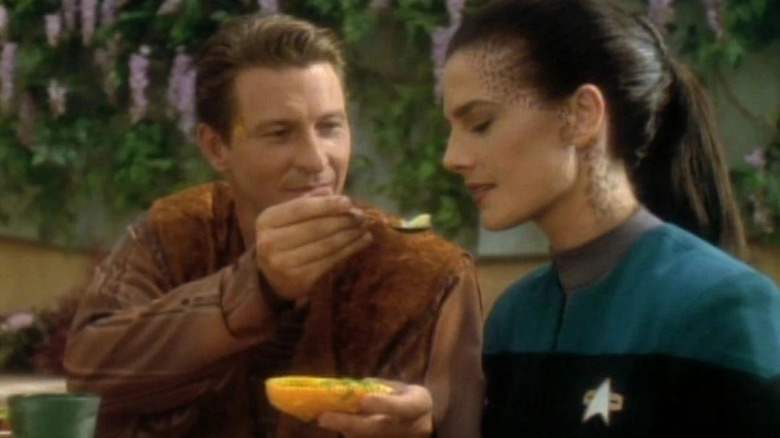
"Meridian" manages to stuff two incredibly uncomfortable stories into one hard-to-watch package. The episode features yet another one-episode romantic arc that the franchise, every so often, likes to thrust its characters into. This time, the recipient is Jadzia Dax (Terry Farrell), who meets a scientist called Deral (Brett Cullen), and it really seems that they might make a good couple.
There's a teeny, tiny hitch, though. Deral lives on a planet that only appears in the universe Jadzia lives in once every 60 years, and Jadzia has to decide whether to stay with him or to go on fulfilling her duties at Deep Space Nine. In a small surprise, she does choose to stay with Deral — but the shock of that decision doesn't last long, as she fails to properly phase between dimensions and ends up staying. Just like that, the show has cooked us another pointless throwaway "Deep Space Nine" romance that ends with heartbreak.
However, it's the B-plot of the episode that puts the cherry on the awkwardness cake. Here, Quark is tasked with procuring what amounts to an adult entertainment holodeck copy of Kira Nerys for a demanding guest called Tiron (Jeffrey Combs). This allows for some entertaining Kira and Odo antics, but all in all, the creepiness factor far outweighs the good points of the episode.
2. Let He Who Is Without Sin... (Season 5, Episode 7)
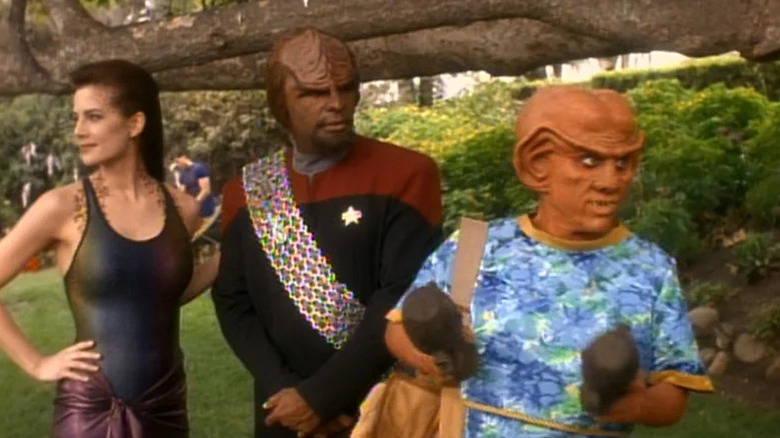
Introducing "Star Trek: The Next Generation" stalwart Worf (Michael Dorn) among the cast of "Star Trek: Deep Space Nine" shuffled the show's character deck in exactly the right way. His impressive character arc revealed whole new sides of the fan-favorite figure — including a surprisingly wholesome and entertaining romance with Jadzia Dax.
Out of all Jadzia and Worf episodes, "Let He Who Is Without Sin..." is the one that never leaves the barrel. The episode has a promising start when the pair and a handful of other characters take a vacation on the hedonistic planet Risa. However, the end product fails to live up to this fantastic setup. Jadzia and Worf are going through a rough patch, and Worf doesn't help the situation by acting like the quadrant's biggest stick in the mud. Apart from questioning Jadzia's commitment and acting jealous, he literally rains on everyone's parade by helping an extremist group sabotage Risa's weather control system.
From the classic episode "Shore Leave," which remains one of the best episodes of "Star Trek: The Original Series," to the charming "Star Trek: Starfleet Academy" Season 1 story "Ko'Zeine," the "Star Trek" franchise has used the concept of downtime to tell effective, fun, and touching character-driven stories many times. "Let He Who Is Without Sin..." forgets the fun part of that equation, and as a result, watching it feels like work.
1. Profit and Lace (Season 6, Episode 23)
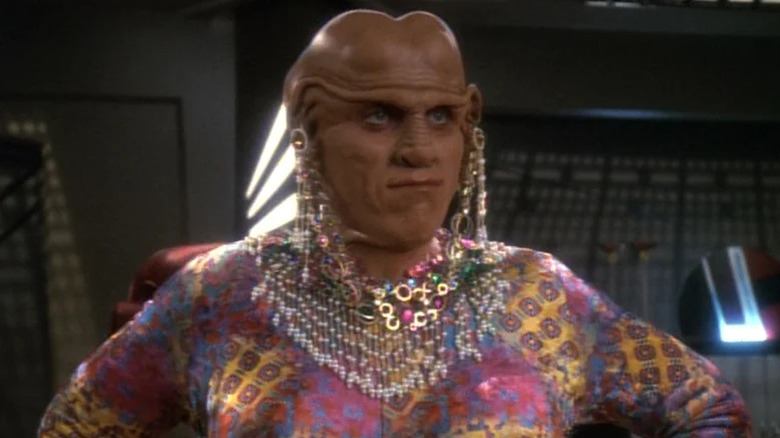
Jeffrey Combs is one of the surprisingly many "Star Trek" actors who have played multiple characters. Unfortunately, out of those characters, both Tiron from "Meridian" and Brunt from the Season 6 belly-flop "Profit and Lace" feature on this particular list. Yet, the latter episode being borderline unwatchable has far more to do with Quark.
In "Profit and Lace," the resident Ferengi figure of "Star Trek: Deep Space Nine" has a temporary gender-affirming surgery in order to foil Brunt's ambitions to become the Grand Nagus of the Ferengi, with all the "wacky" shenanigans you'd assume from a plot like this. There's also another reason as to why this comes across as tone deaf, and it's because Quark was an infamous sexist. The episode mines the situation for every bit of comedy it falsely assumes its setup entails. To give an idea of the forces in play, the episode opens with Quark harassing a woman, and the reason the Ferengi are in the market for a new Grand Nagus is that the old one, Zek (Wallace Shawn), made the grievous mistake of allowing women to wear clothes.
Buried deep within the episode is the admittedly noble intention of making Quark understand some of the troubles women encounter by experiencing them firsthand. Unfortunately, the bad far outweighs the good here, which is enough to make "Profit and Lace" the worst "Deep Space Nine" episode at a generous 5.8/10 on IMDb.