

5 Movies From 1998 That Are Simply Timeless
Ask just about any film fan and they'll agree that 1999 was one of the greatest years in movie history. This year gave us a wild line-up of instant classics, including "The Matrix," "Fight Club," "The Sixth Sense," "The Mummy," "Magnolia," and "Cruel Intentions," to name but a few. No matter what you were interested in, '99 had something to offer you at the box office, and everyone still talks about how incredible it was that there were so many smashes in theaters at the same time. 1998, on the other hand, tends to get overlooked.
According to Box Office Mojo, the biggest hit of 1988 by far was "Titanic," which was released at the tail end of 1997. Still, in addition to good-for-their-time hits like "The Waterboy" and "Rush Hour," '98 also gave us a number of films that have stood the test of time very well. In fact, there's a handful of movies from '98 that, almost three decades on, have proven themselves to be simply timeless. Sure, things have changed a lot since then, but these films are as entertaining as they ever were.
Armageddon
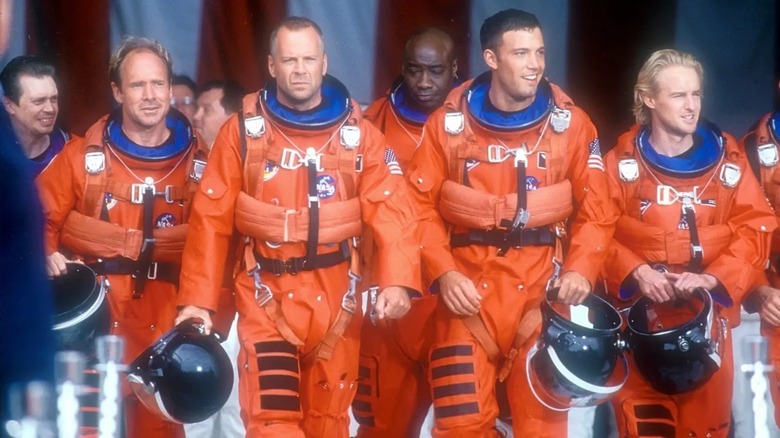
Michael Bay's "Armageddon" may be on the list of sci-fi movies that scientists can't stand watching, but for us regular film fans, it's still a rip-roaring good time today. It's a disaster film (or a near-disaster film, as it were) in which a planet-killing comet the size of Texas is detected heading for Earth. The way to stop it is by drilling into it and placing a bomb in the center to blow it up into smaller pieces. This kind of drilling isn't something NASA astronauts are used to, so Harry Stamper (Bruce Willis) and his team of oil rig workers are drafted in to save the world — if only they can learn how to be astronauts in time.
Willis and Ben Affleck play off one another brilliantly in the two main roles, and the talented ensemble cast (which includes Billy Bob Thornton, Liv Tyler, Will Patton, Peter Stormare, Keith David, Owen Wilson, William Fichtner, and Steve Buscemi) help make would could have been a plain silly movie something you can't take your eyes off in a good way. The script (which was co-penned by J.J. Abrams), Bay's unabashedly bold direction, and the soundtrack (particularly Aerosmith's "I Don't Want To Miss A Thing") create a '90s cocktail that tastes just as sweet in the 2020s.
Babe: Pig in the City
In 1995, audiences were charmed by "Babe," an adaptation of Dick King-Smith's "Babe: The Gallant Pig." The original novel and film are about a pig named Babe who learns to herd sheep, surprising everyone on the farm. "Babe" is good, but the 1998 sequel "Babe: Pig in the City" is even better. It was directed by George Miller (yes, the Australian mastermind behind the "Mad Max" movies and their spin-offs), who co-wrote the screenplay for the first film. It seems strange to call a movie about a talking pig action-packed, but "Babe: Pig in the City" is exactly that, featuring several chase scenes that are much more visually interesting than you'd usually expect from a movie made primarily for kids.
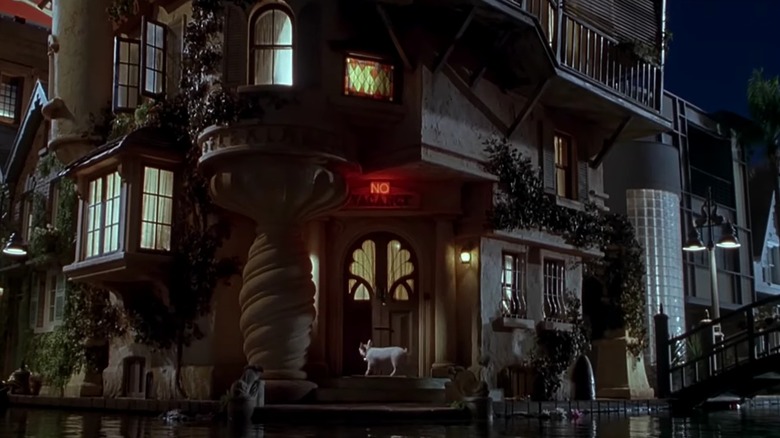
"Babe: Pig in the City" isn't just timeless because of Miller's surprise involvement (he also directed "Happy Feet," so it's clear that the man knows what children like to see). This movie is timeless because of its incredible production design. The titular city is sort of a mishmash of iconic locations from around the world, all reconstructed on a studio backlot. It's lit by neon and features a ton of different architectural styles from various eras all blended into one. There's nothing quite like it, because it's sort of like everything. "Babe: Pig in the City" feels like it takes place in a child's imagination — the setting is exactly the sort of thing a kid imagines when they hear a phrase like "The City" that they don't yet have a frame of reference for.
The Big Lebowski
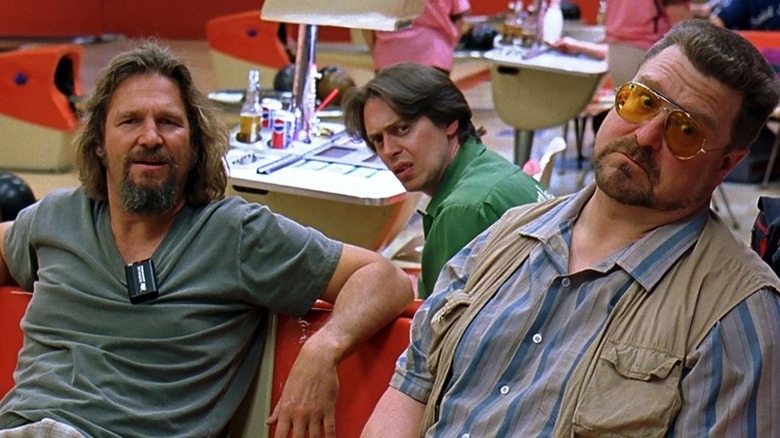
Believe it or not, "The Big Lebowski" wasn't a hit when it came out. Critics were baffled by the Coen brothers film, which follows a slacker named Jeffrey "The Dude" Lebowski (Jeff Bridges) as he embarks on a quirky odyssey, trying to solve what seems like a simple case of mistaken identity. Like many of the best movies directed by Joel and Ethan Coen, "The Big Lebowski" is a funny film with a deceptively deep philosophical core, one that draws inspiration from various places.
One of the biggest inspirations for "The Big Lebowski" goes some way to explaining why it's remained so timeless: The Coens were influenced by "The Big Sleep," a detective novel by Raymond Chandler. The 1946 film noir adaptation of the novel starring Humphrey Bogart as P.I. Philip Marlowe is famously confusing. Unlike most mysteries, it's exceedingly difficult for the audience to follow along with what the characters are talking about, disrupting any opportunity for the viewer to play detective.
"The Big Lebowski," too, is purposely confusing, and its overlapping reveals and reversals ultimately don't add up to much of a compelling solution to the convoluted plot — but that's the point, and that's partly why the movie holds up so well. The fact that the film contains so many quotable lines and several memorable performances (John Goodman, Steve Buscemi, and John Turturro all bring their A-games here) has also helped "The Big Lebowski" stand the test of time.
The Truman Show
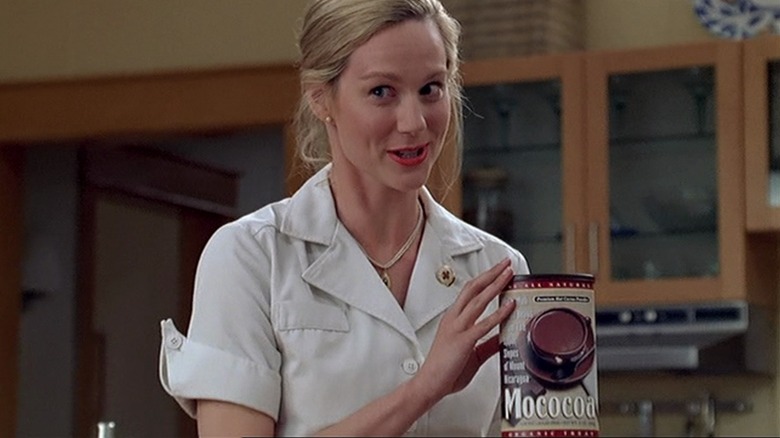
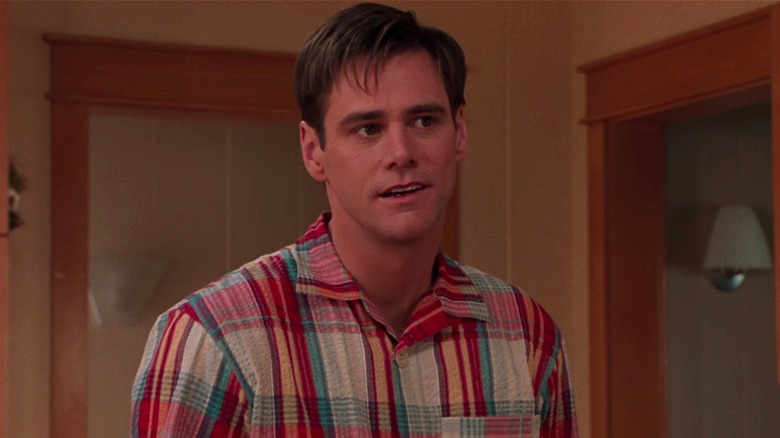
When "The Truman Show" was released, the idea of reality television was still a relatively new one. The fact that it's become so ingrained in pop culture in the years since has helped this fantastic Peter Weir movie remain relevant. It centers on a man named Truman Burbank (Jim Carrey), whose entire life has been beamed into living lives around the world without his knowledge. His entire reality is constructed on a soundstage, with actors playing every single person in his life.
While some films on this list endure because of how well they captured their time period, "The Truman Show" feels timeless because of how well it predicted the future in which we currently live. Like these other sci-fi movies that got the future right, "The Truman Show" anticipated that the entertainment world would pivot to focusing on real people living their lives.
The film also predicted something like influencer brand deals. How often have you been watching an Instagram Reel or a TikTok and realized too late that it's an ad? Every so often, Laura Linney's character (the actress who plays Truman's wife) turns right to the camera and slips in the name of whatever product she's using, embedding advertising within the television show that is Truman's life. Writing about the film in 2025, The Guardian's Tim Byrne called it "freshly disturbing" and "astoundingly prescient."
You've Got Mail
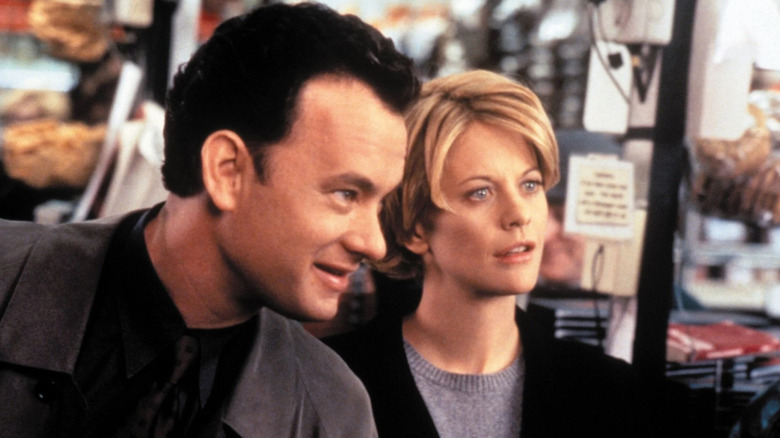
"You've Got Mail" has become timeless because of how much of a time capsule it is. Tom Hanks plays Joe and Meg Ryan (star of several of the best rom-coms of all time) plays Kathleen. In person, the two can't stand each other. Kathleen runs The Shop Around The Corner, a little bookstore, while Joe runs a Fox Books location, part of a chain. Little do they know, they're falling in love online. In 1998, that seemed crazy.
If you need proof that this is a timeless story, just look at the fact that "You've Got Mail" is based on the 1937 Hungarian play "Parfumerie," which has been adapted several times over the decades. It makes total sense that Nora Ephron wanted to update the story of lovestruck pen-pals who don't realize they're real-life enemies in the late '90s; email was taking the world by storm, and the anonymity of the early internet probably seemed like an exciting way to keep the characters from finding out about the mix-up.
These days, writing lovelorn emails feels as quaint as writing a love letter by hand. "You've Got Mail" is ultra-90s in every respect, but dismissing this movie because it's of its time would be like criticizing Shakespeare's "Romeo and Juliet" because it's too old-fashioned. Some stories are so timeless that, with a little tweak to make it fit the sensibilities (and, in this case, the technologies) of the day, they can be told again and again.