

5 Reasons Why HBO's Westworld Flopped
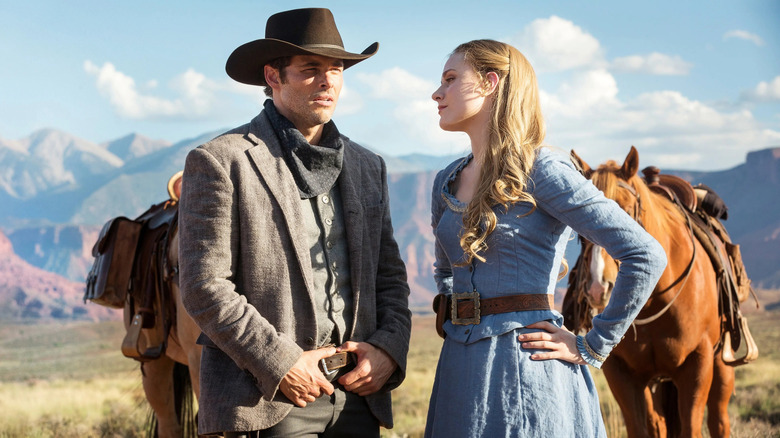
The wild, wild West has always been an enticing backdrop for exciting storytelling. However, not every Western movie or TV show ends up being an all-time classic. Just ask "Westworld," a costly HBO program that ended up falling severely short of expectations. The best episodes of "Westworld" indicate why the show has its defenders, but mostly, this program ended up flying way too under the radar. After four seasons, HBO canned the program in 2022, a devastating blow for something that was once intended to become a major tentpole program for the network. By the time it ended, "Westworld" had become known as a cautionary tale whose demise was utterly unsurprising.
While not quite one of the most expensive TV flops in history, "Westworld" was still a misfire, especially given the massive budget and high-profile cast (Jeffrey Wright! Anthony Hopkins! Thandiwe Newton!) it managed to assemble. Given all the wasted potential, it's well worth asking what on Earth went so wrong here. "Westworld" was besieged by a deluge of problems that few shows could've overcome. That included a writing style that was impossible for new viewers to access, external real-world tragedies that made its later seasons unappealing, and even immense competition from other HBO shows.
"Westworld" was a production that started with grandiose ambitions before fizzling out in a disappointing fashion. While so much of the show was inscrutable, the five biggest reasons HBO's "Westworld" flopped are far easier to understand.
The show was impenetrable for newer viewers
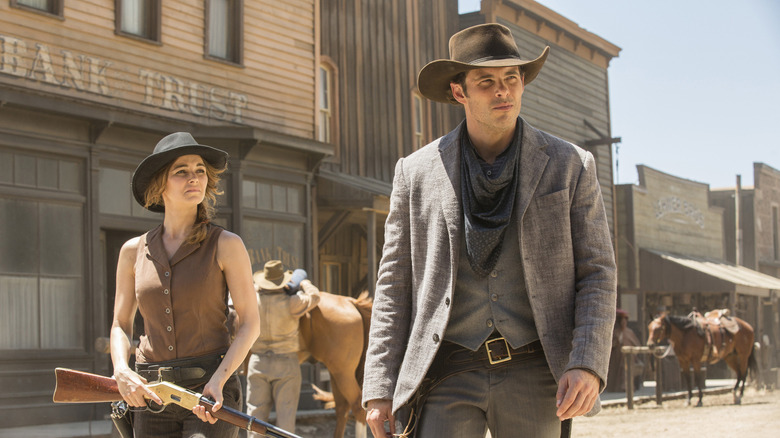
"Westworld" became famous for a confusing and uber-detailed mythos that made "Lost's" lore seem incredibly digestible by comparison. The "Westworld" timeline was one that jumped all over points in time and constantly bamboozled viewers as to whose identities were real, what allegiances could be trusted, and even what worlds were tangible places. Inevitably, this quality in the show became one of its most infamous features. Many "Westworld" discussions simply focused on ardent viewers admitting they were lost as to where the show was or how the program had gotten to certain story points.
That's not exactly the most inviting ambience for a TV program. Casual audiences who might've been interested in "Westworld's" cast or the fusion of sci-fi and Western tropes were likely repelled by how labyrinthine this program was. It didn't help that criticism of "Westworld's" confusing nature got more vocal and heated as the show went on. This creative evolution suggested to potential new audiences that watching "Westworld" would only inspire additional frustration rather than gradually provide interesting answers. This reality inspired some pop culture observers to suggest that this facet of "Westworld" would ultimately be its downfall.
Ambiguity and bold narrative decisions are one thing. However, "Westworld" often got too lost in the weeds when it came to its head-spinning mythology. This meant that it could never build up new devotees, a fatal flaw it couldn't hope to overcome.
Getting disrupted by COVID
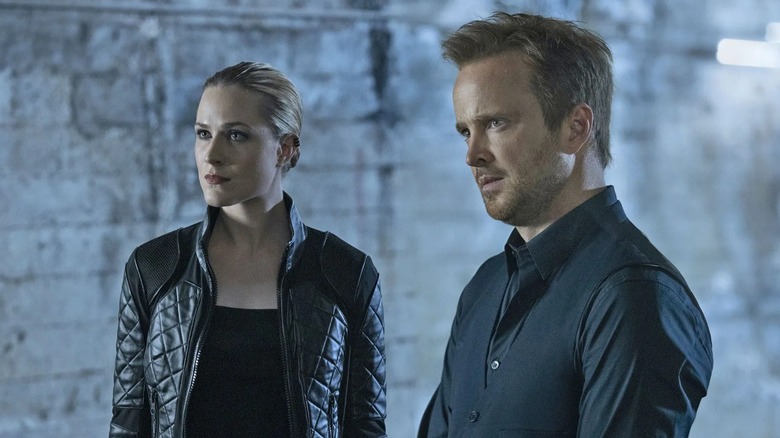
In another timeline, perhaps "Westworld's" third season, which added Aaron Paul to the proceedings as a new main cast member, would've gotten the show back on track and opened it up to more viewers. Instead, this third season began airing on March 15, 2020, just a few days into the world shutting down in response to the COVID-19 pandemic. Suddenly, everyone was locked up in their homes, trying to stay safe, and looking for escapist entertainment that could make the hours tick by faster. It immediately became clear that the brutally grim third season of "Westworld" wasn't exactly ideal viewing during these arduous times.
This season even inadvertently featured background characters wearing face masks, a visual detail echoing the protective wear Americans were donning in response to the COVID crisis. This accidental stark reminder of the real world amplified feelings that "Westworld's" third season was hitting all the wrong notes for audiences in 2020. TV viewers were eagerly looking for shows like "Ted Lasso," which provided viewers with feel-good laughs and depictions of heartfelt camaraderie. That hit the spot for COVID-worn souls in a way "Westworld's" cold grimness couldn't.
With real-world circumstances taking its third season out of step with the general populace, "Westworld's" big shot at getting back on people's good side was derailed. With this misstep, the show's inevitable cancellation was assured. "Westworld" was clearly no longer relevant to the outside world's status quo (if it ever was).
Competition from other Western shows
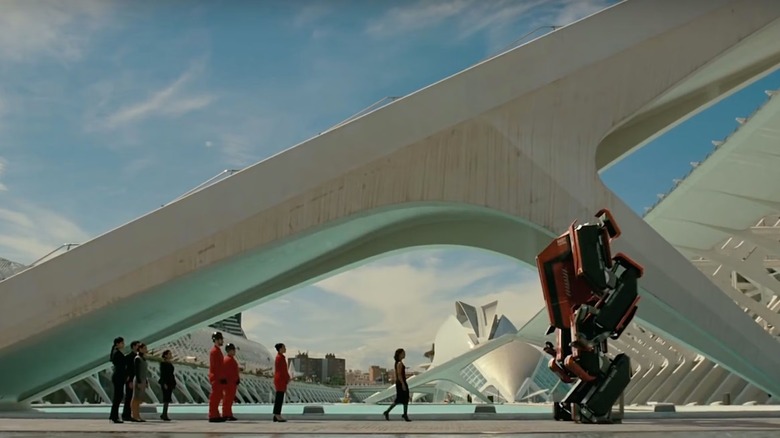
The five best Western shows you can binge-watch in one weekend reflect the profoundly deep well of Western programming available on the small screen. This genre has a long history on television that dates back to productions like "Bonanza" and "Gunsmoke." "Westworld" was clearly continuing that trend even with its sci-fi elements and darker tone. While later seasons would expand the show's horizons beyond the titular Western-themed locale, "Westworld" always evoked images of (mechanical) cowboys and saloon shootouts. That proved a bit of a problem, though, as the 2010s went on and the Western made a major small-screen comeback.
In 2018, "Yellowstone" hit the airwaves and immediately took off as a phenomenon. Even the show's leading man, Kevin Costner, has opened up about how surprising "Yellowstone's" massive success was. With this development, there was suddenly a new Western show on the block taking away some of "Westworld's" thunder. To boot, "Yellowstone" spawned Western program imitators, including tons of new shows from its creator, Taylor Sheridan. As these productions began hitting streamers in late 2021, "Westworld's" specialness began to dwindle. Why would people seek out the divisive, often impenetrable "Westworld" stories when they could just watch "1883" instead for a Western television fix?
Having so many other major, heavily promoted Western programs to compete with made it increasingly hard for "Westworld" to build up momentum and a fan base in between seasons. This television programming town just wasn't big enough for "Westworld" to thrive.
Overshadowed by other HBO programming
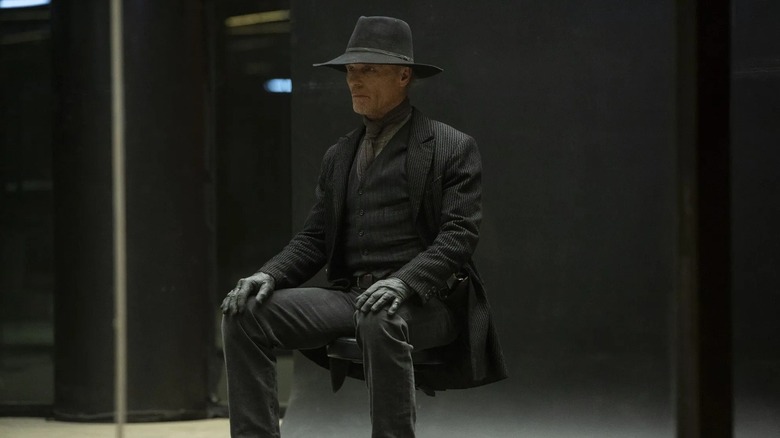
It's always fascinating when networks and streamers end up incorrectly guessing which of their shows will take off. In summer 2016, Netflix launched the colossally expensive program "The Get Down" in hopes it would be a hit as big as its price tag. A few weeks earlier, the more modestly promoted "Stranger Things" hit the platform. The latter show took everyone by surprise and became Netflix's big cash cow. You just never know what will end up striking a chord with the public. A similar phenomenon happened in the late 2010s with HBO programming that left "Westworld" in unexpected shadows it couldn't evade.
With a first season alone that cost $100-ish million, HBO had high hopes "Westworld" could burst out of the gate as a hit to rival "Game of Thrones." Instead, the show ended up declining in viewership from Season 1 to Season 2. The same year "Westworld" Season 2 hit the airwaves, "Succession," a show whose main cast members scored below $100,000 per episode initially, debuted. This HBO show was a major hit by Season 2 and was giving the network way more bang for its buck compared to the exceedingly costly "Westworld."
The 2017 HBO show "Big Little Lies" also ended up becoming a sensation and yet another program on the network that overshadowed "Westworld." This high-concept remake was fatally crowded out in the late 2010s by other, buzzier HBO shows. "Westworld" couldn't excel when people had the option to instead watch "Succession."
More famous for its unpleasantness than artistry
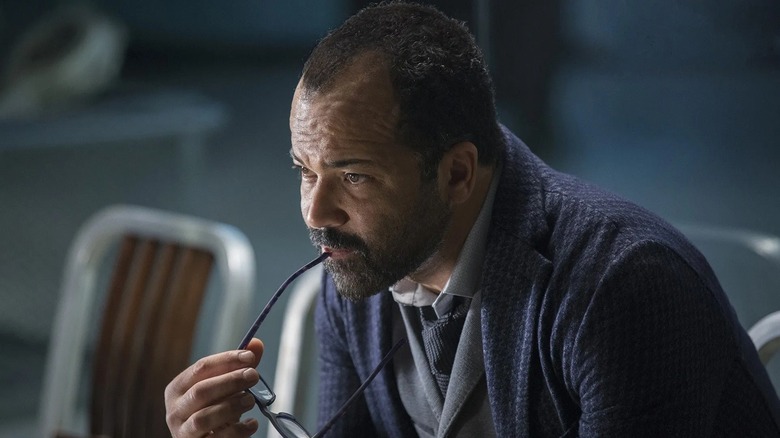
"The Sopranos" is a masterpiece people still regularly talk about decades after its esteemed run ended. Across the 25 best "Sopranos" episodes, as well as every installment of this show, are depictions of barbaric behavior, a large chunk of it directed at women. However, "The Sopranos" and its excellence derive from the thoughtful deployment of its most uncomfortable material. Plus, there's way more going on in the show than just the despair of women. In contrast, "Westworld," from the get-go, was plagued with controversy over its sexual politics and specifically its weird depiction of sexual violence against women.
On paper, these elements were clearly supposed to reflect larger social commentary on the horrific ways male-led power structures utilize technological advances as well as "escapist" scenarios. However, in execution, "Westworld's" cavalcade of sexual anguish for its lead characters didn't lead anywhere especially notable or interesting. It was just miserable material that failed to lend further insight to its characters. Compared to other shows about sexual trauma, like "I May Destroy You" and "Unbelievable," this was a deeply shallow production that used sexual exploitation largely for shock value.
This detail helps explain why "Westworld" didn't take off with a massive fan base. The whole show registered to most people as endless misery. Whereas "The Sopranos" had purpose to its brutality (plus plenty of additional elements to round out the show), "Westworld's" hollow bleakness kept potential viewers at bay.